


Marcin Patrzalek
Current Ranking
Marcin Patrzalek is ranked #134 of 162 guitarists on the Greatest Guitar Player leaderboard, based on our editorial score until fans weigh in. On the shred and virtuoso leaderboard, Marcin Patrzalek ranks #15 of 19. No fan votes yet, so be the first to rate Marcin Patrzalek on 8 attributes at greatestguitarplayer.com/vote.
Biography
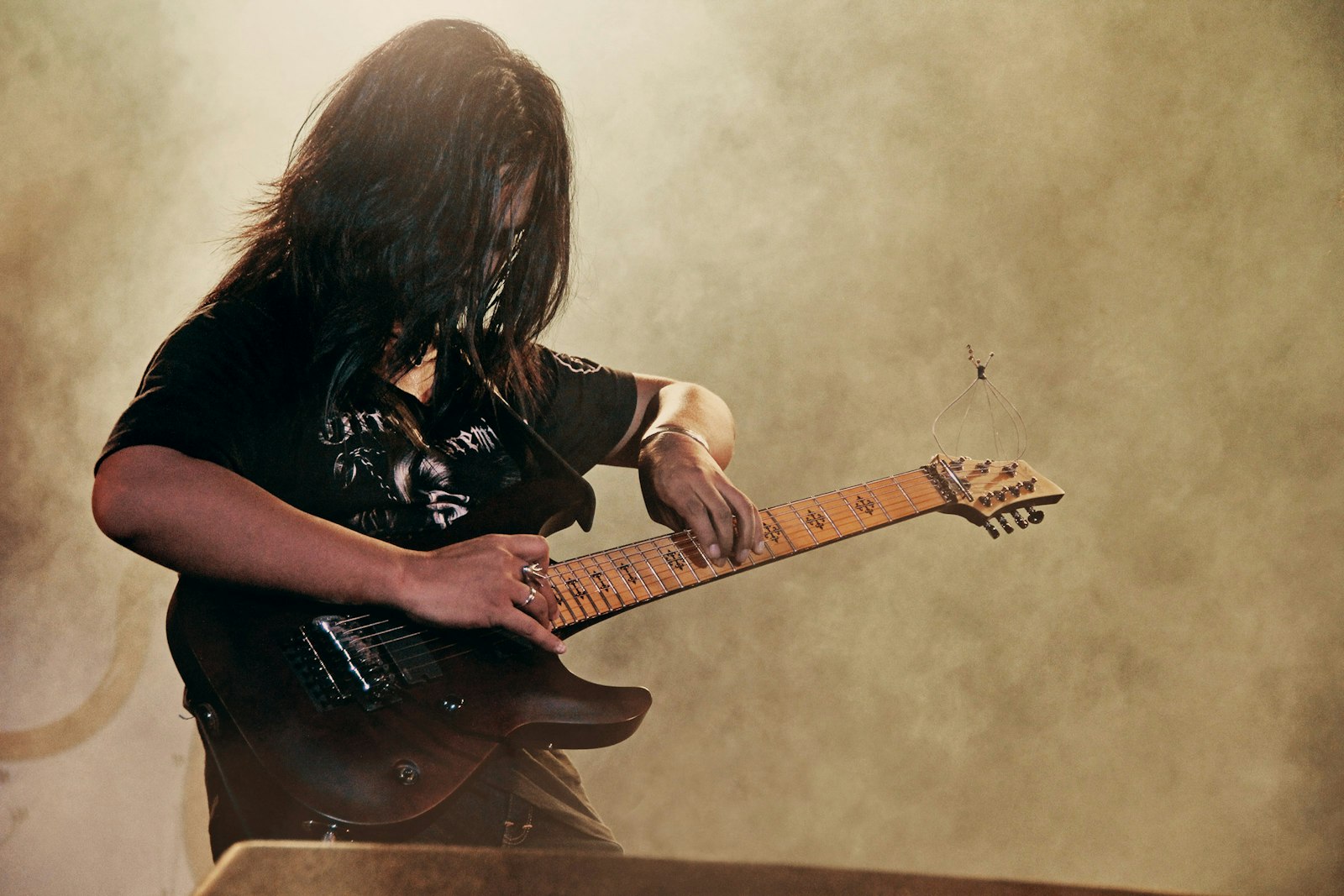
Marcin Patrzalek is the Polish percussive fingerstyle guitarist who turned a single acoustic into a rhythm section, a string section, and a lead voice all at once, and then convinced tens of millions of people online that this was a perfectly normal thing to do. Born October 6, 2000 in Kielce, Poland, he started classical guitar at ten with local teacher Jerzy Pikor, added flamenco at twelve under the Spanish master Carlos Pinana, and by thirteen was teaching himself the tapping, slapping, and body-percussion vocabulary that would become his trademark. That stack of disciplines is the whole story: the nails and tone of a classical player, the attack of a flamenco player, and the groove instinct of a drummer, all in one pair of hands.
The television run came fast. At fourteen he won the ninth edition of Poland's Must Be the Music, and he used the momentum to release his debut album Hush in October 2016. In 2018 he won Italy's Tu Si Que Vales, became an Ibanez endorser, and put out the revAMP EP, the same year his solo arrangement of Beethoven's Fifth Symphony and his cover of Led Zeppelin's "Kashmir" went viral and drew public praise from Tom Morello, Vernon Reid, and Paul Stanley. In 2019 he auditioned for America's Got Talent with a Beethoven and System of a Down mash-up, then worked through Albeniz, Paganini, and Ed Sheeran on his way to the semifinals. Sony Masterworks signed him in 2020, and singles like "Moonlight Sonata" and "Snow Monkey" followed.
The last few years have been about proving he is more than a viral act. He appeared as a special guest across seven Classical Spectacular concerts at London's Royal Albert Hall in 2022, recorded a duet with Japanese guitarist Ichika Nito, and composed the flamenco theme for the swordsman Mihawk in Netflix's One Piece live-action series in 2023. His full-length Sony debut, Dragon in Harmony, arrived in September 2024 with guests including Tim Henson of Polyphia, Portugal. The Man, Delaney Bailey, and Ichika Nito, and its "Habanera" video won the Opus Klassik award for music video of the year. In 2025 he found himself teaching Will Smith the basics of percussive fingerstyle, and in August 2026 Slash posted that Marcin had "redefined acoustic guitar playing" as the Art of Guitar tour made its India debut.
The gem, for guitar nerds, is what he does not use. Marcin has called himself a true enemy of the humble guitar pick, and everything he plays comes off his fingernails, thumb, and palm. Ibanez took that seriously when it built his MRC10 signature model in 2022, adding a reinforced wood scratch plate on the top specifically so his body-tapping would not wear through the spruce. He is still in his twenties, which means the most interesting part of this catalog is probably not written yet.
Legendary Performance
Beethoven's Fifth Meets "Toxicity", America's Got Talent Audition
June 18, 2019 · Pasadena Civic Auditorium, Pasadena, California
Marcin walked onto the America's Got Talent stage at eighteen with nothing but an acoustic guitar, told host Terry Crews that what he does is "quite weird and quite experimental," and then opened with the four most famous notes in Western music. His solo arrangement of Beethoven's Fifth Symphony treats the guitar like a small orchestra, with the bass motif hammered out by the fretting hand, chord stabs slapped in on top, and the rhythmic drive coming from knuckles and palm on the body. Then he stopped, let the room breathe for a second, and slammed into System of a Down's "Toxicity," a nu-metal track that has no business working on a single unplugged instrument, except that it did, with the drop-tuned riff, the drum pattern, and the vocal melody all audible at once.
The performance mattered because it was the moment his online audience and a mainstream television audience converged. He already had viral numbers behind him from the Beethoven and "Kashmir" videos, but the AGT clip put the technique in front of millions of people who had never seen a guitar played with both hands on the fretboard and a palm on the soundboard. All four judges voted yes, and a later round drew Simon Cowell's line that getting that reaction "with just you and the guitar and a couple of wires" was proof of an amazing talent, calling him one of the best he had ever heard.
Marcin went on to play Albeniz's "Asturias" at the Judge Cuts, Paganini's Caprice No. 24 in the quarterfinals, and Ed Sheeran's "Shape of You" in the semifinals, where his run ended. The competition result is a footnote. The audition itself, a classical symphony and a metal anthem on one acoustic guitar in under three minutes, is the performance that defined the shape of his career: virtuoso technique in service of an arrangement idea that makes an audience laugh in disbelief first and applaud second.
▶ Watch on YouTubeGear
Ibanez MRC10 Marcin Signature Acoustic (2022)
Known for: Dragon in Harmony sessions and the Art of Guitar tour; successor to the Ibanez AE900-NT he played on America's Got Talent
Marcin became an Ibanez endorser in 2018 and played the AE900-NT, a solid-top acoustic-electric from the AE series, through his talent-show years and the first wave of viral videos. That guitar had to do a job most acoustics are never asked to do: survive constant slapping, tapping, and palm strikes on the top while staying in tune and delivering a balanced amplified signal. In October 2022 Ibanez turned the lessons from that guitar into the MRC10, his first signature model, loosely based on the AE900 platform.
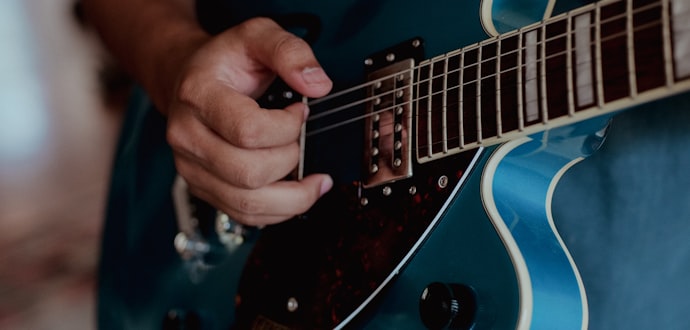
The MRC10 pairs a solid Sitka spruce top with pau ferro back and sides, a satin nyatoh neck, and a Macassar ebony fretboard, with X-M bracing to keep the top responsive under a percussive attack. The tell-tale detail is a reinforced wood scratch plate on the top, positioned where his palm and fingers land during body-tapping, so the instrument does not wear through the way his earlier guitars did. Custom mother-of-pearl inlays and rosette, a bone nut and saddle, and 18:1 Gotoh tuners round out the build. It is a working tool designed around one specific technique rather than a decorated reissue, which is exactly why it suits him.
Fishman Rare Earth Mic Blend and Tap Pickup System, Direct to Front of House
Known for: Every live show since the AGT run; the electronics built into the MRC10
Marcin does not use a conventional guitar amplifier. His sound is a pickup blend sent direct to the mixing desk, which is the only sensible approach when half of the performance is percussion on the body of the instrument. The MRC10 ships with a Fishman Rare Earth Mic Blend active soundhole system, which combines a humbucking magnetic pickup with a small internal microphone, plus a dedicated Tap pickup that captures the thumps and knocks on the top. Blending the three sources is what lets a listener hear the bass line, the chords, and the drum part as separate layers rather than a single thudding mush.
The practical upside is consistency. Whether he is on a television stage, at the Royal Albert Hall, or in a club in Mumbai, the signal chain is the guitar, a cable, and the house system, so the engineer is mixing the same three sources every night. It is a modern acoustic rig in the same spirit as the ones Tommy Emmanuel and Mike Dawes use, built for a player who needs the instrument to sound enormous without a band behind him.
Minimal Chain: Elixir Strings, Occasional Looping and Backing Production
There is very little between Marcin's hands and the audience. He is an Elixir strings endorser, and coated strings matter more to him than to most players because his right-hand technique is nails, thumb, and palm with no pick at all, so string wear and finger noise are constant concerns. On the recordings, especially Dragon in Harmony, the acoustic is layered with electronic and orchestral production, and some live shows use backing elements to reproduce that, but the guitar parts themselves are played straight. The effects, in the sense that matters, are the arrangements: he gets a symphony out of six strings by writing every layer into the part rather than by adding boxes to the floor.
Signature Technique
Percussive Fingerstyle: Classical Nails, Flamenco Attack, Drum-Kit Body
Marcin's technique is a fusion of three schools that rarely meet in one player. From classical guitar, studied from age ten, he has a right hand that plays with shaped fingernails, a free-stroke and rest-stroke vocabulary, and the independence to keep a bass line, an inner voice, and a melody moving at once. From flamenco, learned at twelve from Carlos Pinana, he took the rasgueado strums, the golpe taps on the top, and the sheer force of attack that makes a nylon-school player sound aggressive on steel strings. And from the percussive fingerstyle world that he taught himself as a teenager, he added two-hand tapping, slap bass techniques borrowed from electric bassists, and a full drum-kit vocabulary played on the body of the guitar.
The drum kit is the part audiences notice first. A palm strike near the bridge gives him a kick drum, a knock with the knuckles on the upper bout gives him a snare, and a flick of the fingers across the strings above the nut or against the muted strings gives him a hi-hat. He interleaves these with actual notes so quickly that the ear hears a groove and a riff simultaneously, which is how "Toxicity" and "Kashmir" arrive with their drum parts intact. His arrangement of Beethoven's Fifth is a good study piece: the famous motif lives in the fretting hand as hammer-ons while the right hand alternates between slapped chords and body percussion, so the orchestral weight comes from rhythm rather than from volume.
The fretting hand does far more than fret. Marcin uses hammer-ons from nowhere, meaning notes sounded by the left hand alone with no right-hand pluck, to carry melodies while his right hand is busy elsewhere, and he taps chords with the right hand over the fretboard so both hands share the neck. Altered tunings, often dropped or open, put the bass notes on open strings where a slap or a left-hand tap can trigger them without a fretting finger, which frees up the rest of the hand for melody. That is the secret behind the "one-man band" impression: a tuning chosen so the bass plays itself.
His classical grounding shows up in the details that keep this from sounding like a party trick. Dynamics are real, with quiet passages that are genuinely quiet, phrases shaped with vibrato and rubato, and arrangements of Albeniz, Paganini, and Bizet that respect the original harmony while adding a rhythmic engine underneath. The Opus Klassik award for the "Habanera" video is a sign that the classical world hears the substance and not just the spectacle.
The influence is easy to trace among younger players. Marcin sits on the same branch as Tommy Emmanuel, Andy McKee, Jon Gomm, and Mike Dawes, but he pushed the style toward classical repertoire and metal covers and, through his collaborations with Tim Henson and Ichika Nito, toward the modern instrumental guitar scene. His signature Ibanez has a scratch plate designed for body percussion, which is about as clear a statement as a manufacturer can make that the technique has gone from novelty to established style.