

_(cropped).jpg)
Joe Pass
Current Ranking
Joe Pass is ranked #58 of 162 guitarists on the Greatest Guitar Player fan leaderboard, based on 1 fan vote so far. On the jazz and fusion leaderboard, Joe Pass ranks #7 of 11. Agree? Rate Joe Pass on 8 attributes at greatestguitarplayer.com/vote.
Biography
Joe Pass was born Joseph Anthony Jacobi Passalaqua on January 13, 1929, in New Brunswick, New Jersey, and raised in the steel town of Johnstown, Pennsylvania. He got his first guitar at nine, a seventeen dollar Harmony his father bought after Joe saw Gene Autry playing one in a cowboy picture. Mariano Passalaqua, a mill worker who believed his son had a gift the family could not afford to waste, drilled him mercilessly, hours of practice every day, and told him to learn to fill up the spaces between the melody notes. That one instruction became the blueprint for everything Pass would ever play. By fourteen he was gigging around Pennsylvania, and while still a teenager he toured with Tony Pastor's band and worked with Charlie Barnet.
The 1950s should have been his breakout decade, and heroin took it instead. Pass spent those years scuffling, in and out of trouble and jail, pawning guitars and barely recording. In 1960 he committed himself to Synanon, the drug rehabilitation community in Santa Monica, and stayed clean through two and a half years of hard reckoning. The 1962 album Sounds of Synanon, cut with fellow residents, announced to the jazz world that a fully formed master had seemingly appeared from nowhere. DownBeat handed him its New Star award in 1963, and an admirer gave him the plain 1962 Gibson ES-175 that would remain his main guitar for the rest of his life.
The comeback became a coronation in the 1970s when Norman Granz signed him to Pablo Records. In 1973 alone Pass recorded The Trio with Oscar Peterson and Niels-Henning Orsted Pedersen (it won the Grammy for Best Jazz Performance by a Group), began his duo partnership with Ella Fitzgerald on Take Love Easy, and released Virtuoso, the unaccompanied solo album that permanently redefined what one jazz guitarist could do. No overdubs, no band, just standards played with walking bass lines, chords, and melody woven together in real time. He went on to record with Count Basie, Duke Ellington, Dizzy Gillespie, and Zoot Sims, but the solo concerts became his signature, one man filling a hall with what sounded like three players.
Critics loved to joke that Pass looked like somebody's uncle and played guitar like nobody's business, and the line stuck because both halves were true. Offstage he was rumpled, funny, and allergic to pretension, insisting he just played tunes. Onstage he was the most complete mainstream jazz guitarist who ever lived. His book Joe Pass Guitar Style became required reading, and his instructional videos taught a generation how chord melody actually works. He kept playing at the highest level until the very end, and died of liver cancer on May 23, 1994, in Los Angeles at age 65. Every guitarist who has ever sat alone on a stage with six strings and a standard, from Martin Taylor to Pasquale Grasso, is working in the room Joe Pass built.
Legendary Performance
The Trio, Live at the London House
May 16 to 19, 1973 · London House, Chicago, Illinois
By the spring of 1973 Joe Pass had been rediscovered but not yet crowned. Norman Granz changed that by booking him into the London House, the storied Chicago supper club, alongside Oscar Peterson and the Danish bass phenomenon Niels-Henning Orsted Pedersen. Peterson was the most demanding bandstand partner in jazz, a pianist whose tempos and two-handed torrents had flattened plenty of confident sidemen, and Granz wanted to know if the rumpled guitarist from the Synanon comeback could stand in that fire. Over four nights the tapes rolled, and Pass did not just survive Peterson's onslaught, he answered it, trading choruses at absurd tempos, comping like a big band, and pulling solo spots that silenced the dinner crowd.
The resulting album, The Trio, won the 1974 Grammy for Best Jazz Performance by a Group and formally announced jazz guitar's new first family. The Peterson, Pass, and Pedersen unit toured the world for years afterward, but the London House recordings preserve the moment of ignition: three virtuosos discovering in real time that no tempo, key, or tune could break the others. For Pass it was the performance that moved him from comeback story to permanent royalty, and it set up the solo revolution of Virtuoso, released later that same year.
▶ Watch on YouTubeGear
1962 Gibson ES-175 (1962)
Known for: Virtuoso, the Pablo years, and nearly every solo concert he gave
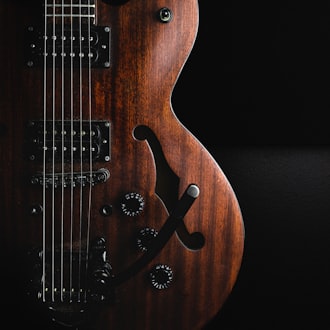
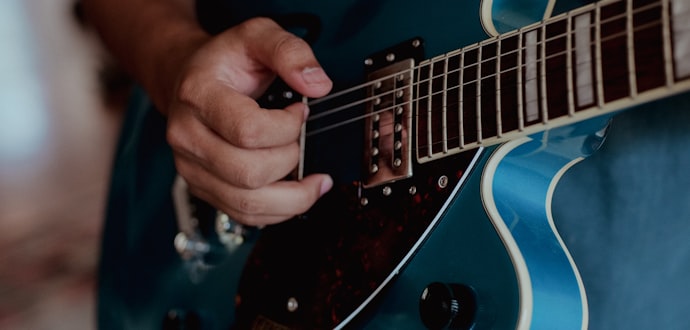
The guitar most associated with Joe Pass was not bought, endorsed, or commissioned. It was a present. In 1963, fresh out of Synanon and playing borrowed instruments, Pass was handed a 1962 Gibson ES-175 by an admirer, and the plain sunburst archtop simply never left. He strung it with heavy flatwounds, kept the setup unfussy, and played it through three decades of recordings, including the Virtuoso albums and the Ella Fitzgerald duets. The ES-175 was a working player's guitar, a laminate top box designed to resist feedback on loud bandstands, and in Pass's hands its dry, woody punch became the default sound of mainstream jazz guitar. He later lent his name to signature models, most famously the Ibanez JP20 in the early 1980s and the Epiphone Joe Pass Emperor near the end of his life, but the battered Gibson remained the sound in everyone's head.
Polytone Mini-Brute
Known for: The warm, dark club tone of the Pablo era
Pass helped make the Polytone Mini-Brute the unofficial official amplifier of jazz guitar. The little solid-state combo was everything a touring soloist needed: light enough to carry in one hand, loud enough for a club, and voiced with a round, dark warmth that flattered an archtop's midrange instead of fighting it. Where rock players chased tube breakup, Pass wanted none of it, just a clean platform that reproduced his fingers. On many solo dates he barely turned it up, letting the guitar's acoustic snap carry the articulation while the Polytone added body underneath.
A Cord and Nothing Else
There was no pedalboard, no rack, and no interest in either. Pass plugged straight in, and even the cable sometimes felt optional, since he happily played completely unamplified in clinics, lessons, and hotel rooms. Whatever reverb appears on his records came from the studio, not the floor. The variety in his sound, and there is enormous variety, came entirely from his right hand: pick, pick with fingers, and eventually bare fingers alone, each producing a different attack from the same guitar and amp.
Signature Technique
Solo Chord Melody & Walking Bass Counterpoint
Joe Pass's defining achievement was making one guitar sound like a complete jazz group. On the Virtuoso recordings and in thousands of solo concerts he played melody, chords, and an independent walking bass line at once, in real time, on standards called in any key. It was not an arranger's parlor trick worked out note by note in advance. Pass improvised the whole texture, steering voice leading through the changes the way a pianist does, which is why solo jazz guitar is effectively divided into before Joe Pass and after him.
His right hand went through a full evolution over his career. He came up as a pick player with a bebop single note attack fast enough to trade with Oscar Peterson, then moved to a hybrid grip, pick plus middle and ring fingers, so he could sound bass notes and chord tones together. By the late 1970s he had abandoned the pick entirely for solo work, playing with bare thumb and fingers because it let the counterpoint breathe, three musical layers with three different attacks.
Harmonically he was a walking encyclopedia of substitution. Passing diminished chords, tritone subs, chromatic inner voices, and half step approaches let him harmonize any melody note from any direction, and his comping behind Ella Fitzgerald showed the same vocabulary in miniature, whole arrangements implied with two and three note voicings. His single lines stayed rooted in bebop, Charlie Parker vocabulary phrased with a horn player's breath, but he connected them with slurs, sweeps, and open string cheats that were pure guitar.
The influence is total. Martin Taylor, Tuck Andress, Earl Klugh, and the modern school around Pasquale Grasso all build on the foundation he laid, and his book Joe Pass Guitar Style plus the later video seminars remain the standard curriculum for chord melody playing. When guitarists talk about achieving pianistic independence on the instrument, they are describing what Joe Pass did nightly, with a smile and a cheap cable, for twenty years.