

.jpg)
John Mayer
Current Ranking
John Mayer is ranked #97 of 162 guitarists on the Greatest Guitar Player leaderboard, based on our editorial score until fans weigh in. On the blues leaderboard, John Mayer ranks #20 of 32. No fan votes yet, so be the first to rate John Mayer on 8 attributes at greatestguitarplayer.com/vote.
Biography
John Mayer, born in Connecticut in 1977, occupies a rare and fascinating place in modern music, a genuine pop superstar who is also one of the most respected blues and rock guitarists of his generation. Early in his career he was known mainly as a sensitive singer-songwriter with acoustic-pop hits, but underneath the radio fame was a serious, deeply studied guitarist whose heroes were Stevie Ray Vaughan, Jimi Hendrix, and B.B. King, and over time he made the world take his playing as seriously as his songwriting.
Mayer's guitar style is fluid, soulful, and impeccably tasteful, full of expressive bends, warm tone, and a vocal phrasing sense that mirrors his singing. He made his serious-guitarist statement with the John Mayer Trio, a blues-rock power trio, and with songs like Gravity, a slow-burning blues showcase that demonstrated he could hold his own with the masters. He plays signature Fender Stratocasters and later developed his own popular PRS Silver Sky model, and his command of tone and touch has earned the admiration of the very legends he grew up idolizing.
Here is the gem that confirmed his standing among the elite. Eric Clapton embraced him and invited him to perform at the prestigious Crossroads Guitar Festival alongside the world's greatest players, a major endorsement from the blues-rock establishment. Even more strikingly, when the surviving members of the Grateful Dead formed Dead and Company, they chose Mayer to fill the enormous role once held by the late Jerry Garcia, trusting a pop star to carry the improvisational guitar legacy of one of America's most revered bands. He has thrived in that role for years, winning over even skeptical Deadheads with his feel and dedication, a remarkable validation of his musicianship.
That dual life, chart-topping pop craftsman and revered guitar player, makes Mayer unusual and a little misunderstood. Some fans know him only for his hits and his celebrity, while guitarists know him as one of the finest, most soulful players working today. He bridges those worlds, using his fame to draw new listeners toward the blues tradition he loves. For aspiring players, John Mayer is proof that you can reach a mass audience and still be a serious student of the instrument, and that great taste and feel never go out of style.
Legendary Performance
John Mayer Trio at "Where the Light Is"
December 8, 2007 · Nokia Theatre at LA Live, Los Angeles, California
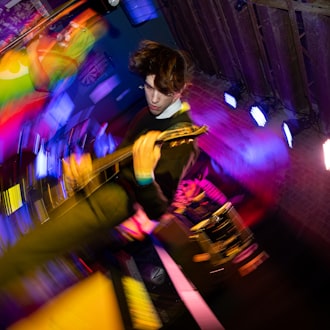
On December 8, 2007, John Mayer played a single career-defining concert at the Nokia Theatre at LA Live, capturing the performance for what would become his Where the Light Is concert film and double live album. The show was structured in three sets: an acoustic set, a John Mayer Trio set with Steve Jordan on drums and Pino Palladino on bass, and a full band set, but it was the middle section that announced him as a guitarist worthy of being mentioned alongside the players he had grown up studying.
The trio's reading of "Out of My Mind" stretches past nine minutes with Mayer holding extended single-note solos that draw directly from Stevie Ray Vaughan's vocabulary while phrasing with his own slightly more relaxed sense of timing. His treatment of Jimi Hendrix's "Bold as Love" closes the trio set with a faithful but personal interpretation, hitting Hendrix's signature chord embellishments and thumb-fretted bass notes without being a slavish copy. The Where the Light Is film became one of the most-watched modern blues concerts of the YouTube era and is regularly cited by younger guitarists as the moment they realised what Mayer was capable of beyond his pop singles.
The concert also marked the public coming-out of the John Mayer Trio sound, a power trio format he would return to throughout his career when he wanted to play purely as a guitarist rather than a songwriter. Steve Jordan and Pino Palladino, both veteran sidemen to the highest level of American music, treated him as a peer, and the chemistry visible on stage that night legitimised his place in the modern blues canon.
▶ Watch on YouTubeGear
PRS Silver Sky and Fender Stratocaster (2018 (Silver Sky))
Known for: Continuum (2006), Where the Light Is (2008), Sob Rock (2021), Dead & Company tours since 2015
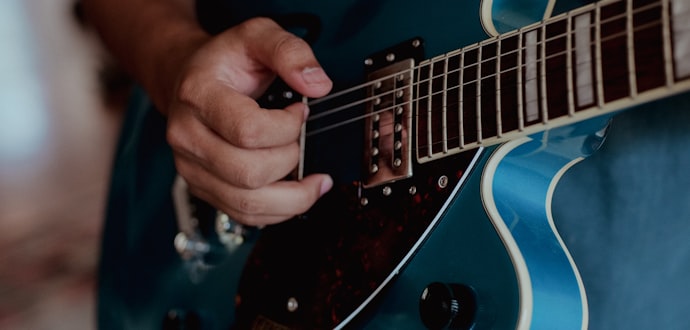
John Mayer's primary guitar through the first decade of his career was a Fender Stratocaster, and his attachment to the model came directly from his teenage worship of Stevie Ray Vaughan and Jimi Hendrix. His most famous early Stratocaster, the "Black1" with the SRV-style large headstock and aged finish, appears on Continuum and the Where the Light Is concert film, and the John Mayer signature Stratocaster Fender released in 2005 became one of the best-selling artist Strats of the 2000s. The instrument fit his hybrid blues-pop approach because the Strat's bell-like neck pickup tone gave him the clean platform he needed for chord-melody work, and the bridge pickup with light overdrive produced the singing lead tone that defined Continuum.
In 2018, after years of collaboration with Paul Reed Smith, Mayer released the PRS Silver Sky, a guitar designed to feel and sound like a vintage Strat but built with PRS quality control and consistency. The model became one of the best-selling artist signature guitars of the modern era and brought single-coil, vintage-style guitar playing back into the mainstream rock conversation, partly because Mayer's high-profile use of the instrument with Dead & Company and on Sob Rock made the Silver Sky the visual signature of a new generation of blues-rock players. He continues to use vintage Strats and Telecasters for specific tones, but the Silver Sky is now the instrument most associated with his current playing.
Dumble Steel String Singer and Two-Rock Custom Reverb
Known for: Continuum and Where the Light Is era tone, singing modern blues lead voice
John Mayer's amplifier choices are notoriously expensive and deliberate, reflecting his obsession with the precise interaction between vintage circuit design and modern reliability. His most iconic amp pairing in the Continuum and Where the Light Is era was the Dumble Steel String Singer, the rare, hand-built amplifier by Howard Dumble that costs upwards of fifty thousand dollars on the secondary market, paired with a Two-Rock Custom Reverb when he needed a more aggressive overdrive. The Dumble's defining feature, a singing, sustaining clean tone that compresses naturally as you push the volume, is the sound at the centre of his lead playing on songs like "Gravity" and "Slow Dancing in a Burning Room."
For touring with Dead & Company, Mayer typically uses a wall of Two-Rock amps in stereo, often pairing his amp with the Grateful Dead's traditional Twin Reverb and Mu-Tron rig to maintain the band's original tonal character while contributing his own singing single-coil voice. He has spoken openly about the influence of amp interaction on his note choices, saying that the way a Dumble responds to pick attack changes how he phrases entire solos, and that he treats the amp as the second half of the instrument.
Klon Centaur, Ibanez TS808 Tube Screamer, Way Huge Aqua-Puss, Hartman Flanger
The Klon Centaur is the defining pedal in John Mayer's signal chain, the famously rare overdrive built by Bill Finnegan in the 1990s that sells for thousands of dollars on the used market. Mayer uses the Klon as an always-on transparent boost in front of his amps, giving his clean tone an extra layer of harmonic richness and saturation without changing the underlying character. The Ibanez TS808 Tube Screamer handles his blues lead tones in the Stevie Ray Vaughan tradition, pushing his Dumble or Two-Rock into the singing midrange compression that defines his solo voice.
For specific effects, the Way Huge Aqua-Puss analog delay provides the short slap-back delay heard on the trio recordings, and the Hartman Flanger adds the swirling texture on songs like "Bold as Love" when he is channelling Hendrix. His pedalboard is famously well-organised and roadie-maintained, with discrete switching for each section of his set, and he has consulted on signature versions of several pedals including the JHS Sweet Tea overdrive. His approach is to use effects sparingly but commit fully when they are engaged, treating each pedal as a discrete colour rather than a layered effect chain.
Signature Technique
Hybrid Picking, Micro-Tonal Vibrato, and Hendrix-Style Embellishment
John Mayer's signature technique is a hybrid picking style that combines a flatpick held between thumb and index finger with the middle, ring, and pinky fingers picking the higher strings simultaneously. This approach, borrowed from country and Western swing players like Albert Lee and James Burton, lets him outline chord-melody figures and rapid double-stop runs without the limitations of pure flatpicking. Songs like "Gravity" and "Slow Dancing in a Burning Room" feature extended sections where his right hand is essentially playing two parts simultaneously, the pick handling the bass note while the fingers articulate a melody above.
His left-hand vibrato is the technical detail most often praised by other guitarists. Mayer uses a fingertip-led, micro-tonal vibrato that bends notes a quarter-step or less, a deliberate echo of Stevie Ray Vaughan and B.B. King's approaches that gives single sustained notes the vocal quality blues players spend decades trying to achieve. Combined with his deliberate pre-bend setups and slow release vibrato, his held notes have a singing, voice-like quality that translates emotional intent without requiring more notes per second.
Mayer also pioneered the modern application of Jimi Hendrix's chord-embellishment vocabulary, particularly the technique of fretting the low E string with the thumb to free the other fingers for chord extensions on the higher strings. Songs like his cover of Hendrix's "Bold as Love" demonstrate this approach in detail, with thumb-fretted bass notes anchoring complex chord shapes above. He has spoken in interviews about the years he spent transcribing Hendrix's chord voicings to understand how Hendrix made a single guitar sound like an orchestra, and that study is audible throughout Continuum and Battle Studies.
His influence on contemporary mainstream blues is substantial. Players like Joe Bonamassa, Gary Clark Jr., Kingfish Ingram, and a whole generation of guitar-shop demo regulars cite Mayer as the bridge between the dying boomer-blues lineage and a younger audience that grew up on Mayer's records before discovering Stevie Ray Vaughan or Jimi Hendrix. His PRS Silver Sky has become the default starter Strat-style guitar for serious players in the 2020s, and his presence on social media has done more to keep single-coil, vintage-style playing alive in the mainstream than any other artist of his generation.