




Richard Thompson
Current Ranking
Richard Thompson is ranked #82 of 162 guitarists on the Greatest Guitar Player leaderboard, based on our editorial score until fans weigh in. No fan votes yet, so be the first to rate Richard Thompson on 8 attributes at greatestguitarplayer.com/vote.
Biography
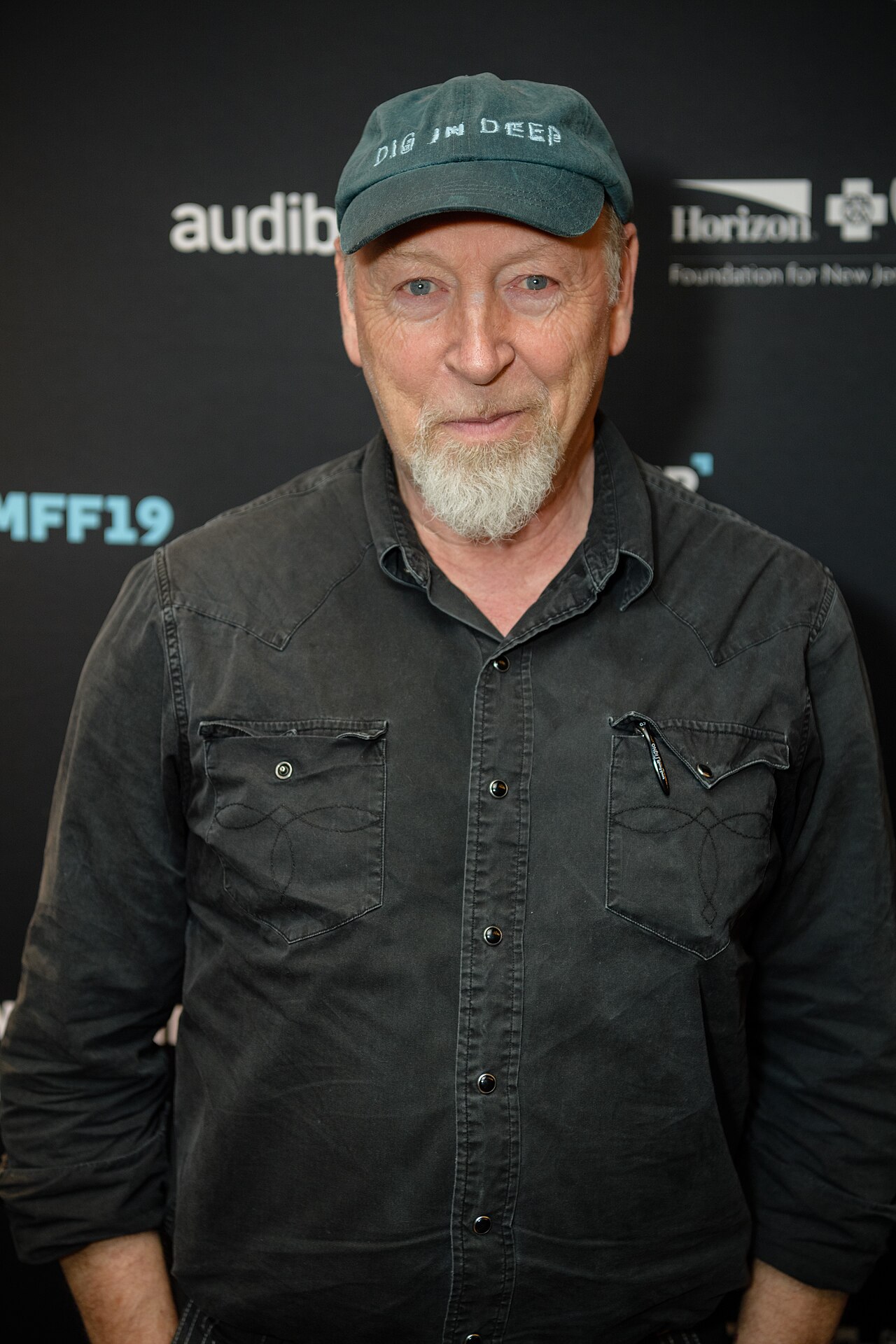
Richard Thompson, born in London in 1949, is one of the most respected and accomplished guitarists in the world, a player of extraordinary versatility whose mastery of both acoustic fingerstyle and electric lead guitar places him in a rare category. A founding member of the pioneering British folk-rock band Fairport Convention and a celebrated solo artist and songwriter, Thompson has spent a long career earning the awe of fellow musicians and critics, even as he remained something of a well-kept secret to the broader public.
Thompson helped invent British folk-rock with Fairport Convention, fusing traditional English folk music with rock instrumentation and sensibility on landmark albums. But it is the sheer range and depth of his guitar playing that sets him apart. On the acoustic guitar he is a fingerstyle master, weaving intricate, propulsive patterns full of drones and ornament drawn from Celtic and folk traditions. On the electric guitar he is a fiery, idiosyncratic lead player with a biting tone and a thrilling, unpredictable approach to soloing, using hybrid picking, combining a flatpick with his fingers, to produce lines no one else could play quite the same way.
Here is the gem that showcases his command. His song 1952 Vincent Black Lightning, a vivid story-song about a doomed romance and a motorcycle, features a dazzling, intricate acoustic guitar part that has become a holy grail for fingerstyle players, a piece so beautifully constructed that it is studied and attempted by guitarists around the world. It captures everything that makes him special, the marriage of storytelling, traditional roots, and breathtaking technique in a single unforgettable performance, all from one person and one acoustic guitar.
Thompson's songwriting is as admired as his playing, full of dark wit, emotional depth, and literary craft, and he has consistently appeared on lists of the greatest guitarists of all time, championed by peers who recognize a true master. He has continued recording and touring across decades, never chasing trends, always deepening his craft. For guitarists who value versatility and substance over flash, Richard Thompson is essential, the rare player equally brilliant on acoustic and electric, whose intricate fingerstyle and fierce, original lead work have made him a guitarist's guitarist of the highest order.
Legendary Performance
Solo Electric Tour, 1983
Richard Thompson's solo electric tours of the early 1980s are among the most quietly remarkable performance events of that decade. Playing alone with a Fender Stratocaster and a small amplifier, Thompson delivered sets that covered Fairport Convention material, his own compositions, and traditional songs with such musical completeness that audiences frequently forgot they were watching a solo act.
His guitar playing in this context was staggering in its scope. He generated bass lines, rhythmic chord patterns, and melodic lead lines simultaneously, effectively functioning as a three-piece band by himself. His right-hand technique, which combined flat picking, fingerpicking, and hybrid approaches fluidly, gave him access to the full dynamic range of the Stratocaster in every register.
The solo electric format stripped away every support structure and placed Thompson's playing in unmediated focus. What it revealed was a guitarist of enormous depth whose rhythmic vocabulary drew from Celtic music as naturally as from the blues, and whose melodic language was entirely his own.
▶ Watch on YouTubeGear
Fender Stratocaster • Ferrington Custom • Heavy Gauge Strings • Hybrid Picking • Celtic Tonal Palette
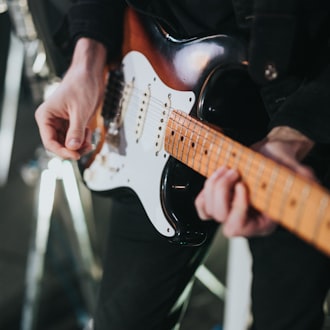
Richard Thompson's primary electric guitar for much of his career has been a Fender Stratocaster, though his relationship with the instrument is less about the specific model than about what he does with it. He has used various Strats over the decades, often in Sunburst or natural finishes, running them through Fender or Marshall amplifiers at moderate volumes.
He is also associated with guitars built by luthier Danny Ferrington, particularly a custom nylon-string acoustic-electric that allows him to access classical and Celtic tonal qualities in live performance without a separate instrument. The Ferrington guitar appears on many of his solo recordings from the 1980s and 1990s.
Thompson's picking technique includes both flat pick and fingerpick approaches, and he uses a thumb pick for certain styles. His string choices tend toward heavier gauges than most electric guitarists prefer, which gives his bends more resistance and his open strings more resonance but requires more physical strength.
Signature Technique
Celtic Fingerpicking & Cross-Genre Synthesis
Richard Thompson's guitar technique is one of the most genuinely original in British music, drawing from Celtic folk traditions, Sufi music, and the blues in proportions that no one else has combined. The Celtic influence appears in his use of modal scales, the preference for drone strings, and the rhythmic emphasis on off-beats that gives his playing its distinctive forward motion.
His right-hand technique is hybrid: he uses a flat pick for rhythmic chord playing and switches to a thumb-and-fingers approach for fingerpicked passages within the same song, often within the same phrase. This flexibility allows him to access the full range of the guitar's dynamic potential without changing instruments.
Thompson's soloing vocabulary is built from modal scales associated with Celtic and Middle Eastern music as much as from the blues pentatonic, which gives his lead lines an intervallic flavor unlike anything in mainstream rock. His choice of when to play and when to leave space is impeccable, a restraint developed over decades of ensemble and solo performance.