



.jpg)

Guthrie Govan
Current Ranking
Guthrie Govan is ranked #34 of 162 guitarists on the Greatest Guitar Player fan leaderboard, based on 1 fan vote so far. Agree? Rate Guthrie Govan on 8 attributes at greatestguitarplayer.com/vote.
Biography
Guthrie Govan, born in England in 1971, is widely regarded as one of the most complete guitarists alive, a virtuoso so fluent across every conceivable style that other professional guitarists tend to describe him with a kind of awed disbelief. Where many great players have a signature sound they live in, Govan seems to have mastered all of them, moving from blistering rock and fusion to blues, jazz, country, and beyond with an ease that can be almost unsettling to watch.
Govan first turned heads as a young player, and the gem of his early story captures his gifts perfectly. In 1993 he won a Guitarist of the Year competition run by a major guitar magazine with a piece called Wonderful Slippery Thing, a performance so fluid and inventive that it announced a major talent. Decades later, when that performance resurfaced online, it became a viral sensation all over again, introducing a new generation to his uncanny touch and his ability to make fiendishly difficult playing look completely relaxed.
Rather than chase rock stardom, Govan built the career of a true musician's musician. He spent years as a beloved guitar columnist and educator, breaking down advanced techniques for other players, and he has lent his playing to a remarkable range of projects, including the progressive rock of Steven Wilson's band, a stint with the reformed Asia, and most notably his own instrumental power trio the Aristocrats, where his composing and improvising run free. He plays a signature Charvel guitar and is known for a warm, vocal tone and a phrasing sense that makes even his most technical runs feel musical rather than mechanical.
What sets Govan apart is not just speed, though he has plenty, but taste, imagination, and a deep understanding of why music works. He can quote a country lick, a jazz line, and a shred run in the same solo and make them flow together naturally, and he improvises with the freedom of someone who has simply internalized the entire history of the instrument. Among guitarists, he is held up as a kind of ideal, the rare player who combines total technical command with genuine musicality and a complete lack of ego about it. For anyone who wants to see just how far the electric guitar can be taken in a single pair of hands, Guthrie Govan is the answer.
Legendary Performance
"Wonderful Slippery Thing"
2006 · Erotic Cakes, studio recording and viral performance video
When the promotional video for "Wonderful Slippery Thing" began circulating online in 2006, it did something almost no instrumental guitar clip had done before. It made hardened, skeptical guitarists stop and rewind. Govan sits on a stool and treats a deceptively cheerful melody as a launchpad, sliding from singing legato lines into hybrid-picked country rolls, then into outside jazz phrasing and back to a bluesy hook, all delivered with a relaxed grin rather than a clenched jaw. The performance became the calling card that introduced him to a global audience.
What makes it legendary is the way it refuses to choose a lane. The tune is structured enough to whistle, yet every chorus return is reharmonized or reaccented so the listener never quite lands where they expect. His phrasing breathes like a vocalist, with bends that arrive a fraction late for tension and vibrato that varies in width to match the emotion of each note. For a generation of players who discovered him through that video, "Wonderful Slippery Thing" is the moment modern fusion guitar stopped being about intimidation and started being about conversation.
▶ Watch on YouTubeGear
Charvel Guthrie Govan Signature (2014)
Known for: fusion versatility, caramelized flame-top San Dimas body
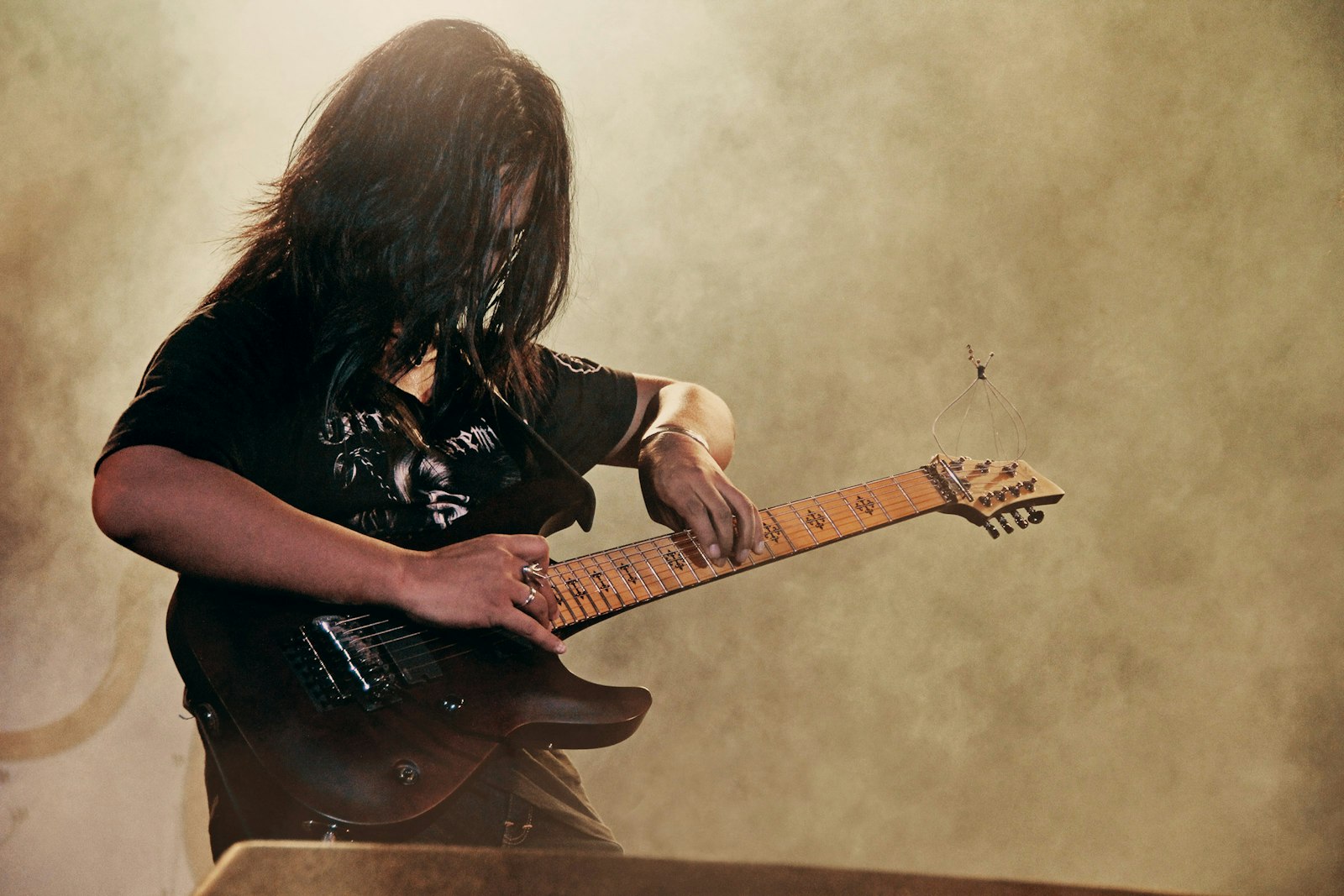
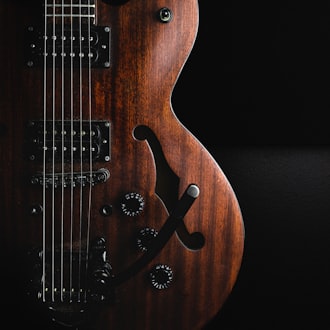
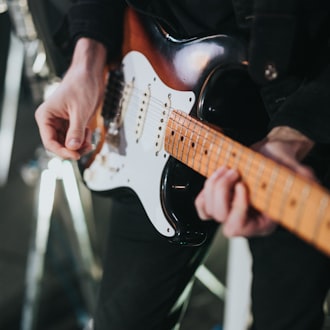
Govan's main instrument is his Charvel signature model, a refined take on the classic San Dimas shape built for a player who needs one guitar to cover every genre in a single set. Earlier in his rise he played a Suhr signature model, and the design language carried over: a comfortable contoured body, a caramelized or roasted neck for stability and a worn-in feel, and a pickup set voiced to go from glassy single-coil cluck to thick humbucking sustain. The guitar is deliberately neutral and responsive rather than characterful in one direction, because Govan's tone comes mostly from his hands.
That responsiveness is the point. He rolls the volume knob to clean up an overdriven amp, digs in or backs off to shift from a country snap to a violin-like swell, and relies on the instrument tracking every nuance of his pick attack and finger pressure. It is a guitar built to disappear, so that the listener hears the musician rather than the equipment.
Victory Amplifiers Signature (V30 "The Countess")
Known for: dynamic touch-sensitive gain, organic fusion tone
Govan is a longtime Victory Amplifiers artist, and his signature voicings, built around the V30 "The Countess" and later the compact V4 "The Kraken" preamp pedal, were designed to reward touch rather than mask it. Before Victory he favored boutique British amps such as Cornford, and the through-line has always been the same priority: a gain structure that stays articulate when he plays softly and only thickens when he leans in.
He keeps the amp side relatively simple so the dynamics of his playing remain front and center. The amp is set to break up gradually rather than compress everything into a wall of distortion, which is what lets a single sustained note bloom into feedback or a fast legato run stay defined note by note. It is a deliberately conversational rig, voiced so that the difference between a whisper and a shout is in his fingers, not a footswitch.
Wah, delay, and tasteful overdrive (Wampler, TC Electronic)
Govan's pedalboard is purposeful rather than sprawling. A wah used as much for fixed tonal shaping as for sweeping, a couple of overdrives to stack and shade his gain, modulation for color, and delay for ambience and the occasional rhythmic effect make up the core. He has worked closely with builders including Wampler on overdrive voicings and leans on TC Electronic for delay, but the philosophy stays constant: effects extend the voice of the guitar without replacing it.
Even his most spacious textures, the washes behind a ballad or the swells in a film-score setting with Hans Zimmer, are built from a few well-chosen tools. The signal chain is there to widen the palette, not to manufacture an identity the hands could not already supply.
Signature Technique
Genre-Fluent Legato and Hybrid Picking
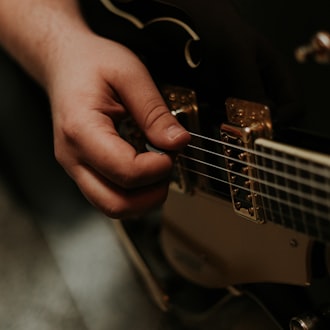
The foundation of Govan's playing is a legato technique so smooth that fast passages sound poured rather than struck, the result of meticulously even hammer-ons and pull-offs across the whole neck. Layered on top is his hybrid picking, where pick and bare fingers work together to snap out country-style rolls, wide interval leaps, and chordal fragments that a flatpick alone cannot reach. The combination lets him switch textures instantly, gliding from a liquid fusion line into a banjo-like cascade within the same bar.
What elevates the mechanics is his command of phrasing and dynamics. Govan treats the guitar like a voice, varying vibrato width and speed note by note, delaying bends for tension, and using the volume of his attack to shade a phrase from a murmur to a cry. He is equally fluent in the harmonic vocabularies of blues, jazz, country, and metal, and rather than quoting them he blends them, dropping an outside altered run into a blues lick or resolving a shred passage with a pedal-steel bend.
His influence is felt less in a single trademark lick than in an attitude, the idea that technical mastery exists to expand expression, not to display itself. Countless modern players cite his instructional columns, his masterclasses, and his improvising with The Aristocrats as the model for how to be virtuosic and musical at once, which is why his peers so often call him the player's player.