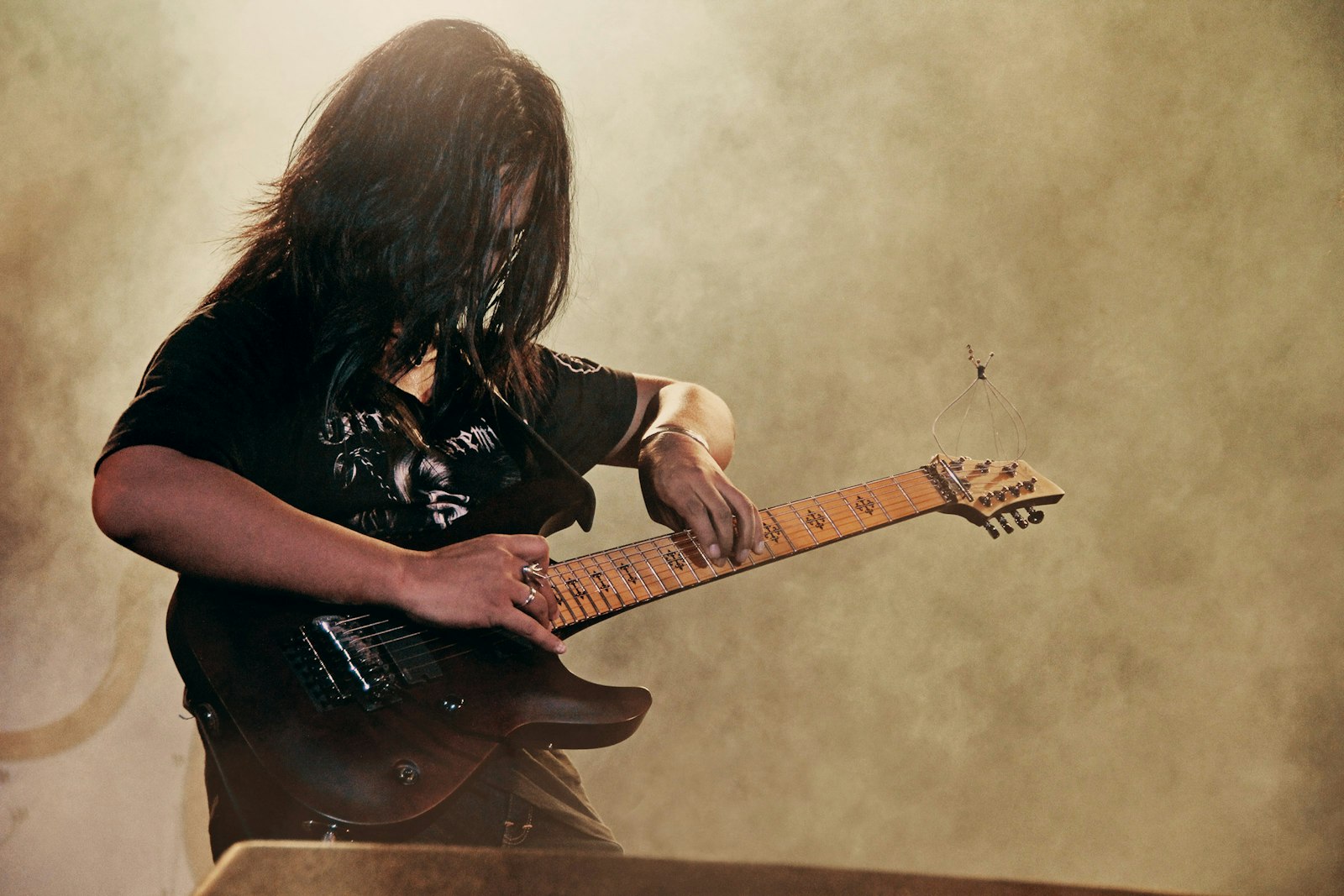


Neal Schon
Current Ranking
Neal Schon is ranked #80 of 162 guitarists on the Greatest Guitar Player leaderboard, based on our editorial score until fans weigh in. On the classic rock leaderboard, Neal Schon ranks #15 of 18. No fan votes yet, so be the first to rate Neal Schon on 8 attributes at greatestguitarplayer.com/vote.
Biography
Neal Schon is the guitarist who has been in Journey since there was a Journey, and the sound of his lead playing, long vocal sustained lines that behave more like a singer than a shredder, is a large part of why those songs still fill arenas more than fifty years on. He was born February 27, 1954 at Tinker Air Force Base in Oklahoma, grew up in the Bay Area, picked up the guitar around age ten, and by his mid teens was good enough that professional musicians twice his age were asking him to sit in.
The famous version of that story happened in November 1970, when Schon was sixteen. Eric Clapton, in town with Derek and the Dominos, jammed with him in a studio and then invited him onstage that same night at the Berkeley Community Theatre, walking him through the plan backstage beforehand. Clapton wanted him in the band. Schon said no. He did not want to move to London, and as he has told it, he felt in his gut that Santana was about to ask. Santana asked. He joined in 1971 at seventeen and played on Santana III and Caravanserai, trading solos with Carlos Santana as a teenager on records people still study.
In 1973 he left to co-found Journey with keyboardist Gregg Rolie and manager Herbie Herbert. Early Journey was a jam-heavy fusion band that sold modestly. The turn came when Steve Perry arrived in 1977 for Infinity, and from there Journey became one of the defining American rock acts of its era: Escape in 1981, Frontiers in 1983, and a run of songs, "Don't Stop Believin'", "Wheel in the Sky", "Separate Ways", that have outlived several generations of radio formats. Schon co-wrote most of them. He is the one member who has been there for the entire ride, through every lineup change, hiatus and reunion, and the band went into the Rock and Roll Hall of Fame in 2017.
Outside Journey he has kept a busy second career: two albums of instrumental fusion with Jan Hammer including Untold Passion, HSAS with Sammy Hagar, the late-eighties supergroup Bad English, Hardline, Soul SirkUS with Jeff Scott Soto, and a stack of solo records. Oklahoma put him in its Music Hall of Fame in 2013. Here is a gem most fans miss: for a few years in the late eighties he ran his own guitar company. The first two hundred Schon guitars were built by Jackson in San Dimas and several hundred more by Larrivee in Canada, which makes him one of very few arena guitarists whose own surname sat on the headstock. His taste in gear has always run a little contrarian too. A lot of the lead tone on the late-seventies Journey records came through a Peavey Mace, not a boutique British stack, which says something about a player who has always chased the note rather than the brand.
Legendary Performance
The Escape Tour, Live in Houston
November 6, 1981 · The Summit, Houston, Texas
By late 1981 Journey were the biggest American rock band on the road, and the Escape tour stop at The Summit in Houston on November 6 is the show that captured it. It was filmed for MTV, a network only three months old at the time, which means the definitive video document of Journey at their commercial peak exists largely because a new cable channel needed programming. The tapes sat for over two decades before the band released them as Live in Houston 1981: The Escape Tour in 2005.
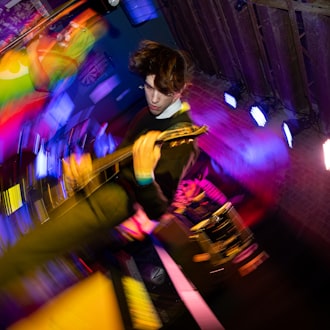
What the footage shows is Schon carrying an arena without a single wasted gesture. The set opens with the instrumental title track and runs straight through the Escape material, "Stone in Love", "Who's Crying Now", "Open Arms", "Don't Stop Believin'", alongside the older hits. His solos are not longer than the record versions so much as louder in intent, every bend pushed a fraction further, the sustain held until it starts to bloom into feedback and then pulled back before it tips over.
The show also includes a dedicated guitar solo spot late in the main set, before "Wheel in the Sky", and it is a useful lesson in what separates Schon from the technicians who came after him. He has the speed, and he uses it, but the passage people remember is the slow part, one note held and shaped until it does the work a vocal line would do. That instinct, melody first and fireworks second, is what turned a fusion band into a stadium act, and Houston is the night it was filmed.
▶ Watch on YouTubeGear
Gibson Les Paul
Known for: the singing sustain of Journey's Escape and Frontiers era
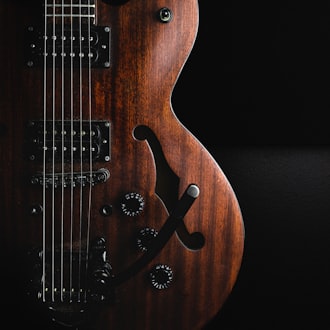
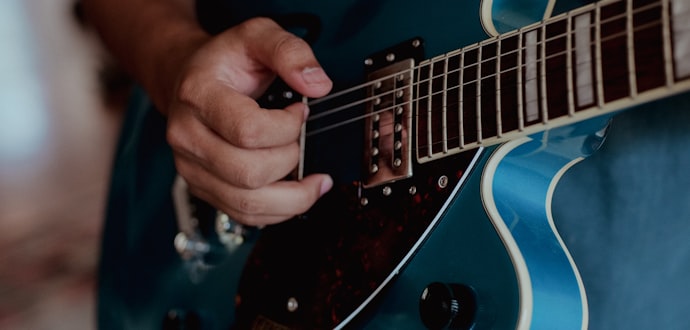
Schon has played a lot of instruments across five decades, Fender Stratocasters, Ovations, Godins, PRS, his own Schon models, but the Gibson Les Paul is the guitar the classic Journey tone lives in. He came up on a Gibson ES-335 as a kid and moved to Les Pauls early, and a black Les Paul is the guitar behind much of the late-seventies and early-eighties lead work. He has also leaned on a 1963 Stratocaster with a rosewood neck for cleaner and more spidery parts, often within the same song.
The reason the Les Paul suits him so well is sustain. Schon's phrasing depends on notes that hang, that keep blooming after the pick attack is gone, and a mahogany body with humbuckers pushed into a hot front end gives him that without forcing him to play louder or faster than the song wants. When people describe his tone as vocal, they are largely describing what a Les Paul does at the edge of feedback in the hands of someone with very disciplined vibrato.
Peavey Mace
Known for: the lead tone on Infinity, Evolution and Departure
The amplifier answer that surprises people is the Peavey Mace. In a July 1982 Guitar Player interview Schon described using it as his main amp on record and live across roughly 1978 to 1980, the Infinity through Departure stretch, often set very low and pushed with a pedal rather than cranked. It is an unfashionable American amp with six 6L6 power tubes, not the boutique British stack the tone would suggest, and that is exactly why it is worth knowing about.
He has used plenty of Marshalls and Fenders over the years, and his modern rig is built around a Friedman Brown Eye voicing alongside Marshall and Diezel models. The point across all of it is consistency of feel rather than loyalty to one box. Schon wants an amp that responds to his hands at moderate volume and lets a held note sing instead of collapsing into fizz, and he has found that in several very different places.
Electro-Harmonix Hot Tubes, Delay & the Fractal Rig
The early signal chain was simple and effective: a black Les Paul into an Electro-Harmonix Hot Tubes distortion pedal into the Peavey Mace, with the amp set clean and low so the pedal did the shaping. That is a pedal-in-front approach to gain, and it is part of why the records have such a tight, focused lead sound rather than a woolly one.
Delay and a touch of chorus have always been the other half of it. The long, wide leads on the Escape and Frontiers material sit in a wash of time-based effects that make a single held note feel like an arena-sized event. In the modern era he has been an outspoken Fractal Audio user, running the whole rig digitally, and he is unusually candid about preferring it to hauling a wall of amps around. Same philosophy, newer box: get a clean, repeatable platform and let the hands do the rest.
Signature Technique
Singing Sustain, Vocal Vibrato & Composed Melodic Leads
Schon's signature is sustain used as a melodic tool. Most rock guitarists treat a held note as a place to rest between phrases. He treats it as the phrase. Listen to the lead lines on "Who's Crying Now" or the outro of "Faithfully" and the memorable moments are single notes given time to bloom, shaped with a slow, wide vibrato that arrives late rather than immediately. That delay before the vibrato starts is the tell, and it is the single most copyable thing about his playing.
His vibrato itself is closer to a singer's than a blues player's. It is even, controlled, and pitched from the wrist rather than fluttered from the fingers, so the note keeps its center instead of wobbling around it. Paired with heavy, deliberate bends that he pushes slightly past the target and then settles back into pitch, it gives his lines a vocal quality that a lot of technically faster players never manage.
He can absolutely play fast, and the Santana and Jan Hammer material is where he shows it. His speed runs are legato-heavy, built on hammer-ons and pull-offs inside pentatonic and Dorian shapes rather than strict alternate picking, which is why they sound liquid rather than machined. He also uses fast repeated cyclical patterns as a tension device, spinning the same three or four notes until the phrase needs to resolve.
The other half of his vocabulary is harmony. Schon frequently doubles his own leads a third or a sixth above on record, a habit borrowed from the twin-guitar bands of the early seventies and applied to arena rock. Combined with his ear for a hook, it means his solos are usually not improvisations at all but composed melodies, written to be sung back. That is the reason a whole generation of listeners who could not name a single guitar technique can still hum his solos note for note.