
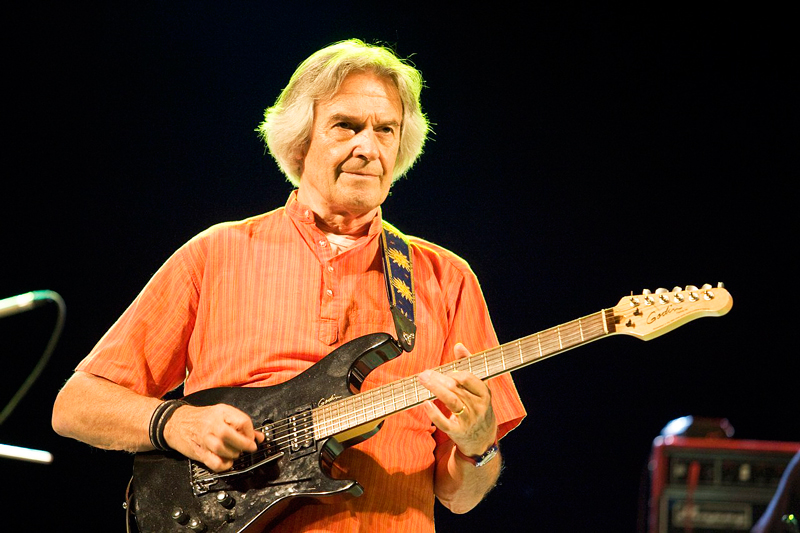

John McLaughlin
Current Ranking
John McLaughlin is ranked #21 of 162 guitarists on the Greatest Guitar Player leaderboard, based on our editorial score until fans weigh in. On the jazz and fusion leaderboard, John McLaughlin ranks #3 of 11. No fan votes yet, so be the first to rate John McLaughlin on 8 attributes at greatestguitarplayer.com/vote.
Biography
John McLaughlin, born in England in 1942, is one of the most important and influential guitarists in the history of jazz fusion, a player of blistering speed, spiritual depth, and boundless curiosity who helped invent an entire genre and then kept restlessly exploring for the rest of his career. Combining the harmonic sophistication of jazz, the power of rock, and the rhythms of Indian classical music, McLaughlin expanded what the guitar could do and inspired generations of players across multiple styles.
McLaughlin's breakthrough came through one of the most important doors in music. Here is the gem: he was recruited by the legendary Miles Davis to play on landmark fusion recordings including the genre-defining Bitches Brew, and Davis thought so highly of him that he named a composition simply John McLaughlin in his honor. To have one of the greatest figures in all of jazz title a piece of music after you, while you are still a young guitarist, is an extraordinary endorsement, and it placed McLaughlin at the very birth of jazz-rock fusion.
He then formed the Mahavishnu Orchestra, a ferociously powerful fusion band whose lightning-fast, complex, high-energy music astonished listeners and set a new standard for instrumental virtuosity. McLaughlin's playing there, full of dazzling speed, unusual time signatures, and intense spiritual seeking, influenced countless rock and jazz guitarists and proved that fusion could be both technically staggering and deeply expressive. He often played a distinctive double-neck guitar to handle the music's demands.
Never content to stay in one place, McLaughlin dove deep into Indian classical music, studying it seriously and forming the acoustic group Shakti, which fused Indian ragas and rhythms with jazz improvisation in a way few Western musicians had ever attempted. His curiosity and openness, his willingness to keep learning entirely new musical languages, set him apart even among the greats. Across more than half a century he has remained a tireless explorer, collaborating with musicians from every tradition and continuing to push his playing forward. For guitarists drawn to the instrument's outer limits, John McLaughlin is a towering figure, the fusion pioneer whose speed, spirituality, and fearless curiosity opened doors that the guitar world is still walking through.
Legendary Performance
Mahavishnu Orchestra at Central Park, 1973
The Mahavishnu Orchestra's 1973 Central Park performance captured the band at their most ferocious and most cohesive. John McLaughlin, playing his custom double-neck Gibson, led a quintet capable of swinging between delicate textural passages and full-throttle fusion storms with no warning and no wasted motion.
McLaughlin's speed at this period was genuinely unprecedented in jazz or rock: he played 16th-note runs at tempos most musicians used for quarter notes, maintaining harmonic clarity throughout. But speed alone was not what made these performances remarkable. It was the way McLaughlin integrated Indian musical concepts, odd meters, and jazz harmony into an improvising language that was entirely new.
The Central Park show drew an audience that crossed genre lines, jazz purists and rock fans standing together, equally stunned, equally unsure what to call what they were hearing. That ambiguity was exactly the point.
▶ Watch on YouTubeGear
Custom Double-Neck Gibson • Scalloped Fretboard • Sympathetic Strings • Rex Bogue • Abe Wechter
John McLaughlin's gear has evolved dramatically across his career, reflecting each phase of his musical development. In the Mahavishnu Orchestra years, he played a custom-built double-neck Gibson: a 6-string and a 12-string on one body, giving him immediate access to two very different textures without changing instruments. The guitar was built to his specifications and had a mahogany body with a sustain that suited the Orchestra's dense, amplified sound.
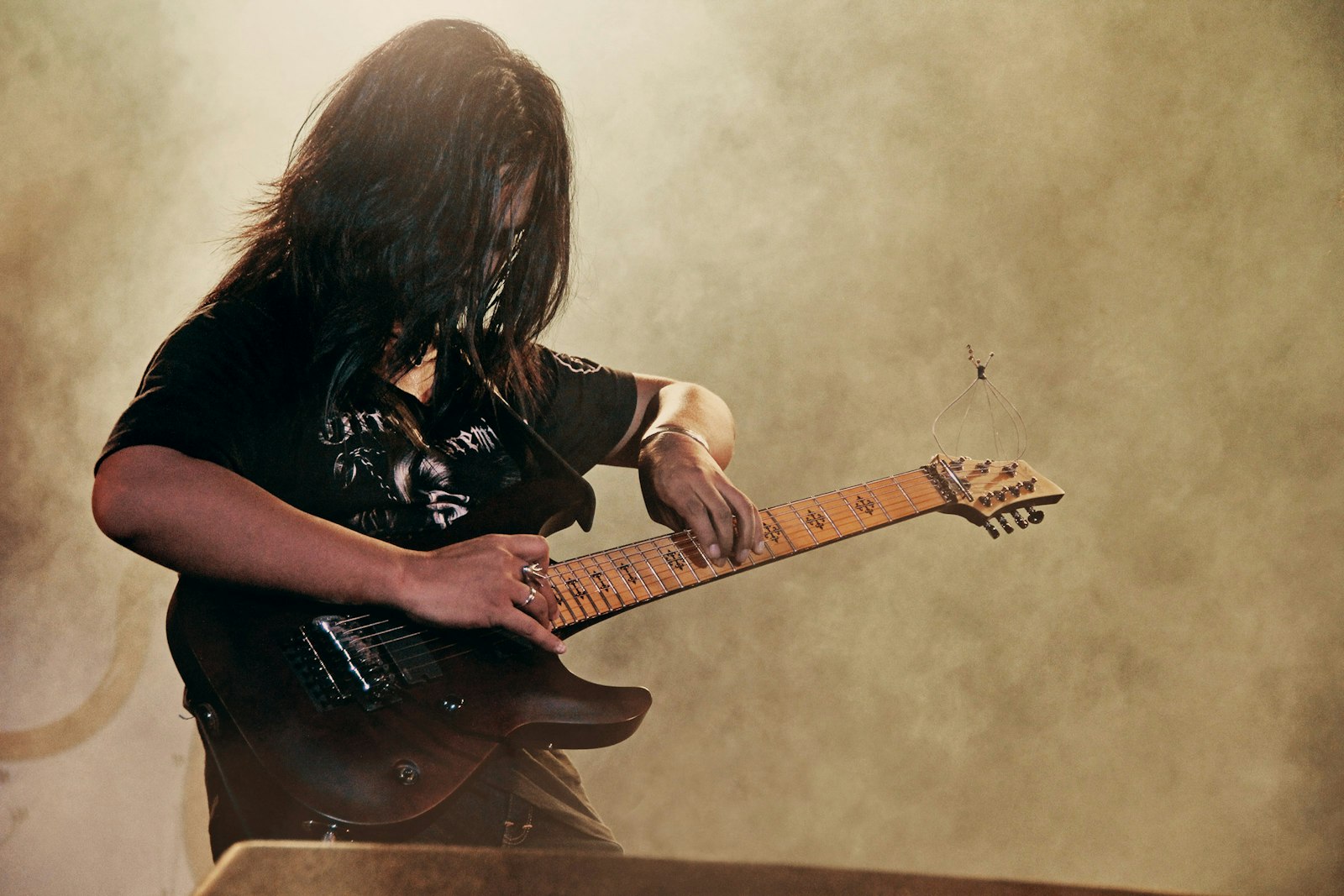
He later adopted guitars built by luthier Rex Bogue and worked with Abe Wechter on custom designs that incorporated scalloped fretboards, a modification inspired by Indian instruments, allowing him to bend notes with the pressure of his fingers on the frets rather than pushing the string sideways.
For his acoustic and nylon-string work with Shakti, McLaughlin used a custom guitar built by luthier Antonio Ramos with a scalloped fretboard and sympathetic drone strings. These instruments allowed him to approximate the microtonal vocabulary of Indian classical music on a guitar.
Signature Technique
Velocity, Odd Meters & Indian Scales
John McLaughlin's technique represents one of the most ambitious syntheses in guitar history: Western jazz harmony, rock energy, and Indian classical musical concepts united in a single improvisational language. Each element demanded years of dedicated study, and McLaughlin pursued all three simultaneously throughout the late 1960s and 1970s.
His right-hand picking speed is exceptional, achieved through a combination of alternate picking and economy picking that minimizes unnecessary motion. He plays rapid single-note lines with such clarity that every note is distinct even at extreme tempos, a quality that requires both technical precision and a musical ear developed enough to know which notes to play.
McLaughlin's use of Indian scales and rhythmic cycles, particularly those associated with Carnatic music, introduced Western guitarists to meters like 5/8, 7/8, and 11/8 as natural improvisational frameworks rather than intellectual exercises. He internalized these rhythms deeply enough to swing inside them.