
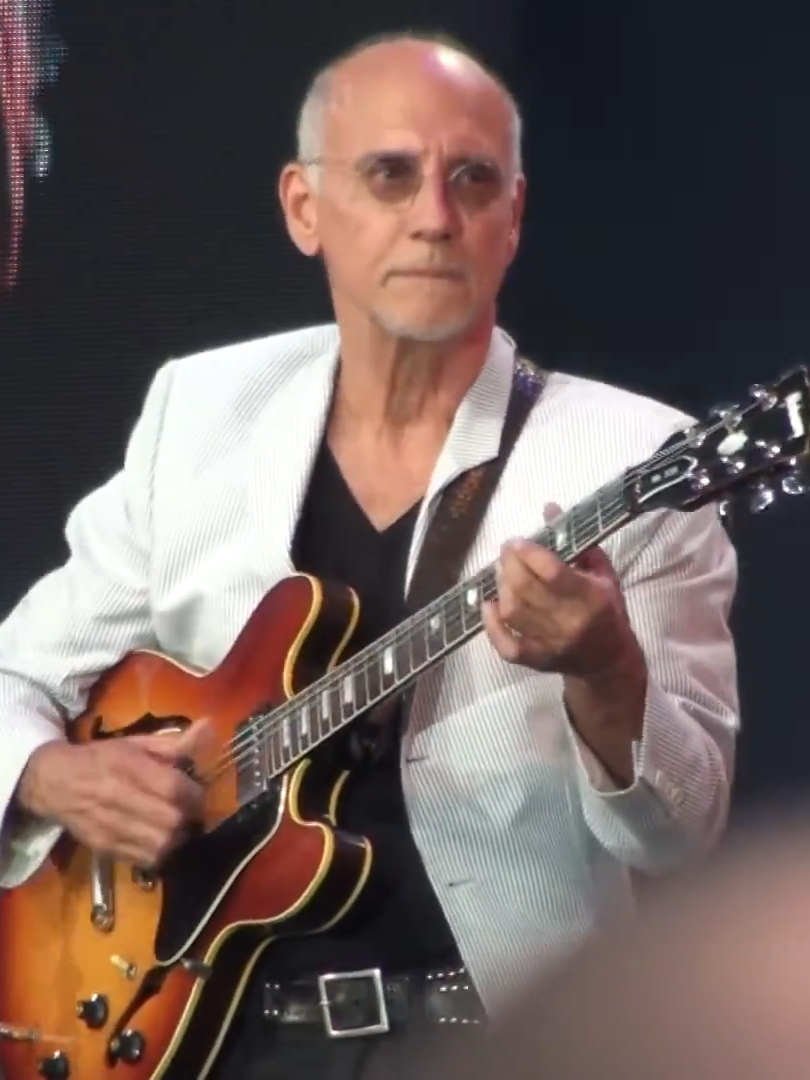

Larry Carlton
Current Ranking
Larry Carlton is ranked #133 of 162 guitarists on the Greatest Guitar Player leaderboard, based on our editorial score until fans weigh in. On the jazz and fusion leaderboard, Larry Carlton ranks #11 of 11. No fan votes yet, so be the first to rate Larry Carlton on 8 attributes at greatestguitarplayer.com/vote.
Biography
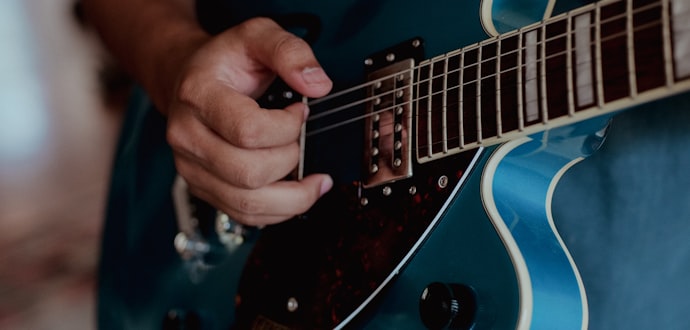
Larry Carlton, born in California in 1948, is one of the most accomplished and influential session and solo guitarists in the history of recorded music, a player whose smooth, singing tone and impeccable melodic sense have graced thousands of recordings across jazz, rock, pop, and R&B. Known affectionately as Mr. 335 after his beloved Gibson ES-335 guitar, Carlton is the consummate professional, a musician whose taste, versatility, and reliability made him one of the most in-demand players of his era.
During the 1970s, Carlton was one of the busiest session guitarists in Los Angeles, reportedly playing on hundreds of records a year, lending his warm, articulate playing to artists across every genre. He was a key member of the jazz-fusion group the Crusaders and contributed to a staggering range of hit records, becoming the kind of behind-the-scenes guitarist whose work you have heard countless times without knowing his name.
Here is the gem that crowned his reputation. Carlton played the now-legendary guitar solo on Steely Dan's Kid Charlemagne, a meticulously crafted, harmonically sophisticated solo that is routinely cited as one of the greatest guitar solos ever recorded. Steely Dan were famous perfectionists who demanded the very best from their session players, and Carlton delivered a performance of such melodic logic, fluidity, and tonal beauty that guitarists have studied it note for note for decades. That single solo is a master class in how to build a perfect, song-serving statement, and it sealed his standing among the finest guitarists of his generation.
Beyond his session work, Carlton built a successful solo career as a smooth jazz and fusion artist, winning multiple Grammy Awards and continuing to record and tour for decades. His tone, a warm, vocal, slightly overdriven sound from his ES-335, became a model that countless players have chased, and his blend of jazz sophistication with bluesy, accessible feel made his music both respected and widely loved. For guitarists, Larry Carlton represents the height of professional musicianship, the player who could walk into any session and deliver exactly the right part with flawless tone and taste. He is proof that there is genuine artistry in restraint, melody, and craft, and that the perfect solo is the one that serves the song.
Legendary Performance
Kid Charlemagne", The Royal Scam Sessions
1976 · A&M Recording Studios, Los Angeles, California
Not every legendary guitar performance happens in front of an audience. Some of them happen inside a recording booth on a Tuesday afternoon, with a handful of engineers watching through glass and a reel of tape turning somewhere between concentration and luck. In 1976, Larry Carlton arrived at A&M Recording Studios in Los Angeles to lay down guitar for Steely Dan's new album, The Royal Scam . Walter Becker and Donald Fagen said very little, they had learned to simply let Carlton find his own way to the tone they wanted, then roll tape and wait. What they captured that session was one of the most celebrated guitar solos in the history of recorded music.
Carlton recorded approximately two hours of material for "Kid Charlemagne." Most of it was discarded. The solo that fades out at the song's end, starting at the 2:18 mark, cascading through twisted single-note phrases, bent strings, and vibrant melodic lines that hover just outside the harmony before snapping back in, was done in a single pass. Carlton was playing his Gibson ES-335 through amplifiers whose settings had been dialed in through hours of patient experimentation, and when the right moment arrived, he simply played, without second-guessing and without stopping. Rolling Stone later ranked it among the greatest guitar solos ever recorded, calling it perhaps the best of all the jaw-dropping leads that Becker and Fagen coaxed from their rotating stable of session masters.
What makes the "Kid Charlemagne" solo legendary isn't just its technical command, though that command is absolute. It's the emotional precision, the way Carlton knows exactly when to push against the chord and when to release, when to play something angular and unexpected and when to let a note sing until it dissolves into sustain. Becker and Fagen were among the most demanding producers in pop music history; that Carlton satisfied them so completely, on his first real take, speaks to a level of musicianship that cannot be taught. The session produced three minutes and forty-seven seconds of recorded music. Guitarists have been studying it ever since.
▶ Watch on YouTubeGear
Gibson ES-335 'Mr. 335'
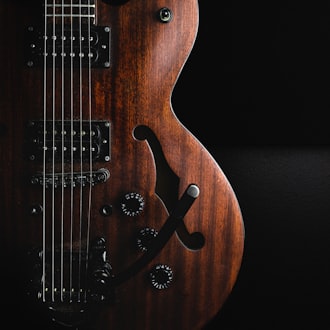
Larry Carlton's association with the Gibson ES-335 is so complete that his nickname, 'Mr. 335', is simply the model number of his primary instrument. His main guitar, a 1969 ES-335, appears on hundreds of session recordings from the 1970s including Steely Dan's Aja , Joni Mitchell's Court and Spark , and countless film and television scores. The semi-hollow 335's combination of warm resonance and solid-body sustain suited Carlton's style perfectly: jazz-inflected chord voicings required the instrument's warmth and sustain, while his more aggressive rock passages benefited from its feedback resistance. His pickups are typically kept at moderate output levels, allowing the guitar's natural acoustic character to contribute to the tone.
Mesa/Boogie Mark I
Carlton was one of the earliest prominent adopters of the Mesa/Boogie Mark I amplifier, a high-gain American design that provided the smooth, singing sustain his lead tone required. Where many guitarists of his era were using Marshalls for British crunch or Fenders for American clean, Carlton found in the Boogie a hybrid voice that served his jazz-rock vocabulary: warm in the lower registers, articulate in the upper, and capable of producing long-sustaining lead notes without the harsh attack of a fully cranked British amp. He typically ran the Boogie at medium gain with his guitar volume rolled back slightly to clean up.
Eventide H910 / MXR Flanger / Tape Delay
Carlton's session work required tonal versatility, and his effects chain was calibrated for that breadth. The Eventide H910 Harmonizer, a groundbreaking pitch-shifting device of the late 1970s, appears on several of his most distinctive session performances. An MXR Flanger provided the shimmering modulation effect that became characteristic of certain 1970s rock productions. Tape delay (typically an Echoplex) added depth and dimension to his lead lines. His overall approach was tasteful and song-serving: effects were chosen to enhance the music, not to display equipment.
Signature Technique
Signature Technique
Larry Carlton operates at the intersection of jazz harmony and rock guitar technique, a space that few players have navigated with his combination of fluency and emotional directness. His phrasing draws on jazz's extended harmonic vocabulary while his delivery, through a semi-hollow Gibson and a responsive amplifier, has the warmth and sustain of blues-rock playing. The result is a distinctive voice that has made him one of the most-recorded session guitarists in American music history.
Carlton's right-hand technique produces an unusually smooth attack, notes flow into each other without the percussive click of flat-picking that characterizes most rock guitar playing. He achieves this through a combination of flat-picking with a soft attack, occasional hybrid picking (using both pick and fingers), and left-hand legato techniques that allow notes to sound without a pick stroke. The result is a phrase quality described as 'liquid', continuous, warm, and harmonically transparent.
Carlton's harmonic language extends well beyond the blues scale that most rock guitarists inhabit. He routinely uses chord tones, extensions (ninths, elevenths, thirteenths), and chromatic approach notes to create melodic lines of genuine harmonic interest over standard chord progressions. On the Steely Dan recordings that made him famous, particularly Aja 's 'Kid Charlemagne' solo, this jazz vocabulary is deployed over rock-tempo grooves, creating a tension between the harmony's sophistication and the music's physical drive.
Carlton builds solos with a compositional intelligence unusual in rock guitar: he establishes a melodic idea, develops it through variation and repetition, and resolves it, a structure borrowed from jazz improvisation tradition. His use of space, silence as a compositional element, is equally sophisticated. He does not fill every available beat; he allows phrases to breathe and resolve before introducing the next idea. This restraint is as much a technique as any physical skill, and it is what separates Carlton's playing from technically similar but musically less coherent players.