



Les Paul
Current Ranking
Les Paul is ranked #44 of 162 guitarists on the Greatest Guitar Player leaderboard, based on our editorial score until fans weigh in. On the jazz and fusion leaderboard, Les Paul ranks #5 of 11. No fan votes yet, so be the first to rate Les Paul on 8 attributes at greatestguitarplayer.com/vote.
Biography
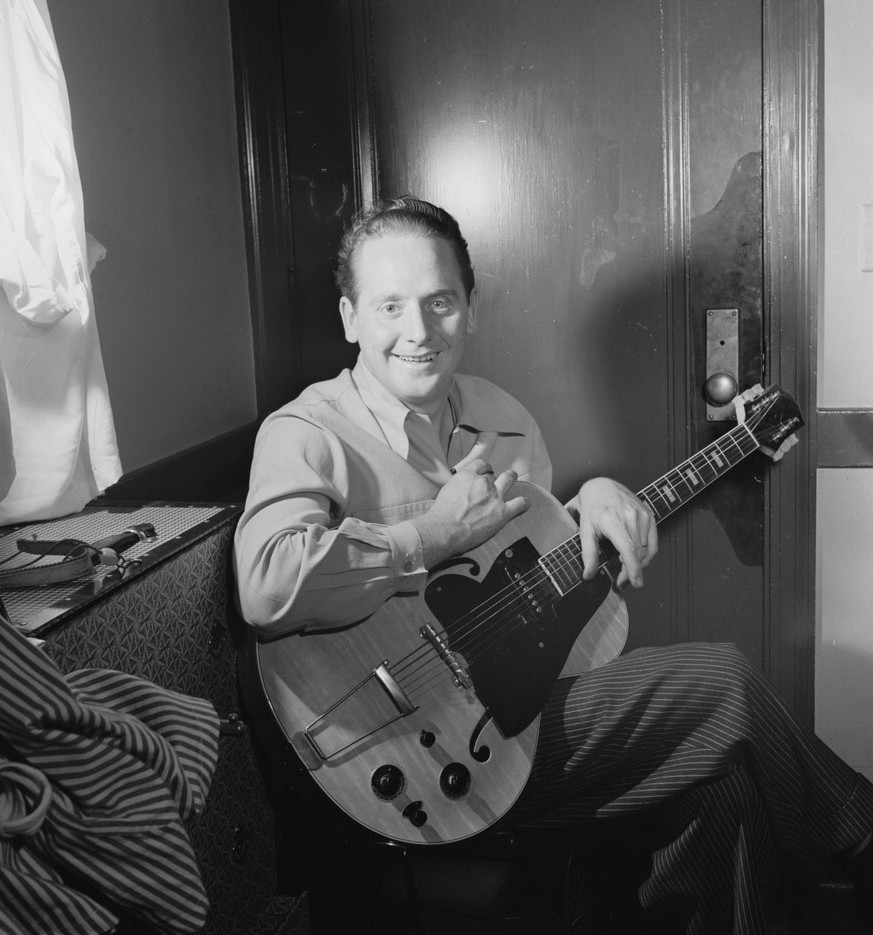
Les Paul, born Lester Polsfuss in Wisconsin in 1915, is one of the most important figures in the entire history of the guitar, a brilliant musician and an even more consequential inventor whose innovations literally made modern music possible. A gifted jazz and pop guitarist in his own right, Paul is remembered above all as a tinkerer and visionary whose creations transformed not just how the guitar sounds, but how all recorded music is made.
Here is the gem, or really the pair of gems, that secure his immortality. Les Paul was a driving force behind the development of the solid-body electric guitar, building an early prototype he called the Log in his quest for an instrument that could sustain notes without the feedback problems of hollow-body guitars. His ideas helped lead to the iconic Gibson Les Paul, which bears his name and remains one of the most beloved and important electric guitars ever made, the instrument of choice for countless rock, blues, and jazz legends. But that is only half the story. Paul was also a pioneer of multitrack recording, developing techniques for layering multiple separately recorded guitar and vocal parts on top of one another, essentially inventing the overdubbing that is the foundation of virtually all modern record production.
As an artist, Paul put his own inventions to dazzling use. His hit recordings with his wife and musical partner Mary Ford featured stacks of layered, sped-up guitar and vocal parts that astonished listeners with sounds no one had heard before, like the multilayered virtuosity of Lover, How High the Moon, and Vaya Con Dios. He was a genuine virtuoso whose playful, inventive playing was years ahead of its time, drawing on the influence of his hero Django Reinhardt, and he combined that musicianship with a relentless drive to push technology forward.
A second gem reveals just how deep his love of the instrument ran. Paul kept performing live almost until the very end of his long life, playing a weekly club gig in New York City into his nineties, where younger guitar heroes would routinely come just to watch and pay their respects to the man who made their careers possible. He treated music not as a job to retire from but as a lifelong joy.
Paul was inducted into the Rock and Roll Hall of Fame and honored by musicians and engineers alike as a founding father of modern music, even earning a place in the National Inventors Hall of Fame. He gave the world both the solid-body electric guitar and the multitrack studio, two innovations without which rock and roll as we know it could not exist. He is, quite simply, one of the people who built the world that every electric guitarist lives in, an inventor and artist whose fingerprints are on nearly every record ever made since.
Legendary Performance
The Listerine Radio Show, Late 1940s
Before the Les Paul model guitar existed, before multitrack recording was an industry standard, Les Paul was performing on national radio with a sound no one else could produce. His weekly appearances on programs including the Listerine show in the late 1940s introduced America to the possibilities of electronic manipulation in music, years ahead of anyone else.
Paul played a Gibson L-5 he had modified extensively, feeding its signal through a series of homemade echo and delay devices he built himself in his garage. The reverberant, layered guitar sound he demonstrated on radio was the first time most listeners had heard anything like it.
His duets with his wife Mary Ford, stacked vocal harmonies layered over his guitar explorations, became defining radio entertainment of the era. The performances were technically extraordinary by any standard of the time, and their influence on how studios and performers thought about recorded sound was immeasurable.
▶ Watch on YouTubeGear
The Log • Gibson Les Paul • Inventor • Tape Delay • Solid-Body Pioneer
Les Paul built his first solid-body electric guitar in the early 1940s, long before Fender or Gibson had commercially produced one. He attached guitar necks and pickups to a four-by-four pine block, adding the sides of an Epiphone archtop for cosmetic reasons, and called it The Log. He took it to Gibson, who turned him down. When Fender's Telecaster proved the commercial viability of solid-body electrics, Gibson came back to Paul and the result was the Gibson Les Paul, introduced in 1952.
Paul's own instruments were heavily modified, incorporating his homemade recording and playback innovations. He built tape delay devices, direct-injection recording equipment, and phasing circuits that no commercial manufacturer offered. His garage in Mahwah, New Jersey, was simultaneously a music studio and an electronics laboratory.
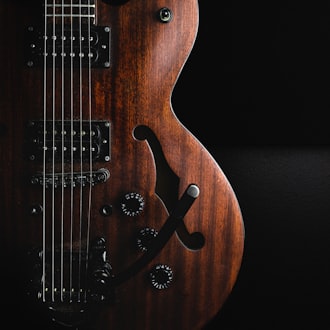
The Gibson Les Paul Standard, with its mahogany body, carved maple top, and PAF humbucking pickups, became one of the two or three most influential guitar designs in history. Paul himself used it for performances, though his recording setups were always far more elaborate than anything available commercially.
Signature Technique
Multitrack Layering & Electronic Innovation
Les Paul's most important technical contributions were not to guitar playing in the conventional sense but to guitar recording. He invented and developed multitrack recording techniques in the 1940s, initially by slowing down and speeding up tape machines to create pitch effects and time-shifted harmonies, and then by building eight-track recording machines years before they existed commercially.
On the guitar itself, Paul was a sophisticated player in the jazz tradition, comfortable with complex chord voicings and melodic improvisation. His right-hand technique was clean and precise, capable of producing clear single-note lines and full chord arrangements without sacrificing definition.
The electronic manipulation he applied to his recordings, the tape delay effects, the pitch layering, the tone shaping he achieved through circuit modifications, constituted a technique in its own right. Paul understood that in the recording era, the finished sound was the instrument, and the guitar was only the beginning of the process.