


Joe Bonamassa
Current Ranking
Joe Bonamassa is ranked #123 of 162 guitarists on the Greatest Guitar Player leaderboard, based on our editorial score until fans weigh in. On the blues leaderboard, Joe Bonamassa ranks #25 of 32. No fan votes yet, so be the first to rate Joe Bonamassa on 8 attributes at greatestguitarplayer.com/vote.
Biography
Joe Bonamassa, born in upstate New York in 1977, is the hardest-working and most commercially successful blues-rock guitarist of his generation, a virtuoso who has built an enormous following by combining jaw-dropping chops with a deep reverence for the blues and rock traditions he grew up on. A genuine child prodigy turned tireless adult professional, he has done as much as anyone to keep blues guitar thriving in the modern era, and he has done it almost entirely on his own terms.
Here is the gem that announced his talent to the world. Bonamassa was such a stunning prodigy that, at just twelve years old, he was already opening concerts for the legendary B.B. King, who recognized the boy's gifts and helped encourage his career. Imagine being barely out of elementary school and earning the respect of the King of the Blues himself. That early blessing set the tone for everything that followed, and Bonamassa has spent his life honoring the masters who came before him while building something distinctly his own.
As a player, he combines the fiery technique of British blues-rock heroes like Eric Clapton and Jeff Beck with the deep feeling of the American blues greats, delivering powerful, articulate solos full of singing tone and dramatic dynamics. He is also famous as one of the most passionate gear collectors in the world, amassing a legendary trove of vintage guitars and amplifiers, lovingly nicknamed Nerdville, that he uses to chase the exact tones of his heroes. His knowledge of and devotion to vintage equipment is itself a kind of scholarship.
Perhaps most impressive is how Bonamassa built his empire. Rather than relying on radio hits or a major label, he became a model of the independent, entrepreneurial musician, releasing a relentless stream of albums, touring constantly, building a devoted fan base directly, and even founding initiatives to support music education and emerging blues artists. He has played the world's most prestigious venues and collaborated widely, all while keeping the blues at the center of everything. For aspiring guitarists, Joe Bonamassa is both an inspiration and a road map, proof that deep respect for tradition, relentless work ethic, and total command of the instrument can build a thriving career carrying the blues forward.
Legendary Performance
Live from the Royal Albert Hall
May 4, 2009 · Royal Albert Hall, London
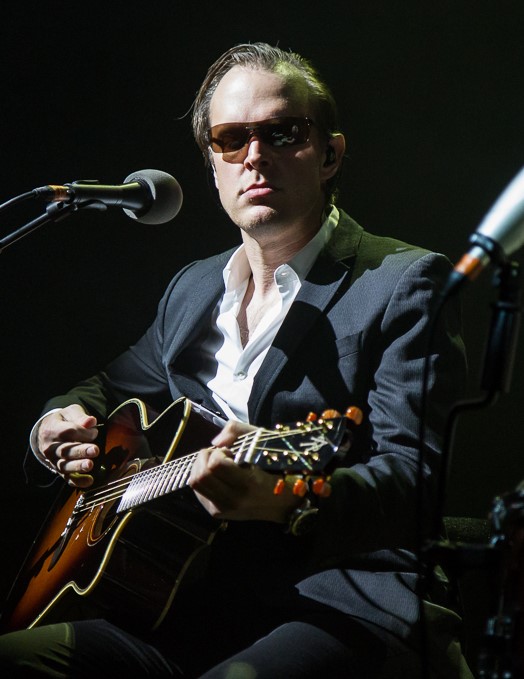
For Bonamassa, the May 4, 2009 show at Royal Albert Hall was the night he announced his arrival as a headlining force on the world stage. He had played the venue once before as a support act, and for years afterward set himself the goal of returning to fill that room under his own name. The show came together as both a personal milestone and a creative summit, helped along by a surprise appearance from Eric Clapton, who joined Bonamassa on "Further On Up the Road" in a moment that fans still cite as one of the great cross-generational blues guitar exchanges of the modern era.
The performance was filmed and released as Live from the Royal Albert Hall, and it became a watershed for his career. The DVD pushed his audience to the next tier and gave the broader rock and blues world a clear single document of what he could do on a stage of that scale. Beyond the headline guest spot, the set demonstrated his command across acoustic and electric textures, his discipline as a singer, and his willingness to stretch songs out and let them breathe in front of a live crowd.
▶ Watch on YouTubeGear
1959 Gibson Les Paul Standard (1959)
Known for: signature sustain and singing midrange tone in his Royal Albert Hall and Beacon Theatre performances
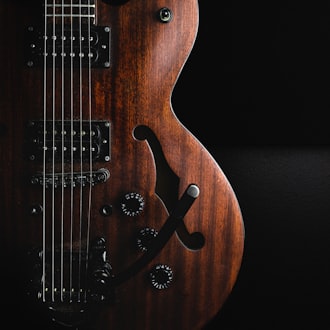
The 1959 Gibson Les Paul Standard sits at the absolute center of Bonamassa's tonal universe. He owns multiple original 1959 sunburst Les Pauls, each given affectionate nicknames, and he often switches between them inside a single set to access slightly different voices for different songs. The combination of a thick mahogany body, the hand-wound PAF humbuckers, and the player-friendly rosewood fingerboard delivers the famously vocal singing midrange and long sustain that he uses to spin out the long melodic lines that define his solo style.
He is known for actually playing his vintage instruments rather than treating them as museum pieces, which makes his approach to gear different from many collectors at his level. Beyond the 1959 Les Pauls he relies on a deep stable that includes vintage Stratocasters, ES-335 semi-hollows, and Flying V models, but if you ask any Bonamassa fan to name his signature instrument, the 1959 Les Paul is the answer almost every time.
Two-Rock Joe Bonamassa Signature Head
Known for: his "Wall of Bonamassa" multi-amp live stage rig
Bonamassa is famous for using multiple amps in parallel on stage, sometimes as many as four different heads driving four different cabinets at once, blending each amp's voice into a single composite tone. His core touring rig has long included a Two-Rock Joe Bonamassa Signature head paired with vintage Tweed Fender Twins, Marshall Silver Jubilees, and Fender Bassmans, all running into matched 4×12 cabinets. The result is a tone that has both the blooming clarity of a clean American amp and the snarling midrange and harmonic complexity of a cranked British amp at the same time.
He treats the amp choice as deliberately as the guitar choice. Different songs call up different combinations on his pedalboard, which lets him dial in a thicker British voice for the heavier blues rock numbers and a brighter Tweed-leaning voice for the slower acoustic-flavored material.
Vintage Dallas Arbiter Fuzz Face, Way Huge Pork Loin overdrive, Vox V846 wah, Boss DD-3 delay
Bonamassa keeps his pedalboard surprisingly disciplined for someone with his level of gear access. The signal chain leans on a vintage Dallas Arbiter Fuzz Face for the long sustaining lead tones that dominate his slower blues material, a Way Huge Pork Loin overdrive to push the front end of the cleaner amps, a Vox V846 wah parked or rocked for vocal-style emphasis, and a Boss DD-3 plus a rack-mounted Korg SDD-3000 for delay textures.
He generally trusts the amps for the bulk of the distortion and the dynamics, treating pedals as flavoring rather than the foundation of his sound. The result is a clean, articulate signal where every note in a fast lick still rings out, and where his right-hand picking dynamics translate clearly to the audience.
Signature Technique
Vibrato-First Phrasing and Vintage-Tone Discipline
The first thing other guitarists notice about Joe Bonamassa is his vibrato. It is wide, slow, and unmistakably his, sitting in the lineage of B.B. King and Paul Kossoff but applied with a precision that lets him bend up to a target note and let it sing for several bars without ever wavering off pitch. Where many fast players treat vibrato as the punctuation at the end of a phrase, Bonamassa uses it as the phrase itself, often holding a single note long enough to make a melodic statement before he moves anywhere else.
His phrasing is rooted in the British blues lineage that obsessed him as a teenager, particularly Free, Cream, and the early John Mayall recordings, and you can hear that in his preference for melodic minor pentatonic ideas that resolve to a strong target note rather than chasing speed for its own sake. He plays with a heavy pick attack and a careful awareness of where each note falls in the bar, which is part of why his slower blues solos feel so arranged even when they are being improvised in real time.
Underneath the surface he draws on a deep technical vocabulary, including Albert King-style bend-and-release patterns, Roy Buchanan-influenced volume swells, and Danny Gatton-influenced country chicken-picking accents that occasionally show up in his more upbeat material. He uses these as flavoring rather than as set pieces, slipping a Gatton-style hybrid pick figure into the middle of a blues solo as a way to surprise the listener.
His other defining trait is tone discipline. He understands what each of his vintage instruments and amps does and chooses combinations consciously based on the song rather than the night. He will swap from a 1959 Les Paul into a Stratocaster mid-set because the next song needs a different attack, and he treats the gear changes as part of the arrangement rather than as a distraction.