


Bob Weir
Current Ranking
Bob Weir is ranked #128 of 169 guitarists on the Greatest Guitar Player leaderboard, based on our editorial score until fans weigh in. On the classic rock leaderboard, Bob Weir ranks #20 of 21. No fan votes yet, so be the first to rate Bob Weir on 8 attributes at greatestguitarplayer.com/vote.
Biography
Bob Weir was the rhythm guitarist and second voice of the Grateful Dead, the band that turned the rock concert into a 30-year traveling community. Alongside Jerry Garcia he founded the Dead in 1965, sang "Sugar Magnolia," "Playing in the Band," "Jack Straw," "Mexicali Blues" and "Estimated Prophet," and spent six decades proving that rhythm guitar could be just as adventurous as lead. He was born on October 16, 1947, in San Francisco, was adopted as an infant and grew up in Atherton, California, where he picked up the guitar at 13 after giving up on piano and trumpet. He struggled in school because of dyslexia and was expelled from several, including a Colorado boarding school where he met John Perry Barlow, who later became his songwriting partner.
Here is the gem. On New Year's Eve 1963, Weir was 16, too young to get into any club in Palo Alto, and wandering the back alleys with a friend when they heard banjo music coming from Dana Morgan's Music Store. Inside was a 21-year-old banjo teacher named Jerry Garcia, who had lost track of the date and was waiting for students who were never going to show. The three played music all night and decided to start a band. That jug band, Mother McCree's Uptown Jug Champions, became the Warlocks and then the Grateful Dead.
Weir's road was not always smooth. In 1968 the band briefly played shows without him, feeling his guitar was not pulling its weight. He responded by reinventing his playing, building a style around jazz piano voicings, especially those of McCoy Tyner, rather than standard rock chords. By the early 1970s Phil Lesh said he was astonished by what Weir was doing, playing chord shapes on six strings with four fingers that sounded like a keyboard. Weir also made solo albums, beginning with Ace in 1972, and led side bands such as Kingfish, the Bob Weir Band and Bobby and the Midnites.
After Garcia's death in 1995, Weir became the keeper of the Dead's flame. He led RatDog, toured with the Other Ones and the Dead, co-led Furthur with Phil Lesh, and in 2015 formed Dead & Company with Mickey Hart, Bill Kreutzmann and John Mayer, introducing the songs to a new generation and playing a long residency at the Sphere in Las Vegas in 2024. He was inducted into the Rock and Roll Hall of Fame with the Grateful Dead in 1994 and received Kennedy Center Honors with the band in 2024. Bob Weir died on January 10, 2026, at 78, having played the Dead's music for more than 60 years.
Legendary Performance
Grateful Dead at Cornell (5/8/77)
May 8, 1977 · Barton Hall, Cornell University, Ithaca, New York
On May 8, 1977, the Grateful Dead played Barton Hall at Cornell University in Ithaca, New York, on a cold spring night during one of the strongest tours of their career. The show was never meant to be special, but an audience of a few thousand students and Deadheads heard a band at the absolute peak of its powers, and a crisp soundboard recording made by engineer Betty Cantor-Jackson captured every note.
Bob Weir is everywhere on that tape. His rhythm guitar weaves around Jerry Garcia's leads on "Scarlet Begonias" into "Fire on the Mountain," and he sings "Estimated Prophet" in its odd 7/4 groove and drives the "Not Fade Away" jam. His chord stabs, partial voicings and countermelodies fill the space between Garcia's guitar and Phil Lesh's bass, giving the band its unique, interlocking texture. On "Morning Dew," the emotional peak of the night, his rhythm work helps build tension to a powerful climax.
Cornell 5/8/77 became the most famous Grateful Dead concert, circulating on cassettes for decades and ranked by many fans as the best show the band ever played. The Library of Congress later added the recording to the National Recording Registry, a rare honor for a single concert, and it was officially released in 2017. For guitarists, it is a masterclass in how Weir's unconventional rhythm style helped create the Dead's sound.
▶ Watch on YouTubeGear
Ibanez custom models, Gibson ES-335 and Modulus Blackknife
Known for: clear, balanced tone for his jazz-inspired voicings
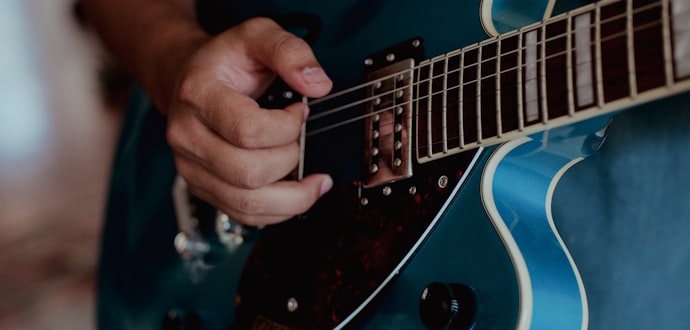
In the early Grateful Dead years Weir played Gibson guitars, including an ES-335 and a Gibson SG, before turning to Ibanez in the late 1970s. Ibanez built him custom models, including a striking guitar with a cowboy-themed inlay that became one of his best-known instruments of the late 1970s and early 1980s, and he later used a Modulus Blackknife with a graphite neck for its stability and sustain on the road.
He favored guitars with a balanced, articulate tone that let individual notes in his complex chord voicings ring clearly. Because his style relied on partial chords and inner voices rather than power chords, clarity mattered more to him than raw output. On acoustic, he often played Martin dreadnoughts for the band's acoustic sets and folk and country material.
Fender Twin Reverb and the Wall of Sound system
Known for: clean, hi-fi headroom for every note in his chords
During the Grateful Dead's Wall of Sound era in 1974, Weir's guitar ran through the band's massive custom sound system, which used McIntosh power amplifiers and hundreds of speakers to deliver clean, detailed sound to huge crowds. Over the years he used Fender amps, including Twin Reverbs, prized for their clean headroom, and later moved to digital modeling for the precise, consistent tones he needed across Dead & Company's huge stages. A clean, hi-fi platform was always central, so every note of his voicings came through clearly.
Envelope filter, chorus, delay and slide
Weir used effects to color his rhythm parts rather than dominate them. Envelope filters gave his funkier rhythm work a vocal quack, chorus and phaser added shimmer, and delays and volume swells filled space in the band's long improvisations. In the late 1970s he also took up slide guitar on songs like "Little Red Rooster," adding another texture to the Dead's sound. His most important tool, though, was always his choice of voicing.
Signature Technique
Jazz Piano Voicings and Counterpoint Rhythm Guitar
Bob Weir reinvented what a rhythm guitarist could do in a rock band. Instead of strumming full chords, he played partial voicings, often just three or four notes, placed in the middle and upper registers so they would not clash with Phil Lesh's melodic bass or Jerry Garcia's leads. He drew those voicings from jazz piano, citing McCoy Tyner as a major influence, and Lesh praised him for playing chords on guitar with four fingers that would usually require ten on a keyboard.
He thought of his part as a counterpoint rather than an accompaniment. In a Dead jam, Weir would answer Garcia's lines, add rhythmic stabs that pushed the drummers, or hold a drone that let the band drift into new territory. Songs like "Playing in the Band," "The Other One" and "Estimated Prophet" show how his guitar sets up the groove while leaving plenty of space for others.
Weir was also comfortable with unusual time signatures and song forms. "Estimated Prophet" grooves in 7/4, "Playing in the Band" stretches into open-ended jams, and his cowboy songs like "Mexicali Blues" and "Me and My Uncle" show his country roots. His sense of rhythm, dynamics and listening shaped the Dead's ability to improvise as a group for hours.
His influence is widely felt. Jam bands from Phish to Goose borrowed his interlocking rhythm approach, and guitarists such as John Mayer have praised his unusual harmonic sense. Weir showed that the rhythm chair can be creative and central, a lesson that still shapes how guitarists think about playing together.
Quick Facts About Bob Weir
What guitar did Bob Weir play?
Bob Weir's signature guitar was the Ibanez custom models, Gibson ES-335 and Modulus Blackknife, known for clear, balanced tone for his jazz-inspired voicings.
What amp and effects did Bob Weir use?
Bob Weir used Fender Twin Reverb and the Wall of Sound system, known for clean, hi-fi headroom for every note in his chords. Effects included Envelope filter, chorus, delay and slide.
What is Bob Weir's most famous performance?
One of Bob Weir's most celebrated performances is Grateful Dead at Cornell (5/8/77) on May 8, 1977 at Barton Hall, Cornell University, Ithaca, New York.
What is Bob Weir known for as a guitarist?
Bob Weir is known as The Dead's Rhythm Visionary. The signature playing style is Jazz Piano Voicings and Counterpoint Rhythm Guitar. Bands and projects include Grateful Dead, Dead & Company, RatDog, Furthur.
When was Bob Weir born?
Bob Weir was born on October 16, 1947 in San Francisco, California, USA. Bob Weir died on January 10, 2026.