



Christone “Kingfish” Ingram
Current Ranking
Christone "Kingfish" Ingram is ranked #71 of 162 guitarists on the Greatest Guitar Player leaderboard, based on our editorial score until fans weigh in. On the blues leaderboard, Christone "Kingfish" Ingram ranks #14 of 32. No fan votes yet, so be the first to rate Christone "Kingfish" Ingram on 8 attributes at greatestguitarplayer.com/vote.
Biography
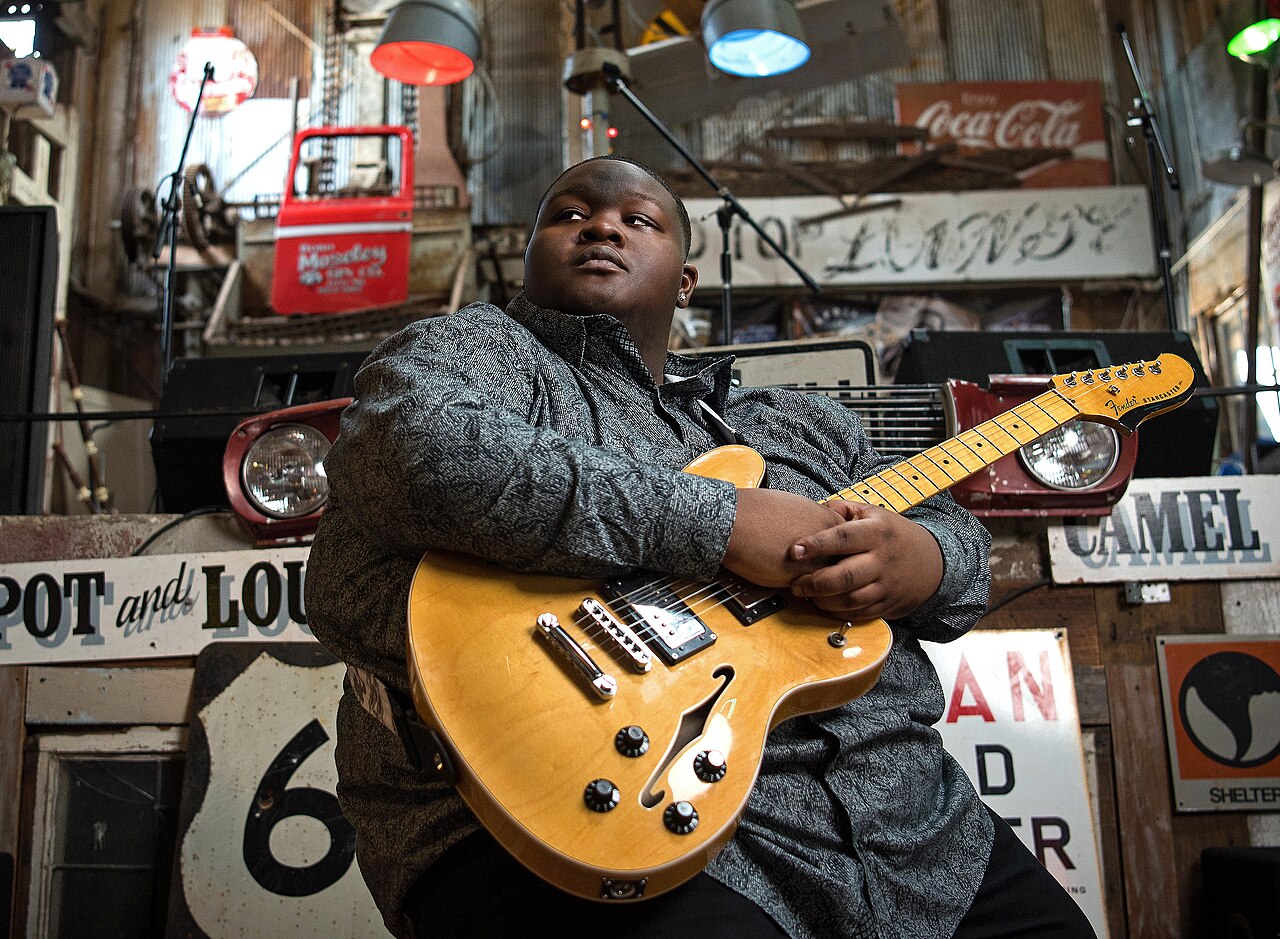
Christone Ingram, known to the world as Kingfish, was born in 1999 in Clarksdale, Mississippi, which is about as close to the literal birthplace of the blues as a guitarist can get. Clarksdale sits at the mythic crossroads of the Mississippi Delta, the soil where Robert Johnson and Muddy Waters and so much of the music began, and Kingfish has emerged as the most exciting young torchbearer that tradition has produced in a generation.
He came up through the Delta Blues Museum's arts program in his hometown, started on drums and bass before settling on guitar, and quickly revealed a talent that seemed to arrive fully formed. By his teens he was stunning audiences with a tone and a maturity that belied his age, all thick, fat sustain, fluid bends, and a deep feel that you usually only hear from players who have lived several more decades of hard road. He sings with the same big-hearted authority, and on stage he combines old-soul phrasing with the energy and openness of a young man raised on hip-hop and modern sounds as much as on the blues.
His 2019 debut Kingfish announced him as a major arrival, and its follow-up 662, named for the area code of his Mississippi home, won a Grammy for Best Contemporary Blues Album and confirmed that the hype was earned. He has become a regular on the biggest stages and festivals, sharing bills with the elder statesmen of the genre who have embraced him as the real thing.
Here is the gem: Kingfish carries the weight of representing the future of the blues from the very ground where it was born, and he wears it openly and proudly, naming records after his home area code and constantly pointing back to Clarksdale and the Delta that made him. In an era when people periodically declare the blues a museum piece, he is vivid, living proof that the tradition is not only alive but capable of producing fresh, vital, world-class guitar playing. For a music that has always passed from one generation to the next, Christone Kingfish Ingram is the handoff happening in real time.
Legendary Performance
Live in London, The Garage
June 6, 2023 · The Garage, London, England
Christone "Kingfish" Ingram was twenty-four years old when he walked onto the stage at The Garage in London on June 6, 2023, and the crowd that filled the standing-room-only room had been waiting for this since they first found him on YouTube as a teenager, a kid from Clarksdale, Mississippi, the birthplace of the blues, playing with a command and authority that didn't match his age by any conventional logic. By 2023 he had two studio albums, a Grammy Award for Best Contemporary Blues Album, and a reputation as the most genuinely important young blues guitarist to emerge in a generation. The London show, recorded and released as his third album, Live in London , was where all of it arrived in a single room at the same time.
Across seventeen songs, Ingram moved from raw Delta blues to soul to rock and back again with the ease of someone for whom genre distinctions are administrative inconveniences rather than meaningful categories. His guitar playing, a synthesis of Albert King's overhead bends, B.B. King's singing vibrato, Jimi Hendrix's psychedelic reach, and something entirely his own that has not yet been named, ranged from whisper-quiet passages that brought the London crowd to breathless silence to incendiary solos that produced the kind of spontaneous, extended ovations that audiences reserve for moments they recognize as once-in-a-lifetime. He was not playing like someone trying to revive the blues tradition. He was playing like someone who had absorbed it so completely that he had become its next chapter.
Critics who covered the tour described watching Ingram as a disorienting experience, the feeling of watching someone this young play this well forced a continuous recalibration of what seemed possible. The comparison most frequently offered was to Stevie Ray Vaughan's emergence in the 1980s: another prodigiously gifted young player from the South arriving with an apparently complete artistic vocabulary and a physical approach to the instrument that suggested the blues were not a genre to be preserved but a living tradition to be carried forward. The Garage show is the document that established what Ingram's arrival meant. He was not a prodigy playing above his station. He was simply a great guitarist, playing exactly where he belonged.
▶ Watch on YouTubeGear
Gibson Les Paul Standard / Vintage Gibsons
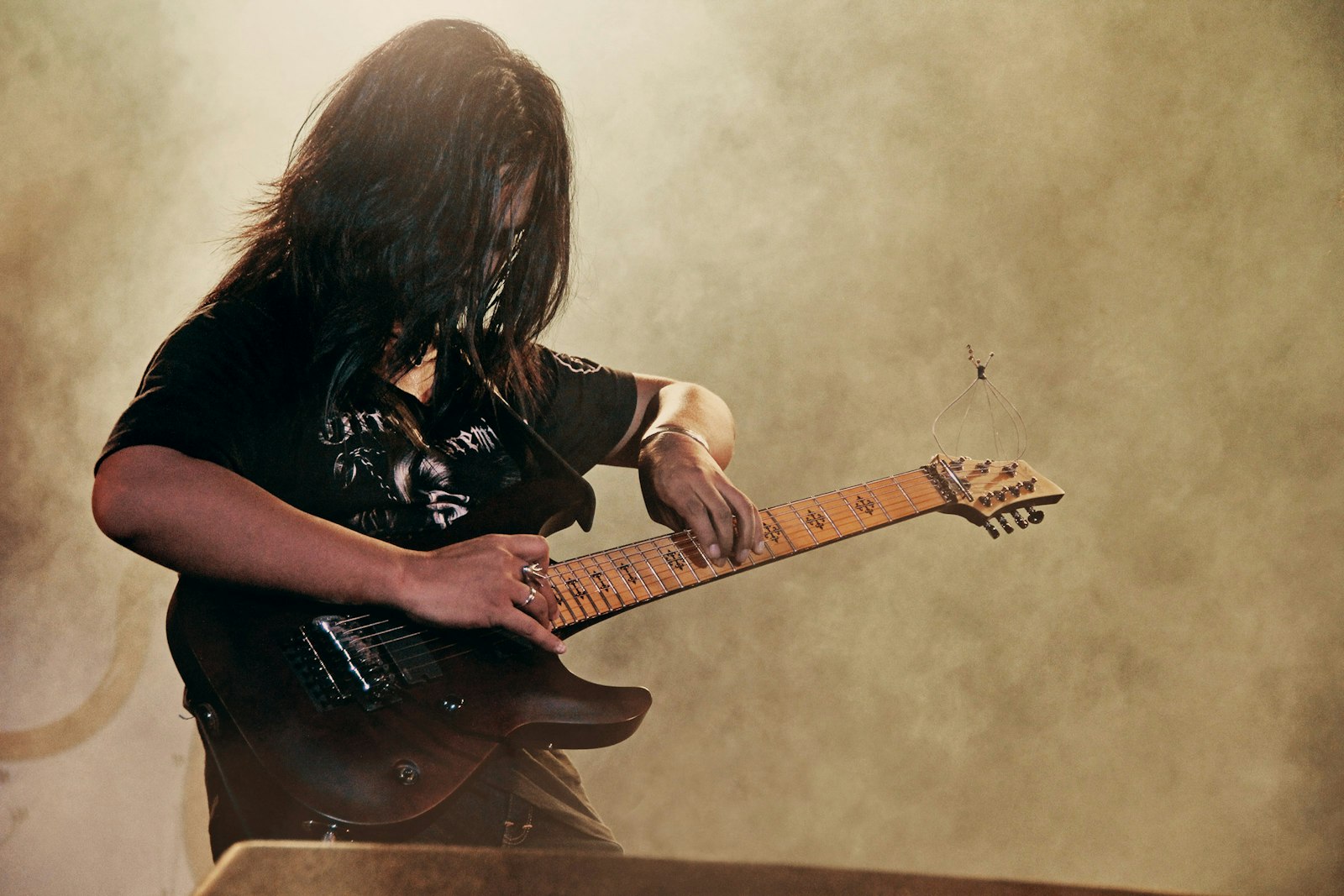
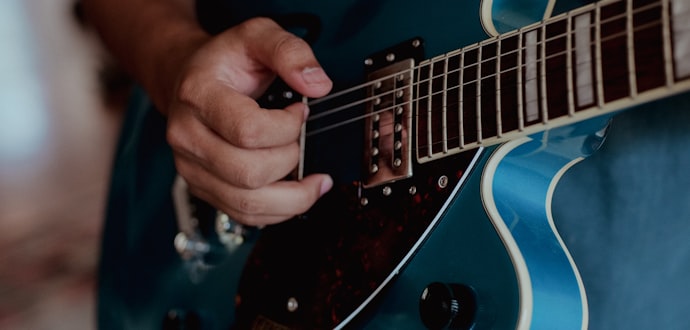
Christone 'Kingfish' Ingram's primary electric guitar is a Gibson Les Paul Standard, an instrument whose combination of humbucking warmth and sustain suits his thick, bending-heavy blues style perfectly. He has also recorded and performed with vintage Gibson ES-335s and other semi-hollow instruments when a slightly more transparent, airy tone is required. His slide work, which rivals his standard playing in authority and expressiveness, is performed on resonator guitars and various electric instruments depending on the context. At an age when most guitarists are still developing their vocabulary, Ingram already plays with a maturity that suggests decades of experience encoded somewhere beyond his years.
Fender Super Sonic / Various Fender Amps
Ingram's amplification centers on Fender amplifiers, particularly the Super Sonic series, that provide the clean headroom needed for his dynamic approach. His playing ranges from feather-light single-note passages to full-throttle, feedback-inducing passages within a single song, and his amplifier must respond accurately to the full range of that expression. He runs his amps at moderate gain with the guitar's volume and tone controls doing much of the dynamic work, a traditional blues approach that prioritizes responsiveness over processed consistency.
Tube Screamer / Slide Technique / Modern Blues Vocabulary
Ingram's effects are minimal and traditional: a Tube Screamer-style overdrive pedal provides the smooth, compressed lead tone for his most assertive playing, while his clean passages run straight through the amplifier. His slide technique, developed alongside his standard playing from an early age, uses glass and steel slides depending on the tonal requirement. But the most remarkable 'effect' in Ingram's playing is generational: he absorbed the complete vocabulary of Chicago blues, Delta slide, and contemporary blues-rock before his twentieth birthday, and deploys that vocabulary with a naturalness that sounds like lived experience rather than studied technique.
Signature Technique
Signature Technique
Christone 'Kingfish' Ingram arrived in the blues world with a technique and emotional vocabulary that seemed to have bypassed the normal developmental stages. By his mid-teens he was playing with an authority that suggested decades of experience, and his recorded output, from Kingfish (2019) onward, has demonstrated a blues technique of exceptional breadth: from Delta slide to Chicago electric, from aggressive attack to whisper-quiet restraint, all in service of an emotional directness that is the defining quality of authentic blues playing.
Ingram bends strings with the controlled power of a player who has absorbed the complete vocabulary of blues bending, B.B. King's precise vibrato, Stevie Ray Vaughan's aggressive whole-step bends, Albert King's supernatural reach, and synthesized them into a personal style that feels neither imitative nor academic. His bends are targeted with harmonic precision, held at pitch with a full, singing vibrato, and released with control that maintains the musical phrase's momentum. The physical commitment to each bend is total.
Ingram's slide playing demonstrates a maturity unusual in a player of any age, let alone one who began performing professionally in his early teens. His slide intonation is precise, his vibrato with the slide is controlled and expressive, and his transitions between slide and standard playing, sometimes within the same song, are seamless. He uses different slides (glass, steel, ceramic) for different tonal requirements, showing a degree of tonal sophistication that most guitarists take years to develop.
What ultimately distinguishes Ingram's technique from mere technical proficiency is its emotional authenticity, the quality that makes a blues solo feel like a statement rather than an exercise. His improvisations respond to the moment, the room, and the music beneath him in real time, producing phrases that feel necessary rather than pre-planned. This responsiveness, the ability to listen and react rather than deploy a repertoire of practiced licks, is the deepest technique in blues guitar and the one that cannot be taught, only developed through years of playing music that demands genuine feeling.