
Igor Paspalj
Current Ranking
Igor Paspalj is ranked #148 of 162 guitarists on the Greatest Guitar Player leaderboard, based on our editorial score until fans weigh in. On the shred and virtuoso leaderboard, Igor Paspalj ranks #19 of 19. No fan votes yet, so be the first to rate Igor Paspalj on 8 attributes at greatestguitarplayer.com/vote.
Biography
Igor Paspalj is the kind of guitarist the internet era was built to discover. Born in Zagreb on November 28, 1981, raised in Prijedor, Bosnia and Herzegovina, and seasoned on the club stages of Dubai, he went from a working pro most of the world had never heard of to Guitar World's Electric Guitarist of the Year 2020, chosen through a mix of public votes, staff picks and a judging panel of John Petrucci, Nita Strauss and John 5. His winning entry, an original called "Into the Blue", packed bluesy clean phrasing, dead-on bends, sweep arpeggios and blistering alternate picking into under four minutes. "I'm over the moon," he told the magazine. "It's just the most incredible news ever."
The road there started with a war. In 1991, as Yugoslavia came apart, his family fled Zagreb for Prijedor, where he grew up. MTV's Headbangers Ball hooked him on rock guitar, but he did not own an instrument until the fighting was over, so he started fairly late, at around 13. The turning point was a friend's cassette with Eddie Van Halen's "Eruption" and Yngwie Malmsteen's "Far Beyond the Sun" on it. He taught himself both, studied VHS lesson tapes until they wore thin, and grew up reading Guitar World and Guitar Player, the same magazines that would later crown him. His first big gig was in front of a couple of thousand people at the second Prijedor Gitarijada, where he took home the award for most promising young guitarist.
Then came the formal training. He finished the four-year program at the Academy of Arts in Banja Luka in three years as its top student, added a master's degree in music theory and harmony in 2009, and stayed on to teach there. In 2010 he released the instrumental solo album Gravity through the Dutch label Moonwolf Entertainment Group, and he twice reached the online finals of Guitar Idol. In 2014 his girlfriend took a job with Etihad Airways in the Emirates, he flew out to visit, liked what he found, and quit his academy post to move to Dubai. Over six years there he taught guitar at the American School of Dubai and played live six nights a week, sometimes two shows a day, eleven months a year, logging roughly 1,500 gigs with musicians from all over the world. That grind is where his own voice on the instrument really took shape.
The gem in his story is how he got noticed. In 2020 he won JTC Guitar's Jam of the Month with a reworking of a Claudio Pietronik tune, and the London lesson company was impressed enough to make him the first Jam of the Month winner ever signed as a JTC artist. His masterclasses there, including Neoclassical Deep Dive, 21 Day Fix: Speed and Legato Approach, put him in front of a global audience months before the Guitar World win. Since then MusicRadar has named him among the best new guitarists in the world (2021), he has become a NUX artist, released the Into the Blue EP and singles like "Tokyo Heat" and "Breakneck", and, in a plot twist nobody saw coming, joined Zagreb's turbofolk punk band Brkovi, playing on their 2023 album Krvava novčanica. These days he is back in Bosnia and Herzegovina, splitting his time between Prijedor and Banja Luka, and still chasing better phrasing, which he calls a never-ending journey.
Legendary Performance
"Into the Blue", Guitar World Guitarist of the Year 2020
December 22, 2020 · Online contest entry, Guitar World Guitarist of the Year
Plenty of guitar contests crown a flashy clip and move on. The Guitar World Guitarist of the Year 2020 result mattered because of who was judging and what was on the line. John Petrucci, Nita Strauss and John 5 weighed in alongside the magazine's staff and a public vote, and the Electric Guitarist of the Year category drew players from all over the world. Paspalj's entry was not a cover or a medley. It was "Into the Blue", an original of just under four minutes that he wrote and played himself.
The piece works like a resume in song form. It opens with bluesy clean tones and vocal bends that sit perfectly in pitch, then climbs through sweep-picked arpeggios and long alternate-picked runs before landing back on the melody. Nothing is there only to impress, because the fast passages resolve into lines you can hum, which is exactly the balance judges say they want and rarely get. When the winners were announced on December 22, 2020, he topped the electric category and took home a PRS S2 McCarty 594 plus a professionally shot performance video.
The timing gave the win extra weight. COVID had wiped out the Dubai live circuit that had been his living six nights a week, and he had said the shows were his favorite part of being a musician. The result turned a working pro known mostly to his students and club crowds into headline news across Serbia, Croatia and Bosnia and Herzegovina, and "Into the Blue" went on to lend its name to his 2023 EP, with full tabs and a backing track released for players who wanted to chase it.
▶ Watch on YouTubeGear
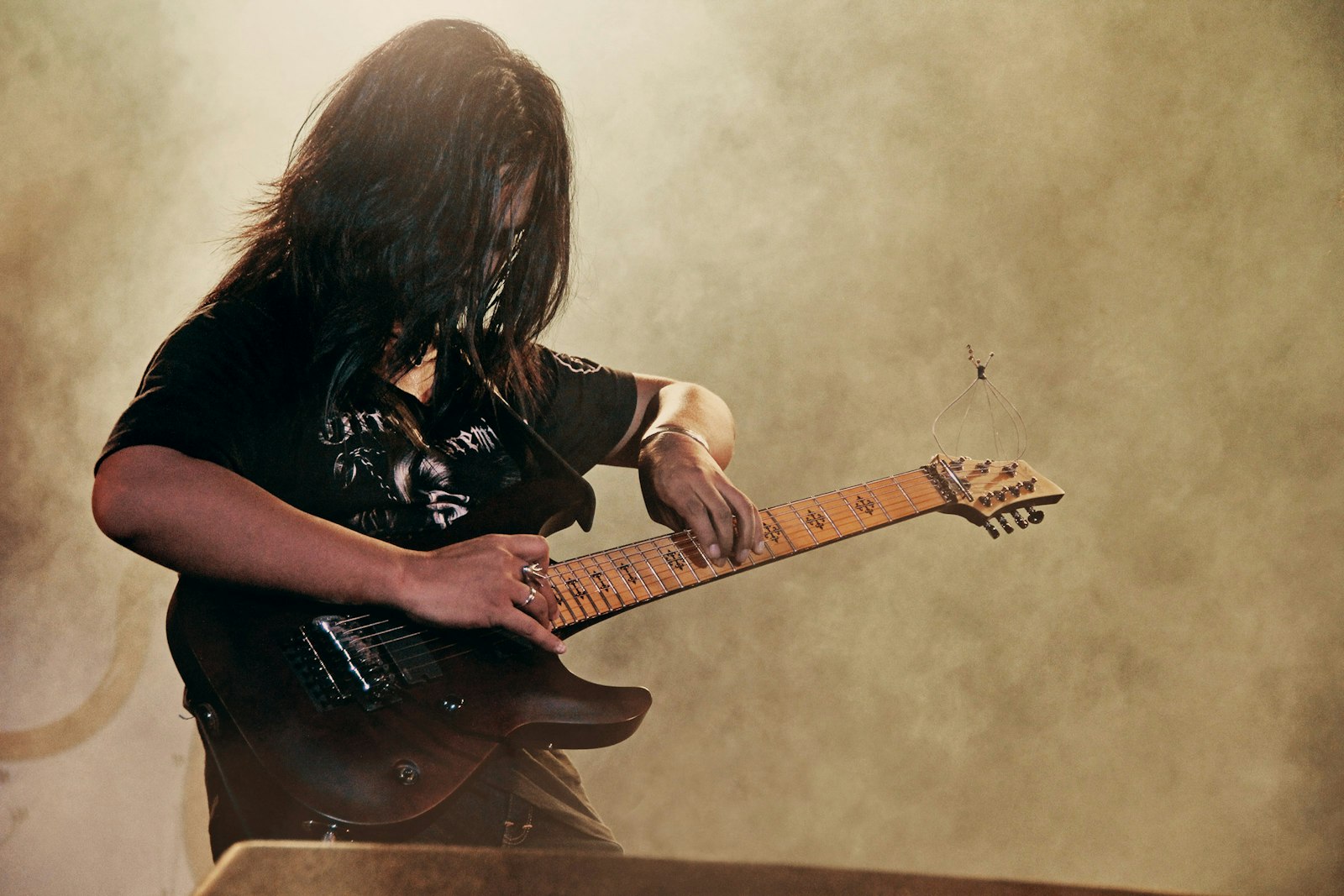
Charvel Guthrie Govan Signature HSH (Birdseye Maple)
Known for: main electric in his lessons and playthrough videos
In his lesson and playthrough videos the main electric is a Charvel, most recognizably his Guthrie Govan signature HSH model with a birdseye maple neck. It is a telling choice. Govan's guitar was built for players who jump from glassy cleans to singing high gain in the same bar, and that is exactly how Paspalj writes, with a humbucker at each end for thick legato and fast picking and a single coil in the middle for the cleaner, bluesier passages.
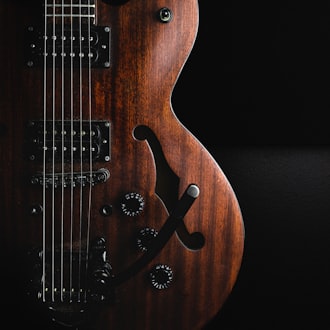
He is not a one-guitar player, though. A tiger-burst singlecut in the Les Paul style has shown up often enough that he has called it the best Les Paul type guitar he has played in years, praising its gnarly voice and rock-solid tuning, and the PRS S2 McCarty 594 from the Guitar World prize joined the stable in 2020. He keeps the strings light, Elixir OptiWeb 9 to 42, which suits the speed and legato work that fills his lessons.
Kemper Profiler
Known for: live rig for his Dubai years, with S-Gear 3 into a UA Apollo Twin for recording
Paspalj belongs to the first generation of virtuosos who built careers largely without a traditional amp line. On stage and in the studio his rig has centered on a Kemper Profiler, which gave a musician playing six nights a week in Dubai hotels and clubs a consistent sound in every room without hauling tube heads from gig to gig.
For recording he has been just as practical. He has said he runs Scuffham S-Gear 3 straight into a Universal Audio Apollo Twin, a small desktop setup that matches how much of his work, from JTC Guitar masterclasses to contest entries, is made at home and delivered online. He is also a NUX artist and visited the company's headquarters in Zhuhai, China, for an interview series, which fits a player who treats modern digital gear as a serious instrument rather than a compromise.
Gig Performer plugin rig (delay, reverb, amp simulation)
Most of his effects story lives inside the computer rather than on a pedalboard. He has appeared in Deskew's Backstage with Gig Performer series, using the plugin host to run amp simulation, delays and reverbs as one switchable rig he can call up live or in the studio.
The sound itself stays uncluttered. Delay and reverb put air around the lead lines, the drive stays tight enough to keep fast picking clear, and the cleans are left open so the blues phrasing breathes. For a player whose calling card is articulation, the less the effects get in the way, the better.
Signature Technique
Speed Picking, Sweeps and Neoclassical Precision
Paspalj's foundation is alternate picking, and he treats it like a craft rather than a party trick. His runs stay even across string changes, and he mixes straight scalar lines with the pedal-point and sequence patterns he picked up from Yngwie Malmsteen, Paul Gilbert and Vinnie Moore, the players he learned from off cassette and VHS. His JTC course 21 Day Fix: Speed is built around exactly that approach: short daily routines, clean synchronization between the hands, and speed that comes from accuracy rather than force.
On top of that sits a full modern toolkit. Sweep-picked arpeggios, often across five or six strings, show up in "Into the Blue" and in his contest work, and his Legato Approach and tapping material lean toward the fluid, horn-like lines of Joe Satriani and Steve Vai. His neoclassical side, laid out in the Neoclassical Deep Dive series, draws on real harmonic knowledge rather than borrowed licks, which is what you would expect from someone with a master's degree in music theory and harmony who lists classical composers among his heroes.
What separates him from a lot of fast players is the phrasing between the fireworks. Years of playing six nights a week in Dubai with singers and bands meant he had to serve songs, and his bends, vibrato and bluesy clean passages carry that experience. Guitar World's write-up singled out exactly that mix of bluesy cleans, precise bends and technical passages, and his later playthroughs, including "Tokyo Heat" and "Breakneck", keep the same balance.
As a teacher he may end up as influential as he is as a player. Through JTC Guitar, private online lessons and years at the American School of Dubai, he has broken down speed picking, legato, arpeggios and modal theory for thousands of students, and his lessons consistently tie technique back to harmony so players know why a line works, not just how to play it.