

James Hetfield
Current Ranking
James Hetfield is ranked #32 of 162 guitarists on the Greatest Guitar Player fan leaderboard, based on 1 fan vote so far. On the heavy metal leaderboard, James Hetfield ranks #4 of 14. Agree? Rate James Hetfield on 8 attributes at greatestguitarplayer.com/vote.
Biography
James Hetfield, born in Los Angeles in 1963, is the frontman, rhythm guitarist, and primary riff writer of Metallica, the biggest heavy metal band in the world, and he is very arguably the greatest rhythm guitarist the genre has ever produced. While lead guitarists get most of the glory, Hetfield built his legend on the unglamorous foundation of metal, the riff, and he plays rhythm with a power, precision, and stamina that have earned him the nickname the right hand of God.
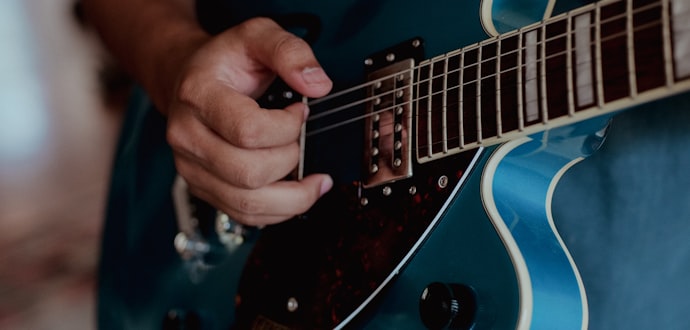
That right hand is the heart of the gem. Hetfield is famous for his relentless down-picking, attacking fast, palm-muted riffs with all downstrokes rather than the easier alternating up-and-down motion most players use. Down-picking at Metallica's tempos is brutally demanding and physically punishing, but it gives the riffs a tighter, heavier, more aggressive chug that has become the band's signature sonic weapon. On songs like Master of Puppets, the galloping riffs require almost superhuman endurance, and Hetfield delivers them night after night with machine-like consistency. Guitarists everywhere study his right hand the way pianists study scales, because that crushing precision is the secret to the Metallica sound.
Beyond the technique, Hetfield is a tremendous songwriter whose riffs are the backbone of metal's most enduring catalog. From the thrash landmarks Ride the Lightning, Master of Puppets, and And Justice for All to the world-conquering self-titled Black Album with Enter Sandman, his writing balances aggression with genuine hooks, which is a big reason Metallica crossed over to massive mainstream success without abandoning their heaviness. He sings with a commanding, instantly recognizable snarl that matches the muscle of his playing.
Hetfield's story also carries real depth and hard-won perspective. He has been open about his struggles with addiction and his journey through recovery, bringing a hard-earned maturity to both his life and his lyrics over the decades. Through lineup changes, internal conflicts famously documented on film, and the ordinary wear of a forty-year career, he has remained the unshakable core of Metallica, the rhythm and the voice that hold the whole thing together. For metal guitarists, he is the ultimate proof that the rhythm guitarist can be the true hero, and that there is nothing more powerful than a great riff played with total conviction.
Legendary Performance
Monsters of Rock, Tushino Airfield, Moscow
September 28, 1991 · Tushino Airfield, Moscow, Russia
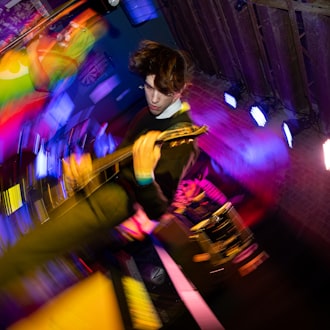
Weeks after the failed coup that signaled the Soviet Union's collapse, Metallica played a free festival at Tushino Airfield outside Moscow, sharing a bill with AC/DC, Pantera, and The Black Crowes. Crowd estimates ran from half a million to well over a million people, the largest audience the band had ever faced, with military helicopters sweeping overhead and soldiers ringing the stage. For a generation of Russian fans who had traded bootleg tapes under censorship, this was the first time Western metal had arrived at full force on their soil.
Hetfield anchored the chaos. Enter Sandman, Creeping Death, and Master of Puppets rolled out over the airfield with the same machine precision he delivered in a club, his downpicked rhythm parts cutting through a sound system stretched across a horizon of people. The footage, released as part of For Those About to Rock: Monsters in Moscow, shows a frontman in total command at a scale no thrash band had ever attempted. The performance stands as the moment metal's most disciplined right hand met history head on, and neither blinked.
▶ Watch on YouTubeGear
ESP Explorer (the EET FUK MX-220) (1987)
Known for: the angular silhouette behind Metallica's rhythm attack
Hetfield's early Metallica years ran on a white 1984 Gibson Explorer, but it was the ESP Explorer copies he adopted in the late 1980s, most famously the MX-220 bearing the EET FUK inlay, that became his signature silhouette. Loaded with EMG active pickups (the classic 81 bridge and 60 neck pairing he later refined into his own EMG JH set), the ESP Explorers delivered the tight, percussive attack his downpicked riffing demands, with none of the mud a passive pickup can smear across fast palm-muted lines. The angular body became so tied to his image that ESP built his Snakebyte signature model around it, and his hand-built Ken Lawrence Explorer, nicknamed Carl, remains one of the most recognizable single guitars in metal.
Mesa/Boogie Mark IIC+
Known for: the Master of Puppets rhythm tone
The heart of Hetfield's recorded tone is the Mesa/Boogie Mark IIC+, the amp behind the Master of Puppets rhythm sound that players have chased for four decades. Its tight low end and aggressive but focused gain let every downstroke read as a distinct percussive event rather than a wash of distortion. In later rigs he layered the Boogie with Diezel VH4 and Wizard heads for live weight, while clean passages such as the intros to One and Sanitarium ran through a chorused Roland JC-120, a contrast that makes the heavy sections land even harder.
Minimal Chain + Roland JC-120 Cleans
Hetfield keeps the signal path deliberately spare, because the tone is in the amp and the right hand. Beyond a tuner and a noise gate to keep the high gain quiet between riffs, his core sound uses almost nothing, with the famous scooped-mid crunch coming from amp EQ rather than pedals. The Roland JC-120 handles the glassy clean textures, and in the studio the band stacks multiple precise rhythm takes into a wall that sounds like one enormous guitar, a discipline only possible because his picking is accurate enough to double itself.
Signature Technique
Downpicking Precision & Riff Architecture
Hetfield's defining skill is downpicking, playing fast rhythm parts entirely with downstrokes where almost anyone else would alternate. The title track of Master of Puppets gallops past 200 beats per minute on downstrokes alone, and Battery, Creeping Death, and Blackened apply the same brute discipline. Downstrokes hit the string with more attack and uniformity than alternate picking, so every chug lands with identical weight, giving Metallica's riffs their stamping, mechanical menace.
Around that engine he built an architecture of riff writing that defines the genre's vocabulary: low E-string foundations, chromatic movement, sudden harmonized accents, and palm muting graded from a tight click to a full open roar. His parts are composed like drum patterns, locked to the kick, which is why Metallica grooves at tempos where other thrash bands blur.
He does all of it while singing lead, an underrated feat of coordination, and his influence is total. From thrash contemporaries through metalcore and modern djent, virtually every metal rhythm guitarist of the last forty years is working inside a framework Hetfield built, one downstroke at a time.