

Jimmy Page
Current Ranking
Jimmy Page is ranked #2 of 162 guitarists on the Greatest Guitar Player fan leaderboard, based on 1 fan vote so far. On the classic rock leaderboard, Jimmy Page ranks #2 of 18. Agree? Rate Jimmy Page on 8 attributes at greatestguitarplayer.com/vote.
Biography
Jimmy Page, born near London in 1944, is the guitarist, producer, and mastermind behind Led Zeppelin, and one of the most influential architects of hard rock and heavy metal guitar. A meticulous studio craftsman as well as a flamboyant live performer, Page built Led Zeppelin from the ground up as his own creative vision, and in doing so he wrote a riff vocabulary that the entire rock world would spend the next half century learning.
Before Zeppelin, Page was one of the busiest session guitarists in London, playing on a staggering number of 1960s hit records by other artists, an apprenticeship that gave him an encyclopedic command of the studio. He then joined the Yardbirds, the same band that had launched Eric Clapton and Jeff Beck, before assembling Led Zeppelin and unleashing a string of albums that fused blues, folk, and sheer sonic power into something monumental. His riffs on Whole Lotta Love, Black Dog, and the towering Kashmir are foundational texts of hard rock, and his composition and arrangement on Stairway to Heaven, building from gentle acoustic fingerpicking to a thunderous climax, is one of the most famous pieces of guitar music ever recorded.
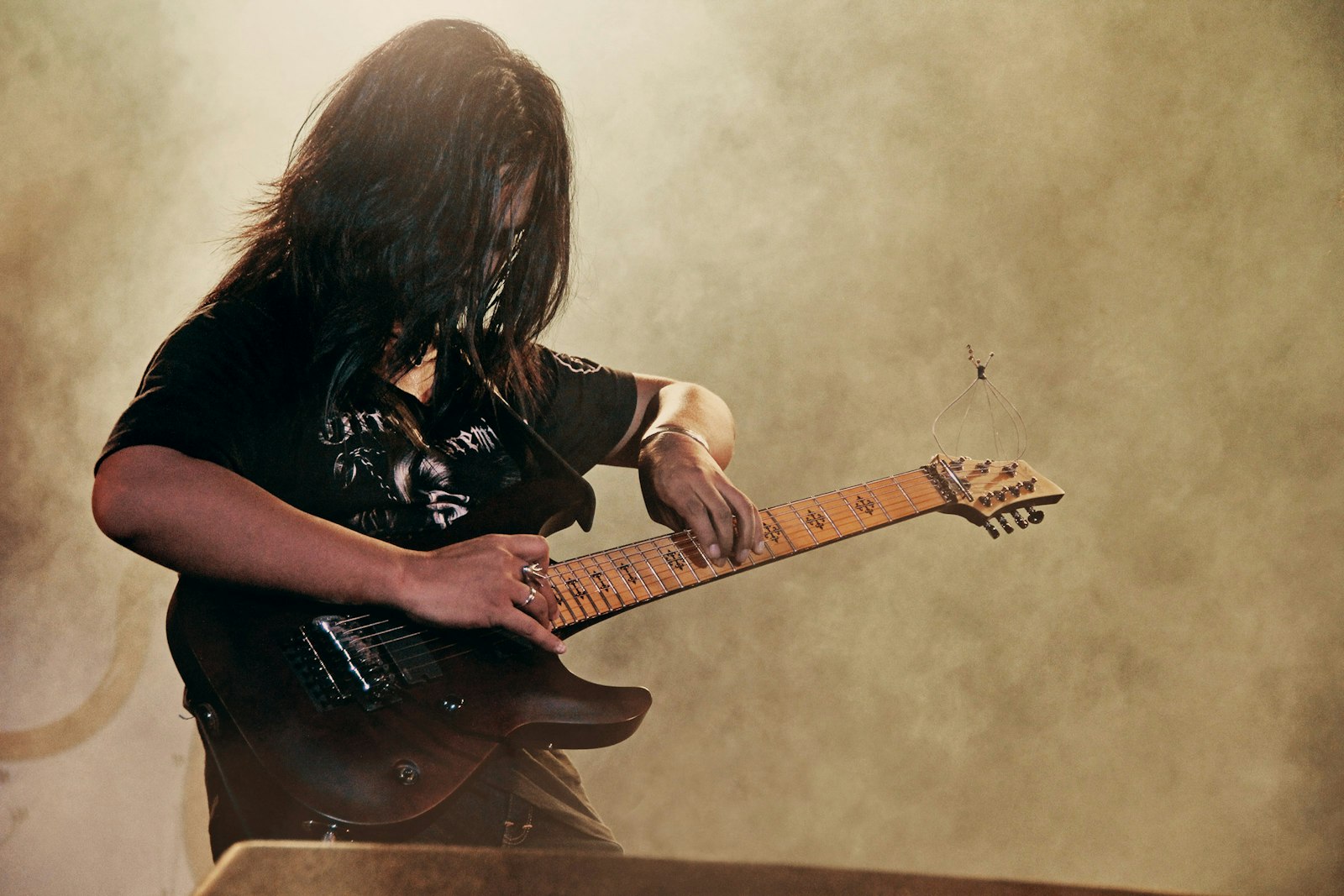
Here is the gem that captured his theatrical imagination. During Led Zeppelin's live shows, Page would pull out a violin bow and play his electric guitar with it, drawing long, eerie, otherworldly sounds out of the instrument that no ordinary picking could produce. It was equal parts musical experiment and showmanship, a spellbinding centerpiece of the band's concerts, and it became one of the iconic images of 1970s rock, the guitar hero sawing at his strings with a bow amid swirling lights.
A second gem reveals the depth of his musical roots. Page was steeped in British folk and acoustic fingerstyle, and his arrangement of the haunting instrumental Black Mountain Side drew directly on the folk-baroque guitar of Bert Jansch, while pieces like Tangerine and Going to California show a delicate side few casual fans associate with the riff lord. He was a sonic visionary in the studio as well, obsessing over microphone placement, layering guitars into huge three-dimensional walls of sound, and reaching for unusual tunings, and on stage he wielded a Gibson Les Paul and a famous double-neck for songs that demanded both six and twelve strings at once.
A Rock and Roll Hall of Fame inductee, Page shaped not only how rock guitar sounded but how it was recorded and presented, serving as Led Zeppelin's producer throughout their reign. For generations of guitarists, his riffs are among the first things they ever learn, and his vision of the guitarist as composer, producer, and showman all at once remains the template for what a rock guitar hero can be. He is, in every sense, the architect of one of the most important catalogs in the history of the instrument.
Legendary Performance
Led Zeppelin at Earls Court Arena
May 17-25, 1975 · Earls Court Arena, London
Led Zeppelin's five-night run at Earls Court in May 1975 is consistently cited by musicians and critics who attended as the peak of their live performance career. The band was at the height of its commercial and artistic powers, "Physical Graffiti" had just been released to widespread critical and commercial success, and the Earls Court shows represented their first major London appearances since 1971. Each night ran to approximately three hours, with sets that included extended improvisational passages in which Jimmy Page's guitar work moved between acoustic fingerpicking, electric slide, and full-band heavy rock without reduction in intensity or precision.
Page's guitar toolkit for the Earls Court run included his 1959 Les Paul Standard, the EDS-1275 double-neck for the live version of "Stairway to Heaven," acoustic guitars for the acoustic set, a Vox Cry Baby wah pedal, and the Echoplex tape delay that shaped his lead tone's sense of space. The bow playing, drawing a cello bow across the electric guitar strings to produce sustained, orchestral tones, appeared in "Whole Lotta Love'"s middle section. These were not technical novelties but compositional tools: Page used each instrument and technique to serve the music's specific requirement at that moment, moving between them with a fluency that made the diversity of his vocabulary feel unified rather than eclectic.
▶ Watch on YouTubeGear
1959 Gibson Les Paul Standard & Gibson EDS-1275 Double-Neck (1959-present)
Known for: "Whole Lotta Love", "Stairway to Heaven", Earls Court 1975
Jimmy Page's primary electric guitar is a 1959 Gibson Les Paul Standard, one of a pair of burst-finish examples he acquired through the session circuit in the late 1960s, known collectively as "Number One" (the main performing guitar) and "Number Two." The 1959 Les Paul's PAF humbuckers and mahogany-maple body construction produce a tonal complexity that Page has described as the closest to the orchestral guitar sound he hears in his imagination: warm in the lower registers, clear in the upper, and sustaining long enough to support the kind of melodic development his solos require. He has played this guitar on virtually every major Led Zeppelin recording.
The Gibson EDS-1275 double-neck, a six-string and twelve-string guitar in a single body, played for the live version of "Stairway to Heaven", is the instrument most associated with Page's visual identity. Its practical purpose was to allow the acoustic twelve-string introduction and the electric six-string solo of the song to be performed without a guitar change in the middle of the live arrangement. Its symbolic weight, the image of Page playing the double-neck under the Earls Court stage lighting, has become one of the defining images of the rock era.
Marshall Super Lead 100W "Plexi" & Hiwatt DR103
Known for: "Whole Lotta Love" guitar tone; live Zeppelin performances
Page ran Marshall Super Lead 100-watt heads, the "plexi" models with the plexiglass front panel, as his primary live amplification through most of Led Zeppelin's touring career, running them through standard 4×12 cabinets at volumes sufficient to produce natural power-amp saturation without an overdrive pedal between the guitar and the input. The Hiwatt DR103 appeared in his setup for cleaner headroom during certain passages, the two amplifier types providing tonal options within a single performance.
His use of the Echoplex tape delay, woven through his lead lines to create the sense of a guitar speaking and answering itself, is one of the most technically imitated effects applications in rock history. The Vox Cry Baby wah pedal, used for both rhythm and lead passages, provided the frequency-selective boost that gave certain solos their vocal quality.
Vox Cry Baby Wah & Maestro Echoplex EP-3
Page's effects vocabulary is small but purposeful: the Vox Cry Baby wah pedal for frequency emphasis in lead playing, the Maestro Echoplex EP-3 tape delay for the echo-and-repeat spatial texture of his solos, and a cello bow applied directly to the guitar strings for the orchestral sustained tones of "Dazed and Confused." The bow technique, drawing a rosined cello bow across the wound strings of the electric guitar while the amplifier sustains the tone, was not Page's invention but his development of it into a performance practice was original.
The Echoplex's tape-based delay mechanism produces a repeat character that digital delays do not accurately replicate: the tape saturation and slight pitch variation of the echoed signal gives the repeat a warmth and organic decay that is audible on Zeppelin recordings and has been the subject of specific study by guitarists attempting to reproduce his lead sound.
Signature Technique
Bowing & Studio Architecture
Jimmy Page drew a cello bow across his electric guitar strings, using the horsehair to vibrate the strings continuously, sustaining notes indefinitely and building impossible swells of harmonic texture. The technique produced an orchestral quality no pick could approach, and Page used it live as well as in the studio, creating passages like the "Whole Lotta Love" theremin-like middle section that no other instrument in the band could account for. The bow gave him access to a different physics of the guitar entirely.
In the studio, Page was equally innovative as an architect of layered guitar sound. He would record multiple takes of different parts, rhythm, counter-melody, fills, and blend them into walls of textured guitar that feel both dense and spacious simultaneously. "Stairway to Heaven," "Kashmir," and "The Rain Song" are master classes in arranged guitar orchestration. He was not just playing guitar; he was building sonic environments in which the guitar was the primary structural material.