








Steve Vai
Current Ranking
Steve Vai is ranked #66 of 162 guitarists on the Greatest Guitar Player fan leaderboard, based on 1 fan vote so far. On the shred and virtuoso leaderboard, Steve Vai ranks #5 of 19. Agree? Rate Steve Vai on 8 attributes at greatestguitarplayer.com/vote.
Biography
Steve Vai, born in New York in 1960, is one of the most technically dazzling and imaginative guitarists who has ever lived, a virtuoso whose combination of jaw-dropping skill, boundless creativity, and theatrical flair has made him a hero to guitar players around the world. A true innovator, Vai approaches the instrument as a vehicle for pure artistic expression, pushing it to extremes of technique and sound while never losing sight of melody, emotion, and showmanship.
Here is the gem that launched his career and revealed his extraordinary gifts. As a teenager, Vai was so determined to play with the famously demanding Frank Zappa that he took on the near-impossible task of transcribing Zappa's fiendishly complex music note for note, and he sent the meticulous transcriptions to Zappa himself. Impressed, Zappa hired the young Vai, dubbing him his stunt guitarist for his ability to play passages others considered unplayable. That apprenticeship under one of music's most challenging composers honed Vai's already formidable technique and set him on the path to becoming a legend. He went on to play with David Lee Roth and Whitesnake before launching a hugely successful solo career.
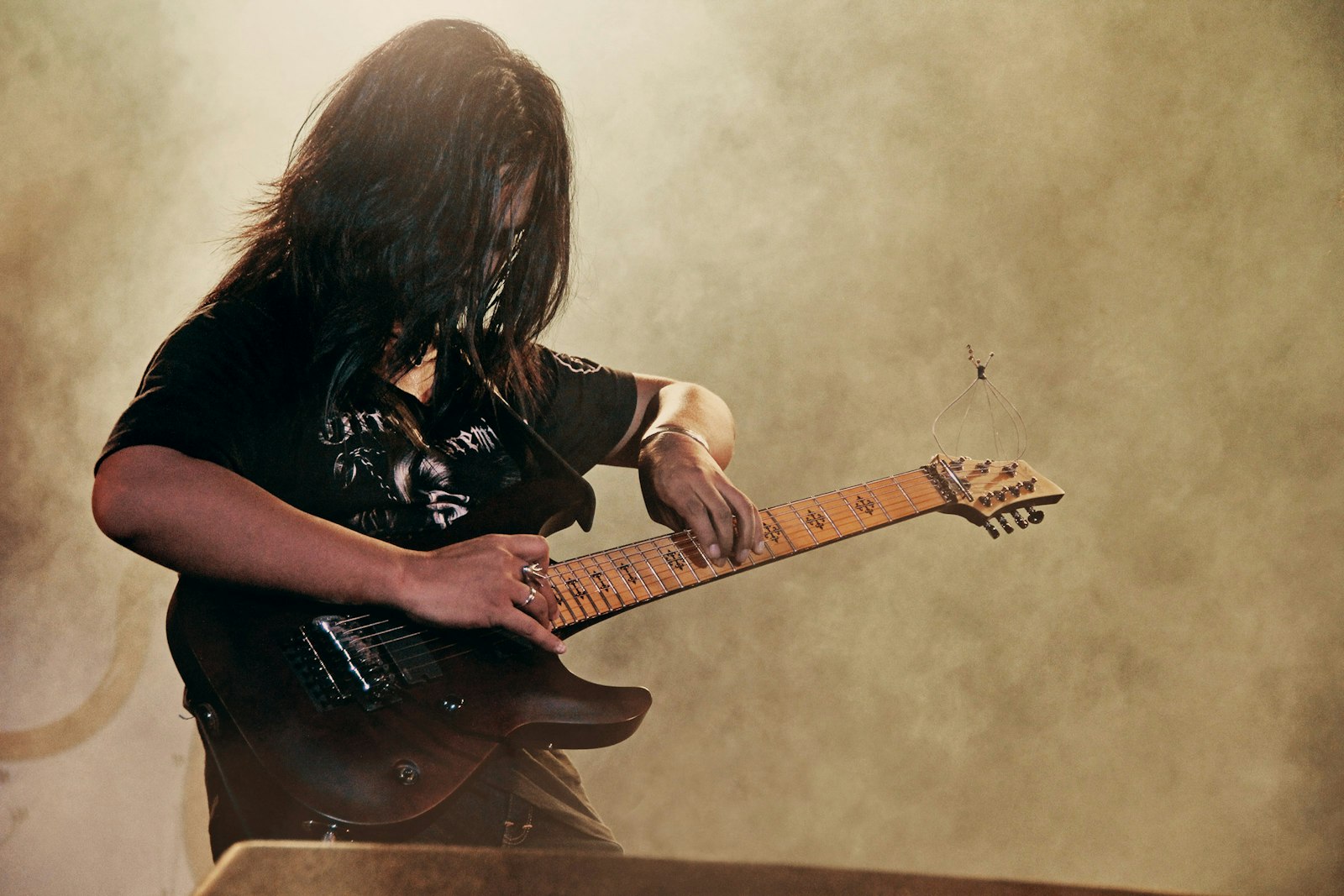
Vai's solo work, especially the album Passion and Warfare with its soaring, transcendent instrumental For the Love of God, showcases everything that makes him special, blistering speed, whammy-bar acrobatics, exotic scales, and a deep emotional and even spiritual sensibility. He plays signature Ibanez guitars, including models with a distinctive carrying handle, and he has experimented with elaborate custom instruments, including a famous triple-neck guitar. He even appeared on screen as the demonic guitarist in a legendary on-film guitar duel in the movie Crossroads, a perfect role for a player whose technique can seem almost supernatural.
A frequent headliner on the G3 tours alongside his former teacher Joe Satriani, Vai is celebrated not just for his technical mastery but for his fearless imagination and his theatrical, expressive performances. He treats the guitar as a tool for limitless creativity, conjuring sounds and emotions few others would even attempt. For aspiring guitarists, Steve Vai is both an inspiration and a challenge, the ultimate example of where dedication, imagination, and technique can take a player. He is a true original, the stunt guitarist turned guitar god whose artistry and innovation have expanded the boundaries of what the instrument can do.
Legendary Performance
Whitesnake at the Monsters of Rock
August 18, 1990 · Castle Donington, Leicestershire, England
Steve Vai joined Whitesnake in 1989 following his tenure with David Lee Roth, and his appearance at the Monsters of Rock festival at Donington in August 1990 was his largest single-day audience as a member of a major rock band: 70,000 people at the flagship British metal festival, with Whitesnake headlining. The performance showcased Vai's complete integration into a band context, his guitar work serving the song structures and David Coverdale's vocal direction rather than existing as a solo vehicle, while demonstrating that the technical vocabulary he had developed through his solo work was not diminished by the collaborative constraint.
His solo passages within the Whitesnake set, particularly on the extended live versions of "Still of the Night" and "Here I Go Again", were the performances that circulated most widely among guitarists following the broadcast. His whammy bar technique, his use of the tremolo arm for sustained pitch variation, and the specific quality of his Ibanez JEM tone through his then-evolving amplification setup were all audible at the Donington distance. For players who knew his "Flex-Able" and "Passion and Warfare" solo recordings, the Monsters of Rock performance demonstrated that those records' techniques were deployable in a live rock band context without artificial studio assistance.
▶ Watch on YouTubeGear
Ibanez JEM 777 Signature (1987-present)
Known for: "For the Love of God"; G3 performances
Steve Vai's Ibanez JEM series, developed in collaboration with Ibanez beginning in 1987, was designed around the specific physical and tonal requirements of his playing: a guitar that could accommodate both the extreme technical demands of his right-hand tapping and pick work and the whammy bar dive-bombs and flutter techniques that required a stable locking tremolo system. The original JEM 777 featured a basswood body, a neck designed to Vai's specifications with a specific taper and fret size, DiMarzio Evolution pickups calibrated to his output requirements, and the "monkey grip", a handle routed through the upper body that Vai uses for performance theatrics rather than any functional guitar purpose.
The locking Ibanez Edge tremolo on the JEM allows aggressive whammy bar use, including full string slack and notes raised by a minor second or more above pitch, while maintaining tuning stability for subsequent passages. This system, which differs from earlier locking tremolos in its pivot bearing precision and string saddle design, is central to the technique vocabulary Vai developed on "Flex-Able," "Passion and Warfare," and subsequent solo recordings.
Carvin Legacy VL100 Signature & Peavey 5150
Known for: "Tender Surrender"; live tone across G3 and solo tours
Vai collaborated with Carvin on the Legacy amplifier series, a tube amplifier designed to his specifications, which became his primary live and studio amplification from the mid-1990s. The Legacy's clean channel provides the full-frequency transparency that his clean lead work requires; the driven channel produces the high-gain saturation of his more aggressive playing without the harshness that competing high-gain amplifiers introduced at the output levels he works at.
His rig incorporates a significant effects rack, harmonisers, digital delays, and modulation effects, that extends the guitar's tonal range beyond what the amplifier alone provides. The Digitech Whammy pedal, whose development he contributed to, allows him to shift pitch in real time over the wider range that his technique requires beyond what the tremolo arm alone can achieve.
Signature Technique
Whammy Extremism & Odd Meters
Steve Vai operates his floating tremolo system, the Ibanez Edge bridge, as a primary melodic tool rather than an accent device. He uses it for divebombs that drop pitch by several octaves, for flutter effects created by rapid arm motion, for harmonic squeals triggered by precise whammy pressure at specific overtone positions, and for micro-pitch inflections that shade a note's emotion without shifting it to a new scale degree. His control of the instrument's mechanical range is so complete that the whammy functions as a second melodic voice running beneath or alongside whatever his fretting hand is doing.
Beyond the whammy, Vai composes and performs in unusual time signatures, 7/8, 11/16, 5/4, treating rhythmic complexity as an expressive choice rather than a barrier. "The Attitude Song," recorded from a transcription of Frank Zappa's piece written specifically to be unplayable, demonstrated early that Vai understood difficulty as a form of musical honesty. His album "Passion and Warfare" remains the most comprehensive document of his full technical and compositional range.