



Brian May
Current Ranking
Brian May is ranked #11 of 162 guitarists on the Greatest Guitar Player fan leaderboard, based on 2 fan votes so far. On the hard rock leaderboard, Brian May ranks #2 of 12. Agree? Rate Brian May on 8 attributes at greatestguitarplayer.com/vote.
Biography
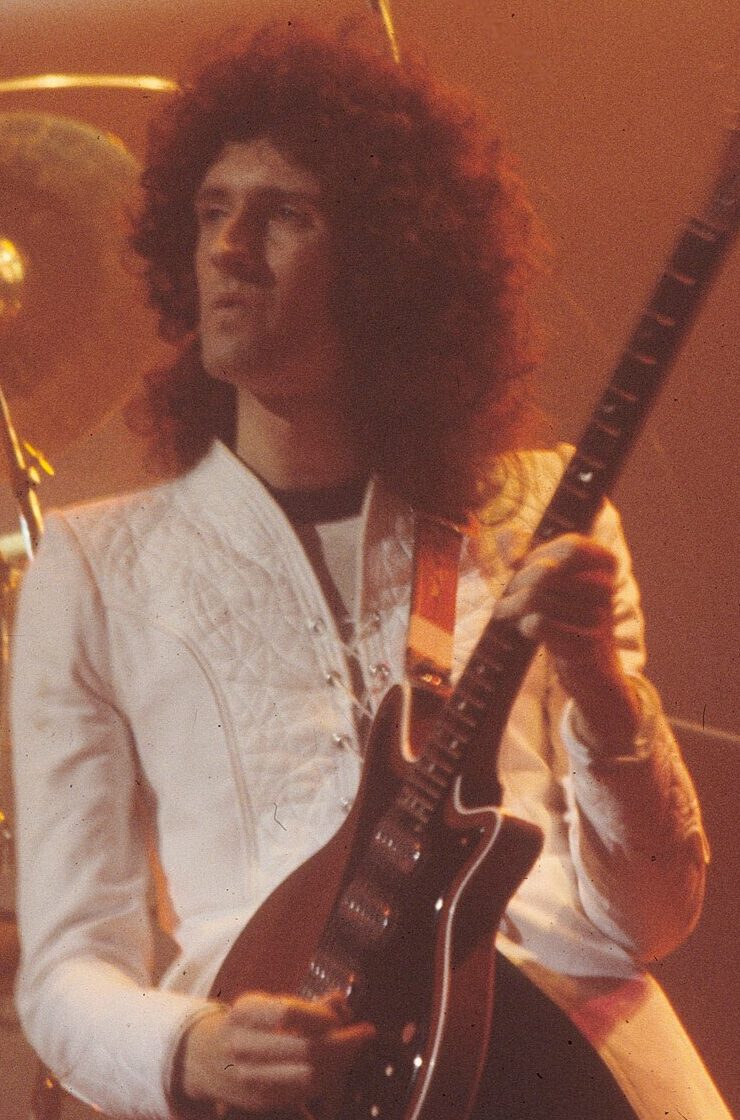
Brian May, born in London in 1947, is the guitarist of Queen and the architect of one of the most distinctive and instantly recognizable guitar sounds in all of rock. A meticulous, classically curious musician, May approached the electric guitar like a composer and a scientist at once, building layered, harmonized parts that function less like rock solos and more like a string section or a choir made of guitars.
You can hear that orchestral imagination all over Queen's catalog. On Bohemian Rhapsody, Killer Queen, and the operatic Brighton Rock solo, May stacks multiple guitar tracks into rich, interlocking harmonies, creating the illusion of a whole guitar orchestra from one player. His tone is warm, vocal, and singing, achieved through a homemade rig, a treble booster pushing a wall of Vox AC30 amplifiers, and one of the most famous personal touches in guitar history.
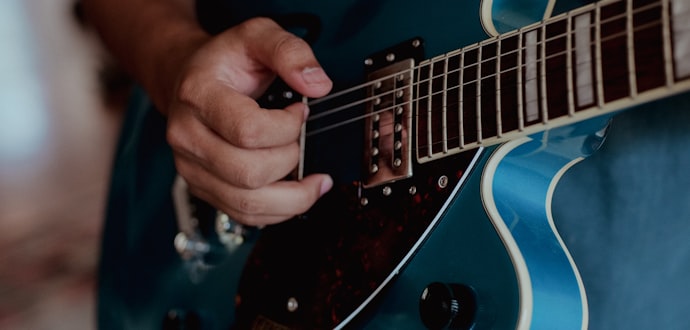
That touch is the first gem. Rather than a normal plectrum, May plays with a sixpence coin, finding that its rigid edge gave him more control and a sharper attack, a tiny, eccentric choice that became part of his signature sound. The second gem is even better. The guitar he uses to make all of it, known as the Red Special, was built from scratch when he was a teenager by May and his father in their home workshop, using salvaged materials including wood from an old fireplace mantelpiece, valve springs, and bits of household hardware. He has played that homemade instrument as his main guitar for his entire career, in front of millions of people and at events like Live Aid, and it remains one of the most beloved and frequently copied guitars ever made, even though it started as a father-and-son science project.
There is a third gem that completes the picture: May is a genuine astrophysicist. He began a doctorate in the early 1970s, set it aside when Queen exploded, and finally returned to finish his PhD in astrophysics decades later, going on to collaborate with NASA on space missions and become a passionate advocate for science. That blend of rigorous scientific mind and soaring musical romance is the essence of Brian May.
He treats the guitar as something to be understood, engineered, and then made to sing, and the result is a body of work that sounds like no one else, played on an instrument that exists nowhere else. After the death of singer Freddie Mercury, May helped keep Queen's legacy alive through tributes and new collaborations, and he was knighted for his services to music and charity. A Rock and Roll Hall of Fame inductee, Brian May stands as one of rock's true originals, the scientist-musician whose homemade guitar, sixpence pick, and orchestral imagination created a sound the world had never heard before and has never forgotten.
Legendary Performance
Bohemian Rhapsody & We Will Rock You at Live Aid
Queen's 21-minute Live Aid set is widely cited as the greatest live performance in rock history, and Brian May's guitar work was its beating heart. From the opening chords of 'Bohemian Rhapsody' to the anthemic climax of 'We Are the Champions,' May navigated the band's complex arrangements with a poise that belied the pressure of performing for an estimated 1.9 billion television viewers. His homemade Red Special rang out across Wembley with a richness and sustain that no production budget could replicate.
What distinguished May that afternoon was his restraint as much as his power. On 'Crazy Little Thing Called Love' he channeled rockabilly twang; on 'Hammer to Fall' he unleashed full-bore stadium rock. The seamless shifting between tones, all produced from one guitar and a chain of AC30s, demonstrated a musicianship that transcended genre. Decades later, that performance remains the benchmark for what a rock guitarist can achieve on the world's biggest stage.
▶ Watch on YouTubeGear
Red Special (Homemade, 1963-1964)
Brian May's Red Special, built by hand with his father Harold over eighteen months when he was a teenager, is one of the most iconic guitars in rock history, and arguably the most famous homemade instrument ever played on a world stage. Constructed largely from reclaimed materials including an oak fireplace mantel for the neck and a centuries-old mahogany table for the body, the guitar features three Burns Tri-Sonic single-coil pickups wired with individually switchable phase and on/off toggles. This switching system allows an extraordinary range of tones from a single instrument, and May has used essentially the same guitar for over fifty years of recording and performing.
Vox AC30 (Multiple Units)
May's amplifier setup is as distinctive as his guitar. He runs multiple Vox AC30s simultaneously, typically three or more, which allows him to layer tones and create the orchestral fullness that characterizes Queen's recordings. The AC30's natural compression and harmonic richness suits the Red Special perfectly, and the combination produces the thick, harmonically saturated 'cello' tone that defines songs like 'Bohemian Rhapsody' and 'We Will Rock You.' May has never been persuaded to modernize his amp setup, and the consistency of his tone across five decades is a testament to that loyalty.
Sixpence / Treble Booster
One of May's most celebrated 'effects' is entirely accidental: he uses a British sixpence coin as a pick, its milled edge gripping the strings and producing a harder attack and brighter initial transient than conventional picks. In terms of electronics, his primary processing tool is a homemade treble booster similar to a Dallas Rangemaster, a simple circuit that pushes the AC30's front end into a smooth, singing overdrive. No elaborate pedal chains, no digital processing: just a handmade guitar, a coin, a booster, and a wall of British valve amplifiers.
Signature Technique
Orchestrated Harmony Guitar & The Red Special
Brian May built his guitar, the Red Special, by hand as a teenager, using wood from a fireplace mantelpiece, a motorcycle valve spring for the tremolo arm, and whatever materials his father could help him salvage. The instrument he produced has a unique acoustic resonance and sustain profile unlike any commercial guitar, and it responds to his playing in ways that no replica or substitute has ever duplicated. He plays it exclusively with an old English sixpence coin as a pick, giving his attack a warm, rounded bite and enabling a picking-hand harmonic technique that contributes to the guitar's characteristic singing tone.
His defining studio technique is orchestrated harmony guitar: recording the same melodic line in multiple takes, each harmonised at a different interval, a third above, a sixth above, an octave above, and layering them into a guitar ensemble that sounds like a string section or a choir. The guitar solo in "Bohemian Rhapsody" is one guitar heard through this lens; "Brighton Rock" and "Killer Queen" show the orchestral range of the technique. The harmonies are meticulous and just intonation-aware, May studied physics at Imperial College before Queen broke through, and his ear for the mathematics of harmonic intervals is precise in a way that most self-taught players cannot access.