




Buckethead
Current Ranking
Buckethead is ranked #92 of 162 guitarists on the Greatest Guitar Player leaderboard, based on our editorial score until fans weigh in. On the shred and virtuoso leaderboard, Buckethead ranks #10 of 19. No fan votes yet, so be the first to rate Buckethead on 8 attributes at greatestguitarplayer.com/vote.
Biography
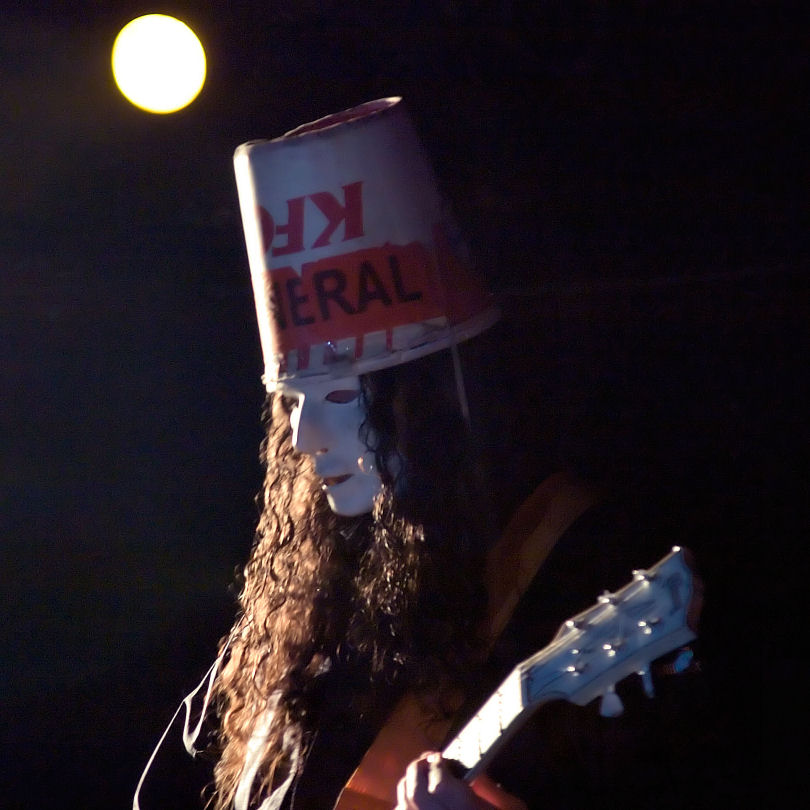
Buckethead, born Brian Carroll in California in 1969, is one of the most prolific, mysterious, and jaw-droppingly virtuosic guitarists alive, a player whose staggering technical command is matched only by the strangeness of his stage persona. He performs wearing an expressionless white mask and an upturned KFC-style bucket on his head, rarely speaks in public, and has spun an elaborate mythology around himself, including a tongue-in-cheek backstory about being raised by chickens in a coop.
Behind the costume is a player of almost frightening ability. Buckethead can shred with the blinding speed and precision of the most extreme metal players, then turn around and play delicate, melodic, deeply emotional passages that show a composer's sensitivity. His music ranges across blistering technical metal, ambient soundscapes, funk, bluegrass-flavored picking, avant-garde noise, and beautiful film-score-like pieces, often within a single record. He is also known for theatrical stage antics, breaking into robotic dance moves and twirling nunchucks mid-set, a surreal contrast to the seriousness of his playing.
Here is the gem that defines him: Buckethead is almost unfathomably prolific. He has released hundreds of studio albums, an output so vast that few fans have heard all of it, churning out entire records at a pace that would take most musicians several lifetimes. This flood of music, much of it self-released in plain packaging, has made him a cult hero, the rare virtuoso who seems to create purely for the joy and compulsion of it rather than for fame.
His reputation among other musicians is enormous. He spent a few high-profile years in Guns N' Roses during the long, troubled gestation of Chinese Democracy, collaborated with the experimental producer Bill Laswell and with funk legend Bootsy Collins, and has been praised by guitar heroes across every genre. Through it all he has guarded his real identity and kept the mask on, letting the music and the mystery do the talking. For guitarists, Buckethead is a singular figure, proof that you can be one of the most technically gifted players on the planet and still treat the whole enterprise as a piece of strange, joyful, never-ending performance art.
Legendary Performance
Guns N' Roses at Rock in Rio III
January 19, 2001 · Sambódromo do Anhembi, Rio de Janeiro, Brazil
When Guns N' Roses took the stage at Rock in Rio in January 2001, they had not performed publicly in eight years. The crowd of 250,000 had been waiting for a band that had spent most of the 1990s in rumour and litigation, and the version of the band that appeared bore almost no resemblance to the original lineup, with one significant exception in the form of Buckethead, the masked guitarist who had joined the new lineup in 2000 and whose technical capability was so far outside normal parameters that it gave the reconstituted band an identity of its own. His solos during the Rio set, particularly on "Welcome to the Jungle" and "November Rain", were among the most discussed guitar moments of the night, combining legato runs at extraordinary speeds with a melodic intelligence that kept the virtuosity purposeful.
The Rock in Rio performance was the moment Buckethead became known to an audience beyond the guitar community that had followed his solo records. His playing that night demonstrated the quality that distinguished him from other speed-focused players: the technique was never the point in itself, but rather the vehicle for phrasing that had genuine musical direction. The combination of extreme velocity and melodic coherence, delivered in a costume that was deliberately surreal, white mask, KFC bucket, oversized jumpsuit, produced the cognitive dissonance that defined his public persona: virtuosity arriving from the most unexpected direction imaginable.
▶ Watch on YouTubeGear
Custom White Gibson Les Paul-style Instruments (1990s-present)
Known for: Rock in Rio with Guns N' Roses, 2001
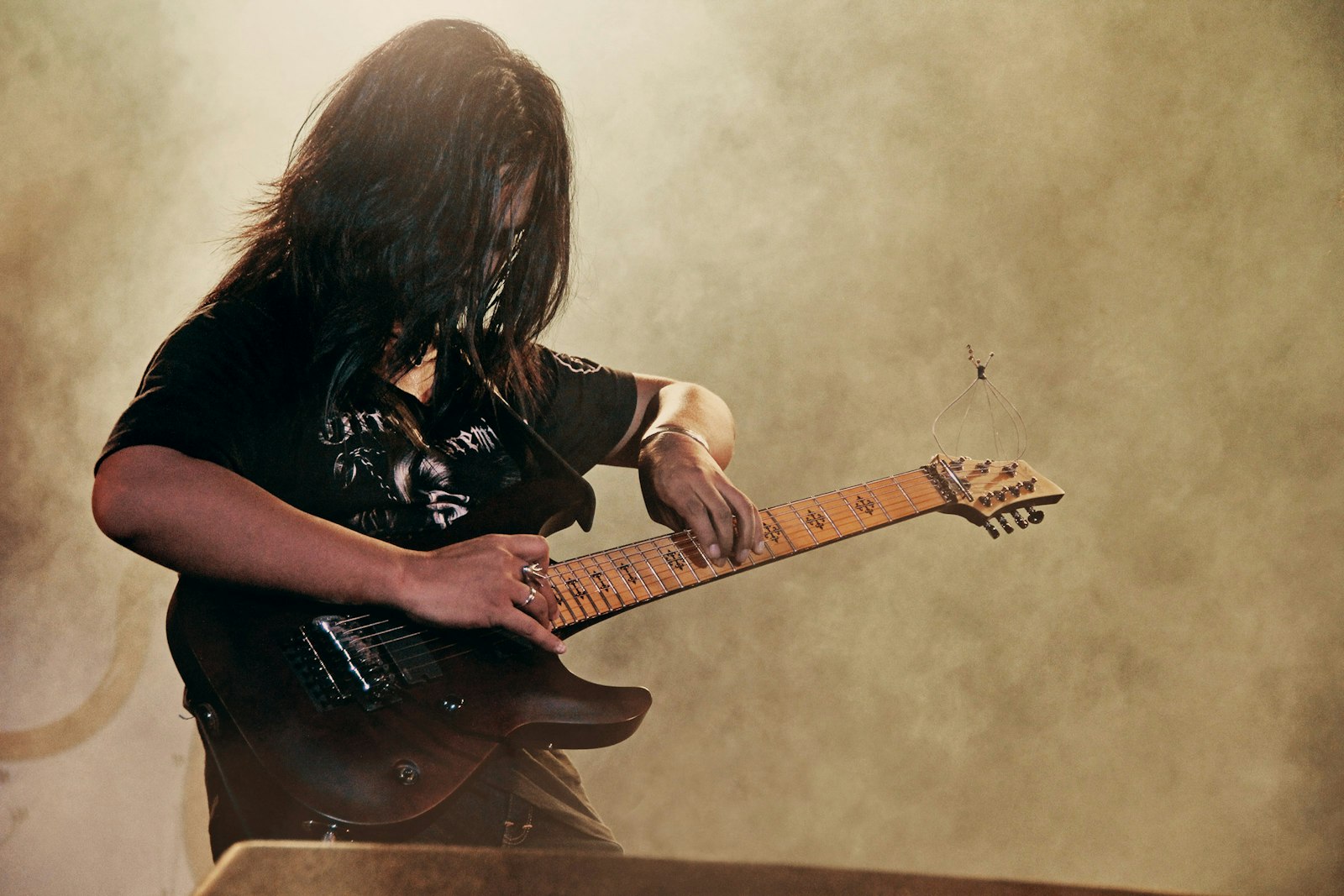
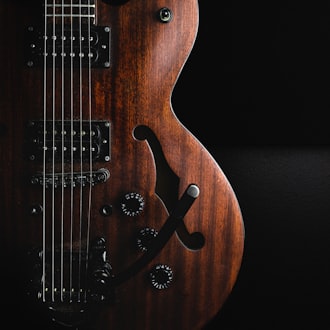
Buckethead has played custom guitars throughout his career, instruments built to his specifications rather than production models, typically in a Les Paul body style with a white finish, reflecting both the persona's visual consistency and the tonal requirements of his playing. The Les Paul-style construction provides the sustain and output his legato technique requires: long hammer-on and pull-off passages need a guitar that maintains string vibration without the player constantly re-picking, and the humbucker pickups in a mahogany body provide that sustain naturally.
He has also used BC Rich guitars, particularly in his earlier performing years, the BC Rich Mockingbird and other models with their sharper, more aggressive body shapes appeared regularly in his early live performances. His guitar choices have always been functional rather than signature-driven: the instrument exists to serve the technique, and consistency of function matters more than brand identity.
Marshall & Mesa/Boogie
Known for: Solo recordings and live performances
Despite the theatrical persona, the KFC bucket, the white mask, the elaborate stage setup, Buckethead's amplifier chain has typically been surprisingly conventional: Marshall heads for the British-voiced drive character, or Mesa/Boogie for higher-gain American tones, both through 4×12 cabinets. The amplifier serves the guitar signal without adding significant character of its own beyond the gain structure.
His live tone, particularly in the Guns N' Roses period, leaned toward a relatively clean-to-moderate gain setting, with the extreme velocity of his technique providing its own apparent density. High gain can obscure technical detail at speed; Buckethead's preference for a cleaner foundation allows the individual notes of his legato runs to remain audible.
Digitech Whammy Pedal
The Digitech Whammy pedal, a pitch-shifting expression pedal that can raise or lower the guitar's pitch by up to two octaves in real time, is the single most distinctive piece of equipment in Buckethead's rig. He uses it to extend the guitar's effective range beyond what the instrument's frets can provide, sweeping through pitch intervals in ways that no traditional technique allows.
Combined with his legato runs and tapping passages, the Whammy pedal enables him to move across multiple octaves within a single phrase, creating a dizzying sense of spatial travel that is entirely his own. Tom Morello popularised a different application of the same pedal at approximately the same period; Buckethead's use is more melodically fluid, treating the Whammy as an expressive extension of the guitar rather than a shock-value effect.
Signature Technique
Extreme Legato, Chicken Pickin' & Multi-Technique Fusion
Buckethead's technique defies single-category description because it incorporates approaches that are rarely found in the same player: the smooth, hammer-on-dominant legato of the fusion tradition, the snapping percussive attack of country chicken pickin', two-handed tapping developed independently of but comparable to Eddie Van Halen's, and a whammy-bar and Digitech Whammy pedal vocabulary that extends the guitar's pitch range into territories that are technically not available on a standard instrument. He moves between these techniques within individual solos without audible seam, which is the aspect of his playing that most challenges easy description: the transitions are not stylistic detours but continuous musical thought expressed through whatever technical means are most appropriate at that moment.
His legato runs, the hammer-on and pull-off passages that he can sustain across multiple octaves at extraordinary speed, are the most discussed element of his technique, and the speed is real and documented. But the quality that distinguishes his best playing from pure technique display is melodic purposefulness: the runs go somewhere, they have directional shape, and they resolve in ways that make musical sense even when the velocity at which they travel makes tracking them in real time nearly impossible. He has released over 300 albums, the majority as solo instrumental records, which means there is more documented Buckethead guitar playing than almost any artist in history, a body of work that rewards attention in proportion to the patience brought to it.