


Freddie King
Current Ranking
Freddie King is ranked #73 of 162 guitarists on the Greatest Guitar Player leaderboard, based on our editorial score until fans weigh in. On the blues leaderboard, Freddie King ranks #16 of 32. No fan votes yet, so be the first to rate Freddie King on 8 attributes at greatestguitarplayer.com/vote.
Biography
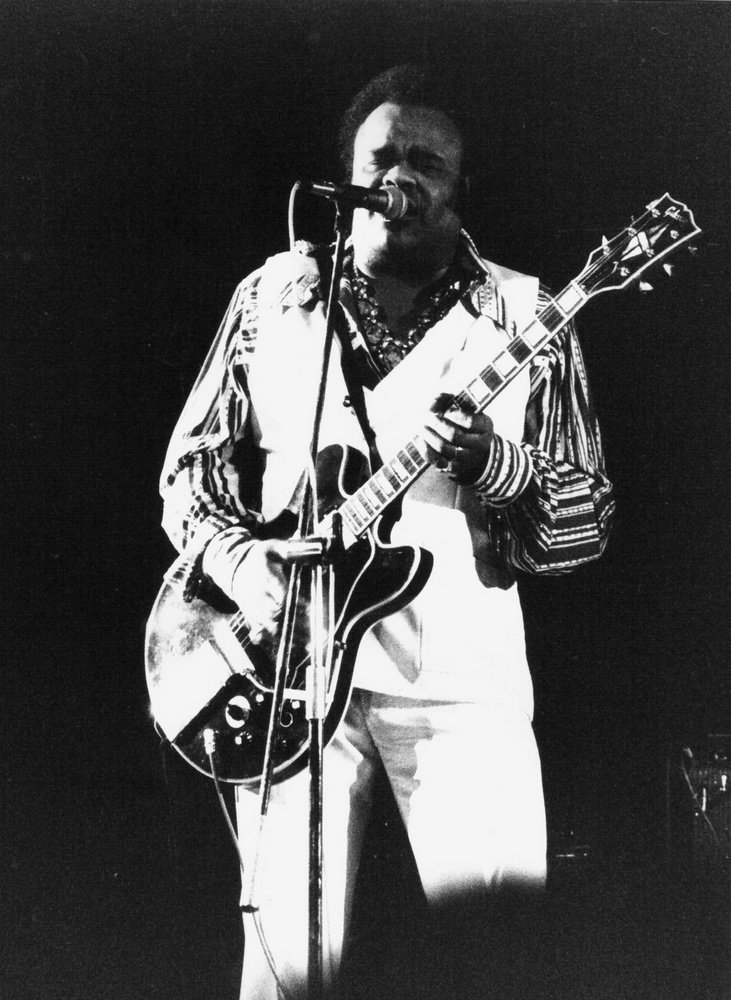
Freddie King, born in Texas in 1934, was one of the Three Kings of the blues, standing alongside B.B. King and Albert King as a founding father of modern electric blues guitar, and arguably the most directly influential of the three on the rock players who followed. Nicknamed the Texas Cannonball, he combined the deep feeling of the blues with a ferocious physical attack, and his fiery, muscular style became a foundational text for an entire generation of guitar heroes.
King grew up between Texas and Chicago, absorbing both the Texas blues tradition and the electric Chicago sound, and he forged them into something powerful and personal. His signature was a series of instrumentals, above all the propulsive Hide Away, that became required learning for aspiring blues-rock guitarists. His playing was aggressive and stinging, full of snapping string bends and biting tone, and he sang with a big, commanding voice to match.
A key to that attack lies in the gem of his technique. Unlike most blues guitarists, who used a flatpick or bare fingers, King played with a plastic thumbpick and a metal fingerpick on his index finger, the same approach country and banjo pickers used. That unusual choice gave his notes a sharp, percussive snap and a piercing clarity that cut through any band, and it became part of his unmistakable sound. He essentially imported a country picking technique into hard electric blues, and the result was electrifying.
King's influence on rock guitar is enormous and direct. Eric Clapton recorded Hide Away early in his career and idolized him, Stevie Ray Vaughan worshipped him, and players from Jeff Beck to Mick Taylor to countless bar-band guitarists learned his instrumentals note for note. He was a thrilling live performer who toured relentlessly, and that punishing schedule may have contributed to his death in 1976 at just forty-two. Inducted into the Rock and Roll Hall of Fame, Freddie King remains the bridge between the older blues masters and the rock guitar explosion of the 1960s and 1970s, the Texas giant whose snapping, fiery style taught the rock generation how to make the blues roar.
Legendary Performance
Ann Arbor Blues Festival
August 1969 · University of Michigan campus, Ann Arbor, Michigan
The Ann Arbor Blues Festival of 1969 was among the first events designed specifically to present Chicago and Texas blues to a predominantly white college audience, and its lineup, which included Muddy Waters, Son House, B.B. King, and Freddie King, served as a collective introduction of the tradition to a generation that had heard its influence through the British Invasion without necessarily knowing the source material. Freddie King's set demonstrated the specific quality that distinguished him from the other Kings: where B.B. played with ornate melodic sophistication and Albert with brutal force, Freddie's playing moved with a fluency that suggested jazz vocabulary applied to blues feeling. His right-hand technique, a flat pick combined with a metal fingerpick, gave his picking a particular brightness that cut through the outdoor acoustic environment.
The Ann Arbor festival served as the discovery moment for many musicians who had absorbed blues influence secondhand. Eric Clapton, who had already recorded his interpretations of Freddie King's instrumentals on the Bluesbreakers album, later cited the festival recordings as evidence of how far the originals exceeded the covers. King's influence on Clapton, Stevie Ray Vaughan, and the entire Texan blues-rock tradition that developed in the 1970s flows directly from the instrumental vocabulary he demonstrated at concerts like this one, a vocabulary so original that its fingerprints are audible in every blues-rock solo that followed.
▶ Watch on YouTubeGear
Gibson ES-345 Stereo, Cherry Red (1960s)
Known for: "Hide Away", 1961; covered by Eric Clapton, 1966
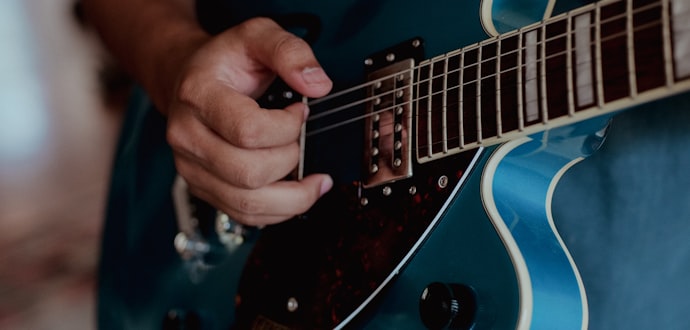
Freddie King's most visually and tonally identified guitar was his cherry red Gibson ES-345 Stereo, a semi-hollow body with two humbuckers, the Varitone selector switch, and a stereo output that he typically ran in mono. The ES-345 was a step up from the ES-335 in Gibson's lineup, with the Varitone providing EQ filtering options that King used to shape his tone. The cherry finish made the guitar visually distinctive, and photographs of King performing with it established the visual identity of Texas blues for the generation of British players who studied those images.
The guitar's humbuckers produced a warmer, fuller tone than the single-coil instruments favoured by many contemporaries, which suited King's approach to blues phrasing: he wanted notes that sustained long enough to be bent and vibrated expressively, and the humbucker's output gave him that sustain. Eric Clapton, learning from King's recordings and eventually covering "Hide Away" on the Bluesbreakers album, was studying this specific guitar sound and attempting to reproduce it on his own Les Paul.
Gibson GA-40 Les Paul Amplifier / Fender Super Reverb
Known for: "San-Ho-Zay", 1961 recordings
King used Gibson amplifiers in his early recording sessions, the GA-40 Les Paul model, a tube combo that paired naturally with his ES-345 in the era before Fender combos became the dominant blues amplifier. The GA-40's clean headroom and natural compression suited the blues picking dynamics he employed, particularly the pick-and-fingerpick combination that produced the characteristic brightness of his attack.
By the late 1960s and into his final decade, King had adopted Fender Super Reverb combos for live work, their louder clean headroom and wider frequency response suited the larger venues he was increasingly playing as the British blues revival brought American artists back to a global audience that had discovered them through their British interpreters.
Signature Technique
Texas Shuffle Blues & Hybrid Picking Precision
Freddie King's picking technique was unusual: he used a plastic flatpick in combination with a metal finger pick on his index finger, a combination that produced a picking attack brighter and more percussive than either implement alone. The flatpick provided the low-string attack needed for rhythm playing and bass notes; the metal fingerpick gave the upper-string melody lines a sharp, cutting quality that cut through the amplifier's output and distinguished his lead tone from other blues guitarists of his period. This hybrid picking approach, distinct from the acoustic-folk hybrid picking of players like Chet Atkins, was self-developed and self-consistent: King used it for rhythm and lead throughout his career without modification.
His melodic vocabulary on instrumentals like "Hide Away" and "San-Ho-Zay", pieces that Eric Clapton recorded on the Bluesbreakers album and that became the templates for an entire generation of British blues learning, combines Texas shuffles with single-note lines that use chromaticism sparingly but effectively, adding and resolving tension within the pentatonic framework rather than replacing it. Stevie Ray Vaughan, who came from the same Texas tradition, cited King as the guitarist who most directly shaped his approach to single-note phrasing. That lineage, from King to Vaughan to the current generation of Texas blues players, is traceable not to stylistic imitation but to the specific melodic logic King developed, which proved generative enough that successive players could derive their own approaches from it.