
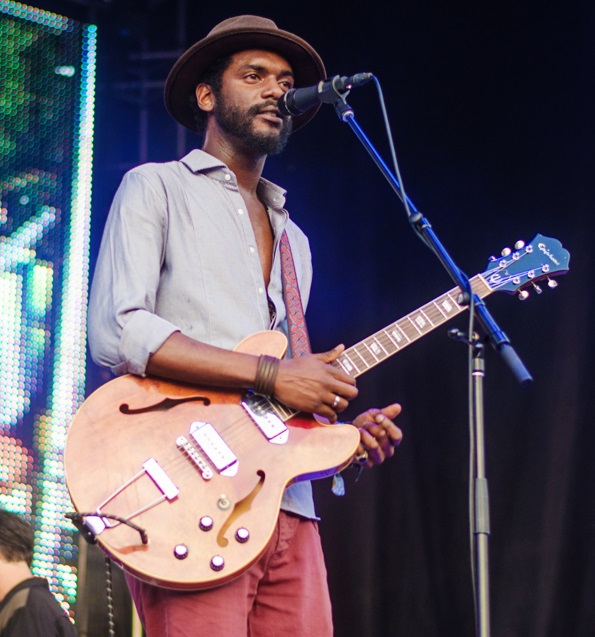

Gary Clark Jr.
Current Ranking
Gary Clark Jr. is ranked #93 of 162 guitarists on the Greatest Guitar Player leaderboard, based on our editorial score until fans weigh in. On the blues leaderboard, Gary Clark Jr. ranks #19 of 32. No fan votes yet, so be the first to rate Gary Clark Jr. on 8 attributes at greatestguitarplayer.com/vote.
Biography
Gary Clark Jr., born in Austin, Texas in 1984, is one of the most celebrated guitarists of his generation and a player widely hailed as a vital new voice in the blues, even as he refuses to be confined by the genre. Rising out of the rich Austin music scene that also produced Stevie Ray Vaughan, Clark built his reputation on a huge, fuzzy, soulful guitar tone and a fearless willingness to blend the blues with rock, soul, R&B, and hip-hop into something that feels distinctly modern.
Clark came up playing the Austin clubs as a teenager, mentored by the city's blues community, and his big breakthrough showcase, the slow-burning Bright Lights, announced a guitarist with old-soul feel and a thoroughly contemporary edge. His signature sound leans on thick, saturated fuzz and overdrive, so his solos can snarl and roar, but he is equally at home with clean, gospel-tinged tones and tender ballads. He sings with a smooth, soulful voice that gives his music a reach far beyond the traditional blues audience, and his records range across genres without ever losing the blues at their core.
Here is the gem that signals his stature. Eric Clapton personally invited the young Clark to perform at his prestigious Crossroads Guitar Festival, a gathering of the world's greatest guitarists, and Clark's electrifying performances there helped vault him to international attention and the unofficial title of the future of the blues. From there he went on to win Grammy Awards, perform at the White House for President Obama, and share stages with the biggest names in rock, all while still in the early arc of his career.
What makes Clark important is that he carries the blues forward rather than simply preserving it. He honors the tradition of the Texas and Chicago masters while writing songs about the present, including pointed commentary on race and modern America, proving the blues can still speak directly to the moment. With his commanding tone, his genre-blending vision, and his easy charisma, Gary Clark Jr. has become living evidence that the blues is not a museum piece but a living language, and that its newest chapter is being written by players bold enough to drag it somewhere new.
Legendary Performance
Bonnaroo Music Festival Headline Set
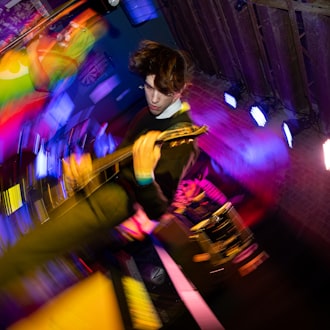
Gary Clark Jr.'s headline appearance at Bonnaroo 2013 arrived at the precise moment his career was accelerating from cult favourite to mainstream recognition, and the performance delivered everything that his recordings had promised and more. Playing to one of the festival's largest crowds, he opened with a blues jam that extended for nearly twenty minutes before the first song was announced, establishing from the outset that this was a performance built on the fundamentals of improvisational music rather than the track-by-track reproduction of a setlist. His Gibson ES-335 through a wall of vintage amplification produced a tone simultaneously raw and polished, the kind of sound that could only come from years of playing the blues circuit in Austin before the major label offers arrived.
The set drew from the full range of his influences without feeling eclectic or unfocused: Delta blues structures gave way to Hendrix-influenced psychedelia, which dissolved into soul-inflected rhythm and blues before returning to the hard-rock riffing of his heavier material. Throughout, Clark's guitar playing demonstrated an improvisational fluency that located him in the tradition of players who use the blues as a starting point rather than a destination. His extended guitar solos, unhurried, melodically rich, and emotionally direct, drew on Muddy Waters and Freddie King as readily as they drew on Jimi Hendrix, synthesising a tradition into something that sounded entirely contemporary.
▶ Watch on YouTubeGear
Gibson ES-335
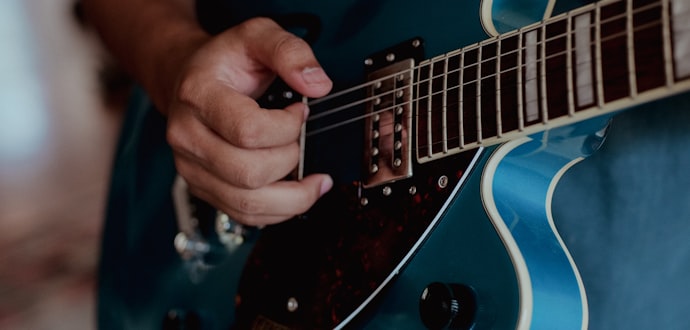
Gary Clark Jr.'s primary instrument is the Gibson ES-335, the thinline semi-hollow archtop that has been central to blues, jazz, and rock since its introduction in 1958. The ES-335's construction, a maple centre block running through a hollow body, combines the feedback resistance of a solidbody with the warmth and resonance of a hollow instrument, producing the rich, slightly compressed tone that suits Clark's fusion of blues tradition and modern production. He plays the instrument hard, his right hand delivering strong pick attacks that drive the pickups into natural compression, and his left hand applying the string bends and vibrato that are the direct descendants of the Texas blues players he studied in Austin.
Vintage Fender & Vox Amplification
Clark's amplifier setup draws on vintage American and British equipment depending on the sonic requirement: Fender Vibroverb and Super Reverb amplifiers provide the clean, warm foundation for his bluesier material, while Vox AC30s add the chimey British clarity for his more melodic passages. Running multiple amplifiers simultaneously allows his tone to occupy a fuller frequency range than any single amplifier can provide, and the slight phase interactions between the outputs add a dimensional quality to his live sound that studio recordings can only approximate.
Dunlop Fuzz Face & Wah
Clark's effects chain is rooted in vintage-correct pedals: a Dunlop Fuzz Face germanium fuzz, the same circuit type used by Hendrix, provides the saturated, harmonically rich distortion that drives his heavier passages, while a Dunlop Cry Baby wah adds the vocal expressiveness of classic blues-rock lead playing. The relatively simple chain reflects his orientation toward tone as a product of touch and amplifier response rather than processing, and his ability to move between radically different tonal characters within a single solo demonstrates what a player with genuine dynamic control can extract from minimal equipment.
Signature Technique
Signature Technique
Gary Clark Jr. represents the most direct living connection between the Texas blues tradition and contemporary popular music, his guitar technique rooted in the playing of Muddy Waters, Freddie King, and T-Bone Walker while existing in a production and performance context that incorporates hip-hop and psychedelic rock. His technique is not a revival or a pastiche but a genuine synthesis: he plays the blues because it is his native musical language, absorbed growing up in Austin among the players who kept the tradition alive, and the contemporary elements of his work emerge from the same organic immersion rather than from deliberate cross-genre strategy.
Clark's left-hand technique places unusual emphasis on slides and microtonal bends that fall between the equal-tempered pitches of the standard Western scale, the "blue notes" that gave the blues its characteristic emotional colour and that cannot be precisely notated in conventional music notation. His ability to land consistently on these between-the-fret pitches and sustain them with vibrato that varies from gentle wobble to wide, urgent oscillation gives his playing its expressive rawness and connects it directly to the pre-electric blues tradition from which the technique derives. This is not a learnable scale pattern but a deeply internalised musical vocabulary.
Beyond his lead playing, Clark's rhythm guitar technique is distinguished by exceptional dynamic range, the ability to move from the whispered chord stabs of a quiet verse to the full-arm strumming of a peak chorus while maintaining precise time and tone throughout. His right-hand technique, particularly the way he accents specific beats within a bar to create rhythmic tension against the drum pattern, reflects the deep groove awareness of a player formed in the tradition of playing with experienced rhythm sections from an early age. This rhythmic intelligence makes his guitar playing function as both melodic voice and rhythmic anchor simultaneously.