
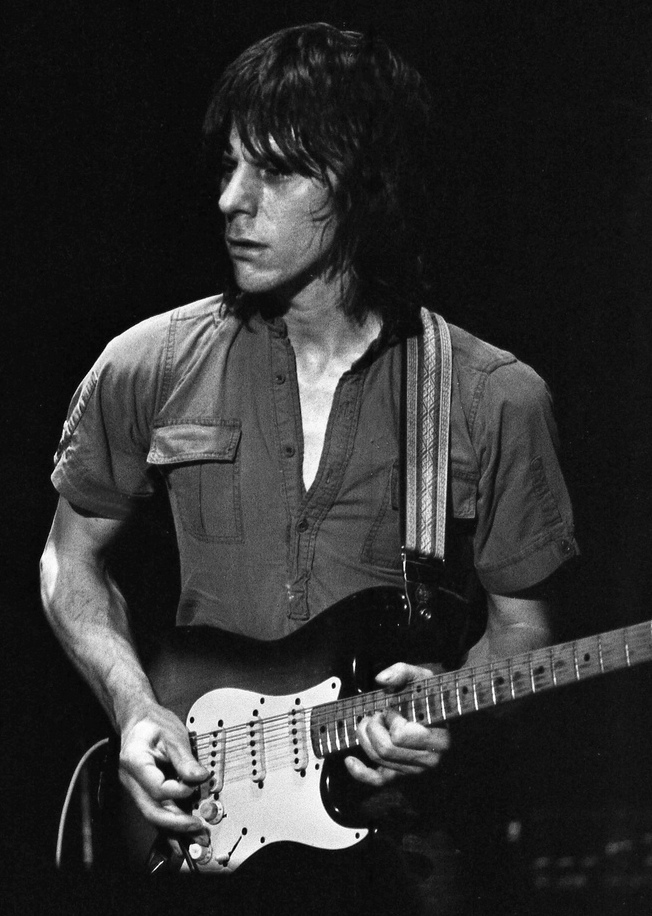

Jeff Beck
Current Ranking
Jeff Beck is ranked #10 of 162 guitarists on the Greatest Guitar Player fan leaderboard, based on 1 fan vote so far. On the classic rock leaderboard, Jeff Beck ranks #4 of 18. Agree? Rate Jeff Beck on 8 attributes at greatestguitarplayer.com/vote.
Biography
Jeff Beck, born near London in 1944, was a guitarist's guitarist in the truest sense, a fearless innovator who spent six decades refusing to repeat himself and chasing sounds no one else even imagined. Widely regarded by his peers as one of the greatest and most original electric guitarists who ever lived, he cared nothing for commercial formulas, abandoning success again and again to follow his restless curiosity wherever it led.
Beck first made his name in the Yardbirds, the same band that launched Eric Clapton and Jimmy Page, and his wild, experimental playing there pointed toward psychedelia and hard rock before either fully existed. He then formed the Jeff Beck Group, helping invent heavy blues-rock and giving an early stage to singer Rod Stewart and bassist Ronnie Wood. But rather than settle into stardom, he kept moving, pioneering jazz-fusion on the landmark instrumental albums Blow by Blow and Wired, exploring electronica, and constantly reinventing his approach. His tone could be savage or impossibly tender, and his version of the ballad Cause We've Ended as Lovers is a master class in making a guitar weep.
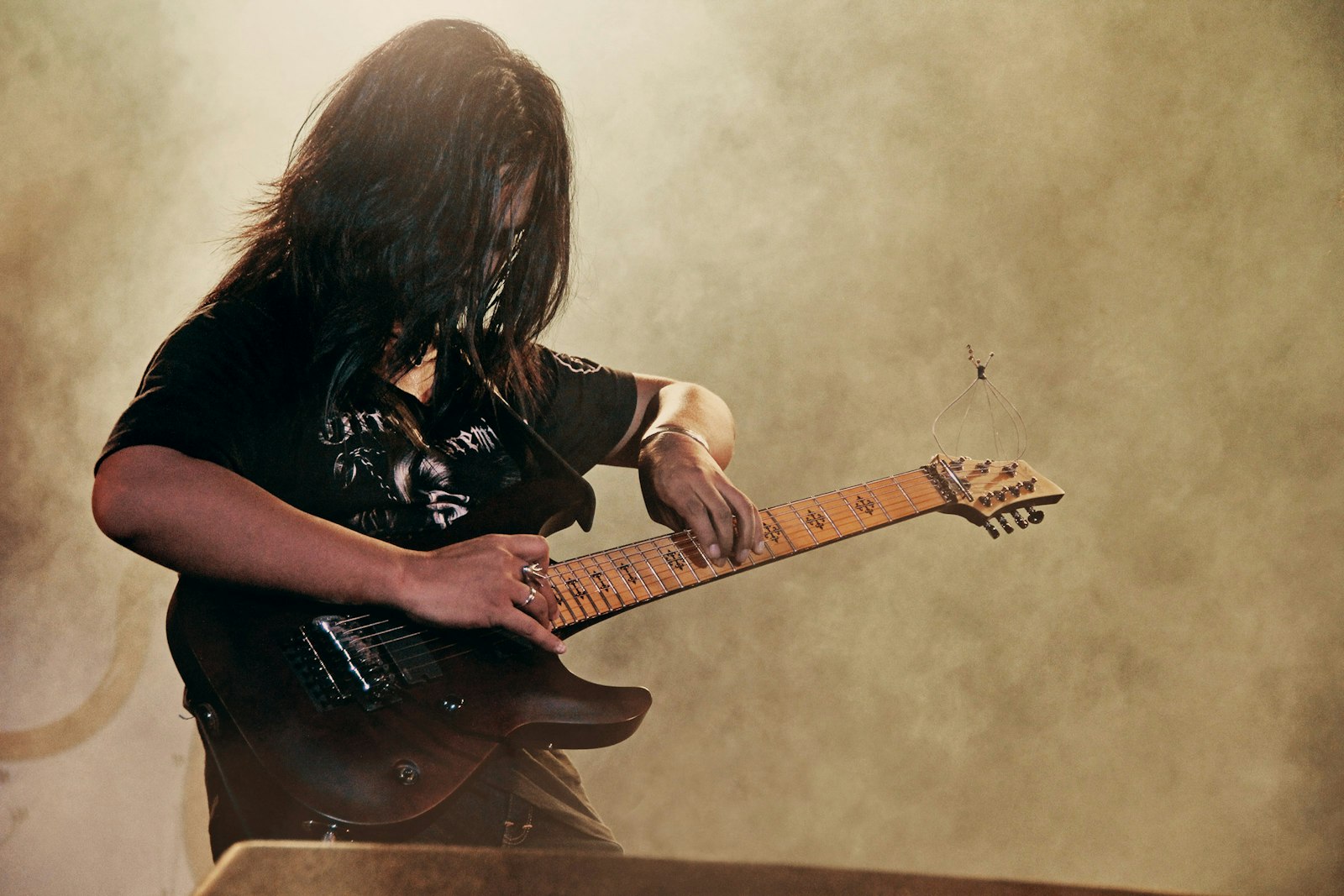
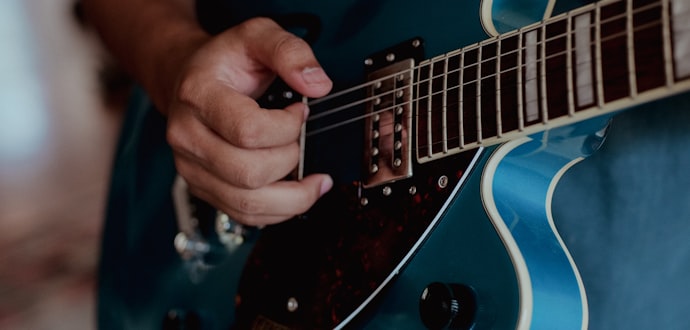
Here is the gem that defines his later genius. At a point when most guitarists have long settled their technique, Beck threw away his pick entirely and rebuilt his playing from scratch, using his bare thumb and fingers to pluck the strings while working the whammy bar and volume knob with his other hand in real time. This let him bend, swell, and shape every note like a human voice, producing vocal cries, gentle sighs, and slippery glissandos no pick-using player could match. He essentially turned the electric guitar into a singing, talking instrument, and watching him do it live looked less like guitar playing than like sorcery.
A second gem explains his outsider streak. Beck was a passionate hot-rod car builder who loved restoring vintage automobiles almost as much as music, and he periodically walked away from the guitar to spend time in his garage, treating fame as entirely optional. That indifference to the music business only deepened his mystique and his reputation as a pure artist who played only what moved him.
Beck collected a stack of Grammy Awards and is one of the rare artists inducted into the Rock and Roll Hall of Fame twice, once with the Yardbirds and once on his own. He was beloved across every style, admired by rock legends and jazz greats alike, and he kept pushing into new territory right up to the end, collaborating with much younger artists and exploring fresh sounds in his seventies. When he died in 2023, the tributes from fellow guitarists were overwhelming, because they understood what they had lost, the most adventurous and expressive player among them, the one who treated the instrument as an endless frontier and never once coasted.
Legendary Performance
Blowup Film Performance
October 1966 · Elstree Studios (simulated Ricky-Tick Club), Borehamwood, England
In the autumn of 1966, Italian director Michelangelo Antonioni was shooting his landmark film Blowup in London, and he needed a rock band for a crucial scene. He got the Yardbirds, and what unfolded on that simulated Ricky-Tick Club stage became one of the most iconic moments in the history of rock cinema, and one of the defining images of Jeff Beck's entire career.
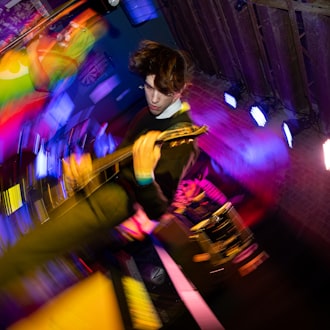
The scene called for the band to perform "Stroll On" until Beck's amplifier began to malfunction. His response was not scripted and not subtle. When the amp started buzzing and cutting out, Beck grabbed his Hofner Senator guitar and drove its neck into the speaker grille. Then he smashed the body against the amp repeatedly, splintering the instrument into pieces, before hurling the neck into the audience, at which point the crowd, utterly indifferent moments before, erupted into a scramble to claim the relic.
The moment reverberated far beyond celluloid. Pete Townshend, then still early in his own guitar-destruction phase, cited Beck's Blowup performance as a pivotal influence on the Who's theatrical mayhem. Here was a guitarist communicating something that no note could: that the instrument itself was merely the beginning of the conversation, and that sometimes the most eloquent statement was demolition. Beck would go on to become one of the most technically sophisticated players in rock history, but that splintered Hofner sailing into a crowd remains, paradoxically, one of his most resonant musical statements.
▶ Watch on YouTubeGear
1954 Fender Stratocaster ('Oxblood')
Jeff Beck's primary instrument from the 1970s onward was a 1954 Fender Stratocaster refinished in a dark oxblood red, one of the earliest examples of a Strat that still retained its original single-coil pickups and steel saddles. Beck played this guitar almost entirely without a pick, using his thumb and fingers to produce a dynamic range unavailable to plectrum players: from barely-there pianissimo to full-volume roar within a single phrase. The Stratocaster's tremolo arm was central to his technique, deployed not for dive bombs but for subtle pitch inflections that gave his notes a vocal, almost human quality. His relationship with the instrument was so physical that the guitar became an extension of his hands rather than a tool.
Marshall 1959 Super Lead / Fender Showman
Beck's amplification philosophy centered on achieving maximum responsiveness to his playing dynamics. He used Marshall stacks for their touch-sensitive response, a light pick attack produced a clean, glassy tone; heavy attack pushed the front end into smooth overdrive. His Fender Showman provided a cleaner option for certain recordings and was particularly well-suited to the jazz-fusion territory he explored with Jan Hammer. The key across all his amplifier choices was headroom and sensitivity: his amps had to breathe with his playing rather than impose a fixed character.
Roger Mayer Wah / Colorsound Overdriver
Beck's minimal effects chain belied its sophistication. Roger Mayer built him customized fuzz and wah circuits that were more transparent than standard units, preserving the guitar's natural resonance while adding color. The Colorsound Overdriver provided a smooth, singing overdrive that pushed the Marshall into vocal sustain territory without obscuring the instrument's character. Most crucially, Beck's primary 'effect' was his right hand, the way he rolled his volume knob, used his palm for vibrato, and manipulated the tremolo arm created a sonic palette that no pedal board could replicate.
Signature Technique
Whammy Bar as Melodic Voice
Jeff Beck treated the tremolo arm, the whammy bar, as a melodic instrument capable of expressing things no fretting hand could produce. Where most players use the whammy for dramatic divebombs or vibrato effects, Beck used it for micro-pitch inflections, gentle swells, and precise vocal imitations. He could nudge a note slightly sharp or slightly flat, create a vibrato entirely through wrist movement on the bar, or slur between pitches the way a slide player slurs, but with both hands free to do other things. The result was a vocabulary of sounds unique to him.
He also abandoned the pick in later years, using his fingers and thumb directly on the strings, giving him the dynamic sensitivity of a fingerstyle player combined with the pitch-shifting range of his whammy work. His albums "Blow by Blow" and "Wired" from the mid-1970s remain the definitive documents of this approach: guitar lines that bend, cry, and whisper in ways that seem to bypass the instrument entirely and communicate emotion directly.