




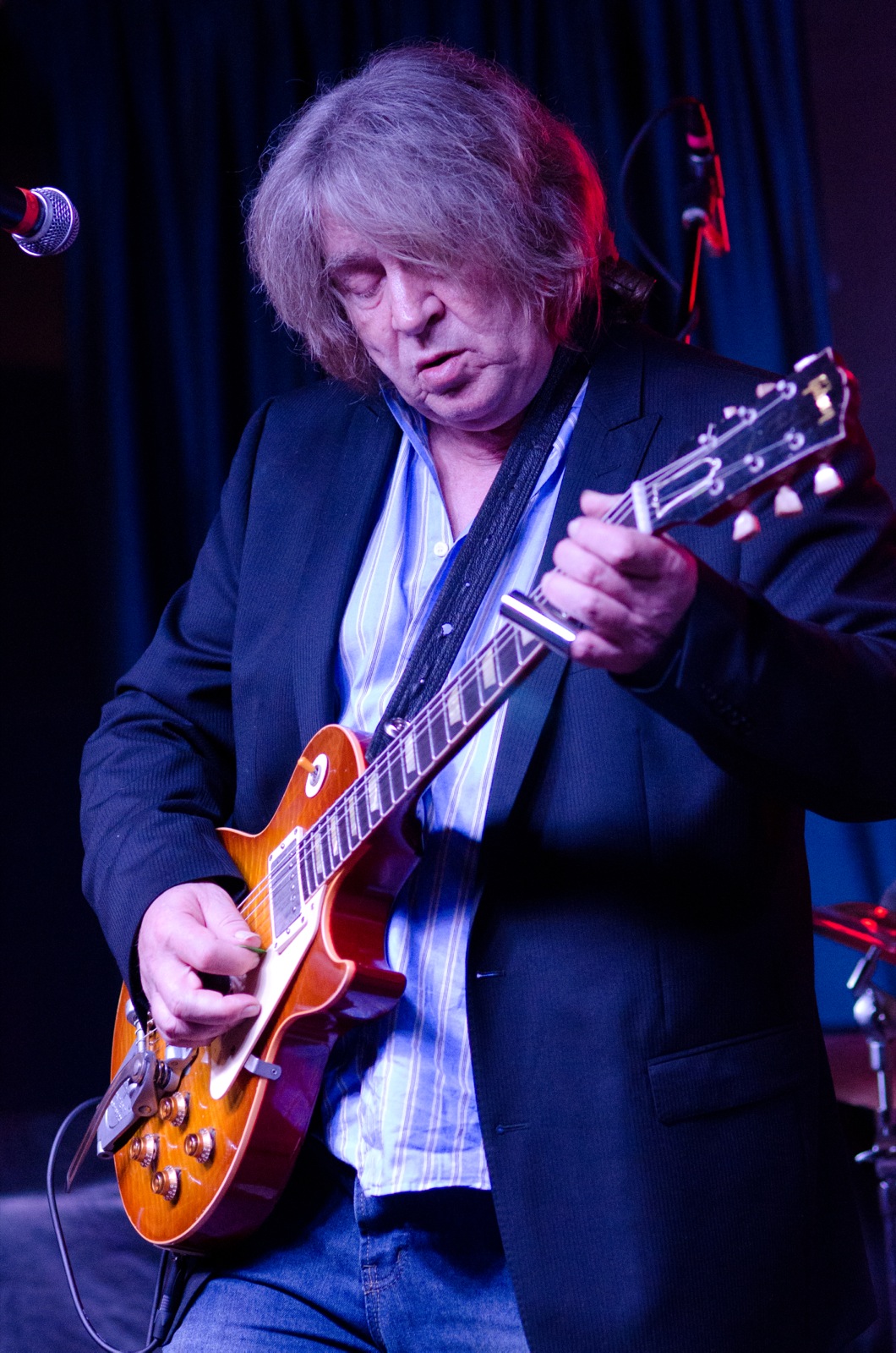

Mick Taylor
Current Ranking
Mick Taylor is ranked #152 of 162 guitarists on the Greatest Guitar Player leaderboard, based on our editorial score until fans weigh in. On the blues leaderboard, Mick Taylor ranks #30 of 32. No fan votes yet, so be the first to rate Mick Taylor on 8 attributes at greatestguitarplayer.com/vote.
Biography
Mick Taylor, born in England in 1949, is the guitarist who, during a brief but golden stretch, helped the Rolling Stones reach their absolute creative peak, and then quietly walked away. A fluid, lyrical, blues-soaked lead player of extraordinary natural gifts, Taylor brought a melodic sophistication to the Stones that the band had never had before and arguably never recaptured, making his short tenure one of the most celebrated and bittersweet chapters in rock guitar.
Taylor was a prodigy who, while still very young, replaced Eric Clapton's successor in John Mayall's Bluesbreakers, the famous finishing school for British blues guitarists. Then, at just twenty years old, he was tapped to join the Rolling Stones, stepping in after the departure of founding guitarist Brian Jones. The timing was extraordinary, because Taylor's arrival coincided with the band's most fertile period.
Here is the gem. During his few years with the Stones, Taylor played on the run of albums widely regarded as their greatest, including Sticky Fingers and the sprawling masterpiece Exile on Main St., and his fluid, melodic lead lines and gorgeous slide guitar elevated the band's music to new heights. Where the Stones had always been a great rhythm-and-attitude band, Taylor added genuine lead-guitar beauty, soaring, singing solos and tasteful slide work that gave songs like Can't You Hear Me Knocking their improvisational magic. Many fans and critics consider this the finest the Rolling Stones ever sounded, and a huge part of that was the young guitarist quietly playing some of the most lyrical lead work of the era.
Then, at the peak, Taylor left. In 1974, citing creative frustrations and a desire to move on, he walked away from the biggest band in the world, a decision that has fascinated and puzzled rock fans ever since. His post-Stones career never reached those heights again, which only adds to the poignancy of what he achieved in those few short years. Among guitarists and serious Stones fans, Mick Taylor is revered as a player of rare melodic gifts, the young virtuoso whose fluid, blues-drenched lead guitar helped create some of the most beloved rock music ever recorded, and who then chose to step out of the spotlight at the very moment it shone brightest on him.
Legendary Performance
Rolling Stones at Madison Square Garden, 1972
The Rolling Stones' 1972 tour, documented on the album Ladies and Gentlemen: The Rolling Stones , featured Mick Taylor at the absolute peak of his powers. The Madison Square Garden shows placed him in front of one of the largest audiences of his career, and the recordings reveal a guitarist who was simultaneously the smoothest and most melodically sophisticated player the Stones ever employed.
Taylor played a Gibson Les Paul Custom and a 1969 Les Paul Standard, running through Marshall amplifiers with a clean-to-light-crunch tone that allowed the sustain and natural harmonics of the Les Paul to carry his long melodic lines. His solos on Midnight Rambler and Loving Cup are extended improvisations that develop with the logic of a jazz solo, building tension and releasing it methodically.
The contrast between Taylor's fluid lead work and Keith Richards' more percussive, riff-driven rhythm playing created a tension that defined the Stones' best years. Taylor left the band in 1974, and they never quite found that dynamic again.
▶ Watch on YouTubeGear
Gibson Les Paul Standard • Les Paul Custom • Marshall Amplifier • Glass Bottleneck • Blues Lead Tone
Mick Taylor joined the Rolling Stones in 1969 and immediately defined his sound with a Gibson Les Paul Standard he had played since his days with John Mayall's Bluesbreakers. The Les Paul's combination of mahogany body, maple cap, and PAF-style humbuckers gave him the sustain and harmonic richness his fluid, melodic soloing style required.
Taylor used Marshall amplifiers primarily during his time with the Stones, though he also worked with Ampeg and other brands depending on availability and stage configuration. His amp settings tended toward clean with a light crunch that allowed the Les Paul's natural sustain to carry notes through long melodic arcs without the note bloom that heavy distortion can create.
He also used a Gibson Les Paul Custom, a slightly different instrument with a brighter character, for certain recordings and live performances. His slide guitar work employed a glass bottleneck, and his slide tone, controlled and lyrical, was as distinctive as his lead work.
Signature Technique
Fluid Pentatonics & Sustained Legato
Mick Taylor's technique is built on a foundation of exceptionally smooth legato playing, achieved through a combination of precise picking and extensive use of hammer-ons and pull-offs that blur the distinction between picked and slurred notes. His solos flow rather than attack, the individual notes connecting into melodic phrases that have the quality of a sung line.
His pentatonic vocabulary is vast and creatively deployed. Where lesser blues-rock guitarists cycle through familiar pentatonic box patterns, Taylor moves across the entire fretboard within a single solo, connecting positions smoothly and finding different melodic angles on the same scale set.
His slide guitar technique is equally sophisticated. He uses controlled vibrato and deliberate intonation, treating the slide as a melodic instrument capable of nuance rather than simply a means of glissando. His slide solos with the Rolling Stones, particularly on extended live versions of songs like Love in Vain , demonstrate a mastery of the form that few contemporary players have approached.