

Rory Gallagher
Current Ranking
Rory Gallagher is ranked #46 of 162 guitarists on the Greatest Guitar Player leaderboard, based on our editorial score until fans weigh in. On the blues leaderboard, Rory Gallagher ranks #9 of 32. No fan votes yet, so be the first to rate Rory Gallagher on 8 attributes at greatestguitarplayer.com/vote.
Biography
Rory Gallagher, born in Ireland in 1948, was one of the most beloved and ferociously dedicated blues-rock guitarists who ever lived, a player whose raw passion, blistering technique, and complete lack of pretension made him a hero to fans and fellow guitarists alike. Eschewing stardom's trappings, Gallagher poured everything into the music itself, becoming the people's guitar hero, an unassuming man in a checked shirt who played with the intensity of someone possessed.
Gallagher first made his name with the band Taste before launching a hugely successful solo career, building his reputation not on hit singles, which he largely refused to chase, but on his electrifying live performances. On stage he was a force of nature, tearing through blues, rock, and folk with fierce energy, switching between scorching electric leads and delicate acoustic and slide playing, always sweating and smiling and utterly committed. His devotion to the live experience and his disdain for commercial gimmickry earned him deep, lasting respect.
Here is the gem that became inseparable from his image. Gallagher played a 1961 Fender Stratocaster so relentlessly, and sweated so profusely while playing it, that the guitar's finish wore away over the years until much of the paint was stripped down to the bare wood, leaving it one of the most famous and battered guitars in rock history. That weathered Strat was a visible testament to the thousands of hours and the sheer physical intensity he poured into his playing, an instrument that looked exactly as hard-working as the man who played it. A second gem, beloved and often repeated by fans, holds that when someone once asked Jimi Hendrix what it felt like to be the greatest guitarist in the world, he replied that they should ask Rory Gallagher, a story whose truth is debated but whose endurance speaks to the awe Gallagher inspired.
Gallagher influenced an enormous range of players, from Brian May to Slash to the Edge, all of whom have spoken of his impact, and he was admired by his own blues heroes, even being invited to record with the likes of Muddy Waters. He played and toured relentlessly until his health failed, dying far too young in 1995, a loss mourned across the rock world and especially in his native Ireland, where he remains a national hero. Rory Gallagher is remembered as the purest of guitar heroes, a humble, hard-working master who cared about nothing but the music, and whose passionate, sweat-soaked playing won the lasting love of everyone who heard him.
Legendary Performance
Irish Tour '74
January 1974 · Ulster Hall, Belfast, Northern Ireland
In January 1974, Northern Ireland was in the grip of The Troubles. Bombings, shootings, and sectarian violence had made Belfast one of the most dangerous cities in Europe, and most touring rock acts had simply stopped coming. Rory Gallagher came anyway. His Irish Tour of January 1974, moving through Belfast's Ulster Hall, Dublin's Carlton Cinema, and Cork City Hall, was as much a political act as a musical one: a declaration, delivered entirely through a battered 1961 Stratocaster and an overdriven Vox AC30, that some things transcend what divides people. The audiences responded with a gratitude and ferocity that the film director Tony Palmer, sent to capture the tour for television, found so overwhelming that he released the footage as a theatrical film instead.
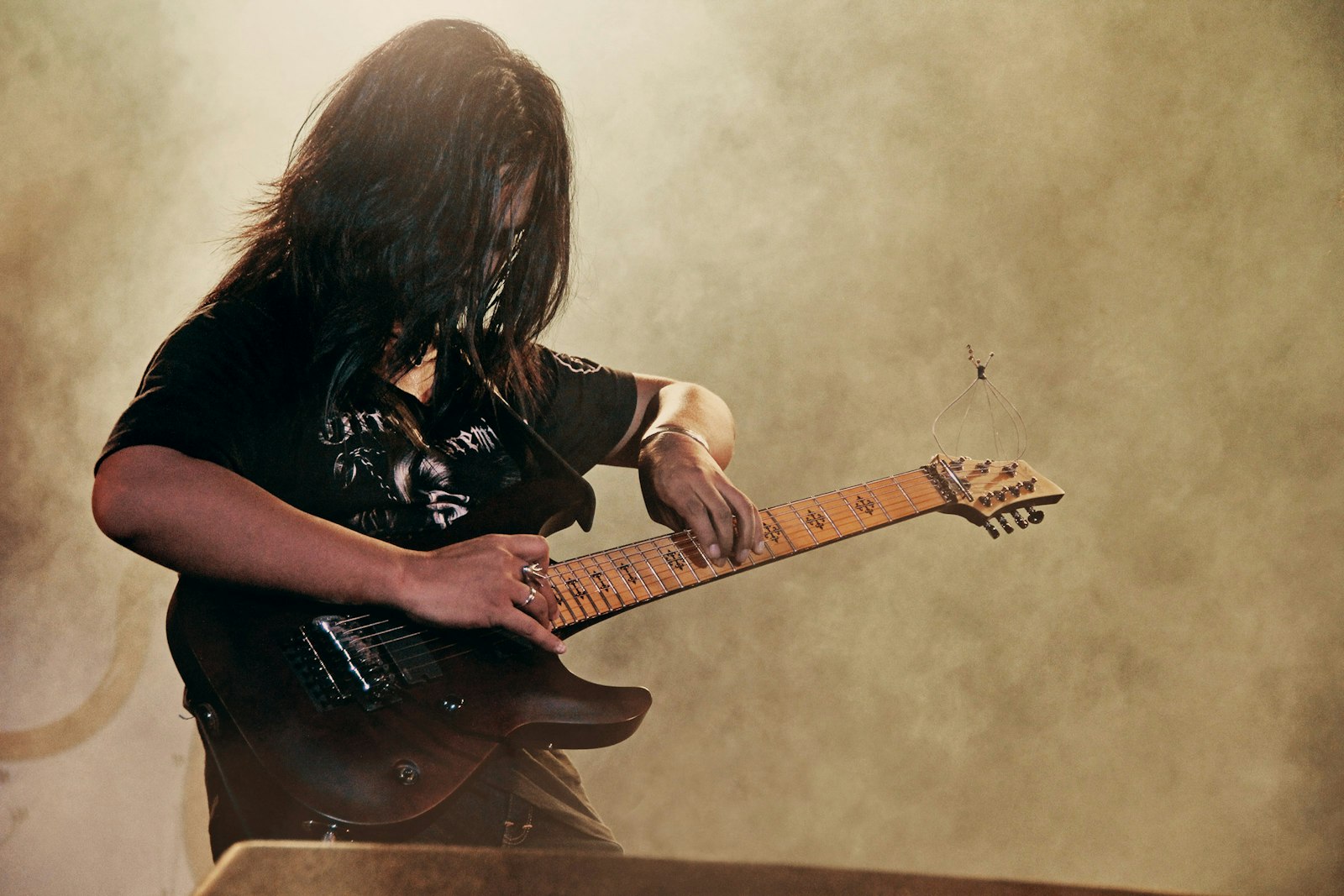
Gallagher's playing on the Irish Tour was the fullest expression of everything he had been building since his days fronting Taste in the late 1960s: a synthesis of Chicago electric blues, Celtic folk, and country that was entirely his own and required no apology. His technique was the opposite of showmanship, head down, shoulders hunched over that worn Stratocaster with its sunburst stripped back to bare wood by years of playing, generating sounds that were simultaneously raw and impossibly fluent. At Belfast, the crowd understood immediately that what they were witnessing was not a performance in any conventional sense but something closer to testimony. Gallagher was not showing off. He was telling the truth.
The film of the Irish Tour '74 is the best live document of Gallagher that exists, which means it is one of the great live documents of any guitarist who ever lived. He died in 1995 at forty-seven following complications from a liver transplant, and the years since have done nothing but deepen the consensus around his playing: that he was one of the most authentically gifted blues guitarists in the history of the electric guitar, a man constitutionally incapable of playing anything dishonest. His decision to tour Northern Ireland in 1974, when no one else would, is part of that story. It was the same impulse that governed every note he played: the conviction that the music owed something to its audience, and that the debt had to be paid in full.
▶ Watch on YouTubeGear
1961 Fender Stratocaster (Heavily Worn)
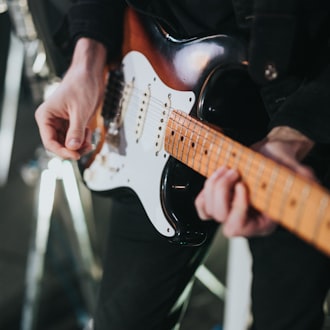
Rory Gallagher's battered 1961 Sunburst Fender Stratocaster, one of the first Stratocasters ever imported to Ireland, became one of the most famous guitars in blues-rock history, distinguished by its almost completely worn-through sunburst finish, exposing the bare wood beneath after decades of hard touring. Gallagher bought the guitar secondhand in 1963 for £100 and played it for the rest of his life, refusing to have it refinished or replaced despite the wear. The guitar's original 1961 single-coil pickups, slightly microphonic after years of use, contributed to his raw, slightly unpredictable tone that felt alive in a way pristine instruments rarely achieve.
Vox AC30 / Fender Bassman
Gallagher's amplifier setup was as straightforward as his guitar choice: Vox AC30s for their chiming British character, Fender Bassmans for their clean American warmth. He typically drove these amplifiers hard enough to generate natural valve breakup, the sound of a well-used amp at the edge of its comfort zone. He had no time for boutique equipment or fashionable alternatives; the Vox and Fender rigs were reliable, tonally satisfying, and suited to the intensity of his live performances, which were legendary for their energy and duration.
Slide (Various) / Dunlop Crybaby / Tape Echo
Gallagher's effects were the classic blues-rock toolkit wielded with uncommon conviction. His slide playing, variously on glass, brass, and ceramic slides depending on the song, was among the most expressive in British blues, combining technical precision with raw emotional directness. A Dunlop Crybaby wah gave his lead lines a vocal urgency, and tape echo (often a Maestro Echoplex) added depth and dimension to his studio recordings. His live sound was largely direct and unprocessed, the wear, the volume, and the man himself provided all the effects a Gallagher performance required.
Signature Technique
Raw Blues Attack & Open-Tuned Slide
Rory Gallagher played with the maximum physical commitment of a man who had nothing left to prove and everything left to say. His picking attack was hard enough to wear strings out mid-performance, he kept a supply of replacements on stage, and his battered 1961 Sunburst Stratocaster, its body worn down to bare wood by decades of playing, was his only instrument. He never changed it for a newer model. He described the guitar as having its own voice by that point, the result of thousands of hours of playing having physically altered its resonance and response. Whether that is acoustics or mythology is immaterial: the tone he produced from it was his and nobody else's.
His slide work in open G and open D tunings was spontaneous rather than systematic, he approached the slide the way a jazz musician approaches improvisation, as a conversation with the music in real time rather than a delivery mechanism for pre-learned phrases. His soloing in standard tuning avoided scale-pattern thinking entirely, favouring melodic shapes learned from listening to blues records and working them out by feel. The live albums "Live! In Europe" and "Irish Tour '74" document this approach at its most unguarded: a musician playing for the music's sake, with no performance calculation and no distance between what he felt and what came out of the guitar.