








Peter Green
Current Ranking
Peter Green is ranked #115 of 162 guitarists on the Greatest Guitar Player leaderboard, based on our editorial score until fans weigh in. On the blues leaderboard, Peter Green ranks #23 of 32. No fan votes yet, so be the first to rate Peter Green on 8 attributes at greatestguitarplayer.com/vote.
Biography
Peter Green, born in London in 1946, was one of the most gifted and soulful blues guitarists Britain ever produced, a player whose exquisite touch, gorgeous tone, and profound feel made him a legend, and whose tragic decline made him one of rock's most haunting figures. As the founder of Fleetwood Mac, back when it was a hard-driving British blues band rather than a pop juggernaut, Green created some of the most beautiful and influential guitar music of his era.
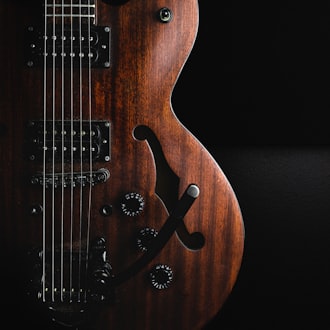
Green's playing was all about feel and economy. Where other guitarists rushed to fill every space, he played with restraint and breathtaking emotional depth, coaxing a vocal, crying tone out of his guitar that could break your heart. He wrote and played classics like the hypnotic instrumental Albatross, the brooding Oh Well, and Black Magic Woman, later a huge hit for Santana, and his work is studied and revered by serious blues guitarists to this day. His tone owed much to his famous 1959 Les Paul, nicknamed Greeny, which had a uniquely wired, slightly out-of-phase pickup configuration that gave it an unmistakable, nasal, vocal quality.
Here is the gem that tells you how good he really was. B.B. King, the King of the Blues himself, paid Green one of the greatest compliments one guitarist has ever given another, reportedly saying that Green was the only player who ever gave him the cold sweats, such was the emotional power and authenticity of his playing. For an English kid to earn that kind of awe from the master of the blues is almost unheard of, and it speaks to the rare, soul-deep quality of Green's music. That legendary Greeny guitar, meanwhile, went on to a storied afterlife in the hands of Gary Moore and later Metallica's Kirk Hammett.
Green's story carries deep sadness. In the early 1970s, struggling with mental illness and the aftereffects of heavy psychedelic drug use, he withdrew from Fleetwood Mac and largely from music, disappearing from the scene for years during what should have been his prime. Though he eventually returned to play again later in life, the world was left to wonder what more this extraordinary talent might have created. When he died in 2020, he was mourned as one of the great lost geniuses of the guitar. A Rock and Roll Hall of Fame inductee, Peter Green remains a beloved and poignant figure, the soulful master whose playing gave even B.B. King chills.
Legendary Performance
Fleetwood Mac at the Fillmore West
January 4, 1970 · Fillmore West, San Francisco, California
In January 1970, Peter Green was four months away from the breakdown that would end his time with the band he had founded, and there was nothing in his playing that night at the Fillmore West to suggest it. The recording that survives from that San Francisco evening, one of the clearest documents of Fleetwood Mac in their original, fiercest form, captures a guitarist operating at the summit of a technique so individual and so fully realized that John Mayall, upon losing him to the band he would form, reportedly said he'd never find anyone to replace him. Mayall was right. Nobody ever did.
Green's blues guitar had always existed in its own category: technically immaculate but never cold, emotionally direct but never sentimental, rooted in the Chicago tradition of B.B. King and Freddie King yet transformed by something darker and more searching. At the Fillmore, playing his prized 1959 Les Paul Standard, a guitar whose pickups had been accidentally reversed during a repair, producing the out-of-phase tone that became his signature sound, he led the original Fleetwood Mac through extended blues workouts with the authority of someone who had been playing these songs since before language. His vibrato was unlike anyone else's: slower, deeper, more deliberate, as though each note were being drawn up from somewhere the listener couldn't see.
B.B. King once said, in what remains one of the most generous assessments one master ever offered another: "He has the sweetest tone I ever heard; he was the only one who gave me the cold sweats." The Fillmore West recording is the evidence King was pointing at, a performance of almost unbearable musical intelligence from a man who was running out of time, though no one in the room could have known it. Green left Fleetwood Mac in May 1970, gave away most of his money, and spent years in profound psychological distress. When he finally returned to public performance decades later, the gift was still there. But the Fillmore West recording is where it was whole and unhesitating, the full measure of what Peter Green was before the world took him apart.
▶ Watch on YouTubeGear
1959 Gibson Les Paul Standard (Out-of-Phase)
Peter Green's 1959 Gibson Les Paul Standard, later sold to Gary Moore and now owned by Kirk Hammett, is one of the most analyzed guitars in rock history, primarily because of an accident that became a defining tone. At some point during Green's ownership, the neck pickup was removed and reinstalled with the magnet reversed, reversing its polarity. When the guitar is played in the middle position (both pickups active), the reversed-phase relationship between the two pickups produces a thin, hollow, out-of-phase sound unlike anything a standard Les Paul produces, simultaneously cutting and slightly nasal, with a ghostly quality that suits slow blues and minor-key pieces perfectly. Green used this tone on 'The Green Manalishi' and 'Oh Well,' and it became his signature. He also owned several other Les Pauls, but the out-of-phase '59 defined his legacy.
Marshall 1987 Plexi / Selmer Treble 'n' Bass
Green ran his Les Paul through Marshall Plexi amplifiers, the original 1960s hand-wired Marshalls that provide a warm, harmonically rich overdrive quite unlike the harsher-sounding later models. The combination of the Les Paul's high-output PAF humbuckers and the Plexi's natural compression produced his singing lead tone, particularly effective on slow blues where long sustain was essential. He also used Selmer amplifiers during his early career with John Mayall's Bluesbreakers, playing in the tradition that Clapton had established with the same equipment.
Minimal / Occasional Fuzz
Peter Green's effects chain was almost non-existent. His tone, including the famous out-of-phase sound, came entirely from the guitar's pickup configuration and the amplifier's natural characteristics. Where he did use processing, a simple fuzz pedal added thickness to his most aggressive passages. But Green's genius was primarily expressed through touch: his vibrato was wide and slow, his bending precise and emotionally targeted, and his use of space and silence as deliberate as any note he played. He remains one of the most sophisticated blues-phrasing guitarists in British rock history, and his sophistication required no electronic assistance.
Signature Technique
Signature Technique
Peter Green's guitar technique is distinguished by two elements that work together to produce one of the most emotionally resonant voices in British blues: an out-of-phase pickup configuration that creates his characteristic hollow, nasal tone, and a vibrato technique of extraordinary expressiveness. Both are deployed in service of a blues phrasing sensibility that B.B. King himself described as the only guitarist who could make him sweat.
The reversed-pickup Les Paul that Green played in middle position produced a tone that no other guitarist had or has exactly replicated, a thin, slightly hollow sound with a ghostly quality that suits minor-key blues and slow ballads in a way that conventional Les Paul tones cannot. Green learned to exploit this quality rather than correct it, using the out-of-phase tone on his most emotionally intense passages and switching to the neck or bridge pickup alone for warmer or brighter moments. The tonal choice became as expressive as any phrasing decision.
Green's vibrato, applied after string bends had reached their target pitch, was among the most expressive in the blues-rock tradition. He oscillated notes slowly and widely, producing a vocal, almost crying quality on sustained passages. His vibrato was not mechanical or metronomic; it responded to the emotional temperature of the phrase, intensifying as a passage built toward its climax. This emotional responsiveness in the vibrato, treating the oscillation as an expressive tool rather than a default behavior, is what distinguishes mature blues playing from merely technically accurate playing.
Peter Green's improvisation was characterised by an extreme economy of notes, he played fewer notes per bar than virtually any contemporary blues-rock guitarist, investing enormous expressive weight in each individual note rather than in phrase length or density. His solos on 'The Green Manalishi' and 'Albatross' demonstrate this economy at its most developed: phrases of two or three notes, separated by meaningful silences, building emotional intensity through accumulation rather than speed. He remains the most economical and arguably the most emotionally powerful improviser in British blues guitar history.