




Mike Bloomfield
Current Ranking
Mike Bloomfield is ranked #141 of 162 guitarists on the Greatest Guitar Player leaderboard, based on our editorial score until fans weigh in. On the blues leaderboard, Mike Bloomfield ranks #29 of 32. No fan votes yet, so be the first to rate Mike Bloomfield on 8 attributes at greatestguitarplayer.com/vote.
Biography
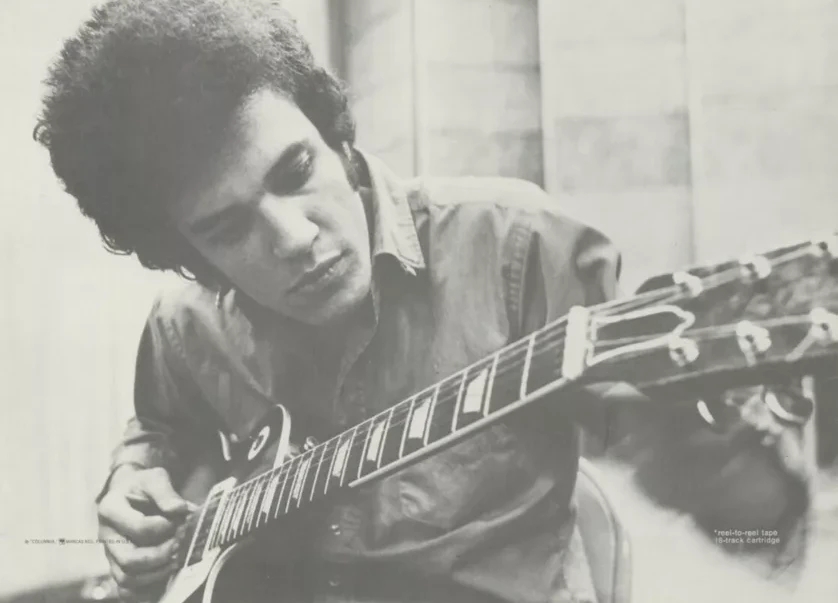
Mike Bloomfield, born in Chicago in 1943, was one of the first great American guitar heroes, a brilliant blues player who helped bring electric blues guitar to a mass white audience in the 1960s and played a pivotal role in one of the most important moments in rock history. Raised in Chicago, the home of electric blues, Bloomfield immersed himself in the city's blues clubs as a young man, learning directly from the Black masters who created the music, and he developed a fluid, fiery, deeply authentic style that stood out in an era when few white players could play the blues so convincingly.
Bloomfield made his name with the Paul Butterfield Blues Band, an integrated group whose searing electric blues influenced countless musicians. But his place in history was sealed by his association with Bob Dylan. Here is the gem: Bloomfield played the electric guitar on Dylan's groundbreaking single Like a Rolling Stone, contributing the bright, ringing lead lines to one of the most important songs ever recorded, and he was part of the band when Dylan famously went electric at the Newport Folk Festival in 1965, a controversial, era-defining moment that scandalized folk purists and helped birth folk-rock. Bloomfield's guitar was right at the center of that revolution, making him a key figure in rock's transformation.
His influence continued through the landmark album Super Session, a jam-oriented record with Al Kooper and Stephen Stills that showcased his improvisational gifts, and through his work with the band the Electric Flag. Bloomfield played with a singing tone and a soulful fluidity that made him one of the most admired guitarists of his generation, a player whose deep blues knowledge and expressive lead work inspired a whole wave of American guitar heroes who followed.
Bloomfield struggled with personal difficulties and was somewhat ambivalent about fame, and his life was cut short when he died in 1981. But his impact was profound and lasting. He helped prove that the blues could be the foundation for a new kind of rock guitar, he played on records that changed the course of music, and he set a standard for authentic, soulful electric blues playing that influenced generations. Mike Bloomfield remains a pioneering figure, the early American guitar hero whose passionate, fluid playing helped electrify both the blues and rock and roll itself.
Legendary Performance
Newport Folk Festival, Bob Dylan Goes Electric
July 25, 1965 · Newport Casino, Newport, Rhode Island
The folk world had gathered at Newport in the summer of 1965 expecting another year of acoustic purity. What they got instead was a confrontation, a declaration, and the sound of popular music cracking open along a fault line it hadn't known was there. When a twenty-two-year-old Mike Bloomfield stepped onto the stage alongside Bob Dylan, plugged his battered Fender Telecaster into a rented amp, and launched into the opening chords of "Maggie's Farm," the noise that came out was not just loud, it was deliberate, aggressive, and aimed directly at the received pieties of the folk revival. Bloomfield's sound was Chicago electric blues at full throttle, and it had no intention of being polite about it.
The crowd's reaction has been argued about ever since. Pete Seeger, by some accounts, threatened to cut the power lines with an axe. Others booed, whether at the amplified volume, the betrayal of acoustic tradition, or the sheer shock of the sound, no one can entirely agree. What is beyond dispute is that Bloomfield played as though none of it mattered. His leads on "Maggie's Farm" and "Like a Rolling Stone" were ferociously confident, drawn from years studying the South Side Chicago bluesmen, Muddy Waters, Little Walter, Howlin' Wolf, and delivered with the reckless authority of someone who understood exactly what the moment required. Dylan himself would later say that Bloomfield was the greatest guitar player he'd ever heard.
The fifteen minutes that Bloomfield played at Newport that evening changed the trajectory of rock and roll. Dylan's electric turn had consequences still being felt today: the merger of folk's intellectual ambition with rock's visceral energy produced a new vocabulary for popular music, and Bloomfield's guitar was the instrument through which that merger was announced. The Telecaster he played has since been called "the guitar that killed folk." He died in 1981 at forty-one, largely forgotten outside guitar circles. But on that Saturday evening in Newport, he stood at the hinge of musical history and played like a man who knew it.
▶ Watch on YouTubeGear
1954 Gibson Les Paul Goldtop
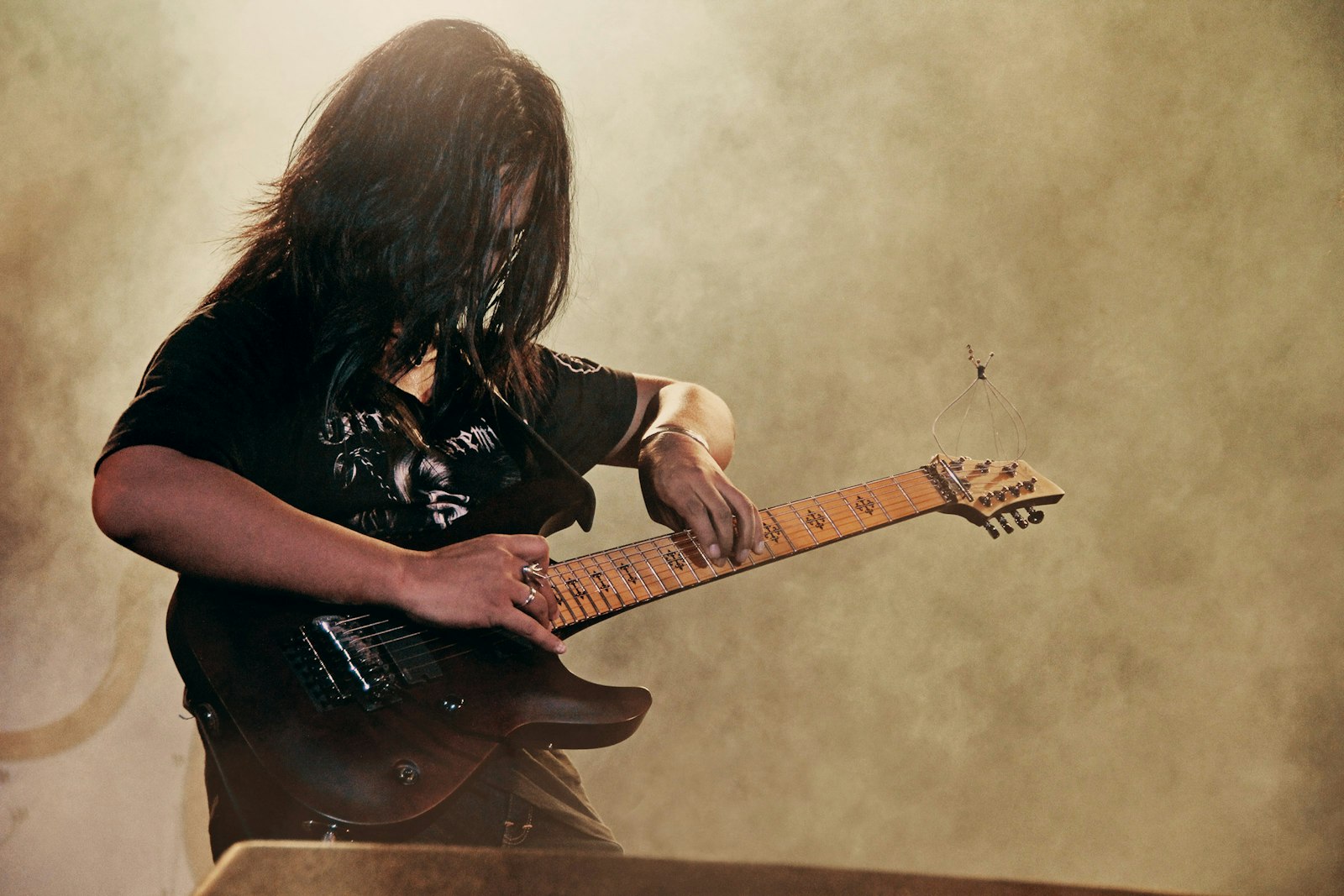
Mike Bloomfield's primary instrument, a 1954 Gibson Les Paul Goldtop with P-90 single-coil pickups, was central to the tone that made him the first American guitar hero of the blues-rock era. The Goldtop's P-90s provided a brighter, more biting character than the later humbucking Les Pauls favored by Clapton and Page, and Bloomfield exploited this quality for a piercing lead tone that could cut through the horns and rhythm section of the Paul Butterfield Blues Band. He also played Fender Telecasters and Stratocasters at various points, but the Goldtop defined his most celebrated period, the mid-1960s recordings that introduced British-style electric blues to an American audience that had never heard it played this way.
Fender Super Reverb / Fender Bandmaster
Bloomfield typically ran his Les Paul through Fender combo amplifiers, the Super Reverb in particular, which provided a clean, spacious American tone that contrasted interestingly with his British-influenced playing style. The Fender's clean headroom allowed Bloomfield to control his own overdrive through pick attack and volume, producing crunch when he dug in and sparkle when he played lightly. His amp setup was functional rather than fashionable, the Super Reverb was the working musician's amplifier of choice in 1960s Chicago, and Bloomfield used what was available and proven.
Minimal / Direct Signal
Bloomfield was not an effects user by temperament. His blues vocabulary, built on the Chicago records of Muddy Waters, Little Walter, and Howlin' Wolf, was grounded in raw, unprocessed guitar tone. Whatever processing appeared on his recordings was primarily reverb added by studio engineers. His live sound was direct: Les Paul into Fender amp, with all expression generated by his hands. The immediacy of this approach was central to his credibility as an American playing a music form that had until then been heard mostly through British interpreters.
Signature Technique
Signature Technique
Mike Bloomfield was the first American guitarist to translate the vocabulary of British electric blues, as developed by Eric Clapton and Peter Green from Chicago sources, back to an American audience that had largely missed the original. His technique drew directly from B.B. King, Muddy Waters, and Otis Rush, synthesizing their approaches with the technical facility of a musician who had obsessively transcribed their recordings. The result was a style that sounded authentic and emotionally raw while being executed with a precision that studio work demands.
Bloomfield's string bending was among the most expressive of the British blues era. He bent notes to precise pitches, usually whole steps and minor thirds, and sustained the bent pitch with a wide, even vibrato that gave each note a vocal quality. His vibrato was applied after the bend had settled rather than during the initial bend, which created a two-stage expression: the bend's arrival and then the note's sustained life. This approach, drawn from B.B. King's technique, became central to the blues-rock vocabulary that Clapton, Page, and their contemporaries developed.
Bloomfield worked primarily within minor pentatonic scales, using position shifts and blues-note additions, the flat fifth, major third over a minor context, to create the harmonic tension that distinguishes blues improvisation from mere scale playing. His ability to phrase these scales melodically, as complete musical statements rather than sequential note runs, marked him as a major improviser rather than a technically accomplished player. The difference is emotional: Bloomfield's pentatonic lines conveyed feeling rather than displaying knowledge.
One of Bloomfield's most important technical contributions was his understanding of call-and-response architecture in blues improvisation. His phrases tended to fall into question-and-answer structures, a climbing phrase answered by a falling resolution, an aggressive attack followed by a delicate retreat. This conversational quality, absorbed from the vocal traditions of Chicago blues, gave his guitar solos a narrative logic that made them dramatically compelling even at extended lengths.