







Paul Gilbert
Current Ranking
Paul Gilbert is ranked #51 of 162 guitarists on the Greatest Guitar Player fan leaderboard, based on 2 fan votes so far. On the shred and virtuoso leaderboard, Paul Gilbert ranks #3 of 19. Agree? Rate Paul Gilbert on 8 attributes at greatestguitarplayer.com/vote.
Biography
Paul Gilbert, born in Illinois in 1966, is one of the most dazzling technical guitarists of the shred era, a virtuoso whose blistering speed, precision, and infectious sense of humor have made him a hero to guitar students everywhere. A prodigy who reportedly enrolled at a prestigious Los Angeles guitar institute as a teenager and was soon teaching there himself, Gilbert combined jaw-dropping chops with a genuine love of melody and a refreshing lack of self-seriousness.
Gilbert first made his name with the shred band Racer X, showcasing fearsome alternate-picking technique and lightning-fast runs that astonished other guitarists. He then found mainstream success with Mr. Big, a hard-rock band that balanced his and bassist Billy Sheehan's virtuosity with strong songwriting. And here lies a fun twist in his story, much like a few other shredders: Mr. Big's biggest hit was the gentle acoustic ballad To Be With You, a number-one smash whose simple, sweet strumming gave little hint of the technical fireworks Gilbert was capable of unleashing.
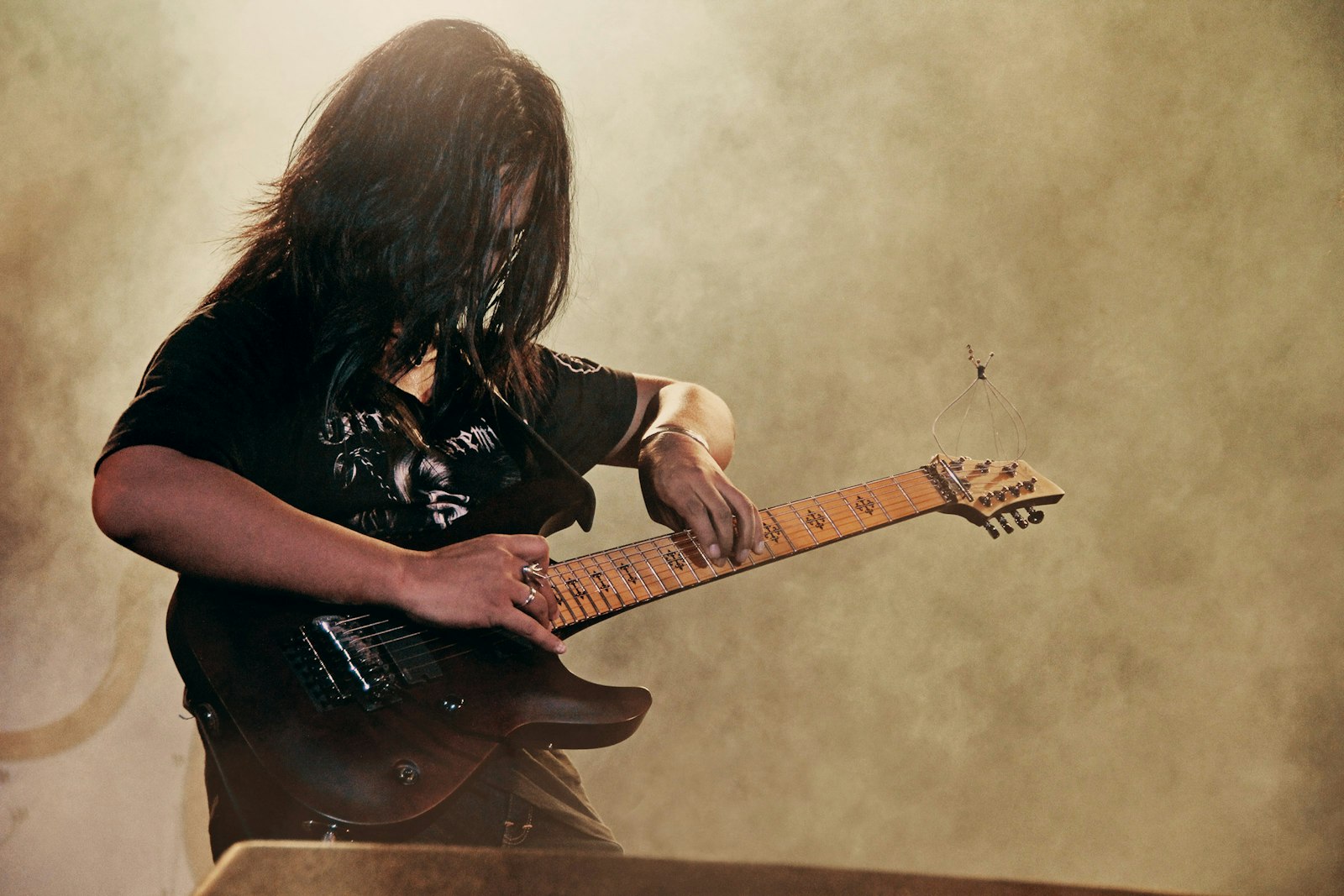
Here is the gem that became his most famous party trick. In his pursuit of impossibly fast tremolo picking, Gilbert took to playing the guitar with an electric power drill, attaching picks to the spinning drill bit so it could strike the strings far faster than any human hand. It was equal parts genuine technique, showmanship, and gleeful absurdity, and it perfectly captured his personality, a player serious enough about speed to engineer a power tool into his act, yet self-aware enough to make a joke of it. The drill became an unforgettable signature of his live shows and a symbol of his playful approach to extreme technique.
Beyond the stunts, Gilbert is a deeply knowledgeable and generous guitar educator, beloved for instructional videos and columns that break down advanced techniques with clarity and good humor. His playing balances staggering speed with strong melodic instincts and a love of classic rock, blues, and pop, and he has remained prolific across solo albums and band projects for decades. For aspiring guitarists, Paul Gilbert is both an inspiration and a teacher, the shred master who proved that you can possess elite, almost superhuman technique and still keep a sense of fun, a smile, and a melody at the center of it all.
Legendary Performance
Mr. Big, Lean Into It Tour
Paul Gilbert's most commercially visible moment came during Mr. Big's Lean Into It tour of 1991, supporting the album that produced their chart-topping ballad "To Be with You" and brought the band's technically demanding guitar playing to arenas. Gilbert's performances on that tour demonstrated the contrast at the heart of his musical identity: a player of extraordinary technical capability whose instinct is consistently melodic rather than merely impressive. Where the shred movement of the 1980s had often treated speed as an end in itself, Gilbert's live playing deployed his technique in service of songs that communicated directly to audiences with no interest in guitar gymnastics.
The tour's set included extended guitar features that allowed him to demonstrate the full range of his technique, from the precise alternate picking that had made him a guitar school phenomenon to the melodic sensibility that translated the same speed into accessible hooks rather than academic exercises. His interaction with bassist Billy Sheehan, whose technique was equally extraordinary, produced a two-instrument conversation that elevated Mr. Big's live performances above the standard hard rock show into something more genuinely musical. Gilbert's playing on that tour remains the most complete live document of a guitarist whose influence on subsequent technical players was enormous.
▶ Watch on YouTubeGear
Ibanez PGM Signature Series
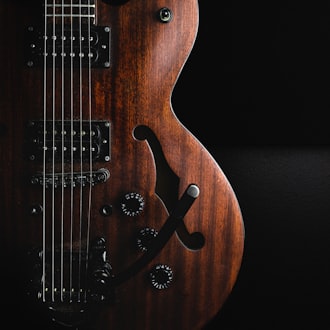
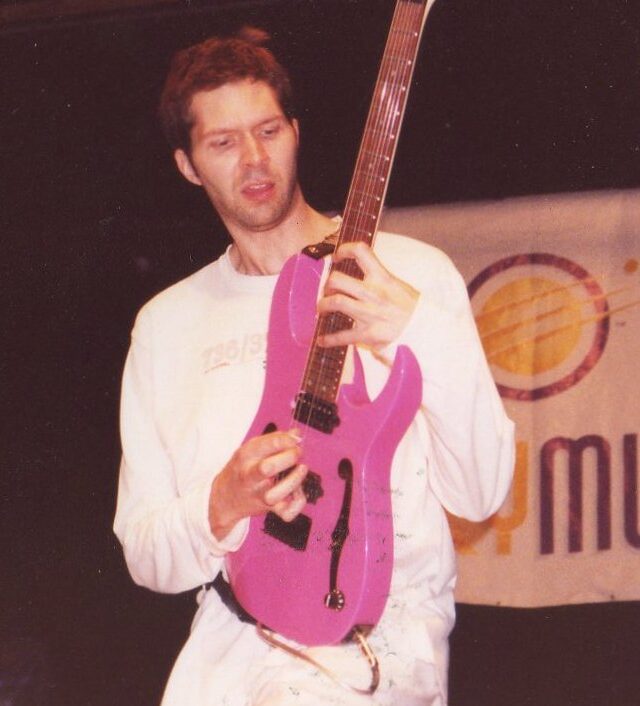
Paul Gilbert's signature Ibanez PGM guitar, developed during his Racer X period and refined through his Mr. Big years, is built around his specific technical requirements: a fast, thin neck profile for the rapid alternate picking that defines his technique, a floating tremolo system for the vibrato and dive effects in his lead playing, and pickup configurations that deliver clarity at high speeds without the muddiness that thicker-sounding instruments produce when playing fast runs. The PGM's most distinctive visual feature, f-holes on the body, adds a slight semi-hollow resonance to what is otherwise a solidbody construction, giving his tone a warmth that pure solidbody instruments sometimes lack.
Marshall JCM 800
Gilbert's amplifier has consistently been the Marshall JCM 800, whose response to hard picking attack and whose harmonic content under saturation suit the precise, articulate technique he has developed. The JCM 800's midrange presence ensures that fast runs cut through a band mix without the frequency masking that can make technically complex playing sound blurred in live contexts. His gain settings are moderate rather than extreme, enough saturation for sustain and harmonic complexity, not so much that individual notes lose definition, a balance that requires genuine picking precision rather than relying on distortion to fill in the gaps.
Minimal Effects, Technique Over Processing
Gilbert's effects approach is deliberately minimal, reflecting his philosophy that technical ability applied to quality equipment produces superior results to processing-dependent tone. A wah pedal for occasional lead colour and modest delay for depth are the extent of his standard live rig. This austerity is a position statement: he teaches that beginners reach for effects to compensate for underdeveloped technique, and his own rig demonstrates the conviction by producing genuinely extraordinary results from a simple guitar-and-amplifier setup.
Signature Technique
Signature Technique
Paul Gilbert is the most pedagogically influential alternate picking guitarist of his generation, a player whose technique has been studied and emulated by students worldwide through his instructional materials as much as through his recordings. His significance is not merely technical, many players can match his speed in isolated exercises, but in the combination of that technical precision with a melodic sensibility that makes his playing genuinely musical at any tempo. His solos tell stories and develop ideas; they are not merely demonstrations of a physical skill applied to guitar-shaped activity.
Gilbert's foundational technique is strict alternate picking, rigidly alternating down and upstrokes regardless of which string is being played, string changes, or position shifts. This approach, maintained with metronomic precision even at the highest tempos he routinely achieves, produces a consistency of articulation that economy picking and sweep picking cannot provide: every note receives the same attack force and angle, resulting in a uniformity of tone that makes his runs sound composed rather than accidental. The discipline required to maintain strict alternate picking across string changes is the primary subject of his teaching and the foundation of his playing.
Gilbert popularised the use of three-note-per-string scale patterns, organising major and minor scales so that every string receives exactly three notes rather than the two-and-three alternation of standard position playing, which enables clean string crossing during alternate picking runs. The pattern allows the picking motion to remain consistent across strings without the rhythmic adjustment that mixed-note-count positions require, and it opens the full range of the guitar for scalar improvisation in a way that position playing does not. His demonstration of these patterns in his Shrapnel Records instructional video in the 1980s influenced a generation of technically oriented guitarists.