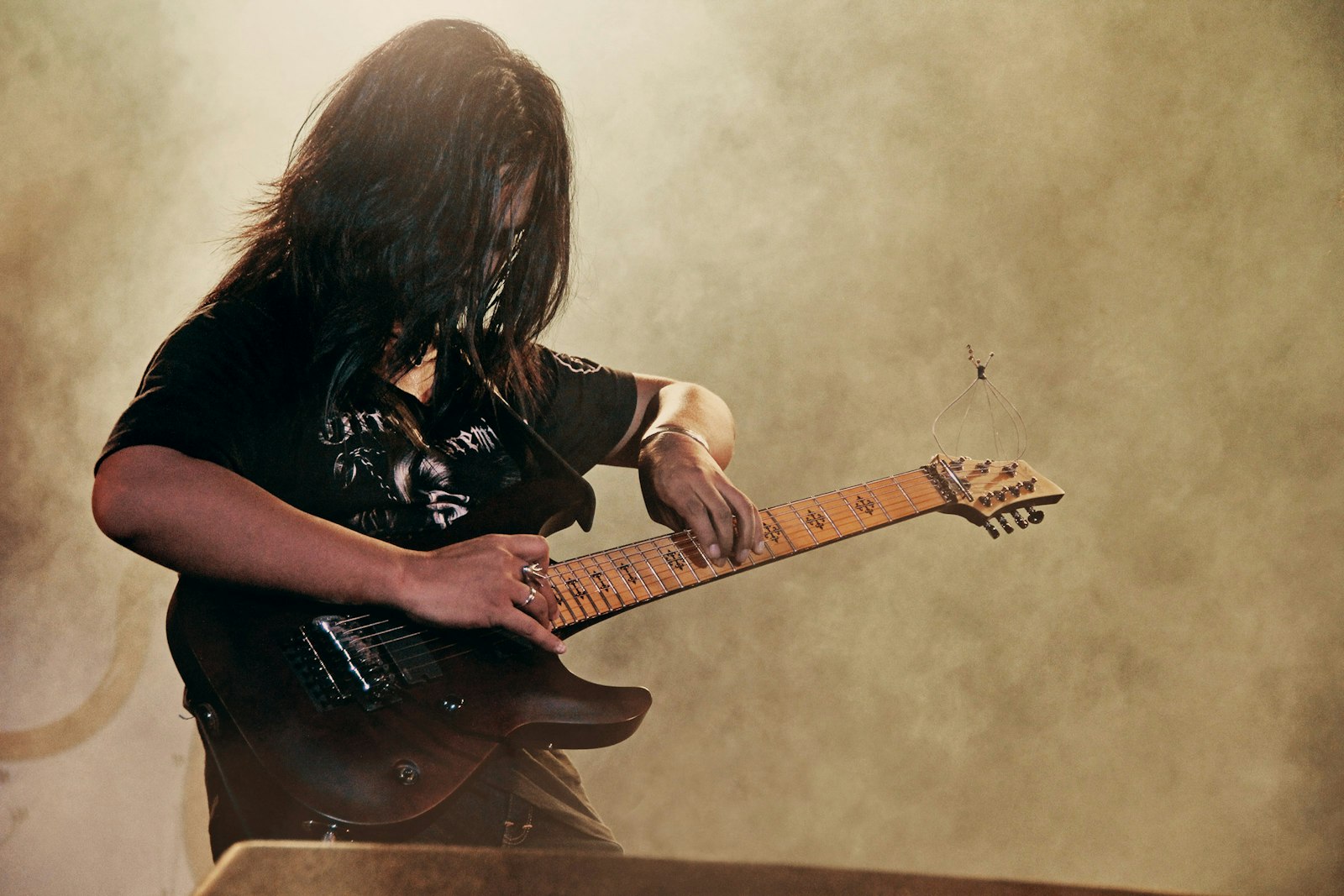



Marty Friedman
Current Ranking
Marty Friedman is ranked #105 of 162 guitarists on the Greatest Guitar Player fan leaderboard, based on 1 fan vote so far. On the heavy metal leaderboard, Marty Friedman ranks #10 of 14. Agree? Rate Marty Friedman on 8 attributes at greatestguitarplayer.com/vote.
Biography
Marty Friedman, born in Washington, D.C. in 1962, is a guitarist of remarkable originality whose exotic, melodic style helped define one of the greatest metal albums ever made before he reinvented himself entirely in a way no other guitar hero ever has. Best known for his work with Megadeth during the band's peak, Friedman brought an unusual harmonic sensibility to heavy metal, full of scales and phrasing borrowed from Middle Eastern, Asian, and other non-Western traditions that made his solos sound like nothing else in the genre.
Friedman first turned heads in the duo Cacophony alongside fellow virtuoso Jason Becker, showcasing dazzling technique and unusual melodic ideas. But his defining work came when he joined Megadeth and played on the landmark album Rust in Peace, widely considered one of the finest thrash metal records of all time. His solos on that album and others, including the epic Tornado of Souls, are celebrated for their combination of blistering speed and genuinely exotic, emotional melody, drawing on scales most metal players never touched and giving Megadeth a richer, more adventurous lead voice.
Here is the gem that makes his story truly one of a kind. At the height of his fame as a Western metal guitar hero, Friedman became fascinated with Japanese culture and music, learned the language, and moved to Japan, where he reinvented himself as a mainstream television celebrity. He became a familiar face on Japanese TV, hosting and appearing on numerous programs, often discussing music and culture, and earned genuine stardom in his adopted country far beyond the metal world. It is an almost unheard-of second act, a guitar virtuoso who walked away from the global rock circuit to become a beloved pop-culture personality on the other side of the world.
Friedman has continued recording adventurous instrumental and rock music throughout his time in Japan, blending his metal background with Japanese pop sensibilities and never losing his appetite for the unexpected. His exotic, melodic approach to lead guitar influenced a generation of players who wanted their solos to sing in unusual ways, and his willingness to follow his curiosity all the way across the globe makes him one of the most fascinating figures in modern guitar. For players looking to break out of the usual scales and clichés, Marty Friedman is essential study, the metal virtuoso who made the exotic beautiful and then built an entirely new life out of following his passions.
Legendary Performance
"Tornado of Souls", Rock In Rio II
January 23, 1991 · Maracana Stadium, Rio de Janeiro, Brazil
Megadeth's appearance at Rock In Rio II on January 23, 1991 came at the absolute peak of the Rust in Peace touring cycle, in front of a crowd estimated at more than 140,000 people. The band had released the album just four months earlier, and the songs were already being recognized as a generational statement in the evolution of thrash and progressive metal. Marty Friedman, only a year into his tenure with Megadeth at that point, had become the focal point of the band's lead guitar voice, and his performance of the Tornado of Souls solo that night demonstrated to a stadium audience exactly what made his playing different from anything else in the genre.
The Tornado of Souls solo is one of the most analyzed lead passages in metal because it refuses to do the expected things. Where most thrash-era solos relied on sequential pentatonic runs and harmonic-minor sweeps, Friedman built his solo from a vocabulary of exotic scales (Hirajoshi, Hungarian minor, Arabic flavors) combined with unusual fingering patterns and wide melodic intervals that made the lines sound like an exotic vocal melody rather than a guitar exercise. His characteristic vibrato, slower and wider than most metal players of his era, gave every sustained note an unmistakable signature. The Rock In Rio performance captured this approach translated into a stadium-rock setting, with the solo cutting through the enormous PA system with the same articulation it had on the studio recording. The footage from that night, widely circulated since on bootleg videos and later official releases, became an entry point for an entire generation of metal guitarists who discovered through Friedman that virtuosity and melody were not opposites and that the conventional rock-guitar scale vocabulary was only one of many available languages.
▶ Watch on YouTubeGear
Jackson Kelly KE2 (Megadeth Era) and Caparison TAT 2 (Solo Era) (1990s Jackson, 2000s onward Caparison)
Known for: Friedman's primary instruments across his Megadeth and solo eras
Throughout the Megadeth years Marty Friedman was strongly associated with Jackson guitars, particularly the Kelly KE2 model with its distinctive offset-pointed body shape. He chose the Kelly for its balance of high-output humbucking pickups and the comfortable upper-fret access that his soloing style demanded, and the instrument appears on most of the Rust in Peace and Countdown to Extinction era studio recordings and live footage. Friedman favored relatively high action and medium-jumbo frets, both unusual choices for shred-style players of his era, which contributed to the deliberate articulation in his playing and made every note feel intentional rather than accidental.
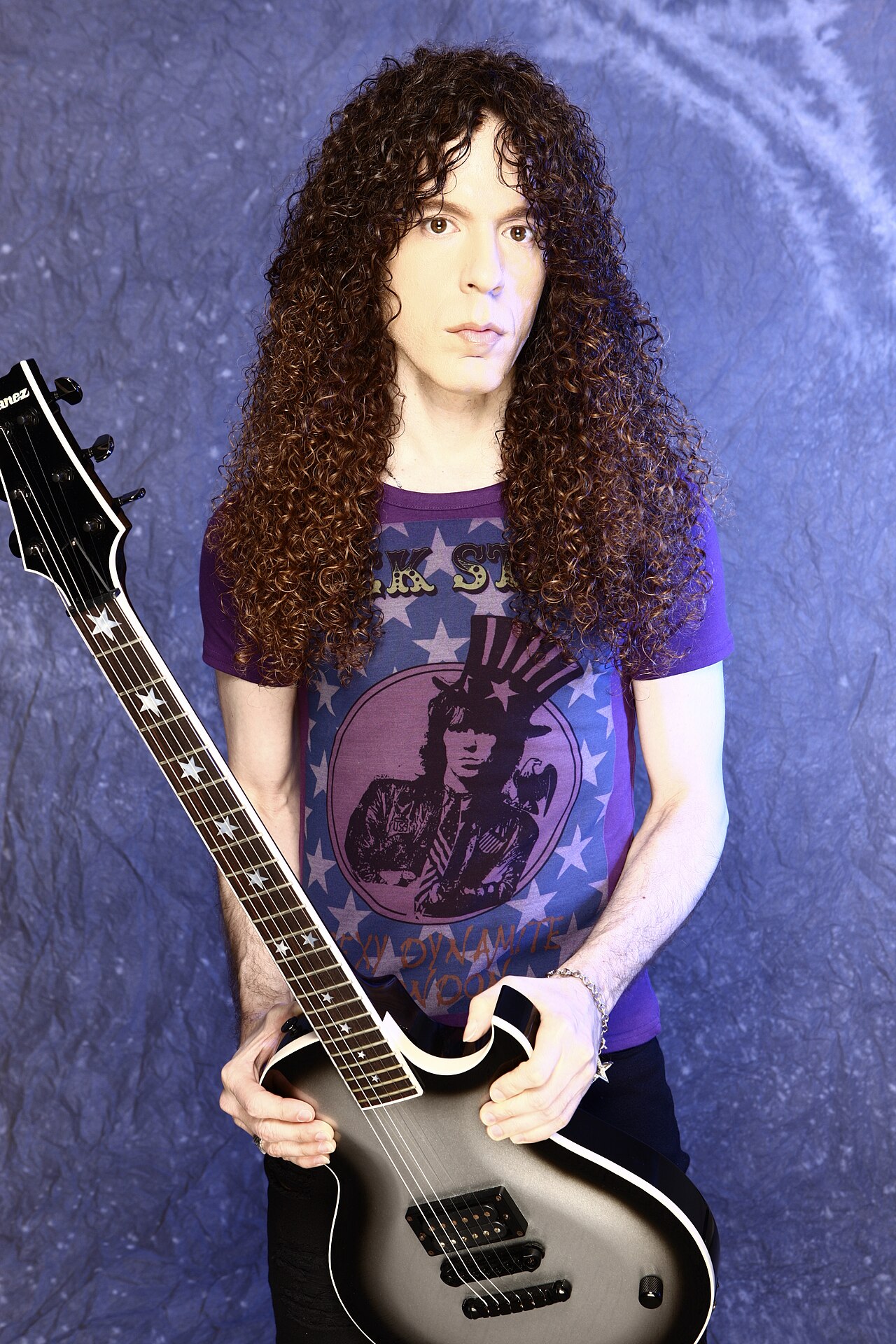
After moving to Japan in 2003 and beginning his second career as a solo artist and J-pop session player, Friedman partnered with the Japanese manufacturer Caparison to develop a signature line built around the TAT 2 platform. The Caparison MF (Marty Friedman) models use passive humbuckers voiced for clarity at high gain, an extra-comfortable neck profile, and the characteristic offset body shape that allows the instrument to sit well in standing or sitting playing positions. The collaboration produced several models over the years, and Caparison remains his primary instrument family. The shift from Jackson to Caparison mirrored his geographic and musical migration: the Japanese boutique builder's attention to detail and willingness to engineer around his specific preferences matched the bespoke career he was building in his new home.
Marshall JCM800 (Megadeth Era) and Engl Powerball (Solo Era)
Known for: Friedman's main touring rigs through his metal career
During the Megadeth years Marty Friedman relied primarily on Marshall JCM800 tube heads, the amplifier that defined the high-gain rock and metal tone of the 1980s. He paired the JCM800 with standard 4×12 cabinets loaded with Celestion speakers, running the amp's preamp gain at more modest settings than many of his peers and letting his picking attack and string-vibrato control the tonal character. This was a deliberate choice: the JCM800's natural saturation gave him enough harmonic complexity for legato lead lines without the over-compression that would have flattened the articulation he prized.
In his solo career and Japanese recording work he transitioned to Engl amplifiers, particularly the Engl Powerball and Fireball, which offered the higher gain levels and tighter low-end response that modern productions demanded. The Engl heads also allowed him to switch cleanly between rhythm and lead channels via MIDI, which mattered for the more complex song structures of his solo material. Across both eras the consistent quality was his preference for high headroom and clear articulation over saturated wall-of-noise gain, a choice that kept his intricate single-note phrasing legible even at extreme picking speeds.
Minimal Chain: Delay, Whammy Pedal, Wireless
For a player so often associated with virtuosic complexity, Marty Friedman's effects chain is remarkably restrained. The core of his signal path is the guitar plugged into a high-gain amplifier, with relatively few pedals in between. Delay is the one effect he uses almost constantly, set to short slap-back times for thickening lead lines and occasionally to longer settings for repeating melodic figures during introspective passages. The Digitech Whammy pedal makes occasional appearances for pitch-shift dive effects and the soaring octave-up leaps that punctuate some of his more recent solo material.
What is striking about his rig is what is absent. There is no rack of harmonizers, no chorus for the clean tone, no heavy reverb wash. The choice reflects his belief that the guitar's voice should come from the hands and the amp, and that effects should be used as occasional punctuation rather than as the foundation of the sound. This minimalist approach also makes his playing exceptionally portable: the same lead lines work whether he is performing in a stadium, a Japanese television studio, or a small club, because the tonal character comes from technique and choice of pickups, not from a complex outboard signal chain that has to be set up and dialed in for each environment.
Signature Technique
Exotic Scales, Wide Vibrato, and Vocal Phrasing
Marty Friedman's technical vocabulary is built on a foundation of non-Western scale systems applied to a metal context, an approach that almost no other player of his stature has pursued as systematically. While most thrash and progressive metal lead guitarists of the 1980s and 1990s worked primarily from natural minor, harmonic minor, and pentatonic scale shapes, Friedman drew heavily from Japanese pentatonic systems (Hirajoshi, Iwato, Kumoi), Arabic maqamat, Hungarian minor, and the various exotic modal flavors that Western theory tends to lump together as bracket exotic without engaging seriously with their internal logic. His solos move through these scales with the fluency of a player who learned the underlying intervallic structure rather than memorizing scale shapes, and the resulting lines often sound like exotic vocal melodies translated to the guitar.
His vibrato is perhaps his single most identifiable technical trait. Where most metal players use a relatively fast, tight vibrato, Friedman's is slower, wider, and applied with the kind of finger-and-wrist control more often associated with vocal performance than with electric guitar. He frequently bends a note up to pitch and then applies the vibrato around the destination pitch, producing a singing quality that is the closest a guitarist can come to the human voice. This characteristic is so personal that other players have struggled to imitate it convincingly, even after studying his technique in detail.
His right-hand approach combines alternate picking with significant use of hybrid picking (pick plus middle and ring fingers), allowing him to play wide-interval leaps and string-skipping patterns at high speed without losing tonal consistency. The unusual fingerings he uses on the fretting hand are part of what gives his playing its sense of harmonic surprise: rather than running scales in conventional positions, he often chooses stretchy or position-shifting fingerings that produce melodic contours impossible to achieve with standard fretboard logic. The combination of unusual scales, unusual fingerings, and vocal-influenced vibrato is what makes Friedman immediately recognizable within the first second of any lead passage.
His pedagogical influence has been substantial. Guitar magazines have run hundreds of columns analyzing his solos, and his instructional materials introduced a generation of players to the idea that exotic scales were not just academic curiosities but practical tools for melodic invention. His move to Japan and integration into J-pop production has also placed his playing in front of audiences who would never have heard it in a Western metal context, broadening the reach of his approach in ways that few of his peers have matched. The lineage of players directly shaped by his work runs from European progressive metal soloists through neo-classical revival players and into the modern djent and progressive scenes, where his blend of melodic ambition and technical command remains a reference point that few have surpassed.