


Albert Lee
Current Ranking
Albert Lee is ranked #36 of 162 guitarists on the Greatest Guitar Player fan leaderboard, based on 2 fan votes so far. On the country and roots leaderboard, Albert Lee ranks #1 of 11. Agree? Rate Albert Lee on 8 attributes at greatestguitarplayer.com/vote.
Biography
Born in Herefordshire in 1943 and raised in postwar South London, Albert Lee fell for American music long before he ever heard it played live, chasing the sounds of James Burton, Cliff Gallup, and the Nashville pickers on scratchy imported records and teaching himself to bend a guitar toward Tennessee from the wrong side of the Atlantic. He actually started on piano, which is part of why his guitar lines roll and tumble the way they do, with a two-handed logic underneath the speed. By the early 1960s he was one of the most wanted young players in the London club scene, holding the lead chair in Chris Farlowe's Thunderbirds and soaking up everything from rockabilly to soul.
His first real showcase came with the country-rock band Heads Hands and Feet, whose live set built to a barnstorming instrumental called Country Boy. That tune became his signature for the rest of his life, a blur of hybrid picking and chicken-pickin' twang that somehow never sounds rushed, just joyful. Widely regarded as the finest country guitarist Britain has ever produced, Lee built the rest of his reputation on the road and in the studio. In 1976 he crossed the Atlantic to take over the lead guitar chair in Emmylou Harris's Hot Band, stepping into the seat his hero James Burton had just vacated, and suddenly the kid from South London was schooling American audiences in their own music.
From there the resume reads like a who's who of roots and rock. He anchored Eric Clapton's touring band for years, served as musical director for the Everly Brothers across their long reunion, and even held down a stint replacing Jimmy Page in The Crickets. His session credits run through virtually every corner of American music, and he picked up Grammy recognition for his instrumental work along the way. The players who could hire anyone tend to hire Albert Lee.
Here is the gem that tells you how guitarists really feel about him: when Ernie Ball Music Man built him a signature model, they did not just slap his name on an existing shape, they designed the instrument around how his hands actually move, and it became a quiet favorite among working pros who care more about feel than flash. That is Lee in a nutshell. He never chased fame, never leaned on showmanship, and stayed largely in the background while the famous names out front quietly studied his right hand. Clapton, Vince Gill, and a long line of Telecaster obsessives have called him one of the best who ever picked up the instrument, and he kept gigging and recording into his seventies and beyond with the same unhurried precision. If you want to understand why other virtuosos go quiet when his name comes up, cue up Country Boy and watch his picking hand.
Legendary Performance
Emmylou Harris & Her Hot Band at Carnegie Hall
November 1977 · Carnegie Hall, New York City
When Emmylou Harris assembled the Hot Band in the mid-1970s, she built it around the best musicians available, and Albert Lee, recruited from England in 1976, rapidly became the most discussed of them. His chicken-picking technique, hybrid picking combining flatpick and bare fingers at speeds that defied easy description, had never been heard in that context before: pure British country-rock velocity applied to American country material. The 1977 Carnegie Hall concert captured Lee at the peak of his Hot Band tenure, trading lines with Harris on material from the "Luxury Liner" album, and demonstrating that a guitarist raised on Chet Atkins records in Shropshire could play American country music with more authority than almost anyone born within its tradition.
The Carnegie Hall recording circulated among studio musicians and guitar players throughout the late 1970s and became required listening in session circles on both sides of the Atlantic. Chet Atkins, who had effectively invented the style Lee was extending, named him one of the two or three best guitarists he had ever heard. The session work that followed, with the Everly Brothers, Eric Clapton, Dave Edmunds, and dozens of others, was a direct consequence of those Hot Band years and that Carnegie Hall night specifically, when Lee played to an audience that included half the session musicians in New York.
▶ Watch on YouTubeGear
Ernie Ball Music Man Albert Lee Signature (1993-present)
Known for: "Country Boy", live with Emmylou Harris
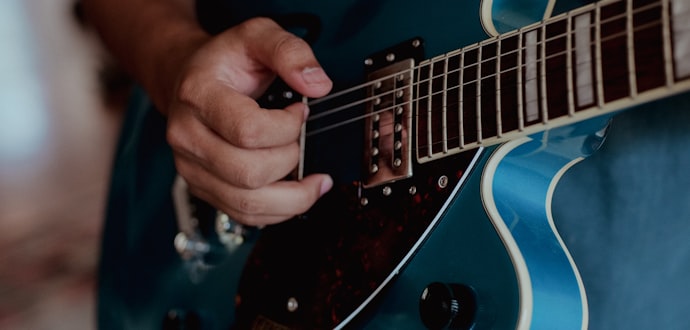
When Music Man collaborated with Albert Lee on his signature model in the early 1990s, the brief was to build a guitar that could handle the demands of professional country, rock, and session work without compromise. The result was a double-cutaway body with a bolt-on maple neck, two single-coil pickups in the bridge and middle positions and a humbucker at the neck, a configuration that gives Lee the cut and snap of Telecaster-adjacent tones on the bridge pickup while retaining warmth on the neck. The body contours are comfortable enough for extended live use, and the guitar's sustain and output suit the hybrid-picking technique Lee employs.
Before the signature model, Lee's main instrument through the Hot Band years was a 1950s Fender Telecaster, the natural predecessor to what Music Man would eventually build for him. The Telecaster's snappy bridge pickup response is the acoustic foundation on which chicken-pickin' technique works best, and Lee's Tele-based playing during those years established the tonal template the Music Man signature would later formalise.
Fender Super Reverb
Known for: Live country and session work throughout the 1970s
Lee has used Fender combo amplifiers throughout most of his career, with the Super Reverb, a 45-watt, four-ten-inch speaker combo with spring reverb, serving as his primary live amp through the Hot Band years. The Super Reverb produces a clean, full-frequency response that lets the attack of the hybrid-picking technique speak clearly without compression artefacts obscuring the distinction between the pick and the finger snap.
The amplifier's reverb was used sparingly, enough to give the guitar a sense of space without obscuring the precision of the picking. Lee's philosophy has always prioritised clarity: the technique is the content, and the equipment exists to transmit it faithfully rather than to add character of its own.
Signature Technique
Chicken Pickin' & Hybrid Picking at Full Velocity
Albert Lee is the guitarist other guitarists cite when they want to identify the absolute ceiling of chicken-pickin' technique, the hybrid picking method in which the flatpick handles the lower strings while the middle and ring fingers snap the higher strings with a sharp, percussive attack that produces a clucking, popping quality on the upper notes. The technique originates in American country music and was codified by Chet Atkins, but Lee took it to velocities and melodic complexities that Atkins himself acknowledged went beyond anything he had attempted. What distinguishes Lee's hybrid picking from lesser practitioners is the evenness: at the speeds he operates, the dynamic balance between pick and fingers remains consistent, so the tone does not break down into a blur of uncontrolled attack.
His right-hand mechanics are matched by a left-hand fretting approach built on economy, he moves as little as possible between positions, using string bending and vibrato to extend the range of a given location rather than shifting up and down the neck unnecessarily. The result is a fluency that sounds relaxed even at extreme tempo, a characteristic he shares with the American country players who influenced him but carries further into rock and blues territory. Chet Atkins called him the best guitarist he had ever heard. That assessment, from the man who invented the style, is the most authoritative technical review Albert Lee's playing has ever received.