



Ry Cooder
Current Ranking
Ry Cooder is ranked #118 of 162 guitarists on the Greatest Guitar Player leaderboard, based on our editorial score until fans weigh in. On the country and roots leaderboard, Ry Cooder ranks #9 of 11. No fan votes yet, so be the first to rate Ry Cooder on 8 attributes at greatestguitarplayer.com/vote.
Biography
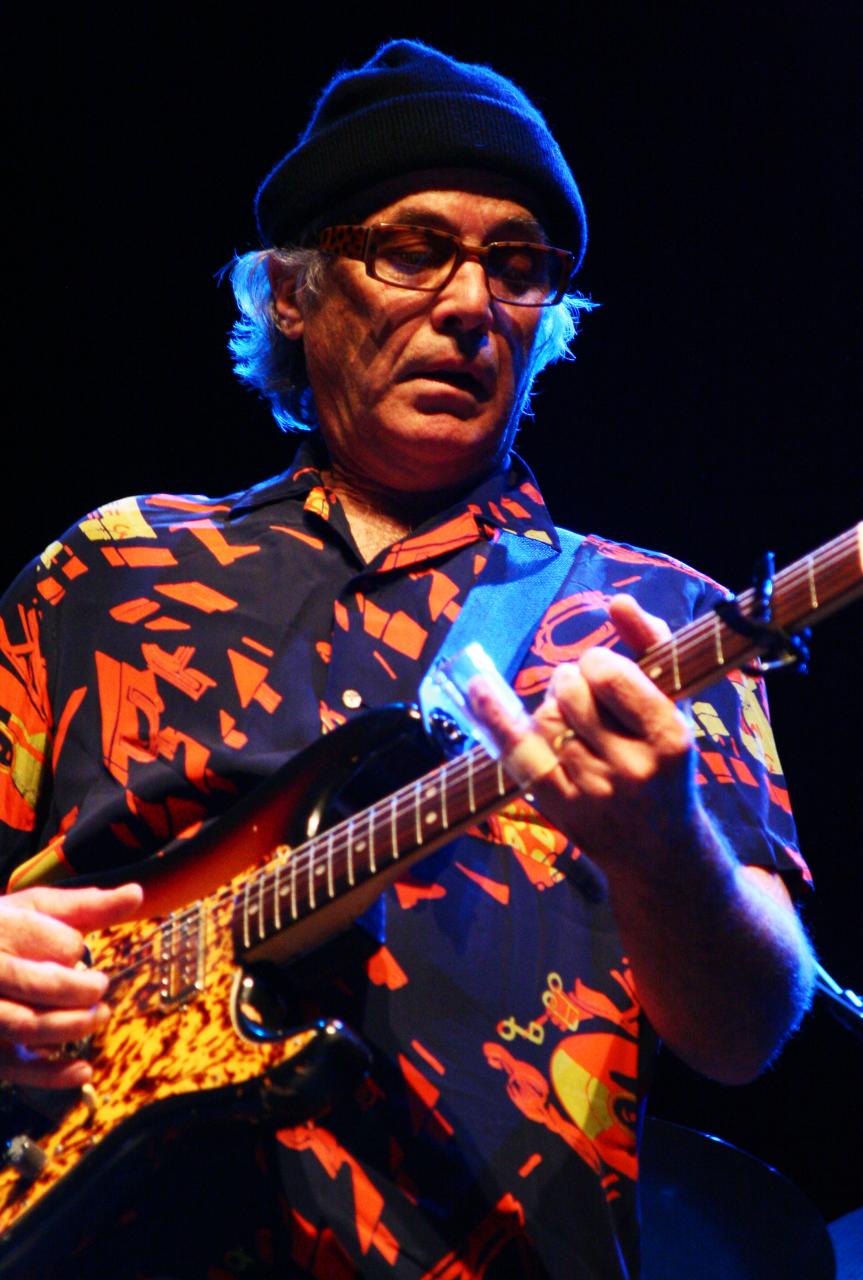
Ry Cooder, born in Los Angeles in 1947, is one of the most respected and adventurous guitarists in the world, a master of slide guitar and a tireless musical explorer whose curiosity has carried him across nearly every genre and around the globe. A virtuoso with deep roots in American blues, folk, and roots music, Cooder has spent his career not just mastering traditions but connecting them, becoming as celebrated for his cultural collaborations as for his exquisite playing.
Cooder is widely regarded as one of the finest slide guitarists alive, with a tone and a touch of remarkable expressiveness and authenticity. He came up as a young prodigy steeped in the blues, did influential early session work, including lending his guitar to recordings by the Rolling Stones, and then launched a solo career that roamed freely through American roots music, from blues and gospel to Tex-Mex, Hawaiian, and beyond. His evocative, atmospheric slide playing also made him a sought-after film composer, most famously for his haunting, spare soundtrack to the film Paris, Texas, a piece of music so evocative it became a touchstone of cinematic guitar.
Here is the gem that became his most far-reaching achievement. In the 1990s, Cooder traveled to Cuba and helped assemble and record a group of veteran Cuban musicians, many of them elderly and largely forgotten, into the Buena Vista Social Club. The resulting album became a worldwide phenomenon, selling millions of copies, winning a Grammy, and sparking a global revival of interest in traditional Cuban music, while giving its aging legends a triumphant and deeply moving late-career renaissance. It was a stunning act of musical stewardship, Cooder using his skill, reputation, and curiosity not to showcase himself but to lift up and share a whole tradition with the world, and it stands as one of the most beloved cross-cultural music projects ever made.
That generous, exploratory spirit defines Cooder's entire career. He has collaborated with musicians from India, Africa, Mexico, and beyond, always approaching other traditions with respect and genuine love, and always letting his tasteful, soulful guitar serve the music rather than dominate it. A masterful slide player, an evocative composer, and a cultural bridge-builder, Ry Cooder is a guitarist whose importance extends far beyond technique. He represents the guitar at its most open-hearted and curious, an instrument for connecting people and honoring traditions, and few players have ever used it so beautifully or so generously.
Legendary Performance
Buena Vista Social Club at Carnegie Hall
July 1, 1998 · Carnegie Hall, New York City, NY
In 1996, Ry Cooder traveled to Havana with a recording budget and the ambition to capture something the wider world had been systematically prevented from hearing for nearly forty years. What he found in the back rooms and rehearsal halls of the Cuban capital was a community of musicians, some in their seventies, eighties, even nineties, who had been playing a refined, deeply soulful brand of Cuban son and bolero since before the revolution, and who had been largely invisible to the rest of the world ever since. The recordings released under the name Buena Vista Social Club became one of the bestselling world-music albums in history. But the recordings were, in some sense, only the first act. The second came on July 1, 1998, when this impossible ensemble walked out onto the stage at Carnegie Hall.
The house was sold out, the audience hushed in anticipation. Then Compay Segundo, ninety years old, a trademark double cigar tucked behind his ear, led the band into the first number with the unhurried authority of someone who had been playing music since before the oldest person in the room was born. Ibrahim Ferrer sang as though Carnegie Hall were his living room. Ruben González played piano with a touch so light and precise it seemed to defy physics. And through it all, Ry Cooder moved quietly through the ensemble, playing slide and rhythm guitar with the discretion of a man who understood that his role was not to lead but to hold. He was the one who had made the introductions; the music belonged to them.
Wim Wenders filmed the concert for a documentary that would go on to receive an Academy Award nomination, ensuring the evening survived not just as memory but as permanent document. All About Jazz called it "the pinnacle of the Buena Vista project." It was something rarer than that: a moment when music sealed behind a political embargo finally stepped into a room large enough to deserve it, surrounded by the musicians who had kept it alive through sheer devotion. Ry Cooder's achievement was not just as a guitarist but as a listener, the man who heard something worth preserving and had the skill and stubbornness to make the world hear it too.
▶ Watch on YouTubeGear
National Style O Resonator / Fender Stratocaster
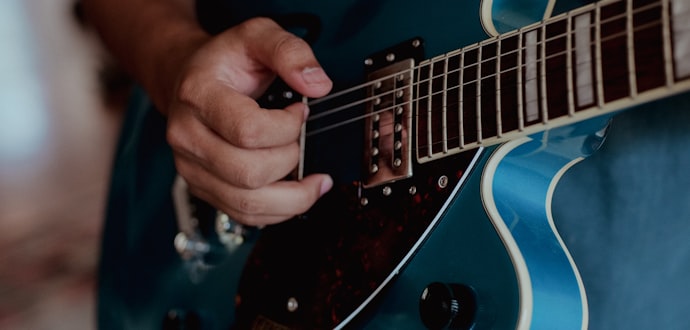
Ry Cooder's instrument choices reflect his lifelong commitment to American roots music in all its regional variations. His National Style O resonator guitar, a single-cone steel-bodied instrument originally designed in the 1920s for Hawaiian and blues players, is central to his slide work and produces the raw, metallic tone of early Delta blues. Alongside the National, he uses a modified Fender Stratocaster with the tremolo removed and the nut replaced for slide work, giving him an electric option with the Strat's single-coil clarity. His tuning choices are as significant as his instrument choices: he favors open tunings (Open G, Open D, Hawaiian) that suit his slide playing and allow chord voicings unavailable in standard tuning.
Fender Tweed Deluxe / Small Combos
Cooder's amplification philosophy aligns with his instrument philosophy: vintage, American, and appropriate to the musical tradition he's working in. Fender Tweed Deluxe amplifiers, small, loud, and naturally compressing when driven, provide the right sonic context for both his slide work and his fingerpicked rhythm playing. He typically records with small combos placed in acoustically interesting rooms, allowing the natural ambience of the space to contribute to the sound. His approach to amplification is the studio equivalent of field recording: capture the instrument honestly in a good-sounding space.
Open Tunings / Bottleneck Slide / Minimal Processing
Cooder's primary 'effects' are his tunings and his slide technique. Working in open tunings with a metal or glass bottleneck, he produces a vocal, sustained tone that standard tuning playing cannot replicate. His slide intonation is precise, he plays behind the slide for slightly flat notes in the blues tradition, or directly over the fret for clean pitch. Minimal reverb (often natural room ambience) completes the picture. His recording philosophy extends to his live work: the most honest representation of the instrument in its acoustic environment, with as little electronic mediation as possible.
Signature Technique
Signature Technique
Ry Cooder's guitar technique is inseparable from his role as America's foremost musical archaeologist. He has spent his career learning and translating the playing styles of early blues, gospel, Hawaiian, Mexican, and world music traditions, not as academic exercises but as living vocabularies to be deployed in his own recordings. His technique is therefore not a single style but a collection of regional traditions synthesized into a personal voice.
Cooder's slide guitar technique, developed primarily in open tunings (Open G and Open D are most common), represents one of the most precise and expressive approaches to the instrument in any tradition. He plays his bottleneck slides with a light, singing touch, controlling vibrato with minimal lateral movement, achieving precise intonation by positioning the slide directly over frets. His slide phrasing is melodic and vocal rather than ornamental: each slide passage tells a complete musical story rather than serving as a tonal color between standard passages.
For non-slide playing, Cooder uses a combination of thumbpick and bare fingers, a technique derived from pre-war blues and country traditions. The thumbpick handles bass note responsibilities, alternating bass patterns, root-chord punctuation, while his fingers handle melody and inner voices. This self-sufficient approach, which allows him to imply a full band arrangement without accompaniment, suits the solo acoustic contexts he often works in. His fingerpicking patterns vary with each musical tradition: Delta blues patterns differ from Hawaiian slack-key patterns, which differ from Mexican son jarocho patterns.
Cooder's most sophisticated technique is conceptual rather than physical: the ability to identify the core structural principle of a musical tradition, its rhythm, its harmonic language, its tonal ideal, and translate it into a context where it can communicate to new audiences. His Buena Vista Social Club project with Cuban musicians demonstrated this at its most spectacular scale, but the same translation ability appears throughout his career, from his Delta blues recordings to his Indian music collaborations. Understanding multiple traditions deeply enough to bridge them is a technique that no amount of technical practice alone can teach.