



Chuck Berry
Current Ranking
Chuck Berry is ranked #12 of 162 guitarists on the Greatest Guitar Player leaderboard, based on our editorial score until fans weigh in. On the rock and roll leaderboard, Chuck Berry ranks #1 of 8. No fan votes yet, so be the first to rate Chuck Berry on 8 attributes at greatestguitarplayer.com/vote.
Biography
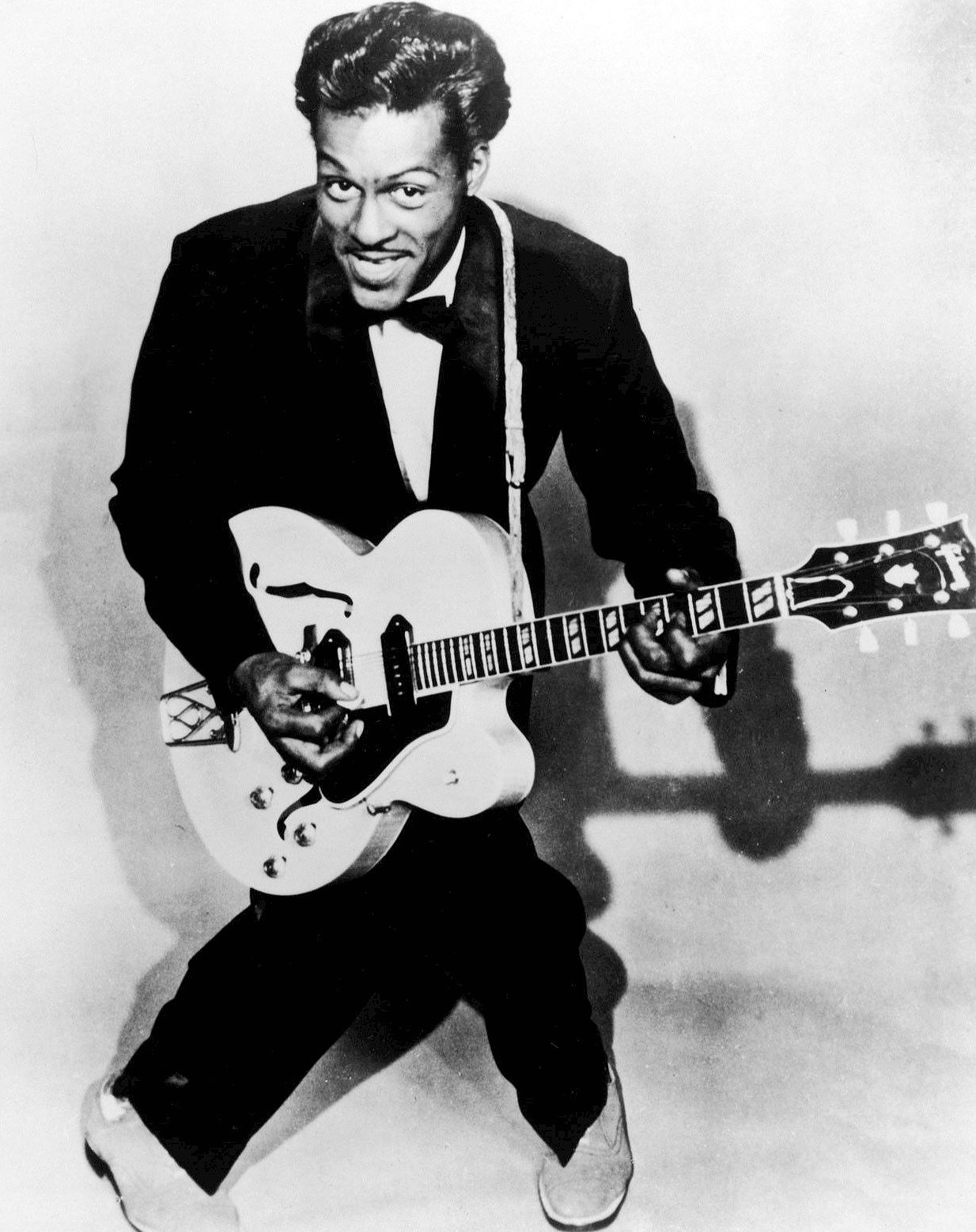
Chuck Berry, born in St. Louis in 1926, did as much as any single human being to invent rock and roll guitar, and he did it with such style, wit, and showmanship that we are all still living in the world he built. He took the rhythms of the blues, the twang of country, and the swing of jump-blues and translated them onto the electric guitar, then wrote sharp, funny, vividly detailed lyrics about cars, school, and teenage life that gave the new music its voice.
Berry's guitar style is the foundational vocabulary of rock. His chiming double-stop riffs, his driving rhythm, and above all the electrifying intro to Johnny B. Goode are the literal grammar that every rock guitarist who followed had to learn. Songs like Maybellene, Roll Over Beethoven, Sweet Little Sixteen, and Johnny B. Goode were not just hits, they were instruction manuals, and the young Beatles, Rolling Stones, and Beach Boys built their early sets out of them. He matched the music with unforgettable showmanship, most famously the duck walk, scooting across the stage on one leg with his guitar held high.
Here is the gem that puts his importance into cosmic perspective, quite literally. When NASA sent the Voyager spacecraft toward the stars in 1977, they included a golden record meant to represent the best of human culture to any intelligent life that might find it, and the music chosen to represent rock and roll was Chuck Berry's Johnny B. Goode. His guitar is now drifting through interstellar space, billions of miles from Earth, the sound of humanity's young, restless joy carried out among the stars. It is hard to imagine a more fitting tribute to the man who started it all.
A second gem reveals where some of that magic came from. Berry openly borrowed the bright, swinging lead style of jump-blues guitarist Carl Hogan, who played in Louis Jordan's band, and the dazzling intro to Johnny B. Goode is a direct descendant of a Hogan line, a reminder that even the great originator was himself a brilliant student of the music that came before him. He then transformed those influences into something wholly new and instantly his own.
Berry's life was complicated and sometimes troubled, but his musical legacy is beyond dispute. He was among the very first inductees into the Rock and Roll Hall of Fame, and John Lennon once joked that if you tried to give rock and roll another name, you might call it Chuck Berry. Every time a guitarist cranks out a driving riff or bends into a double stop, they are speaking the language Chuck Berry wrote. He is, as much as anyone can be, the architect of the whole thing, the founding father whose riffs remain the bedrock of rock guitar.
Legendary Performance
Toronto Rock and Roll Revival
September 13, 1969 · Varsity Stadium, University of Toronto, Toronto, Canada
Three weeks after Woodstock had reportedly ushered in a new age of rock consciousness, Toronto assembled its own answer, and invited the man who had started the whole argument in the first place. When Chuck Berry walked onto the Varsity Stadium stage on September 13, 1969, launching into "Rock & Roll Music" before 20,000 people, it felt less like a concert opener and more like a founding father returning to survey what he'd built.
What surrounded Berry that evening was extraordinary: John Lennon and Yoko Ono debuting the Plastic Ono Band, Jerry Lee Lewis, Little Richard, Bo Diddley, a gathering of the genre's architects at a moment when their inheritance was being radically reinterpreted by a younger generation. But Berry needed no reinterpretation. He simply played, duck-walking across the stage with the same physical electricity he'd brought to the same songs a decade and a half earlier, and the crowd, many of them barely old enough to have been born when "Johnny B. Goode" was recorded, went completely to pieces.
Berry's guitar playing that night was a master class in economy and impact. The double-string bends, the rhythmic chops locked into the backbeat, the leads that said everything and wasted nothing, it was the vocabulary he'd invented, spoken with the fluency of someone who had never needed a translation. The performance was captured on an official live album and later film, preserving the night for posterity. John Lennon, watching from the wings, later said he'd been genuinely nervous to perform after Berry. That's the measure of the man.
▶ Watch on YouTubeGear
Gibson ES-335 / ES-345
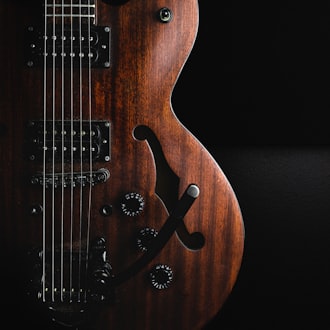
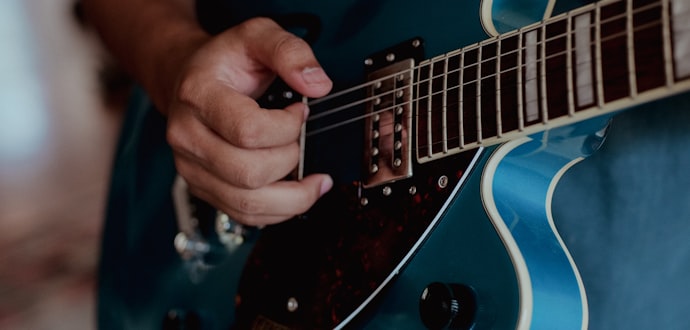
Chuck Berry's guitar work in the 1950s and early 1960s was built around Gibson semi-hollow archtops, the ES-335 and ES-345 being his most associated instruments. Their hollow-body resonance gave his double-stop riffs a warmth and depth that solid-body guitars couldn't match, while the humbucking pickups provided enough output to cut through the mix without excessive harshness. Berry's trademark opening riff to 'Johnny B. Goode', played on the bass and treble strings simultaneously, requires a guitar with clear note separation in double-stop positions, and the ES-335's wide neck and low action facilitated exactly that. The guitar became so associated with his style that it influenced the choice of instrument for virtually every rock and roller who came after him.
Fender Dual Showman / Various Combos
Berry's amplifier requirements were simple: loud, clean, and capable of filling a rock and roll club without breaking up prematurely. He used a variety of period-correct Fender amplifiers, including the Dual Showman for larger venues, and was generally more concerned with volume and reliability than with tonal nuance. His approach to amplification reflected his approach to music: practical, powerful, and entirely in service of the song and the dance floor.
Minimal / Straight Guitar-to-Amp
Chuck Berry's signal chain was one of the most elemental in rock and roll: guitar straight into amplifier, nothing in between. His tone came entirely from his hands, the way he struck the strings, the angles of his pick, and the intuitive rhythmic feel that made his playing so irresistible. The duck walk, the showmanship, the riffs that launched a thousand careers: all of it came from a man with a guitar, an amp, and an absolute mastery of how to move a crowd.
Signature Technique
Double Stops & Lead-Rhythm Fusion
Chuck Berry built the lead vocabulary of rock and roll guitar on double stops, pairs of notes played simultaneously, typically a major third or major sixth interval apart, hammered on or bent as a unit. By applying this technique in the upper register of the guitar over a driving rhythm, he fused lead playing and rhythm playing into a single gesture. The guitar was leading, comping, and driving the groove all at once. This synthesis was not accidental; Berry understood intuitively that rock and roll required a guitar that never stopped swinging, even when it was soloing.
The opening two bars of "Johnny B. Goode" contain perhaps the single most copied guitar phrase in popular music, a cascading double-stop run that descends the neck with rhythmic authority and lands perfectly on the downbeat. Generations of guitarists learned it as their first real lead phrase. Keith Richards, Angus Young, and George Harrison all point directly to Berry's double-stop vocabulary as the foundation of their own approach to rock guitar. The debt the instrument owes him is essentially incalculable.