
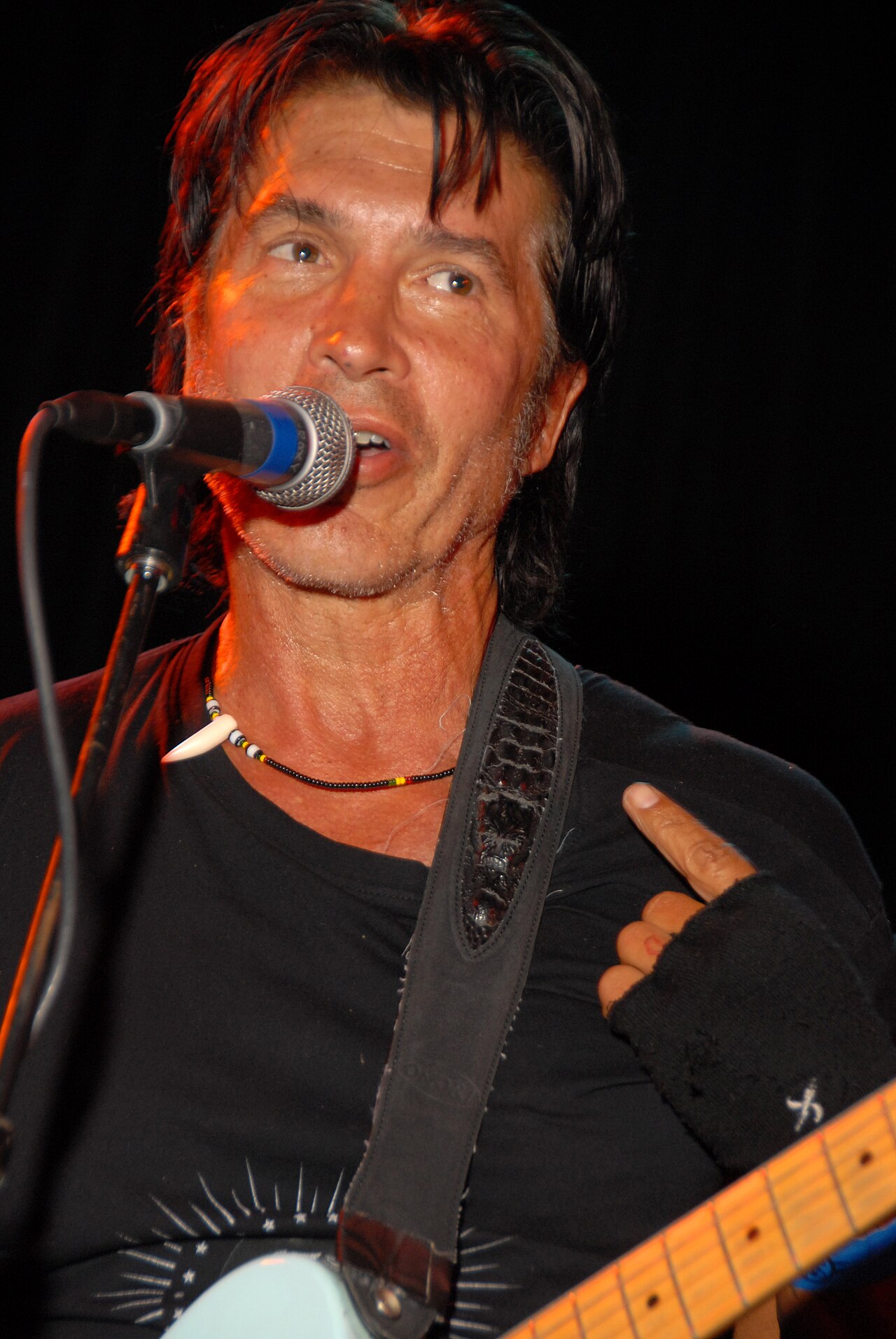

George Lynch
Current Ranking
George Lynch is ranked #49 of 162 guitarists on the Greatest Guitar Player fan leaderboard, based on 1 fan vote so far. On the heavy metal leaderboard, George Lynch ranks #5 of 14. Agree? Rate George Lynch on 8 attributes at greatestguitarplayer.com/vote.
Biography
George Lynch, born in California in 1954, is one of the most distinctive and respected guitarists to emerge from the 1980s hard-rock and metal scene, a player whose exotic, fiery style set him apart from the pack of fast guitarists crowding that era. As the lead guitarist of Dokken and later his own band Lynch Mob, he combined blazing technique with an unusually expressive, almost vocal sense of melody and a tone that earned one of his signature instrumentals the perfect title Mr. Scary.
Lynch's playing draws on more than just rock and blues. He laces his solos with exotic, Middle Eastern and diminished scales, unusual phrasing, and a snarling, aggressive attack, giving his work a darker and more adventurous flavor than many of his shred-era peers. His command of the whammy bar, his harmonics, and his fierce vibrato made him a favorite of serious guitarists, and his striking custom guitars, including the famous Kamikaze and Tiger graphics, became as recognizable as his playing.
Here is the gem that places him in rock history. Before Dokken made him a star, Lynch was a serious contender for one of the most coveted guitar gigs of the era, auditioning to replace the late Randy Rhoads in Ozzy Osbourne's band. He came genuinely close to landing it, and though the gig ultimately went elsewhere, the fact that he was in the final running for such a high-profile slot speaks to how formidable a player he already was. It is one of rock's great what-if moments, and it underscores that Lynch was operating at the absolute top tier of guitarists in his prime.
With Dokken, Lynch's guitar work was the secret weapon behind hits like Tooth and Nail, In My Dreams, and the ballad Alone Again, where his solos consistently outshone the material around them. The band's famously volatile internal relationships eventually fractured, but Lynch's reputation only grew, and he has remained creatively restless across decades, exploring blues, funk, and socially conscious projects while never losing his fearsome chops. For fans of expressive, exotic, hard-rock lead guitar, George Lynch remains a player's player, the man behind Mr. Scary who very nearly became Ozzy's guitarist and spent a career proving he belonged in that conversation.
Legendary Performance
Back for the Attack Tour, Monsters of Rock
The 1987 Monsters of Rock at Castle Donington drew over 70,000 people to watch a bill that represented heavy metal at the height of its commercial power, and Dokken, riding the momentum of Back for the Attack and its career-defining instrumental showcase "Mr. Scary", delivered one of the day's most talked-about sets. George Lynch played with the controlled aggression that had made him one of the most discussed guitarists in hard rock: his tone cut through the festival's notoriously difficult open-air acoustics with the precision of a player who had been thinking hard about what he was doing rather than simply turning up the gain and hoping for the best. The crowd's response to his solo spots, particularly the extended instrumental passage that drew from the album's most technically ambitious moments, confirmed that Lynch had graduated from "promising" to genuinely essential.
What distinguished Lynch's Donington performance from his contemporaries on the same bill was its musical ambition. The other guitarists were mostly doing what hard rock lead players did in 1987: fast runs, whammy bar acrobatics, pentatonic patterns delivered with maximum confidence. Lynch was doing something more interesting, building solos with genuine compositional logic, using rhythmic displacement and wide interval jumps to create melodies that surprised even attentive listeners. His blues roots gave his most aggressive passages a harmonic depth that kept the music from collapsing into pure technique, and the result was a festival performance that earned him a reputation among musicians as one of the era's most underrated guitar architects.
▶ Watch on YouTubeGear
ESP Skulls & Snakes / Charvel Superstrat
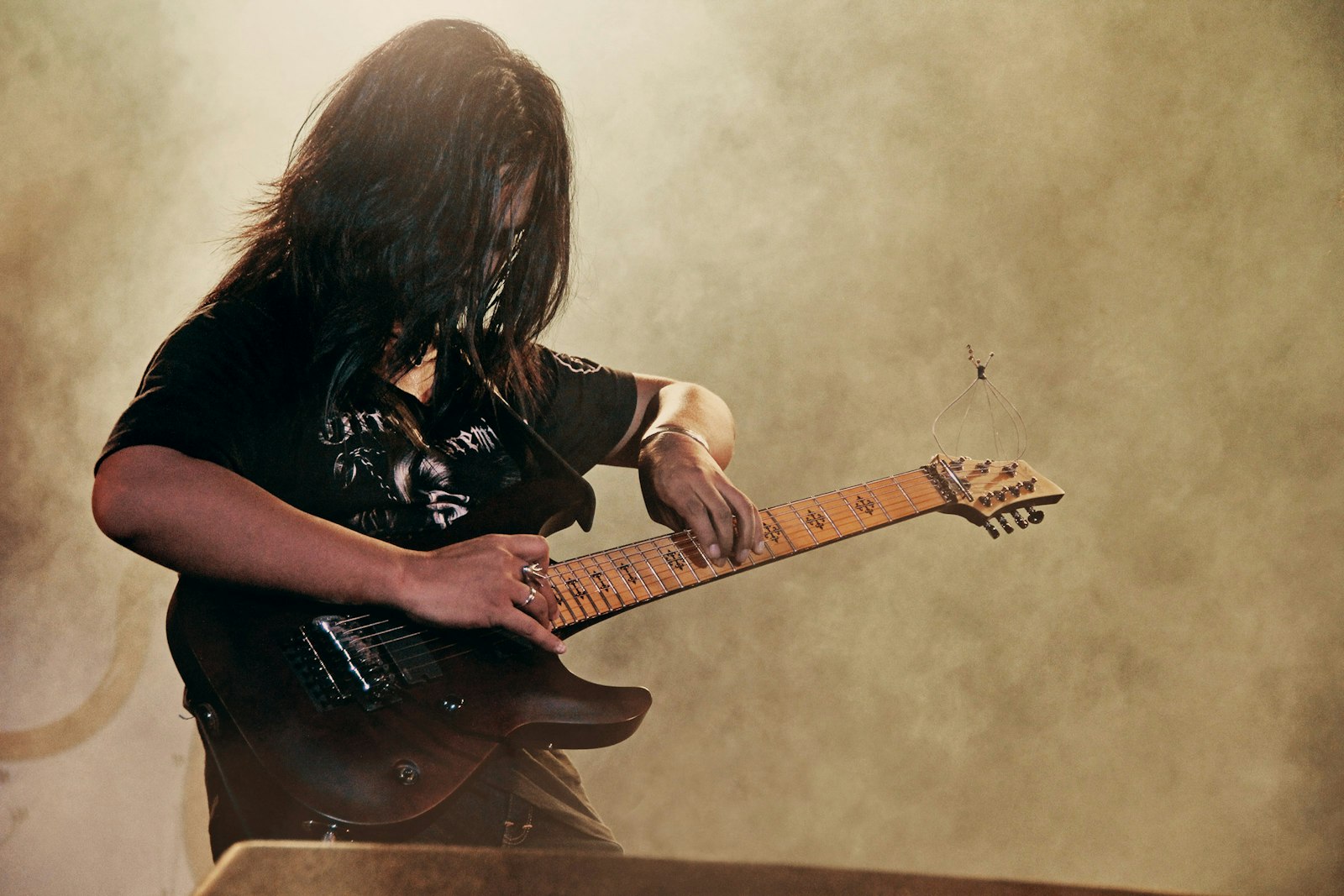
George Lynch's most iconic instrument is his ESP Skulls & Snakes, a Strat-style body covered in hand-painted skull-and-snake artwork that became one of heavy metal's most recognisable guitar images. Beneath the artwork is a serious instrument: ESP's mahogany body, maple neck, and high-output Jackson-style pickups provide the thick, sustaining tone Lynch's lead style demands. He was an early ESP endorser and worked closely with the company to develop instruments suited to the physical demands of his playing, particularly the aggressive right-hand attack and wide vibrato that define his approach. He also played a range of Charvel and Jackson guitars through the 1980s, and his early Dokken recordings feature the bright, cutting tone of Charvel Superstrats that was characteristic of the era's high-performance hard rock.
Mesa/Boogie Mark Series
Lynch's amplification has centred on Mesa/Boogie throughout most of his career. The Boogie's combination of American clean tone and high-gain lead channel suited his playing perfectly: the clean channel preserved the harmonic complexity of his chord voicings, while the lead channel provided the smooth, sustaining distortion his long-note melodic passages required. He has used both the Mark series and the Rectifier platform at various points, adapting his setup to the sonic requirements of different projects. His amplifier settings tend toward high mids and controlled low end, a configuration that allows his pick attack to cut through the mix with the percussive clarity his rhythmic playing demands.
Roland SDE-3000 / Wah / Minimal Chain
Lynch's effects chain is purposeful and relatively compact for a player of his era. A Roland SDE-3000 digital delay, one of the most-used rack units of 1980s hard rock, provided the slap-back and longer repeats that gave his studio recordings their characteristic spatial depth. A wah pedal appears on certain recordings for vocal expression in lead passages. His overall philosophy has always been that the guitar and amplifier should do most of the tonal work, with effects serving to enhance rather than create character. The result is a signal chain that sounds live and immediate rather than heavily processed, a quality that has kept his recordings sounding vital long after many of his contemporaries' more effect-saturated productions have dated.
Signature Technique
Signature Technique
Aggressive Attack, Compositional Soloing & "Mr. Scary" Architecture
George Lynch's guitar technique is built on a paradox: he is one of hard rock's most aggressive physical players, yet his musical intelligence is quietly sophisticated in ways that took his peers years to fully appreciate. He absorbed the blues tradition deeply enough to use its vocabulary naturally rather than decoratively, and he applied that vocabulary to heavy metal contexts with a rhythmic unpredictability, sudden accents, displaced phrase starts, wide interval leaps, that made his playing genuinely difficult to anticipate. His solos are constructed, not improvised in the conventional sense: each element serves a larger musical argument, and the result is a body of recorded guitar work that rewards close listening in a way that most 1980s hard rock simply doesn't.
Lynch's vibrato is among the most immediately recognisable in hard rock, wide, fast, and applied with a physical commitment that gives sustained notes an almost vocal urgency. He oscillates from the wrist with a speed and consistency that few players can match, and the width of the oscillation gives each bent or held note a singing quality that sits at the boundary between guitar and human voice. This vibrato is not applied uniformly; Lynch varies its onset, width, and speed with the emotional temperature of each phrase, using narrow oscillation for more understated moments and full-width vibrato for the climactic passages where the music demands maximum expression.
Lynch's right-hand picking technique is unusually percussive for a melodic lead player, he strikes the strings with a force that generates a sharp initial attack even at high gain, giving his notes a clarity and definition that softer picking styles cannot achieve. This hard attack combined with his Mesa/Boogie's natural compression creates a two-stage envelope: a defined percussive transient followed by smooth, sustaining decay. He also uses rhythmic displacement, starting phrases on unexpected beats, placing accents where the bar's natural stress falls differently, which gives his improvisations an unsettled, forward-leaning quality that keeps listeners off-balance in a musically productive way.
Lynch's most celebrated technical achievement is 'Mr. Scary', an instrumental on Back for the Attack that demonstrates his compositional approach to the guitar solo at full development. The piece uses wide interval jumps (sixths and sevenths rather than the stepwise motion that most rock guitarists default to), unconventional phrase lengths that resist the predictable four-bar symmetry of most rock improvisation, and dynamic shifts between delicate single-note passages and full-throttle hard rock intensity. The technical vocabulary deployed, legato runs, aggressive picking, bent double-stops, whammy bar drops, is wide, but every element is in service of the piece's overall dramatic arc. Lynch has described his approach to guitar composition as closer to writing a piece of music than improvising over chord changes, and 'Mr. Scary' proves the point.