
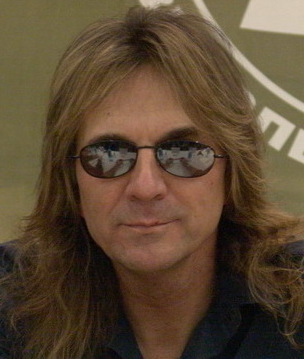

Glenn Tipton
Current Ranking
Glenn Tipton is ranked #111 of 162 guitarists on the Greatest Guitar Player leaderboard, based on our editorial score until fans weigh in. On the heavy metal leaderboard, Glenn Tipton ranks #12 of 14. No fan votes yet, so be the first to rate Glenn Tipton on 8 attributes at greatestguitarplayer.com/vote.
Biography
Glenn Tipton, born in Birmingham, England in 1947, is one half of the legendary twin-guitar attack that powered Judas Priest, one of the most important and influential heavy metal bands of all time. Alongside his longtime foil K.K. Downing, Tipton helped define the very sound of metal guitar, trading and harmonizing leads with a precision and ferocity that became the blueprint for countless bands that followed.
Tipton actually joined Priest a little later than the others and quickly became a driving creative force, and the interplay between his more polished, melodic approach and Downing's wilder, rawer style gave the band a rich, dynamic two-guitar sound. Together they took the dual-lead harmonized guitar idea and made it heavier, faster, and more aggressive, dressing the band in studs and leather and stripping away the blues-rock looseness in favor of tight, powerful, precise metal. Their playing is all over genre-defining albums like British Steel, Screaming for Vengeance, and the relentless Painkiller, whose title track features some of the most savage and technical guitar work of Tipton's career.
For metal guitarists, the gem is the template itself. The harmonized twin-lead attack that Tipton and Downing perfected, two guitars weaving melodic lines in parallel before exploding into dueling solos, became one of the foundational sounds of heavy metal, echoing through Iron Maiden, thrash, and beyond. They proved that metal could be both crushingly heavy and genuinely intricate, and they did it with a showmanship and a sharpness that elevated the entire genre.
There is a deeply admirable chapter to Tipton's later story, too. In 2018 he revealed that he had been battling Parkinson's disease, which had progressed to the point where he could no longer handle full sets, and he stepped back from constant touring. But he refused to disappear, continuing to make music and famously walking out to play encores with the band when he could, to thunderous, emotional ovations from fans who understood exactly what it cost him. That courage only deepened the affection metal fans feel for him. A genuine architect of heavy metal guitar, Glenn Tipton helped write the rulebook that every twin-guitar metal band still plays by, and he has met adversity with the same grit that always defined his playing.
Legendary Performance
US Festival 1983
May 29, 1983 · Glen Helen Regional Park, San Bernardino, California
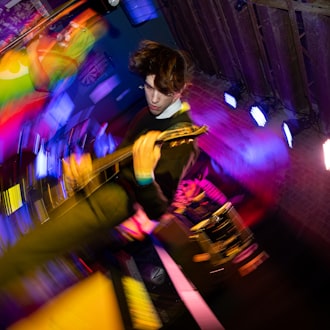
At dawn on Heavy Metal Day at the US Festival, Judas Priest walked onto a stage facing roughly 300,000 people, the biggest single-day audience the band had ever played to. Riding the commercial slipstream of Screaming for Vengeance, the set turned into the public coronation of metal as a stadium genre. Tipton's solos that day were a clinic in studio precision meeting arena power. His break on "You've Got Another Thing Comin'" became the defining moment, a melodic, blues-rooted statement that resolves with a trademark fast lick, beamed onto MTV and replayed for decades.
Beyond the headline song, his leads on "Living After Midnight" and "Metal Gods" demonstrated his discipline as a player who refuses to overplay. Where many of his peers were chasing speed alone, Tipton balanced punishing tempo with composed, hummable melodic lines. The festival appearance helped cement his reputation as the technical conscience of Judas Priest, and it confirmed heavy metal's commercial arrival in the United States.
▶ Watch on YouTubeGear
Hamer Phantom GT (Glenn Tipton signature) (Introduced 1985)
Known for: 1980s and 1990s Judas Priest sound, including "Painkiller," "Turbo," and "Ram It Down"
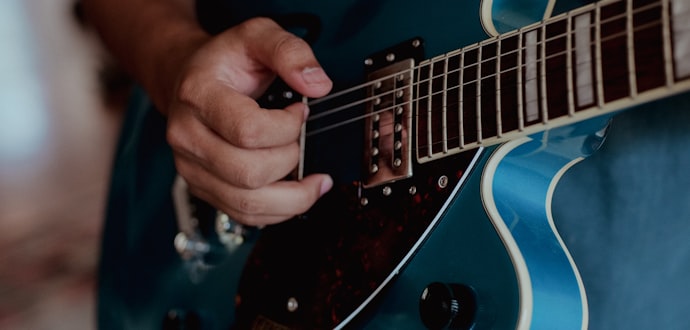
The Hamer Phantom GT was Tipton's signature instrument throughout Priest's most commercially dominant era. Built around a thinline mahogany body with twin humbuckers, a flat-radius fretboard, and a Floyd Rose-style locking tremolo, it gave him the ergonomic speed and tuning stability he needed for the increasingly precise leads on tracks like "Freewheel Burning" and "Painkiller." The contoured upper horn made upper-fret runs feel effortless, and the high-output pickups delivered the searing bite that defined his lead tone.
Earlier in his career he favored a Fender Stratocaster and a Gibson SG Custom. In later years he moved through Gibson Les Paul Customs and ESP signature models, but the Hamer remains the guitar most associated with the cover-photo era of Glenn Tipton.
Marshall JCM800 100-Watt Head
Known for: Painkiller-era lead tone, twin-stack live rig with K.K. Downing
Tipton built much of his iconic 1980s and 1990s tone around Marshall JCM800 100-watt heads, often run with the gain pushed and paired with stacked 4×12 cabinets loaded with Celestion Greenbacks. The amp's tight low-end response and aggressive midrange were the perfect canvas for his fast alternate picking, since every note in a Tipton run jumps out distinctly rather than smearing together. Live, he typically ran a wet/dry rig with stereo delay panned wide to add three-dimensional weight to the harmonized leads with K.K. Downing.
By the Painkiller era he was layering JCM800s with Marshall JCM900 dual-reverb heads to thicken solos in the studio. The signal stayed largely amp-driven rather than relying on stompboxes for distortion, a deliberate choice to keep the tone direct and cutting.
MXR Phase 90, Cry Baby Wah, stereo rack delay
Tipton's effects approach was disciplined rather than minimal. A Cry Baby wah parked in a fixed position helped sculpt the famous siren-like opening of "The Sentinel," while an MXR Phase 90 added subtle motion to clean passages. For solos he leaned on tape and rack-style stereo delays, typically set to long, dotted-eighth repeats, to create the wide, three-dimensional space that distinguishes Priest's lead work from contemporaries who chased dry, in-your-face tones.
He generally trusted the amp for distortion rather than stomping a heavy fuzz or overdrive, which kept his picking attack uncompressed and his fast runs articulate.
Signature Technique
Surgical Alternate Picking & Harmonized Lead Architecture
Tipton's defining trait is his clinical alternate picking, a metronomic, every-note-articulated approach that allows blistering tempos without losing the attack of each pick stroke. The opening solo of "Painkiller" is a masterclass: a 30-second tornado of descending diminished arpeggios and chromatic runs that has been transcribed by countless metal guitarists since 1990. The notes are not just fast, they are surgically clean, each one given its own air, which is why the solo still sounds frightening rather than blurred even at modern speeds.
He also brought classical-music vocabulary into a metal context decades before "neo-classical" became a marketing category. Diminished and harmonic-minor arpeggio shapes became part of the Priest sound through Tipton's leads on tracks like "Beyond the Realms of Death" and "The Sentinel." His phrasing inside those scales is melodic rather than purely athletic. Every fast run resolves to a strong target note, and he often answers a flurry with a long sustained bend, giving the listener a moment to breathe.
His other foundational technique is the harmonized twin-guitar arrangement he developed with K.K. Downing. Drawing from Wishbone Ash and Thin Lizzy, but pushing the intervals further into thirds, fifths, and octaves stacked across two players, Tipton wrote the lead lines as ensemble pieces rather than solo showcases. The interlocked leads on "Hell Bent for Leather," "Electric Eye," and the title track of "Painkiller" became a template that bands from Iron Maiden to Trivium would inherit and extend.
He layered this with controlled use of pinch harmonics and pick-scrape squeals to punctuate phrases, never gratuitous, always at the resolution point of a line. Combined with a disciplined right hand and a refusal to rely on legato as a shortcut, his playing remains one of the most architecturally complete styles in heavy metal.