

.jpg)
Jonny Greenwood
Current Ranking
Jonny Greenwood is ranked #78 of 162 guitarists on the Greatest Guitar Player leaderboard, based on our editorial score until fans weigh in. On the punk, grunge and alternative leaderboard, Jonny Greenwood ranks #6 of 17. No fan votes yet, so be the first to rate Jonny Greenwood on 8 attributes at greatestguitarplayer.com/vote.
Biography
Jonny Greenwood is Radiohead's lead guitarist, multi-instrumentalist and resident sound scientist, the player who made a generation of guitarists think of the instrument as a source of noise, texture and orchestral color as much as riffs. He was born November 5, 1971, in Oxford, and music started early and a little sideways. His first instrument was the recorder, and as a kid he played viola in youth orchestras, which he later credited with teaching him how an orchestra actually sounds. That classical grounding never left, and it is a big reason his parts on Radiohead records feel composed rather than jammed.
He was the youngest member of On a Friday, the band his older brother Colin, Thom Yorke, Ed O'Brien and Philip Selway had formed at Abingdon School, and he worked his way in on harmonica and keyboards before taking over lead guitar. He enrolled at Oxford Brookes University to study music and psychology but left after one term when the band signed to EMI in 1991 and became Radiohead. From the explosive chorus of "Creep" through The Bends, OK Computer, Kid A, In Rainbows and A Moon Shaped Pool, his playing kept moving the goalposts, and it helped make Radiohead one of the most influential bands of their era. He was inducted into the Rock and Roll Hall of Fame with the band in 2019, and Rolling Stone's 2023 guitar list placed him and Ed O'Brien together at number 43.
Here is the gem: when he first joined, he reportedly played his keyboard with the volume turned off for months while he learned the chords at home, and the rest of the band thought he was adding an interesting texture. The other famous story is the violent "chunk chunk" before the chorus of "Creep," a burst of muted strings that band lore says came from Greenwood trying to rough up a song he found too polite. Either way, it became one of the most recognizable sounds in 90s rock.
Outside Radiohead he has quietly become one of the most respected film composers alive. Starting with There Will Be Blood in 2007, he has scored a run of Paul Thomas Anderson films including The Master, Inherent Vice, Phantom Thread and Licorice Pizza, and he earned Academy Award nominations for Phantom Thread, Jane Campion's The Power of the Dog and One Battle After Another. He was composer in residence with the BBC Concert Orchestra in 2004, made an album of Middle Eastern songs with Israeli musician Dudu Tassa, and in 2021 formed The Smile with Thom Yorke and jazz drummer Tom Skinner, releasing three albums in quick succession. He also writes his own audio software in Max/MSP and is one of the world's best-known players of the ondes Martenot, an early electronic instrument he fell for after hearing Olivier Messiaen's Turangalila Symphony at fifteen.
Legendary Performance
Radiohead at Glastonbury, Pyramid Stage
June 28, 1997 · Worthy Farm, Pilton, Somerset, England
On June 28, 1997, less than two weeks after OK Computer came out, Radiohead headlined the Pyramid Stage at Glastonbury in a field turned to deep mud by days of rain. The night nearly fell apart. The band were exhausted from touring, and accounts from the stage describe monitor trouble that left Thom Yorke struggling to hear himself. He later admitted he told Ed O'Brien he was walking off, and O'Brien told him he would regret it for the rest of his life. He stayed, and what followed is routinely named among the greatest sets in the festival's history.
Opening with "Lucky" and running 20 songs, the set leaned on OK Computer before most of the crowd had lived with it for long, and Jonny Greenwood's guitar was the engine. "Paranoid Android" swung from its acoustic opening into his serrated, killswitch-chopped solo, "Just" climbed through its knotty riff at full speed, and "Airbag" and "Exit Music (For a Film)" showed how much of the new album's atmosphere came from his textures rather than conventional lead playing. The contrast of fragility and violence, often within the same song, landed with tens of thousands of people standing in the rain.
The performance is the moment Radiohead stopped being the "Creep" band and became the most important rock band in Britain. It also put Greenwood's approach in front of the widest possible audience: a guitarist who used noise, dynamics and orchestral thinking instead of guitar-hero clichés, and who could still tear a song open when it needed it.
▶ Watch on YouTubeGear
Fender Telecaster Plus (Lace Sensors, killswitch) (1990s)
Known for: the "Paranoid Android" solo, The Bends and OK Computer
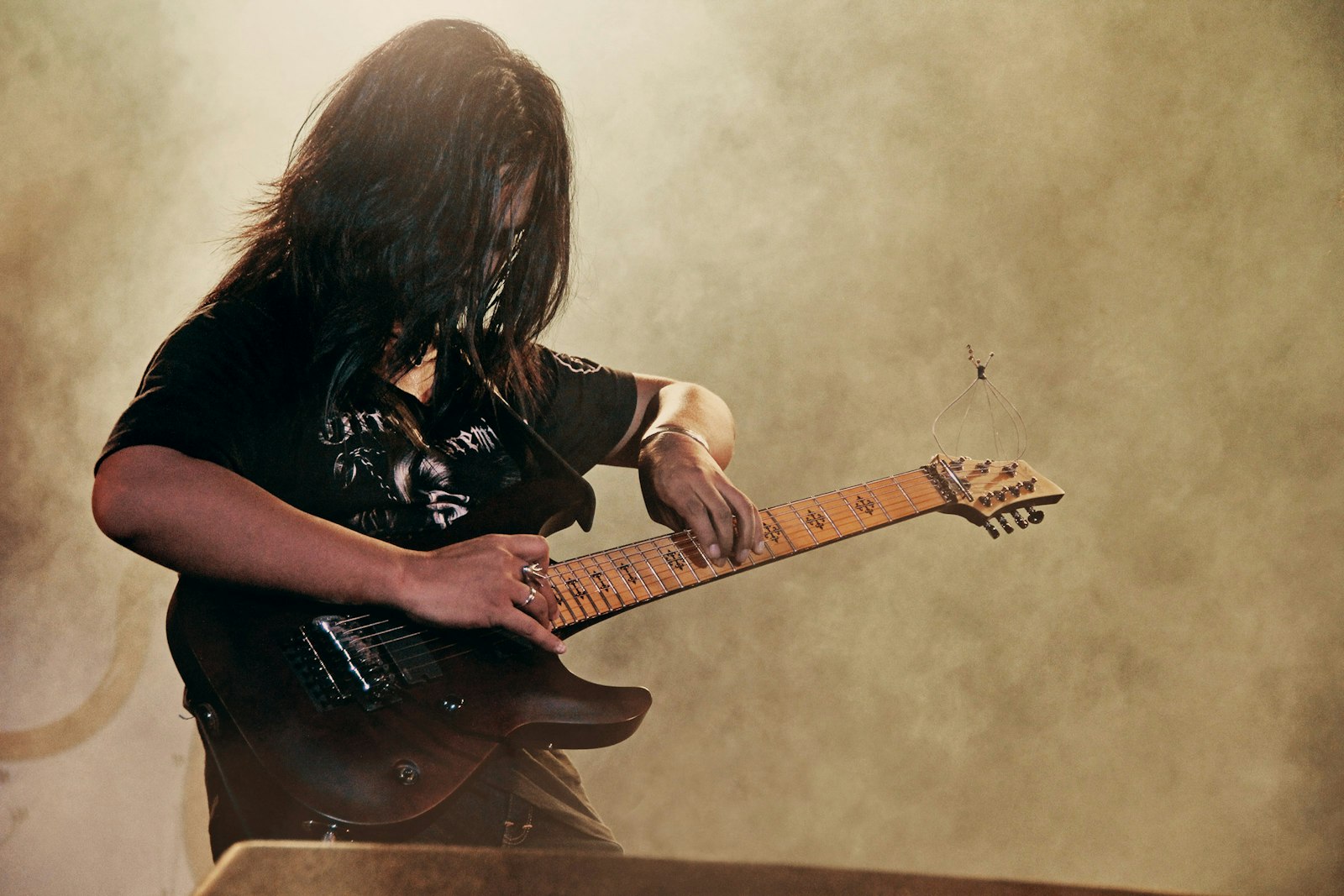
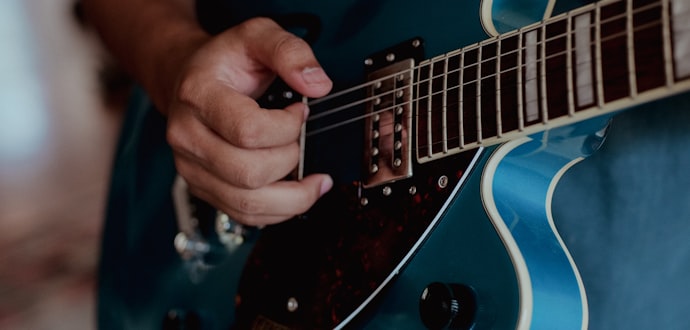
Greenwood's main guitar for most of Radiohead's career has been a Fender Telecaster Plus, a 90s model fitted with Lace Sensor pickups, which give a clean, hum-free output that takes heavy distortion and pitch effects without turning to mud. His has been fitted with a killswitch, a button that cuts the signal instantly, and he uses it to chop notes into machine-gun stutters, most famously in the "Paranoid Android" solo.
The Telecaster suits him because he plays hard and wants every note to bite, and its bright, cutting voice sits clearly alongside Ed O'Brien's more ambient parts and Thom Yorke's rhythm guitar. For gentler songs he has often switched to a Fender Starcaster, a semi-hollow 70s oddity whose warmer tone suits the softer, arpeggiated material.
Fender Eighty-Five (with a Vox AC30)
Known for: a solid-state practice combo turned blank canvas for his pedals
His amp choice is famously unglamorous: a solid-state Fender Eighty-Five from the late 80s, the kind of practice-room combo most pros would never take on tour. Greenwood has kept it for decades because it delivers a tight, slightly brittle clean tone and takes pedals predictably, which makes it the right blank canvas for the ShredMaster, the Whammy and the rest of his chain. A Vox AC30 has often run alongside it for chime and warmth.
The choice says a lot about his priorities. He has never chased boutique tone; he picks tools that do a specific job reliably, then makes them sound strange on purpose.
Marshall ShredMaster, DigiTech Whammy, Roland RE-201 Space Echo, Max/MSP
The core of the Greenwood sound is a Marshall ShredMaster distortion for his raw, fizzy overdrive, a DigiTech Whammy for wild octave jumps and pitch dives (the squeals on "My Iron Lung" and "Just" are the classic examples), and a Roland RE-201 Space Echo for tape delay. Add the killswitch on his Telecaster and you have most of what made The Bends and OK Computer sound so jagged. Beyond pedals, his palette stretches to the ondes Martenot, custom Max/MSP software he writes to sample and mangle the band's playing live, and orchestral instruments, so on some Radiohead songs the most important "guitar" part is not played on a guitar at all.
Signature Technique
Violent Dynamics, Whammy Leaps and a Composer's Ear
Jonny Greenwood plays with a ferocity that surprises people who know Radiohead mainly for its atmosphere. His picking attack is heavy and percussive, he favors short, violent bursts over long held notes, and he uses dynamics as a weapon, sitting almost silent through a verse and then exploding into a chorus. The muted "chunk chunk" before the chorus of "Creep" is the earliest famous example, and that same instinct for sudden contrast drives "Paranoid Android," "Bodysnatchers" and the Smile's heavier songs.
Harmonically he thinks like a composer. The riff of "Just" is a knotty, climbing chord sequence that band lore says came from Greenwood trying to cram as many chords into one song as possible, and his lines often use chromatic movement, diminished and octatonic shapes and unusual voicings borrowed from 20th-century classical music. Penderecki and Messiaen are his stated heroes, and you can hear their influence in his love of clusters, slow-shifting textures and string writing that bleeds into his guitar parts.
He treats effects as part of the technique. The Whammy jumps octaves mid-phrase, the killswitch slices a sustained bend into rhythmic stutters, and on later albums he processes the band's playing live through his own Max/MSP patches, turning guitar and voice into loops and glitches in real time. On quieter songs like "Weird Fishes/Arpeggi" and "Reckoner," he goes the other way, with clean, interlocking arpeggios that rely on precise picking and feel.
His influence runs through two decades of alternative and indie guitar. He showed that a lead guitarist could serve a song with texture and noise rather than solos, made the Telecaster and odd pedals cool again, and opened a path from rock guitar into film scoring and contemporary classical writing that very few players have followed as far.