

Marcus King
Current Ranking
Marcus King is ranked #79 of 162 guitarists on the Greatest Guitar Player leaderboard, based on our editorial score until fans weigh in. On the blues leaderboard, Marcus King ranks #18 of 32. No fan votes yet, so be the first to rate Marcus King on 8 attributes at greatestguitarplayer.com/vote.
Biography
Marcus King is the torchbearer of modern Southern soul guitar, a singer and player from upstate South Carolina who sounds like he absorbed the Allman Brothers, Stax and classic country all at once and came out the other side with something his own. He was born March 11, 1996, in Greenville, South Carolina, into a family where the guitar was simply part of the furniture. His father, Marvin King, was a working blues guitarist who played with gospel acts around the Carolinas, and his grandfather was a popular regional player too. Marcus was on stage next to his dad by the age of eight, and by eleven he was playing on one of his father's records.
His teenage years were a double shift. He played clubs at night and went to school during the day, studying jazz theory and performance with Steve Watson at the Greenville Fine Arts Center while teaching himself Duane Allman, B.B. King, Albert King, Waylon Jennings and Merle Haggard on the side. He left high school in his junior year to go pro, got his GED, and formed The Marcus King Band, a horn-driven outfit that described its sound as soul-influenced psychedelic Southern rock. A 2014 jam video filmed at Norman's Guitars in California racked up millions of views and turned a regional prodigy into a name guitar players everywhere were passing around. Warren Haynes became an early champion, and the band's records, from Soul Insight through The Marcus King Band and the Dave Cobb produced Carolina Confessions in 2018, built a reputation for long, swinging, gospel-tinged jams.
Here is the gem. His main guitar, a cherry 1962 Gibson ES-345 he calls "Big Red," was bought around 1964 by his grandfather while he was stationed with the Air Force in Great Falls, Montana. It passed from grandfather to father to Marcus, still wearing an oddball Maestro tailpiece and a custom plaque that was fixed on crooked. He leaned on it so hard on the road that he eventually started worrying about its safety, and Gibson answered with a Marcus King signature ES-345 that copies Big Red down to that mismatched plaque. His amp story runs in the family too, since a 1965 Fender Super Reverb that belonged to his grandfather still sits in his collection.
The solo years pushed him toward songwriting. El Dorado, produced by Dan Auerbach of The Black Keys, arrived in 2020 and earned a Grammy nomination for Best Americana Album. Young Blood, also with Auerbach, followed in 2022 with a heavier, 70s hard rock edge and debuted at number one on Billboard's Top Blues Albums chart. Mood Swings, made with Rick Rubin, came out in 2024, and in 2025 he reunited the full Marcus King Band for Darling Blue, recorded at Capricorn Studios in Macon, Georgia, with guests including Billy Strings and Jamey Johnson. He made his Grand Ole Opry debut in 2019 and his Austin City Limits debut in 2025. Through all of it, the core has stayed the same: a voice that sounds decades older than he is, and a guitar tone that hits like a punch and then sings.
Legendary Performance
First Headlining Shows at the Ryman Auditorium
September 29 and 30, 2022 · Ryman Auditorium, Nashville, Tennessee
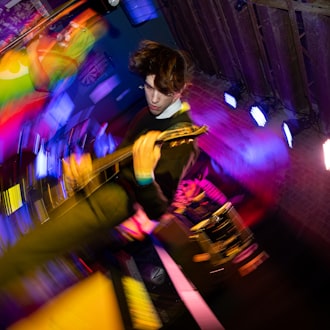
On September 29 and 30, 2022, Marcus King headlined the Ryman Auditorium in Nashville for the first time, and he did it twice in two nights, both shows sold out. For a player who grew up on country and gospel records in South Carolina, the old Mother Church of Country Music was the room that mattered most, and he treated it like a homecoming rather than a victory lap. The shows were also livestreamed free in 4K across nine camera angles through a partnership with Volume and Orange Amps, so guitar players around the world got a front-row view of how he works.
The sets were built around Young Blood, the Dan Auerbach produced album released that summer, and its heavier, riff-first songs sounded huge in the Ryman's wooden acoustics. King ran his guitars through his own signature 30-watt Orange MK Ultra, the amp he co-designed with Orange, and the tone was exactly what made the album land: thick, slightly fuzzy rhythm parts that opened up into searing, vocal lead lines without ever losing the low end.
What made the nights special was the balance. He could drive a song with a 70s hard rock riff, then strip a ballad down to voice and a clean, trembling guitar, then stretch a solo out with the patience of a jam band veteran. Headlining the Ryman marked the point where Marcus King stopped being described as a prodigy with potential and started being treated as one of the defining roots rock guitarists of his generation.
▶ Watch on YouTubeGear
1962 Gibson ES-345 "Big Red" (1962)
Known for: his grandfather's guitar, the basis of his Gibson signature ES-345
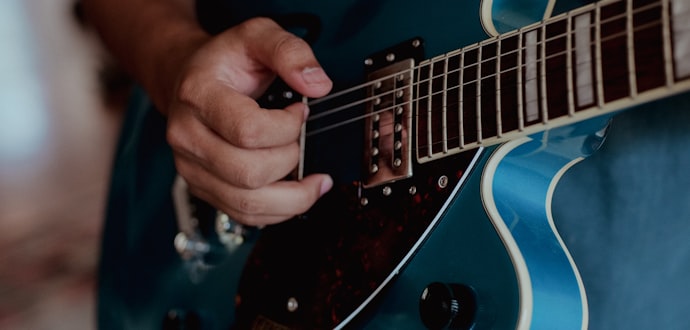
The heart of Marcus King's sound is "Big Red," a cherry 1962 Gibson ES-345 that his grandfather bought around 1964 while stationed with the Air Force in Great Falls, Montana. It came down through his father to Marcus as a teenager, and it carries quirks most 345s never had: a Maestro vibrato tailpiece and a custom plaque that was mounted crooked. The semi-hollow body gives him the woody warmth and bloom that blues and soul players love, while the humbuckers have enough bite to push into hard rock.
Big Red was so central to his playing that he eventually worried about taking it on the road, and Gibson responded with a Marcus King signature ES-345 built to mirror it, from the pickups (voiced close to PAF clones but with a sharper attack) to the Maestro tailpiece and the off-kilter plaque. For writing he favors a 1961 Martin 0-18 acoustic, a small-bodied guitar he has said has a voice of its own and acts as a co-writer.
Orange MK Ultra signature head (with a 1965 Fender Super Reverb)
Known for: his co-designed 30-watt Orange signature amp
King's modern rig centers on the Orange MK Ultra, a 30-watt signature head he co-designed with Orange Amps and used on his first headlining Ryman shows in 2022. Before it, he ran an Orange Rockerverb 50 MkII, and the MK Ultra keeps that British crunch while adding the clean headroom and touch sensitivity he needs for soul and country passages. The result is a tone that can go from a glassy clean to a roaring overdrive just by how hard he digs in.
He also keeps a family heirloom in the mix: a 1965 Fender Super Reverb that belonged to his grandfather, a classic blackface combo with four 10-inch speakers and lush spring reverb. Between the two, he covers both sides of his playing, the Southern rock grind and the sparkling, church-like cleans.
Ibanez TS9 Tube Screamer, Analog Man Beano Boost, Dunlop Wah, Fender Mirror Image Delay
His pedalboard is refreshingly simple. An Ibanez TS9 Tube Screamer pushes the amp for leads, an Analog Man Beano Boost (a treble booster in the classic Rangemaster mold) adds the Clapton and Gallagher style sizzle, and a Dunlop wah handles the funkier, more vocal moments. A Fender Mirror Image Delay adds space for long solos. Most of the character comes from the guitar, the amp and his hands, with the pedals there to nudge rather than reshape. He strings his electrics with Elixir, a deal he has said took years to finalize because he insisted on the strings he actually wanted to use.
Signature Technique
Gospel Phrasing, Southern Slide-Ins and Volume-Knob Dynamics
Marcus King plays like a singer, which makes sense because he is one of the best soul voices in modern rock. His lead lines breathe in phrases, leave space, and then answer themselves, a call and response approach he learned from gospel, from B.B. King and from years of trading solos with horn players in his own band. He favors wide, slow bends that climb a little past the target note before settling, and a fast, nervy vibrato that gives sustained notes a sense of urgency.
The Southern rock side comes straight from Duane Allman and Dickey Betts. He mixes the major and minor pentatonic scales freely, slides into notes rather than picking them cleanly, and builds long, patient solos that rise in intensity across several choruses, a habit from the jam band circuit where a song can stretch past ten minutes. His studies in jazz theory show up in the passing tones and chromatic approaches that slip into otherwise bluesy lines.
His right hand does a lot of the work. He plays with a heavy, dynamic attack and rides his guitar's volume knob, cleaning up the amp for verses and slamming it back on for choruses, so a single setting covers a whole song. On the heavier Young Blood material he leans on thick, fuzzy power chord riffs, then switches to country chicken picking and hybrid picking on the Carolina Confessions and Darling Blue tunes.
His influence is in how he has made Southern soul and blues rock feel young again. Alongside players like Christone "Kingfish" Ingram and Billy Strings, he is part of a generation proving that roots guitar is still being pushed forward, and his mix of real vocal chops, deep tone and patient improvising has made him a model for younger players who want to sound like themselves rather than a shred demo.