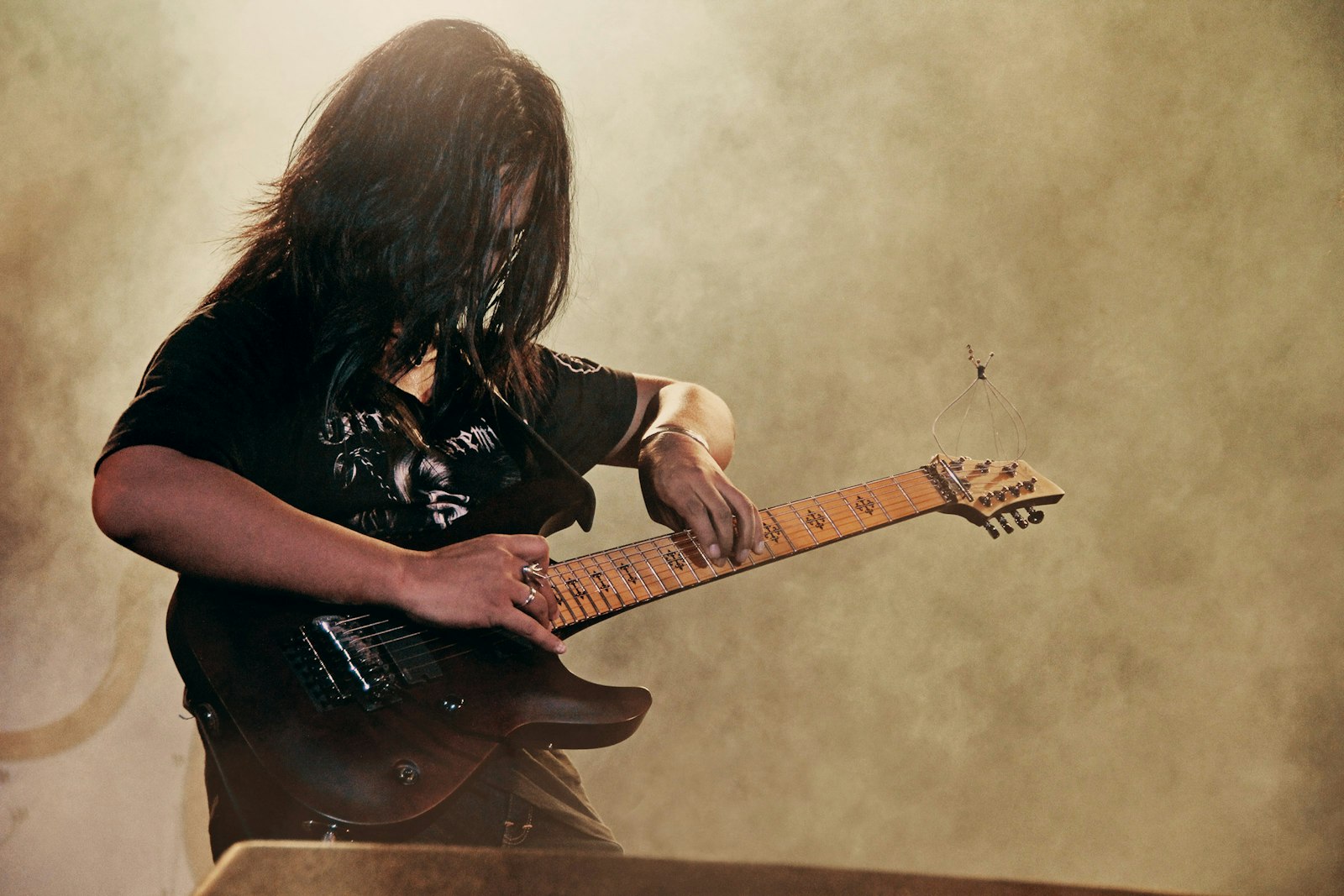



Steve Morse
Current Ranking
Steve Morse is ranked #84 of 162 guitarists on the Greatest Guitar Player leaderboard, based on our editorial score until fans weigh in. On the shred and virtuoso leaderboard, Steve Morse ranks #7 of 19. No fan votes yet, so be the first to rate Steve Morse on 8 attributes at greatestguitarplayer.com/vote.
Biography
Steve Morse is the guitarist other guitarists point at when they want an argument about precision settled. Born July 28, 1954 in Hamilton, Ohio and raised in Augusta, Georgia, he started a band with bassist Andy West in high school and carried it with him to the music school at the University of Miami, where it hardened into the Dixie Dregs. The Dregs were an all instrumental group that refused to pick a lane, welding bluegrass fiddle tunes, Bach counterpoint, country chicken picking, jazz fusion and flat out hard rock into one sound the band itself described as electronic chamber music. Records like Free Fall (1977), What If (1978) and Dregs of the Earth (1980) drew a run of Grammy nominations for Best Rock Instrumental Performance, and Guitar Player readers voted Morse Best Overall Guitarist five years running in the 1980s, until the magazine finally retired him into its Gallery of Greats, an honor he shares with only Steve Howe and Eric Johnson.
Here is the detail that tells you who he is. When the Dregs wound down in the late 1980s, Morse did not hustle for session work or wait by the phone. He got his commercial licenses and went to work as an airline co-pilot, flying for a living while the guitar sat in the case. The nickname stuck, and The Aviator still flies today. Music pulled him back anyway. He spent 1986 to 1988 in Kansas, playing on Power and In the Spirit of Things and co-writing the Top 20 single "All I Wanted", then launched the Steve Morse Band, whose High Tension Wires and Southern Steel became a template for instrumental rock that swings instead of just sprinting.
In 1994 Deep Purple came calling, and the job was close to unwinnable. Ritchie Blackmore had walked out, Joe Satriani had covered the remaining dates, and the band needed someone to inherit a catalog that fans treat as scripture. Morse met the band 24 hours before his first show, having learned the set from tapes of both predecessors. By his own account he built a character out of the two of them and walked on stage in Mexico City. He stayed 28 years, longer than any other guitarist in Deep Purple history, cutting eight studio albums from Purpendicular (1996) through Turning to Crime (2021), and turning the band back into a writing unit rather than a nostalgia act.
He stepped away from Deep Purple in July 2022 to care for his wife Janine, who had stage 4 cancer and died in February 2024. He came back to work the way he always has, by playing. The Steve Morse Band returned in November 2025 with Triangulation, cut with longtime bassist Dave LaRue and drummer Van Romaine, with Eric Johnson and John Petrucci guesting and a song for Janine called "Taken by an Angel". He also still records with Flying Colors alongside Mike Portnoy, Neal Morse, LaRue and Casey McPherson. Ask him about any of it and the answer usually circles back to practice, because Morse is famous among his peers for treating the guitar like a discipline, a daily set of exercises run against a metronome, decade after decade, whether anyone is listening or not.
Legendary Performance
First night with Deep Purple, taking over from Ritchie Blackmore
November 23, 1994 · Palacio de los Deportes, Mexico City, Mexico
Deep Purple in late 1994 was a band with a hole where its identity used to be. Ritchie Blackmore had quit in November 1993, Joe Satriani had honorably covered the remaining tour dates, and the search for a permanent replacement had to satisfy an audience that considered the guitar parts on "Highway Star" and "Smoke on the Water" untouchable. Roger Glover pushed for Steve Morse. The band jammed with him, liked what happened, and put him on a plane. Morse has said he met the band roughly 24 hours before the first show, having prepared from cassettes of both Blackmore and Satriani playing the set, and that he essentially invented a character out of the two of them.
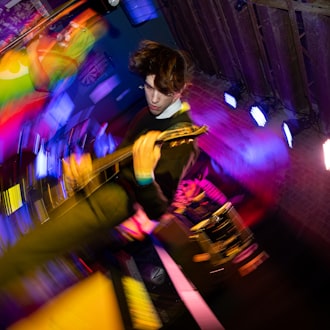
The debut landed on November 23, 1994 at the Palacio de los Deportes in Mexico City, a hard room in front of a crowd with no interest in a polite audition. What the audience got was a player who honored the famous lines without impersonating anyone, then took the open spaces and filled them with something recognizably his own, all clean articulation and country inflected phrasing where Blackmore had used menace and Satriani had used gloss. Jon Lord met him halfway from the organ bench, and by the end of the set the band was improvising like a group rather than a tribute to itself.
That night started the longest guitar tenure in Deep Purple's history, 28 years and eight studio albums, and it quietly rewrote what a replacement in a legacy band could be. Morse did not try to win the argument with Blackmore's ghost. He simply out-worked it, and the band that was supposed to be finished in 1994 was still writing new material a quarter century later.
▶ Watch on YouTubeGear
Ernie Ball Music Man Steve Morse Signature (1987)
Known for: four pickup switching, the production version of his homemade Frankenstein Telecaster
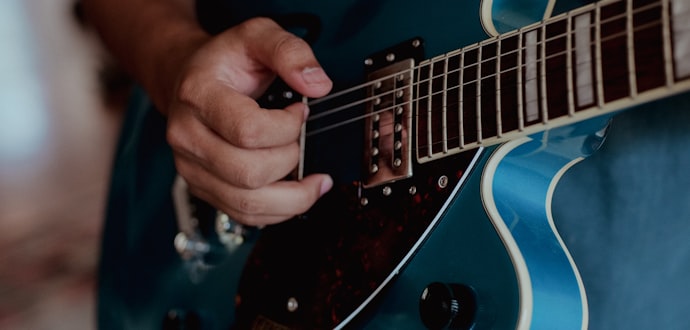
Morse's first great guitar was a homemade problem solver. He wanted the twang of a Telecaster, the neck of a Stratocaster and the fat humbucker voice of a Gibson, so he built one instrument that did all three, a Tele body loaded with four pickups in a humbucker, single, single, humbucker layout, a Strat neck bolted on and a Gibson style trapeze tailpiece hanging off the end. Everyone called it the Frankenstein, and its switching is what let one player cover bluegrass, jazz and hard rock inside a single Dregs tune without changing guitars.
In 1987 Ernie Ball Music Man turned that idea into a production instrument, one of the first true signature models the company built. The Steve Morse model keeps the four pickup arrangement with DiMarzio humbuckers at the neck and bridge and a pair of single coils between them, wired to a selector that hands him a genuinely different guitar at every position. That is the whole design philosophy. Most players chase one perfect tone. Morse wanted five of them under his thumb, instantly, because his writing moves between styles faster than a guitar change would allow.
ENGL E656 Steve Morse Signature
Known for: clean headroom and tight gain for every note articulated playing
Morse spent years cycling through Marshall Silver Jubilees, Peavey heads and Ampeg V4s looking for an amp that could stay clean enough for his articulation and still deliver a rock voice on command, since his whole approach depends on every note in a fast line being audible rather than smeared together by gain. ENGL eventually built it for him. The E656 Steve Morse Signature head is a four channel amp voiced so that the clean channel keeps its bloom at stage volume and the high gain channels stay tight and dry instead of woolly.
The practical result is what you hear on the Deep Purple live records. When Morse plays a sixteenth note run, you can count the notes. That is partly technique and partly an amplifier chosen specifically to not do him any favors, since a compressed high gain tone would hide the occasional flaw and also hide the definition he built his reputation on.
Volume Pedal, Delay & the Pickup Selector
For a player with this much technical machinery, the signal chain is almost spartan. A volume pedal for swells, a delay for space, a little chorus or wah when a song asks for it, and that is close to the whole story. Morse does most of his tone shaping with his hands and the pickup selector, flipping between the humbucker and single coil positions mid phrase the way another player would stomp a pedal.
It is a deliberate choice. Effects add latency, noise and one more thing to fail in front of an audience, and a guitarist who spent part of his working life in a cockpit tends to like systems with fewer moving parts.
Signature Technique
Alternate Picking Precision, Cross Picking & String Skipping
Morse's right hand is the engine. He is a strict alternate picker at speeds where most players switch to legato or sweeping, and the discipline is audible, since every note in a run gets its own attack instead of hiding inside a slur. That evenness is why his fast lines read as melodies rather than as blur, and it is why other professionals treat him as a benchmark.
Layered on top of that is cross picking, a technique lifted from bluegrass flatpickers, where the pick rolls across three or four strings in a repeating pattern to imitate a banjo roll. Combine it with string skipping, jumping over a string mid pattern to open up wider intervals, and you get the signature Morse sound, arpeggios that leap instead of stepping, played with a pick where most players would need to sweep or tap.
He also hybrid picks, holding the pick and plucking with the middle and ring fingers at the same time, which is how he plays the double stop country lines and pedal steel style bends that show up in Dregs material. Those two vocabularies, bluegrass right hand and classical left hand, meeting inside a hard rock band, are the reason the Dregs never fit any category.
The last piece is composition. Morse writes long form instrumental music with real development, themes that return in new keys, counterpoint traded with violin or keyboard, and solos built as arguments rather than showcases. It is the least imitated part of his playing and probably the most important one.
None of it happened by accident. Morse is legendary among guitarists for a practice regimen he has kept for decades, mechanical exercises run daily against a metronome, treated less like inspiration and more like a pilot running through a checklist before every flight.