


Tom Scholz
Current Ranking
Tom Scholz is ranked #129 of 171 guitarists on the Greatest Guitar Player leaderboard, based on our editorial score until fans weigh in. On the classic rock leaderboard, Tom Scholz ranks #20 of 22. No fan votes yet, so be the first to rate Tom Scholz on 8 attributes at greatestguitarplayer.com/vote.
Biography
Tom Scholz is the engineer who built Boston, and that is meant literally. Born March 10, 1947, in Toledo, Ohio, and raised in nearby Ottawa Hills, he studied classical piano as a kid, tinkered with go-karts and model airplanes, and left for MIT, where he earned a bachelor's degree in mechanical engineering in 1969 and a master's in 1970. He did not pick up a guitar until he was 21. By day he was a senior product design engineer at Polaroid. By night he was in a basement in Watertown, Massachusetts, wiring up his own four-track and mixer and chasing a sound nobody at the record labels could hear yet.
That sound became Boston. After six years of rejection letters, including a flat no from the very label that later signed him, Epic took the band on in late 1975 and insisted the demos be re-recorded in a proper Los Angeles studio. Scholz and producer John Boylan ran what Boylan called an end run around the label: the band pretended to be working out west while Scholz tracked almost everything himself, guitars, bass, keyboards and the layered harmonies behind Brad Delp, in his Foxglove Studios basement next to the furnace. Released August 25, 1976, the debut went on to sell more than 17 million copies in the United States and stood for years as the best-selling debut album in American history. "More Than a Feeling," "Peace of Mind" and "Foreplay/Long Time" have barely left classic rock radio since.
Here is the gem. The "Boston sound" was not a studio trick, it was a set of inventions. Scholz built his own attenuators, compressors and equalizers to get a Marshall screaming at bedroom volume, then turned the research into a company. Scholz Research & Development launched the Power Soak in 1980 and the Rockman headphone amplifier in 1982, a belt-clip box that put his layered, chorused, endlessly sustaining guitar tone in the hands of anyone with a pair of headphones. Def Leppard built most of Hysteria on Rockman gear. He holds a stack of patents from that era, and the original units are collector's items today.
His perfectionism is as famous as his tone. Don't Look Back took two years, Third Stage took eight, and the gaps between the six Boston studio albums have become a running joke that Scholz has never minded. He is still the only constant member of the band, still playing a 1968 Gibson Les Paul goldtop he has owned since before the first record, and he has given much of his fortune to animal welfare, hunger relief and children's causes through the DTS Charitable Foundation he started in 1987. AllMusic once called him an "un-rock n' roll" figure, which sounds about right for a man who treated the greatest arena rock debut of the 1970s as a thesis project.
Legendary Performance
"More Than a Feeling", the Foxglove Basement Sessions
1975 to 1976 · Foxglove Studios, School Street, Watertown, Massachusetts
Boston's most important performance did not happen on a stage. It happened in a tiny, pine-paneled basement on School Street in Watertown, Massachusetts, a space Scholz said sat next to the furnace and flooded from time to time. Epic Records had signed the band in December 1975 on the strength of a demo tape and then demanded the songs be re-recorded with a real producer in Los Angeles. Scholz refused to give up control of his own sound, so he and producer John Boylan ran a quiet deception: the label believed the band was tracking out west while Scholz, on leave from Polaroid, went downstairs every morning and recorded nearly the entire album alone on a used 12-track machine he had bought with his house down payment.
What came out of that room was "More Than a Feeling" and the rest of the debut album, a record that reproduced the home demos almost note for note and then outsold every debut before it. The double-tracked harmonized leads, the clean-to-crunch volume swells, the organ pads and the stacked guitars that sounded like a cathedral were all Scholz playing against himself through gear he had built or modified. Boylan later admitted the guitars already sounded amazing before he arrived; his job was mostly to keep the label calm and to help with vocals and mixing.
The sessions matter because they rewrote the rules for how a hit record could be made. A single engineer with a basement and a soldering iron had produced something that stood up against anything coming out of the big studios, and the industry noticed. The modern home studio, the amp simulator, the idea that tone could be designed rather than captured, all trace a line back to the Foxglove sessions. Every time "More Than a Feeling" comes on the radio, that is the sound of a man proving a point in his own basement.
▶ Watch on YouTubeGear
1968 Gibson Les Paul Goldtop (1968)
Known for: every Boston album and tour since 1976
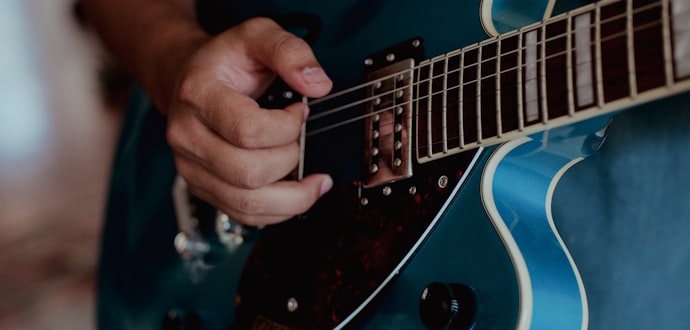
Scholz has played the same guitar for essentially his entire career, a 1968 Gibson Les Paul goldtop he bought used before Boston existed. It is the instrument on every Boston record and nearly every show. The guitar left the factory with P-90 single-coils, and the neck pickup is still a P-90, which gives his clean, chiming parts their glassy character. The bridge position was swapped for a DiMarzio Super Distortion humbucker, the hot pickup that lets the Marshall and Rockman rigs saturate without losing note definition. He also had the guitar routed and wired for a few of his own experiments over the years.
The point of the goldtop for Scholz was consistency. He is an engineer who wants a known quantity at the front of the signal chain so he can control everything after it, and a single familiar Les Paul with heavy sustain and a mix of single-coil and humbucker voices was exactly that. The worn gold finish and the stickered body have become as recognizable at Boston shows as the spaceship on the album covers.
Marshall 100-Watt Super Lead with the Power Soak attenuator
Known for: the Boston debut album, recorded at basement volume
The Boston sound started with a 100-watt Marshall Super Lead run flat out, which was impossible in a Watertown basement without a way to tame the volume. Scholz solved that problem himself. He built an attenuator that sat between the amp and the speaker, soaking up wattage so the output tubes could cook at full crank while the room stayed quiet. That device became the Power Soak, the first product from Scholz Research & Development in 1980 and the ancestor of every load box on the market today.
Live, he ran modified Marshall heads into multiple cabinets, but by the mid 1980s his rigs were increasingly built from his own Rockman rack modules, the Sustainor and Distortion Generator, feeding the PA directly. The amp, for Scholz, was never sacred. It was one stage in a system he kept redesigning until it gave him the exact compression, sustain and stereo width he heard in his head.
Rockman, Echoplex, Hyperspace Pedal
Scholz is the rare guitarist whose signature effect is a product he invented. The 1982 Rockman headphone amp packed compression, distortion, chorus and a chamber echo into a box that clipped on a belt, and its stereo chorus and long, smooth sustain are the texture people mean when they say something sounds like Boston. Before the Rockman, his chain was built around an Echoplex tape delay, heavy studio compression and his own home-built processors, including the Hyperspace Pedal that creates the swooping feedback sweep in the intro to "Long Time."
He also leaned on a wah for sweeps and used his guitar's volume knob as an effect in its own right, backing off for clean passages and pushing in for the harmonized leads. The result was a rig that sounded enormous but stayed completely controlled, which is the engineering philosophy in a sentence.
Signature Technique
Layered Harmony Guitar & Engineered Sustain
Scholz's defining technique is orchestration. He thinks like an arranger, not a soloist, and his guitar parts are built in layers: a doubled rhythm bed, a harmony line a third or a sixth above the melody, a counter-melody tucked underneath, and a lead on top with every note sustained and vibratoed into place. The instantly recognizable intro to "More Than a Feeling" is a clean, arpeggiated figure that blooms into stacked distorted chords, and that contrast between crystalline clean tones and a wall of saturated harmony is the Boston blueprint.
His lead playing is melodic and vocal, closer to a horn section than to a blues shredder. He favors long bends that land dead in tune, slow and wide vibrato, and harmonized runs that are tracked precisely enough to sound like one instrument with a chorus on it. "Peace of Mind" and "Hitch a Ride" are textbook examples: the solos are composed, singable, and could be hummed back by anyone who has heard them once. There is very little improvisation in his approach, because for Scholz a solo is a part of the song, written and engineered to fit.
He is also a master of dynamics through gear. The volume swell, the slow bloom of sustain into feedback, and the clean-to-crunch handoff in "Foreplay/Long Time" are played as much with the volume knob, the compressor and the room as with the fretting hand. He treats the entire signal chain as the instrument, which is why his tone translated so directly into the Rockman products: he had already reduced his playing to a reproducible system.
His influence runs through the whole arena rock and melodic hard rock era. The layered, chorused guitar sound of 1980s radio, the harmonized guitar solo as a pop hook, and the idea that a guitarist could be the producer and engineer of their own records all owe him a debt. Def Leppard, Journey-era Neal Schon and countless home recording guitarists since have followed the path he cut in that Watertown basement.
Quick Facts About Tom Scholz
What guitar did Tom Scholz play?
Tom Scholz's signature guitar was the 1968 Gibson Les Paul Goldtop (1968), known for every Boston album and tour since 1976.
What amp and effects did Tom Scholz use?
Tom Scholz used Marshall 100-Watt Super Lead with the Power Soak attenuator, known for the Boston debut album, recorded at basement volume. Effects included Rockman, Echoplex, Hyperspace Pedal.
What is Tom Scholz's most famous performance?
One of Tom Scholz's most celebrated performances is "More Than a Feeling", the Foxglove Basement Sessions on 1975 to 1976 at Foxglove Studios, School Street, Watertown, Massachusetts.
What is Tom Scholz known for as a guitarist?
Tom Scholz is known as The Basement Sound Architect. The signature playing style is Layered Harmony Guitar & Engineered Sustain. Bands and projects include Boston, Mother's Milk, Scholz Research & Development.
When was Tom Scholz born?
Tom Scholz was born on March 10, 1947 in Toledo, Ohio, USA.