

Zakk Wylde
Current Ranking
Zakk Wylde is ranked #85 of 162 guitarists on the Greatest Guitar Player leaderboard, based on our editorial score until fans weigh in. On the heavy metal leaderboard, Zakk Wylde ranks #8 of 14. No fan votes yet, so be the first to rate Zakk Wylde on 8 attributes at greatestguitarplayer.com/vote.
Biography
Zakk Wylde, born in New Jersey in 1967, is one of the most powerful and recognizable guitarists in modern heavy metal, a player whose thunderous tone, squealing harmonics, and larger-than-life presence have made him a hero to metal fans around the world. Best known as the longtime guitarist for Ozzy Osbourne and as the leader of his own band Black Label Society, Wylde combines blistering metal technique with deep roots in blues and Southern rock, creating a style that is both crushingly heavy and surprisingly soulful.
Here is the gem of his origin story. In the mid-1980s, Wylde was a virtually unknown young guitarist from New Jersey when he was plucked from obscurity to become Ozzy Osbourne's guitarist, stepping into a role once held by the legendary Randy Rhoads. Still a teenager or barely out of his teens, he suddenly found himself playing alongside one of metal's biggest stars on a global stage, and he seized the opportunity, becoming Ozzy's longest-serving and most identifiable guitarist. His playing on albums like No Rest for the Wicked and No More Tears revitalized Ozzy's sound and announced a major new talent, a remarkable leap from anonymity to metal stardom.
Wylde's playing is instantly identifiable, full of ferocious, squealing pinch harmonics, fast pentatonic runs, and heavy, grooving riffs, all delivered with enormous power and a thick, saturated tone. Just as recognizable is his iconic guitar, a Gibson Les Paul painted with a black-and-white bullseye design that has become one of the most famous instruments in metal. With Black Label Society, he showcases the full range of his abilities, from brutal, hard-hitting metal to surprisingly tender, blues-soaked ballads that reveal his love of players like the Allman Brothers and his gift for melody and feel.
A mountainous, bearded figure with a fierce stage presence and a famously brotherly devotion to his fans, Wylde has become an elder statesman of metal guitar, even stepping in to perform with the surviving members of Pantera to honor the late Dimebag Darrell. His combination of raw power, technical skill, and genuine blues feeling sets him apart from many of his heavier peers. Zakk Wylde is the embodiment of modern metal guitar muscle, the unknown kid who became Ozzy's guitar hero and built a lasting legacy on thunderous riffs, screaming harmonics, and an unmistakable bullseye Les Paul.
Legendary Performance
"Mr. Crowley" Live, No More Tears Tour
October 9-10, 1992 · Pacific Amphitheatre, Costa Mesa, California
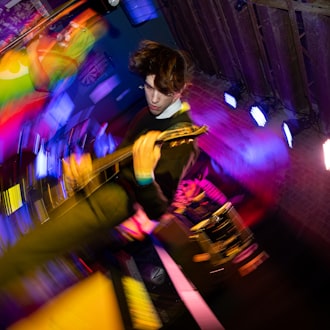
On the two nights of October 9 and 10, 1992, Ozzy Osbourne's No More Tears world tour stopped at the Pacific Amphitheatre in Costa Mesa, California, and the recordings from those shows became the spine of the Live & Loud double album released the following year. Zakk Wylde had been Ozzy's lead guitarist for five years by that point, having joined as a twenty-year-old unknown in 1987, and the Pacific Amphitheatre shows captured him at the technical and emotional peak of his time with the band.
His reading of Randy Rhoads's "Mr. Crowley" solo became the most-discussed moment from those recordings, partly because of the impossible challenge involved. Rhoads's original 1980 solo was considered untouchable in metal circles, a perfect marriage of classical phrasing and rock intensity that Rhoads had not survived long enough to evolve past. Wylde's choice was not to copy Rhoads note-for-note but to inhabit the song with his own vocabulary, adding pinch harmonics, wide rotational vibrato, and dive-bomb articulations that Rhoads had never used. The result honoured the original while announcing that the guitar chair had a new authoritative voice.
The Live & Loud recordings also captured his playing on "No More Tears," "Mama, I'm Coming Home," and a fierce take on Black Sabbath's "Paranoid," and the album sold well over a million copies. More importantly for guitar history, the recordings became the gateway through which thousands of nineties teenagers discovered both Wylde's playing and the lineage that ran through him back to Rhoads, Iommi, and the entire Sabbath and Ozzy guitar tradition. The Pacific Amphitheatre shows are now regarded as the document that completed his transition from Ozzy's hired gun to one of metal's foundational modern players.
▶ Watch on YouTubeGear
Gibson Les Paul Custom "Bullseye" (1981)
Known for: every Ozzy and Black Label Society album since 1988, the most recognisable guitar visual in modern metal
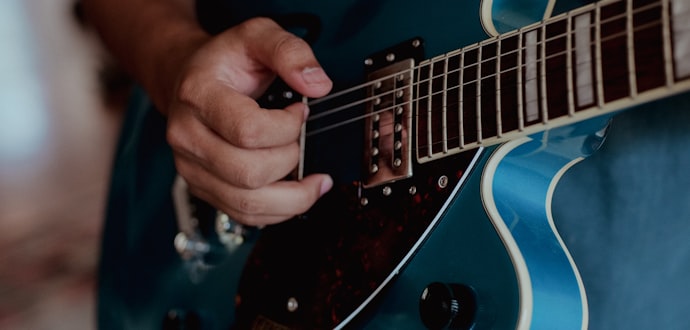
Zakk Wylde's Bullseye Gibson Les Paul Custom is one of the most recognisable guitar visuals in modern metal, a 1981 cream-colored Les Paul Custom that he had repainted with concentric black and white target circles when he joined Ozzy Osbourne's band in 1987. The original story is that he wanted something visually distinctive at twenty years old playing arenas alongside an established frontman, and the Bullseye pattern (officially called "Vertigo" after the Hitchcock film's spiral title sequence) accomplished exactly that. Gibson has since released multiple signature variants of the design, and the visual has been copied by countless tribute players and casual hobbyists.
The guitar's tonal character matters as much as its appearance. A Les Paul Custom with twin uncovered EMG 81 and 85 active pickups gives Wylde the searing high-output tone he needs for pinch harmonics and pentatonic shred runs to punch through Marshall stacks at stadium volume. The all-mahogany construction and 24.75-inch scale length contribute to the thick, fundamental-heavy tone that has become inseparable from his playing voice. Wylde owns multiple Bullseyes, Buzzsaws, Rebel Camos, and other Les Paul Custom variants in similar configurations, and the guitar has appeared on every Ozzy and Black Label Society album since 1988.
Marshall JCM 800 2203 (100-Watt Head)
Known for: every Ozzy album from No Rest for the Wicked onwards, all Black Label Society albums
Zakk Wylde has used the Marshall JCM 800 2203 100-watt head as his primary amplifier for his entire professional career, a deliberate inheritance from the British metal lineage that includes Tony Iommi, Randy Rhoads, and Slash. The JCM 800's tube-driven high-gain channel gives him the thick, mid-rich crunch that defines his rhythm tone, and the natural sustain produced by pushing a 100-watt tube head into a 4×12 cabinet at high volume is the source of the long-held pinch harmonics that have become his signature.
Wylde typically runs multiple JCM 800s in stereo through Marshall 1960A and 1960B 4×12 cabinets loaded with Celestion G12T-75 speakers, and Marshall released a Zakk Wylde signature version of the JCM 800 in 2002 with slight modifications to the gain stages. He has resisted the digital amp modeling revolution that has swept through younger metal players, preferring the physical interaction of tube saturation and the cabinet's air movement to anything a digital processor can simulate. For Black Label Society albums he often layers two or three different JCM 800 recordings to thicken the rhythm tone, but the fundamental sound has not changed materially since 1987.
Dunlop Cry Baby Wah, MXR Wylde Overdrive, MXR ZW-44 Overdrive, MXR Black Label Chorus, MXR Phase 90
Zakk Wylde's pedalboard reflects a working-musician approach, dominated by Dunlop and MXR pedals that have been roadworthy for decades and tweaked to his exact specifications. The Dunlop Cry Baby Wah is essential to his lead vocabulary, used not for the conventional Hendrix-style funky sweep but as a tonal filter to add vocal-quality formant shifts to sustained notes during solos. His MXR Wylde Overdrive and ZW-44 Overdrive pedals, both signature collaborations, sit in front of his Marshall JCM 800 to push the amp into the focused mid-range saturation his playing demands.
For ambient layers, the MXR Black Label Chorus widens his clean and lightly overdriven passages, particularly on Black Label Society ballads like "In This River" and the chorus sections of "Stillborn." The MXR Phase 90 adds psychedelic colour to certain Ozzy reprises and Black Label Society live segments. Wylde has spoken about treating his pedalboard as a stable extension of his amp tone rather than a constantly evolving experiment, and most of the pedals on his board today are versions of pedals he was using twenty years ago, refined but not fundamentally changed.
Signature Technique
Pinch Harmonics, Rotational Vibrato, and Pentatonic Shred
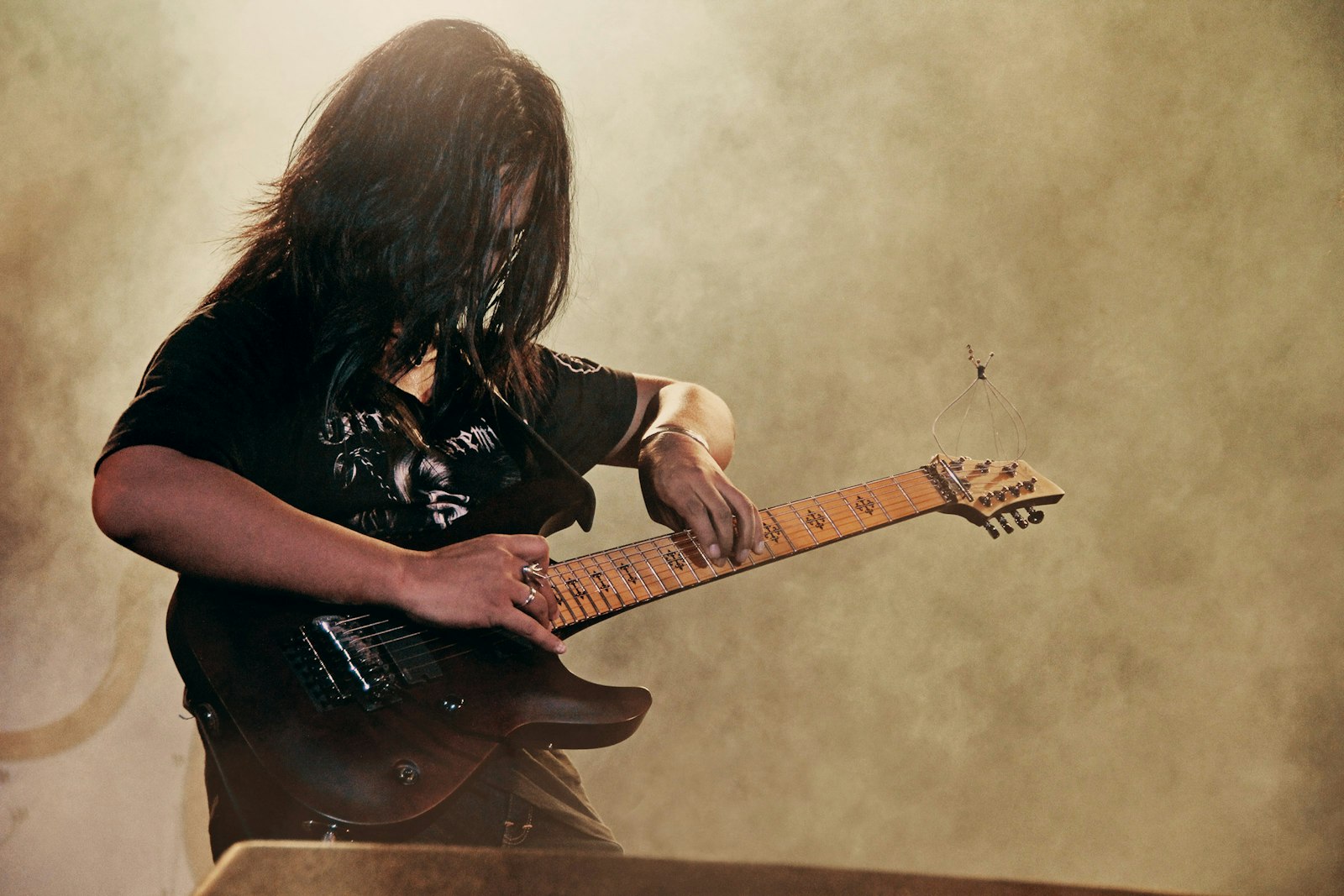
Zakk Wylde's signature technique is the pinch harmonic, a controlled overtone produced by digging the edge of the thumb into the string immediately as the pick strikes it. The technique was not invented by Wylde, players like Billy Gibbons and Eddie Van Halen had used pinch harmonics before him, but Wylde made them the central rhythmic and melodic feature of his playing rather than an occasional ornament. On songs like "No More Tears" and "Stillborn" he uses pinch harmonics as punctuation, placing them at the end of phrases or on syncopated beats to create the squealing, vocal-quality accents that have become a defining sound of modern metal lead guitar.
His vibrato is the second pillar of his style, a wide rotational motion produced by rocking the entire forearm and wrist rather than just the finger. The result is a slow, exaggerated vibrato that can reach a full whole-step in width on sustained notes, giving his held tones a vocal, almost crying quality that contrasts with the speed of his picked passages. This rotational approach was influenced by Eddie Van Halen's wider vibrato style and Randy Rhoads's expressive bends, and Wylde extended it further into a deliberate signature.
For faster passages, Wylde leans heavily on the minor pentatonic scale played at extremely high tempos with hybrid picking and legato hammer-ons. His pentatonic runs often span four or five octaves of the guitar neck using sequenced patterns, and the consistency of his attack makes the runs sound mechanical in the best sense, every note clearly articulated at speeds where most players blur into noise. Songs like "Miracle Man" and "Suicide Messiah" feature extended pentatonic excursions that demonstrate this approach in studio detail.
Wylde's influence on modern metal guitar is direct and traceable. Dimebag Darrell of Pantera was a close friend and shared the pinch-harmonic-driven approach, and the two players cross-pollinated each other's vocabulary throughout the 1990s. Phil Demmel, Mark Morton, Andreas Kisser, and a generation of metal lead guitarists who came up in the 1990s and 2000s have all cited Wylde's tone, vibrato, and pinch harmonic vocabulary as primary influences. His refusal to update his core sound in the face of changing metal subgenres has paradoxically made his approach evergreen, every new generation of metal kids learning Wylde licks remains within reach of the canonical metal lead vocabulary.