



Duane Allman
Current Ranking
Duane Allman is ranked #18 of 162 guitarists on the Greatest Guitar Player fan leaderboard, based on 1 fan vote so far. On the blues leaderboard, Duane Allman ranks #3 of 32. Agree? Rate Duane Allman on 8 attributes at greatestguitarplayer.com/vote.
Biography
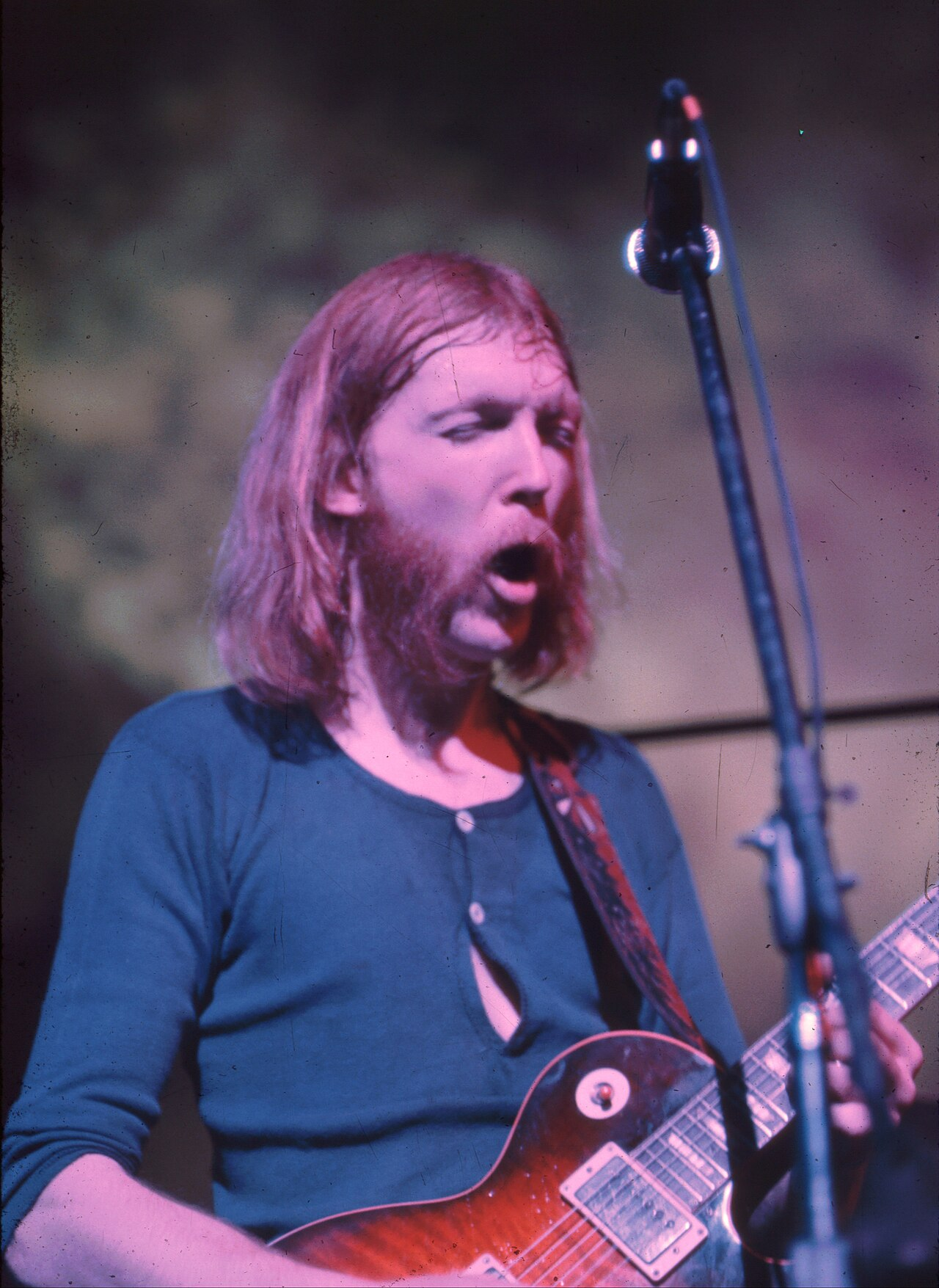
Duane Allman, born in Nashville in 1946, packed a revolution into a tragically short life, becoming one of the greatest slide guitarists in history and the soul of the Allman Brothers Band before dying at just twenty-four. Nicknamed Skydog, he played with a fire, taste, and vocal expressiveness that set the standard for Southern rock and influenced essentially every slide player who came after him.
Allman's slide style was a thing of beauty, played in open tunings with a glass medicine-bottle slide on his finger, drawing long, crying, singing lines out of his Les Paul. Legend has it he found his calling while laid up sick in bed, when his brother Gregg brought him a Taj Mahal record and a bottle of pills, and Duane slipped the empty glass bottle onto his finger and taught himself bottleneck slide on the spot. With the Allman Brothers he helped invent a new American music, fusing blues, country, jazz, and rock into long, improvisational jams, trading lead lines with guitarist Dickey Betts in twin-guitar harmonies that became the band's signature. The live album At Fillmore East captured them at their soaring peak and remains one of the greatest concert recordings ever made.
Before and during all that, Allman was also an in-demand session guitarist whose playing lit up records by Aretha Franklin, Wilson Pickett, and others at the famous Muscle Shoals studio in Alabama, where his soulful contributions made him a first-call player while still in his early twenties. That session work led to the gem of his story. In 1970 Eric Clapton, recording with his band Derek and the Dominos, invited Allman to join the sessions, and the two formed an instant, almost telepathic musical bond. Allman's searing slide guitar is all over the album Layla and Other Assorted Love Songs, most famously on the soaring coda of the title track Layla itself, where his slide trades and intertwines with Clapton's playing in one of rock's most enduring guitar moments.
A second gem captures how completely he poured himself into the music. Allman was so relentlessly dedicated that he reportedly slept with his guitar and practiced obsessively, and his nickname Skydog grew out of both his lofty, soaring tone and his fierce, almost otherworldly commitment to playing. In just a few years he transformed himself into a master.
In October 1971, just as the Allman Brothers were breaking through to stardom, Duane was killed in a motorcycle accident in Macon, Georgia. The loss was devastating, but his recorded legacy, compressed into only a few years, was more than enough to make him immortal. A Rock and Roll Hall of Fame inductee with the Allman Brothers, he took the slide guitar and made it sing like a human voice, and every player who has reached for that crying, bottleneck sound since is following the trail that Skydog blazed.
Legendary Performance
Live at the Fillmore East
March 12-13, 1971 · Fillmore East, New York City, NY
There are nights that define a musician, and then there are nights that define an era. March 12 and 13, 1971 were both. The Allman Brothers Band arrived at New York's storied Fillmore East not as superstars but as road-hardened Southern missionaries carrying a gospel of blues, jazz, and country woven into something the world hadn't quite heard before. Over two incendiary evenings, they played as though the building were on fire and only music could put it out.
The centerpiece of both nights, and of the double album that would emerge from them, was a staggering 22-minute-and-40-second reading of "Whipping Post." Duane Allman's slide work across that performance was not merely guitar playing; it was a conversation between a man and his instrument conducted in a language that bypassed the mind entirely and landed somewhere older and deeper. He coaxed tones from his Gibson SG that seemed to bend time itself, elongating phrases until they ached, then releasing them in cascading runs of almost unbearable beauty.
The resulting record, At Fillmore East , is routinely cited as one of the greatest live albums ever committed to tape. But those who were in the room that weekend will tell you: the album only captured half of it. The other half, the electricity in the air, the sense that something unrepeatable was happening, that lived only in the memory of everyone lucky enough to be there. Duane Allman would be dead in seven months, killed in a motorcycle accident at 24. These two nights remain the fullest document of a talent that burned too briefly and too brilliantly.
▶ Watch on YouTubeGear
1961 Gibson SG Standard & Coricidin Bottle Slide (1961)
Known for: "Whipping Post", At Fillmore East, 1971
The instrument that produced Duane Allman's most celebrated recorded work was not, strictly speaking, a single guitar. It was a guitar and a glass bottle, specifically, a Coricidin cold medicine bottle repurposed as a slide. The combination of that pharmaceutical-grade glass with his 1961 Gibson SG Standard produced a tone that guitarists have spent fifty years attempting to replicate. None have fully succeeded.
Allman wore the Coricidin bottle on his ring finger, leaving his other fingers free for fretting, a fluidity unavailable to most slide players. The technique reached its fullest expression on the Fillmore East recordings of 1971, particularly across the twenty-two minutes of "Whipping Post," where Allman coaxed harmonics from the space between notes rather than the notes themselves. The Coricidin bottle survives in the Rock and Roll Hall of Fame, a small brown glass container, unremarkable in every way except for what came out of it.
Marshall Super Lead 100W, "Plexi"
Known for: "Statesboro Blues", At Fillmore East, 1971
Allman ran his SG and Coricidin bottle through late-1960s Marshall Super Lead heads, pushing the input stage hard enough to add warmth and bloom without obscuring the pitch precision his slide technique demanded.
On the Fillmore East recordings, the Marshall's interaction with the SG's humbucking pickups produced a tone that sat perfectly between raw and refined, loud enough to fill a theatre, controlled enough to resolve into specific pitches when the bottle moved across the strings.
Signature Technique
Open-E Slide Guitar
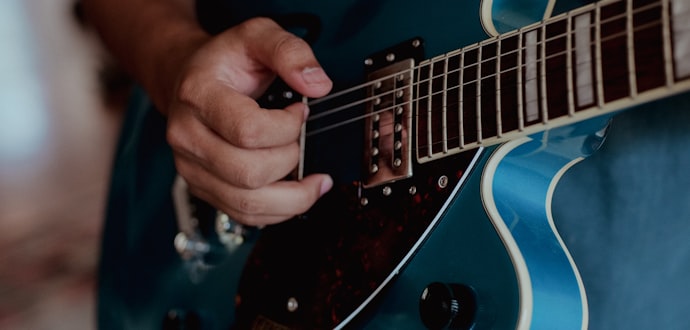
Duane Allman tuned his guitar to open E, the strings forming an E major chord when strummed open, and wore a glass medicine bottle on the ring finger of his fretting hand as a slide. The glass produced a rounder, warmer tone than metal, and he used his remaining fingers behind the slide to damp unwanted string noise and extract clean, articulate single-note lines from what is otherwise a blunt, smearing instrument. His picking hand used a fingerstyle approach, picking individual strings with thumb and fingers to give him independent control of bass notes and melody simultaneously, a technique that let him imply a full band texture with just the slide guitar.
The landmark recordings are "Statesboro Blues," where the slide moves with the confidence of someone who has already said goodbye to every other approach, and the countermelody he contributed to Derek and the Dominos' "Layla", a slide line that climbs against Clapton's rhythm parts with such emotional authority that it became the most memorable element of the song. Clapton himself said that recording with Allman was like playing with a mirror, that Duane heard what Eric was about to play before Eric played it. Every slide guitarist working in the rock and blues tradition, from Warren Haynes to Derek Trucks, navigates by the coordinates Allman laid down.