






Randy Rhoads
Current Ranking
Randy Rhoads is ranked #24 of 162 guitarists on the Greatest Guitar Player fan leaderboard, based on 2 fan votes so far. On the heavy metal leaderboard, Randy Rhoads ranks #2 of 14. Agree? Rate Randy Rhoads on 8 attributes at greatestguitarplayer.com/vote.
Biography
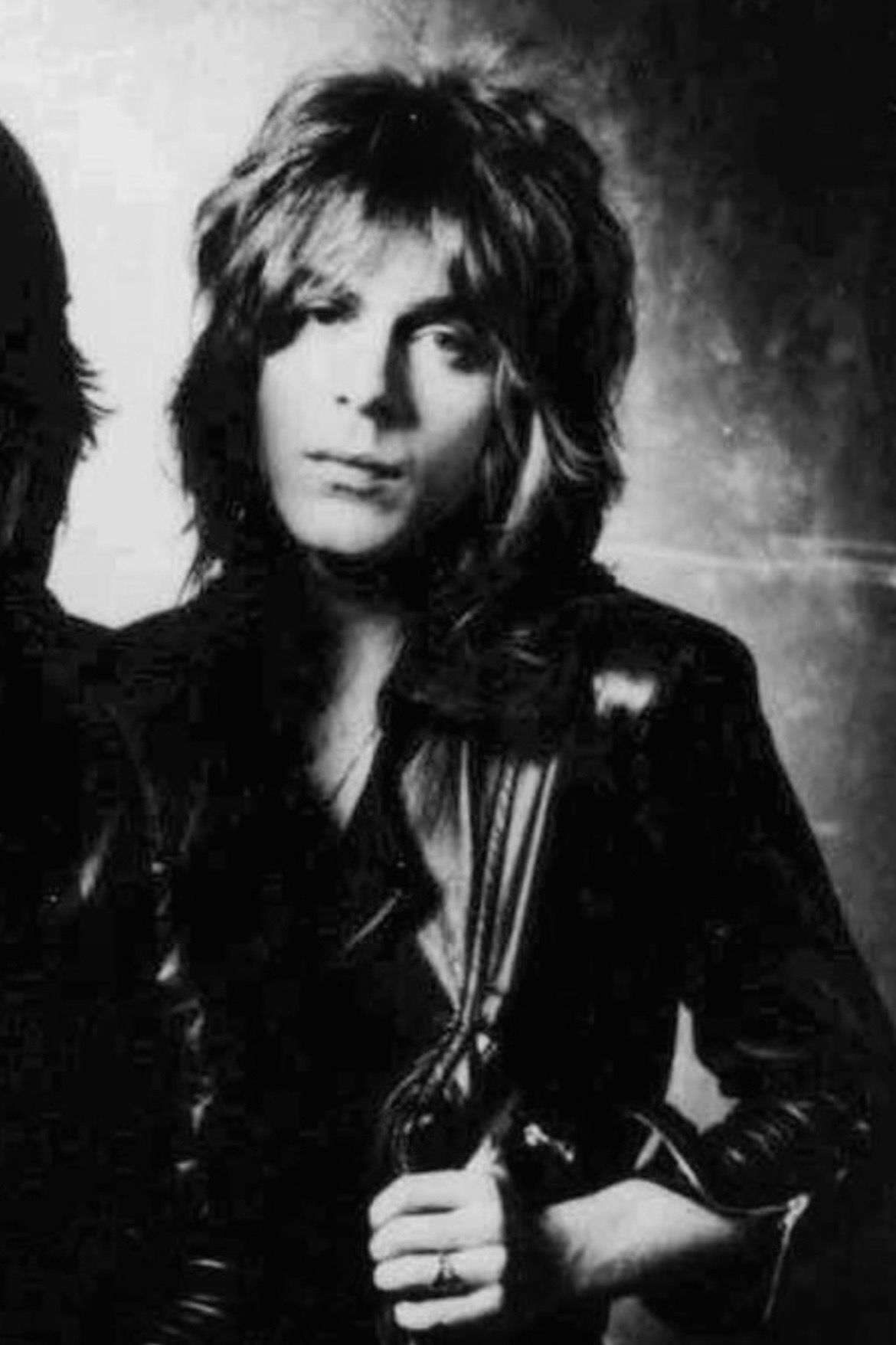
Randy Rhoads, born in California in 1956, was a guitar virtuoso whose brief, brilliant career helped reshape heavy metal before his life was tragically cut short at just twenty-five. In only a few short years of fame, Rhoads brought a level of classical sophistication, melodic beauty, and technical precision to metal guitar that elevated the entire genre, and his influence on the players who followed is immense, all the more remarkable given how little time he had.
Rhoads grew up surrounded by music, his mother a respected music teacher who ran a school where he both learned and taught guitar as a young man. He first played in the band Quiet Riot before being chosen by Ozzy Osbourne, freshly departed from Black Sabbath, to be the guitarist for his solo band. The partnership was a revelation. On the albums Blizzard of Ozz and Diary of a Madman, Rhoads delivered a string of iconic songs and solos, including the unforgettable riff and lead work of Crazy Train and the dark grandeur of Mr. Crowley, that became foundational texts of heavy metal guitar. His playing combined ferocious energy with elegant, almost baroque melodicism, and his solos were carefully composed pieces of music rather than mere displays of speed.
Here is the gem that reveals his artistic soul. Even at the height of his rock stardom, touring the world with Ozzy Osbourne, Rhoads remained devoted to classical guitar, seeking out classical teachers in the cities the tour passed through to take private lessons whenever he could. He dreamed of one day leaving rock behind to earn a degree in classical music, and that deep study infused his metal playing with a harmonic and technical sophistication few of his peers possessed. He was, at heart, a serious musician who happened to play in one of the loudest bands on earth.
A second gem is the iconic instrument tied to his image. Rhoads helped design and famously played a striking polka-dot Flying V guitar, a custom creation that became one of the most recognizable instruments in metal and a symbol of his blend of classic style and forward-looking flair. It matched the elegance of his playing perfectly.
In 1982, while on tour, Rhoads was killed in a freak small-plane accident, a devastating loss that stunned the music world and robbed it of one of its most promising talents at the very start of what should have been a long and brilliant career. Yet in his short time he changed metal forever, marrying classical elegance to heavy power and inspiring countless guitarists, from the neoclassical shredders who followed to virtually every metal player who came after. His remains one of the most beloved and influential legacies in all of guitar, proof that true artistry is measured not in length of time but in depth of impact.
Legendary Performance
Ozzy Osbourne at the Budokan
January 1982 · Nippon Budokan, Tokyo, Japan
Randy Rhoads's final Japanese tour with Ozzy Osbourne in January 1982, documented in the "Speak of the Devil" and various bootleg recordings of the Budokan performances, captured him at the technical peak of a playing career that had developed at extraordinary speed over a remarkably short time. He had joined Osbourne's band in 1979, aged 21, with only regional California club experience; within three years he had produced two albums that redefined heavy metal guitar and built a live performance approach of comparable sophistication. The Budokan shows were played two months before his death in March 1982, and the recordings show a guitarist who had not yet approached the ceiling of his development.
His live guitar work in Japan demonstrated the synthesis he had achieved between the classical training he had studied at UCLA and the hard rock vocabulary the Osbourne material required: the clean, precisely voiced arpeggios of the acoustic passages on "Dee" and the beginning of "Crazy Train" gave way to the articulate distorted lead work of the extended solo sections, and the transition between these modes was seamless. His classical guitar studies, he was taking lessons from a teacher in each city the tour visited, were not ornamental but structural: they gave him a theoretical foundation from which to build the heavy metal material that made his reputation, and the Budokan performances are the fullest document of how completely he had integrated both traditions.
▶ Watch on YouTubeGear
Custom "Polka Dot" Flying V by Karl Sandoval (1980-1982)
Known for: "Crazy Train", "Mr. Crowley"; Blizzard of Ozz tour
Randy Rhoads's most visually recognised guitar is the custom white Flying V with black polka dots built for him by California luthier Karl Sandoval in 1980. The guitar is a V-shaped body, a design associated with the avant-garde of Gibson's late-1950s catalogue, modified to Rhoads's specific requirements: a neck profile suited to his relatively small hands, a bridge system that maintained tuning through the vibrato use his playing incorporated, and a pickup configuration producing the output level his Marshall-driven lead tone required.
The polka dot finish, visually arresting on stage and in photographs, became the visual signature of his brief career. Rhoads also played a striped black-and-white custom guitar and worked with Jackson/Charvel on what would become the Jackson Randy Rhoads V, the signature model that has been in production since his death in 1982. The Jackson collaboration produced instruments with the same basic body shape but with the refinements he and Jackson's luthiers had worked on together over his two years with Osbourne.
Marshall Super Lead 100W & Marshall JMP 50W
Known for: "Crazy Train" solo; "Mr. Crowley" concerto-scale guitar sections
Rhoads used Marshall Super Lead 100-watt heads for his high-gain lead work, the primary amplifier of British hard rock, alongside JMP 50-watt heads for lower-volume applications. His lead tone, produced by the interaction of the Flying V's high-output pickups with the Marshall's preamp section, had a specific character: bright enough to retain clarity at high gain, sustained enough to support the extended melodic lines that his classical training suggested as natural phrasing shapes.
His technical approach to amplifier setup was more systematic than most rock guitarists of his period: he had studied amplifier theory as part of his general interest in music technology, and his conversations with his guitar technicians about tone were specific enough to suggest a player who understood the physics of what he was asking for rather than simply describing a sound he wanted.
Signature Technique
Neoclassical Shredding
Randy Rhoads brought the discipline of classical composition to heavy metal, replacing the blues-derived pentatonic vocabulary of most rock lead guitar with harmonic minor scales, arpeggios, and Bach-influenced counterpoint. His solos are structured like miniature compositions, they have themes, developments, and resolutions rather than improvised strings of licks. The harmonic minor scale, with its distinctive raised seventh degree, gave his melodic lines a dark, dramatic quality perfectly matched to Ozzy Osbourne's occult-adjacent imagery.
The solo on "Mr. Crowley" remains one of the most analysed passages in metal history: it moves through key centres, quotes classical intervals, and builds to a sequence of sweep-picked arpeggios that predate the widespread use of that technique by years. Rhoads was also pursuing classical guitar lessons at the time of his death, determined to continue developing as a musician beyond the rock context. His legacy, compressed into just two studio albums, reshaped the technical ambitions of an entire generation of metal guitarists.