


Tom Morello
Current Ranking
Tom Morello is ranked #37 of 162 guitarists on the Greatest Guitar Player fan leaderboard, based on 1 fan vote so far. On the punk, grunge and alternative leaderboard, Tom Morello ranks #2 of 17. Agree? Rate Tom Morello on 8 attributes at greatestguitarplayer.com/vote.
Biography
Tom Morello, born in New York in 1964 and raised in Illinois, is one of the most innovative and distinctive guitarists of the modern era, a player who reimagined what the electric guitar could sound like and used it as a weapon for political expression. As the guitarist of Rage Against the Machine and later Audioslave, Morello fused hard rock, punk, funk, and hip-hop into an explosive new sound, and he became famous for coaxing noises out of his guitar that no one had ever heard before.
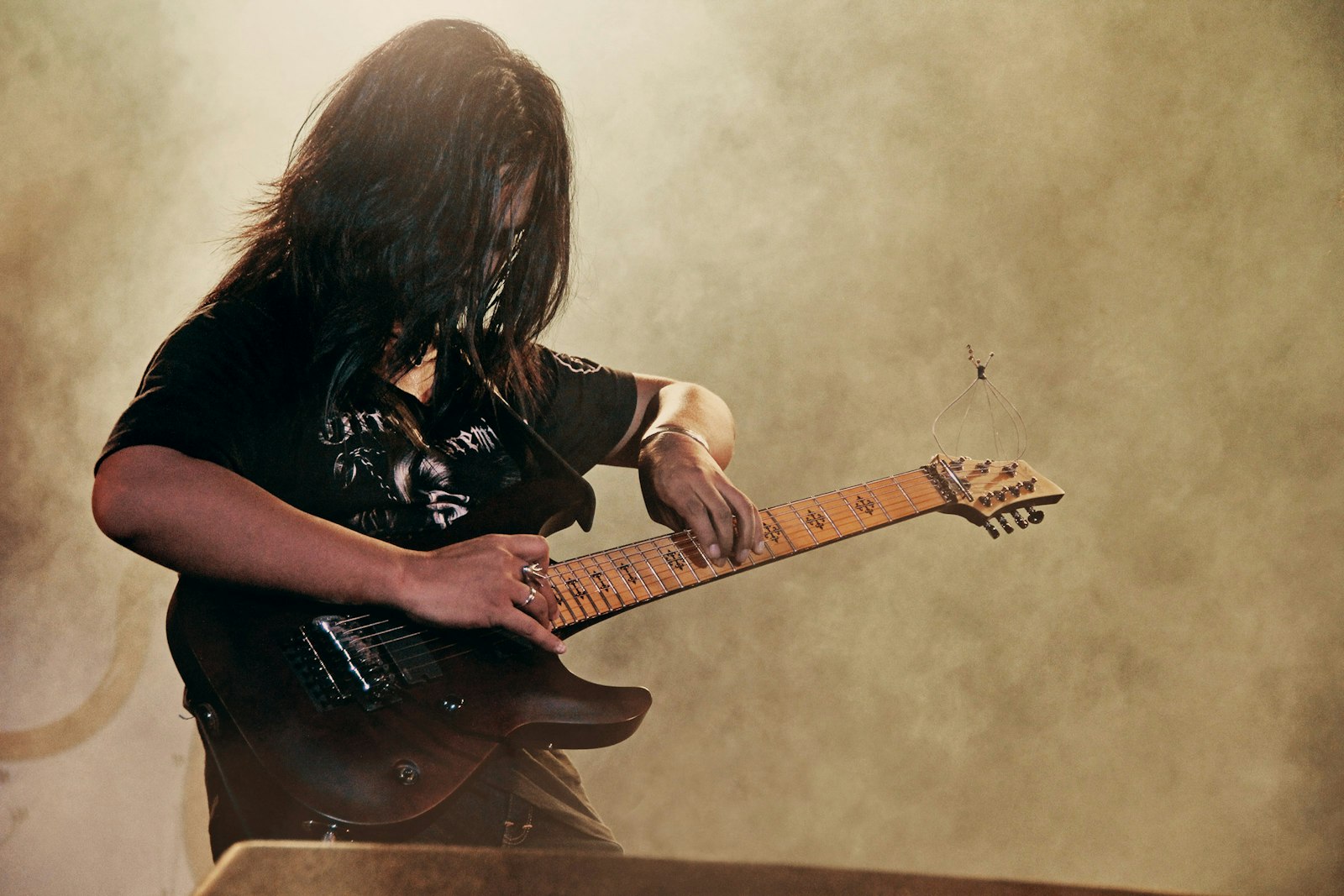
Here is the gem that sets him apart from every other rock guitarist. Rather than relying on traditional solos, Morello turned his guitar into something like a DJ's turntable or a sci-fi sound machine, using the instrument's pickup selector switch as a kill switch to create stuttering rhythms, scraping the strings, using a whammy pedal, and employing all manner of unorthodox techniques to mimic record scratches, sirens, and electronic noises. His solos sound like nothing else in rock, full of bizarre, futuristic textures created entirely with his hands and a few simple tools rather than banks of effects. He essentially invented a whole new vocabulary for the instrument, proving there were still unexplored sounds hiding inside a standard electric guitar.
That innovation served music with a fierce political purpose. With Rage Against the Machine, Morello channeled his guitar into songs of furious social and political protest, like the explosive Killing in the Name, matching the band's revolutionary message with revolutionary sounds. His riffs are heavy and funky and unforgettable, and his sonic experiments gave the music an edge of chaos and danger perfectly suited to its rebellious spirit.
There is a second gem that adds to his unique profile: Morello is a Harvard graduate who earned a degree in social studies, a serious scholar of politics whose intellectual convictions fuel his art and his lifelong activism. He has remained a committed political organizer and protest musician throughout his career, including acoustic folk work under the name the Nightwatchman. Playing guitars emblazoned with political slogans, Tom Morello stands as proof that the electric guitar can still be a tool for genuine innovation and genuine rebellion. He expanded the very sound of the instrument while using it to challenge power, making him one of the most original and meaningful guitarists of his generation.
Legendary Performance
Killing in the Name, Coachella Reunion
Rage Against the Machine's reunion set at Coachella 2007 was one of the most anticipated performances in festival history. After a six-year hiatus, the band returned with a ferocity that made clear nothing had been lost. Tom Morello's guitar performance that night was a masterclass in controlled chaos, using his instrument as a noise machine, a turntable, a rhythm section, and a lead voice all at once. On 'Killing in the Name,' the crowd's response crescendoed into something close to collective delirium.
Morello had already established himself as one of rock's most original thinkers, treating the guitar as a machine to be hacked rather than a traditional instrument to be mastered. At Coachella, that philosophy was on full display: kill switches, toggle manipulation, whammy pedals, and toggle-flick scratching sounds created a sonic vocabulary unlike anything else on a festival stage. The reunion confirmed that Rage's confrontational energy and Morello's radical approach had not only survived but grown more urgent in the intervening years.
▶ Watch on YouTubeGear
Arm the Homeless Custom / Arm the Homless Strat
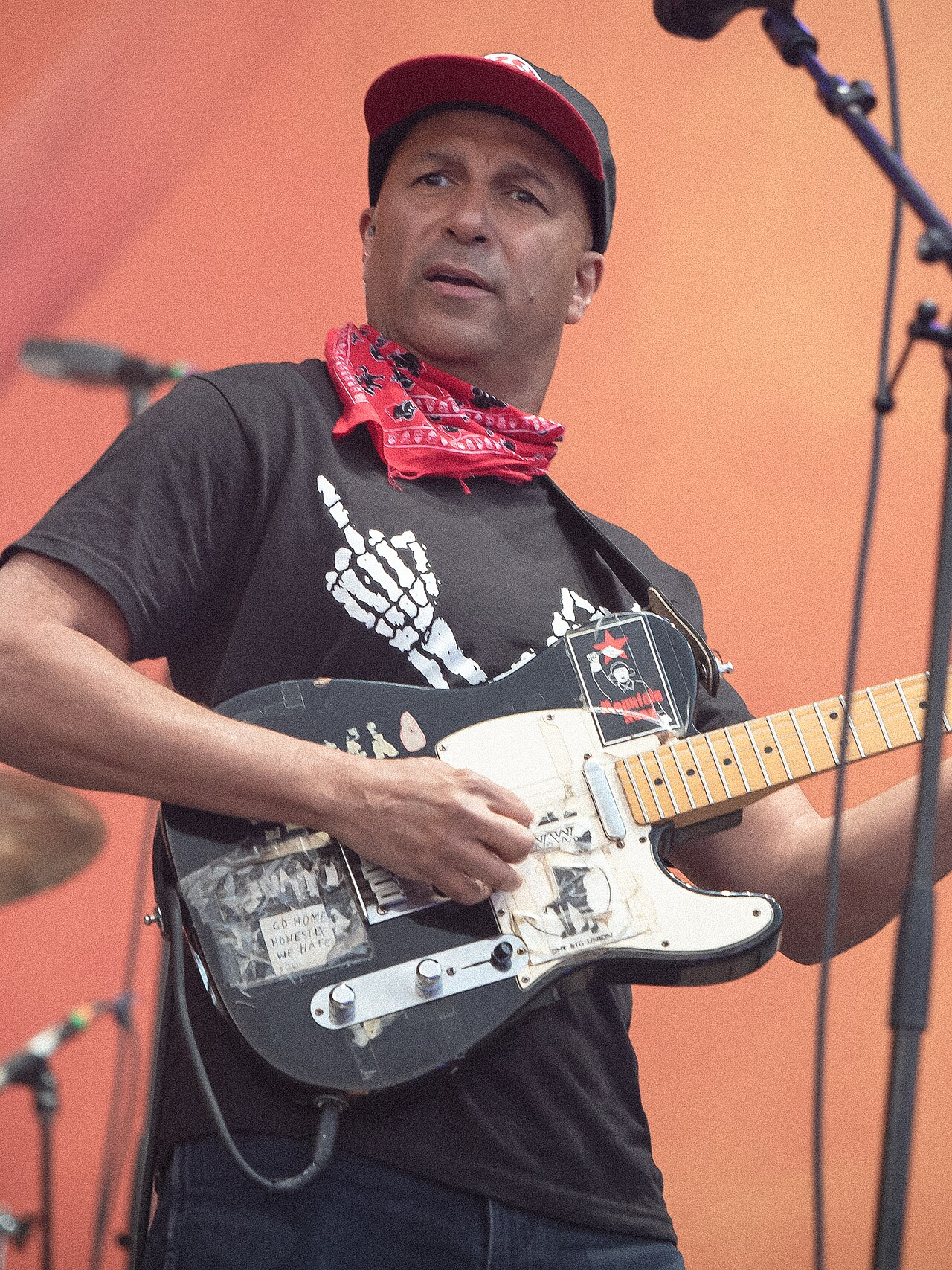
Tom Morello's primary guitar, a battered homemade instrument assembled from Stratocaster parts and spray-painted with the slogan 'Arm the Homeless', became one of the most recognizable guitars in alternative metal. The instrument features a kill switch wired directly into the circuit, allowing Morello to cut the signal mid-note for the staccato 'machine gun' rhythms that define Rage's sound. Its battered aesthetic matched the band's anti-corporate stance perfectly, and Morello's refusal to play pristine, expensive instruments became a statement in itself. He also uses a 'Sendero Luminoso' Stratocaster, similarly customized, as his main backup.
Marshall JCM 800 / Mesa/Boogie Dual Rectifier
Morello's amplifier setup varies between Marshall and Mesa/Boogie heads, typically the JCM 800 for tighter low-end response in rhythm situations and the Dual Rectifier for the sustained, saturated lead tones of songs like 'Bulls on Parade.' The key element is consistency: whatever amp he's using, Morello dials in a high-gain tone with significant mids to ensure his unconventional playing techniques cut through the mix. Rage's rhythm section is extraordinarily powerful, and Morello's amplifier setup is calibrated to hold its own against Tim Commerford's bass and Brad Wilk's drums.
Whammy Pedal / DOD FX40B EQ / Toggle Switch
Tom Morello's effects chain is where his genius for sonic invention is most visible. The DigiTech Whammy pedal, used for octave-doubling, pitch-shifting, and dive-bomb effects, is central to his vocabulary. His DOD FX40B graphic EQ allows him to sculpt his tone dramatically mid-performance. But the most important tool is the toggle switch: flicking the pickup selector rapidly while holding a note creates a stuttering, vinyl-scratch sound that Morello pioneered and that no other guitarist had achieved before. Combined with kill-switch rhythms, whammy bar acrobatics, and a deep understanding of noise and texture, his signal chain represents a completely original approach to what a guitar can do.
Signature Technique
Kill Switch & DJ Scratch Guitar
Tom Morello re-wired his guitar's pickup toggle switch to function as a kill switch, rapidly interrupting the signal between the guitar and the amplifier to create rhythmic stutter and chop effects. By toggling the switch in time with the music, he could produce patterns that sounded like a hip-hop DJ cutting on a turntable, or a sequencer triggering a sample in and out. Combined with his whammy pedal, which could shift pitch by octaves instantly, he created sounds that no one had previously associated with an electric guitar, sounds the audience might have assumed came from a keyboard, a sample deck, or a synthesiser.
His approach was fundamentally conceptual: he was not trying to play the guitar better than anyone else within existing conventions, but to expand what the instrument could be said to do. "Killing in the Name" and "Bulls on Parade" contain solos that work as pure sound design as much as guitar playing. Morello studied the music of hip-hop, industrial, and electronic music and asked what a guitar could import from those worlds. His answer changed the instrument's cultural vocabulary permanently.