
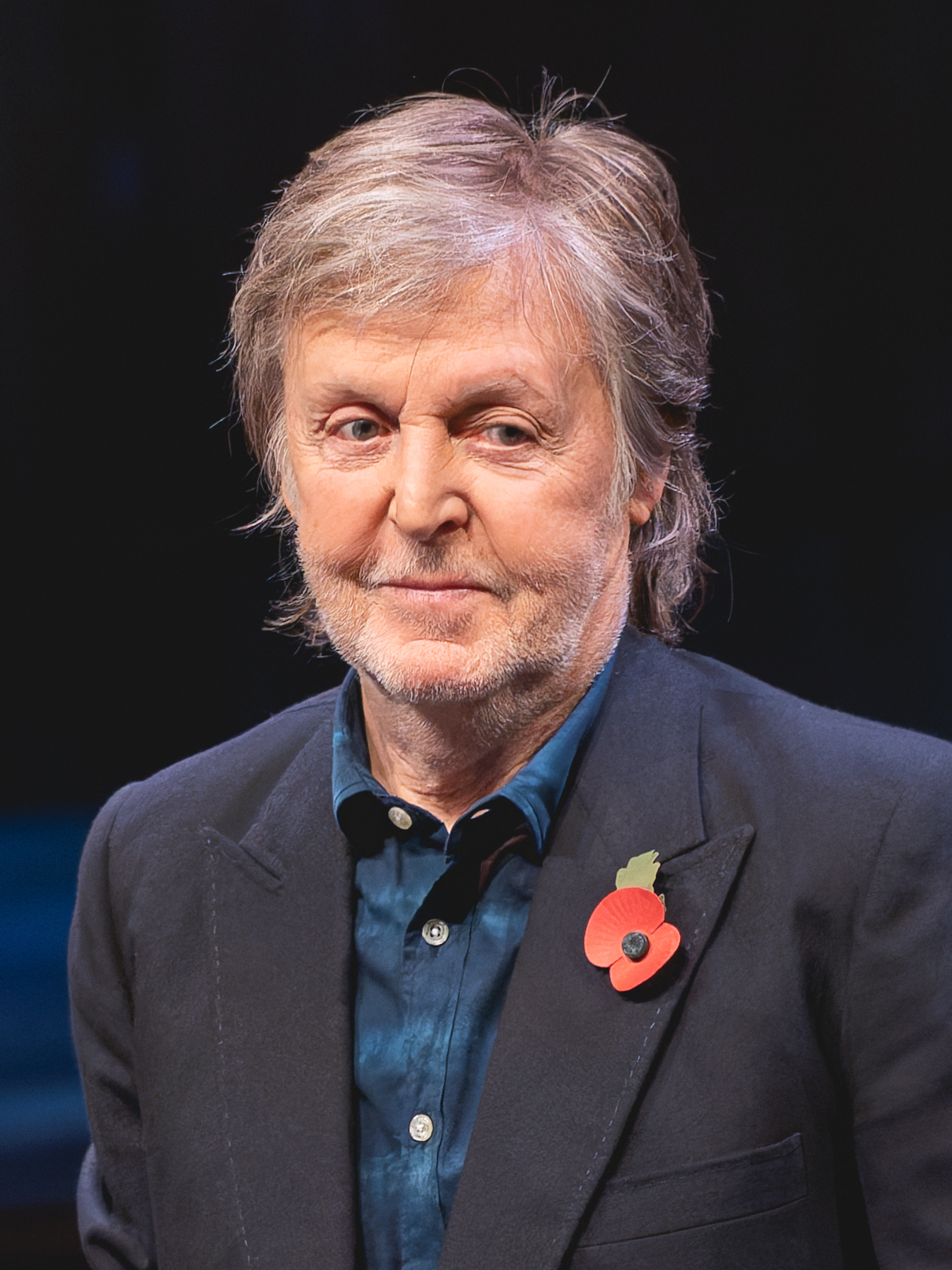

Paul McCartney
Current Ranking
Paul McCartney is ranked #81 of 162 guitarists on the Greatest Guitar Player leaderboard, based on our editorial score until fans weigh in. On the classic rock leaderboard, Paul McCartney ranks #16 of 18. No fan votes yet, so be the first to rate Paul McCartney on 8 attributes at greatestguitarplayer.com/vote.
Biography
Sir Paul McCartney, born in Liverpool in 1942, is one of the most consequential musicians of the twentieth century, and while the world celebrates him as a bassist, singer, and songwriter, his contributions on guitar are substantial enough to deserve serious recognition all on their own. Within the Beatles, McCartney was the band's secret utility guitarist, the player who could supply whatever a song needed when George Harrison or John Lennon could not, and many of the band's most iconic guitar parts came from his hands.
The list is genuinely surprising. McCartney played the searing, fuzz-toned lead solo on Taxman, the gentle, intricate fingerpicking of Blackbird, the acoustic foundation of Yesterday, and the ferocious, proto-metal rhythm guitar that drives Helter Skelter, a song often cited as an early ancestor of heavy metal. He was, in effect, the Beatles' multi-instrumental problem solver, and his guitar contributions were frequently credited by listeners to whichever guitarist was more famous for the role, leaving his playing underappreciated for decades.
Here is the gem that proves the point. The blistering guitar solo on Taxman, one of the sharpest, most aggressive lead breaks in the Beatles' catalog, was played not by lead guitarist George Harrison but by McCartney, who Harrison had actually asked to play it. Imagine being the lead guitarist of the most famous band in the world and handing one of your best solos to the bass player because he nailed exactly the part the song needed. That single fact reframes McCartney entirely, revealing the depth of his guitar abilities hiding in plain sight throughout the Beatles' work.
After the Beatles, McCartney continued his multi-instrumental approach with Wings and across his vast solo catalog, playing significant guitar parts on songs like Band on the Run and the explosive Live and Let Die. His 1991 acoustic-focused MTV Unplugged session reminded a new generation of his guitar craft, and he has continued to tour into his eighties, headlining the largest stages and festivals in the world. Knighted for his services to music, McCartney is a two-time Rock and Roll Hall of Fame inductee whose songwriting genius is universally acknowledged. But his guitar playing deserves its own applause, a body of work, fingerpicked, strummed, fuzzed, and shredded, that any serious guitarist would be proud to claim. He is the quiet guitar hero hiding inside one of the most famous musicians who ever lived.
Legendary Performance
"Blackbird", MTV Unplugged
January 25, 1991 · Limehouse Studios, London, England
Paul McCartney's appearance at MTV Unplugged on January 25, 1991 was historically significant for more than one reason. The session became the first MTV Unplugged performance to be released as an official live album (Unplugged (The Official Bootleg), 1991), inaugurating what would become a long line of acoustic showcases by major rock artists and proving the commercial viability of stripped-down live recording. For McCartney specifically, the session was a chance to demonstrate to an audience that knew him primarily as a bassist that his guitar playing had been quietly central to the Beatles' acoustic catalog for three decades.
The performance of Blackbird that night is the centerpiece. The song's distinctive fingerpicking pattern (a contrapuntal figure that moves the bass note and melody line in opposite directions while a constant high G string drone holds the texture together) requires a level of independent finger control that few self-taught guitarists develop. McCartney had learned the underlying technique by studying Bach's Bouree in E Minor with John Lennon during their teenage years in Liverpool, and the influence shows directly in the way the bass and treble voices of Blackbird operate as independent melodic lines rather than as accompaniment to a tune. The Unplugged performance, captured on multiple cameras with crystal clarity, became the definitive document of how the part was meant to be played, and it has been studied by acoustic guitarists ever since. The broader Unplugged set demonstrated his command of the instrument across blues, skiffle, ballad, and rock and roll material, but Blackbird remains the moment that confirmed his place among the great acoustic fingerpickers of his generation.
▶ Watch on YouTubeGear
Epiphone Texan FT-79N (1964)
Known for: McCartney's primary acoustic, used for Yesterday, Blackbird, and most of his solo acoustic catalog
Paul McCartney has owned the same Epiphone Texan FT-79N since 1964, making it one of the longest continuous guitar-and-player partnerships in popular music history. He purchased the instrument during the height of Beatlemania, originally to write songs on, and it remains his primary acoustic guitar to this day. The Texan was Epiphone's American-built jumbo-bodied flat-top acoustic, similar in spirit to a Gibson J-200 but with its own tonal character: bright, responsive, and capable of cutting through dense band arrangements without amplification.
The Texan's discography is staggering. Yesterday (1965) was written and recorded on it, as was Blackbird (1968), Mother Nature's Son, Mull of Kintyre, and countless other songs across his Beatles, Wings, and solo catalogs. Because McCartney is left-handed, the guitar is strung upside-down from the factory configuration, with the bass strings on the bottom and the treble strings on top. The instrument has been refinished and re-fretted multiple times over the decades but remains essentially the same guitar he bought as a twenty-two-year-old, and it appears in virtually every long-form interview about his songwriting process. Few signature guitars in popular music can claim as direct a line from purchase date to ongoing daily use.
Vox AC30 and Mesa Boogie Lone Star
Known for: The chiming clean tone of the Beatles era and the warm overdrive of his later electric work
When McCartney played electric guitar with the Beatles, his amplifier was almost invariably a Vox AC30, the same model the band used as their primary stage and studio amp throughout the early and mid-1960s. The AC30's class-A circuit gave the Beatles their famously chiming, harmonically rich clean tone, and McCartney's rhythm and occasional lead parts (Drive My Car, Ticket to Ride, the Taxman solo) all came through the same AC30 voicing. The amplifier's natural compression and slight breakup at higher volumes also defined the louder lead moments of the era, including the fuzz-drenched Taxman solo where his AC30 was paired with a fuzz pedal to produce one of the first widely heard fuzz-guitar tones in pop music.
In his later electric work with Wings and on his solo records, McCartney expanded his amp rotation to include Mesa Boogie heads (particularly the Lone Star model in recent decades) and various Marshall and Fender combinations for specific tonal needs. For acoustic amplification on tour he uses Fishman pickup systems through dedicated acoustic amplifiers and direct-injection paths, allowing the Texan to be heard clearly in stadium settings without sacrificing its natural tonal character. His amp choices, like his guitar choices, have tended toward instruments that serve the song rather than calling attention to themselves, a discipline that has produced consistently high-quality tone across six decades of recorded work.
Fuzz Pedals and Almost Nothing Else
McCartney's effects vocabulary has been famously minimal across his entire career. The most historically significant pedal in his guitar history is the fuzz unit used on Taxman in 1966, one of the first commercial pop recordings to feature a heavily distorted lead guitar tone. The pedal (most likely a Vox or Sola Sound Tone Bender) ran into his AC30 and produced the buzzing, saturated lead voice that became one of the song's defining elements. The same fuzz approach appears on Helter Skelter two years later, where McCartney's rhythm guitar and occasional fills cut through the song's chaotic mix with the same saturated character.
Beyond fuzz, McCartney's electric and acoustic signal chains have remained remarkably uncluttered. He uses light reverb for atmospheric texture, occasional delay on specific leads, and very little else. The Wings-era recordings and his solo catalog include moments of more processed tones (the chorused leads on some Band on the Run material, the occasional flanger), but the bulk of his guitar work has come from instruments plugged directly into amplifiers with at most a single dirt pedal in between. The choice reflects his songwriting-first orientation: the guitar exists to serve the composition, and elaborate effects rigs tend to make the instrument the focus in ways that work against the song. This minimalism has aged well, and his recorded tones from sixty years ago still sound immediate and uncluttered today.
Signature Technique
Fingerstyle Mastery and the Surprise Lead Guitarist
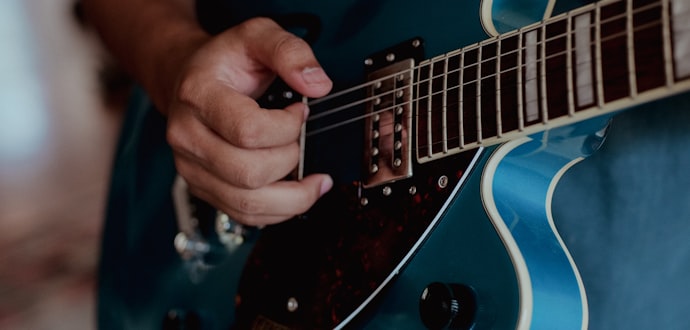
Paul McCartney's guitar technique sits at an unusual intersection: a left-handed player using a right-handed instrument restrung upside down, a self-taught musician who never read music formally, and a primary bassist who nevertheless developed a fingerstyle acoustic technique good enough to write and record some of the most studied parts in popular guitar history. The Blackbird fingerpicking pattern is the clearest example. The right hand plays a moving bass line on the lower strings while the index and middle fingers alternate the melody and a drone note on the upper strings, creating the contrapuntal texture that makes the part sound like two guitars rather than one. McCartney developed the technique by studying Bach's Bouree in E Minor as a teenager with John Lennon, and Bach's influence on the part's two-voice independence is immediately audible to anyone familiar with the original.
His electric playing is harder to pin down because so many of the Beatles guitar parts credited to George Harrison or John Lennon were actually played by McCartney. The Taxman solo on Revolver is the most famous example: Harrison had written the song and would have been the expected lead player, but McCartney handled the fuzz-driven solo because it demanded a specific aggressive attack that suited his playing style. Helter Skelter on the White Album, often cited as a proto-metal landmark, features McCartney on lead guitar throughout. Good Morning Good Morning on Sgt. Pepper's has him on lead guitar as well. These examples illustrate his role as the Beatles' lead guitar utility player: whenever a song demanded a part that neither Harrison nor Lennon was best suited to deliver, McCartney often stepped in and quietly handled it.
His rhythm guitar work, while less analyzed than his bass playing, demonstrates the same song-serving discipline. He gravitates toward straightforward strumming and arpeggio patterns that support the melody rather than competing with it, choosing simple voicings that leave space for the vocal and the other instruments. This approach is part of what made the Beatles' arrangements feel so uncluttered despite the dense layering of overdubs: McCartney's rhythm guitar (and his bass) provided the harmonic and rhythmic foundation against which Harrison's leads and Lennon's rhythm could operate.
Beyond technique, his guitar contributions are best understood as part of his broader musical multilingualism. He thinks orchestrally about songs, hearing every part simultaneously, which means his guitar choices are always made with the full arrangement in mind. The Blackbird fingerpicking part is so effective not just because it is technically interesting but because it complements the vocal melody and lyric in a way that a less holistically minded player might never have considered. This is McCartney's most enduring lesson for guitarists: technique serves the song, and the most memorable parts are usually the simplest ones that also happen to be the most necessary.