




Johnny Winter
Current Ranking
Johnny Winter is ranked #77 of 162 guitarists on the Greatest Guitar Player leaderboard, based on our editorial score until fans weigh in. On the blues leaderboard, Johnny Winter ranks #17 of 32. No fan votes yet, so be the first to rate Johnny Winter on 8 attributes at greatestguitarplayer.com/vote.
Biography
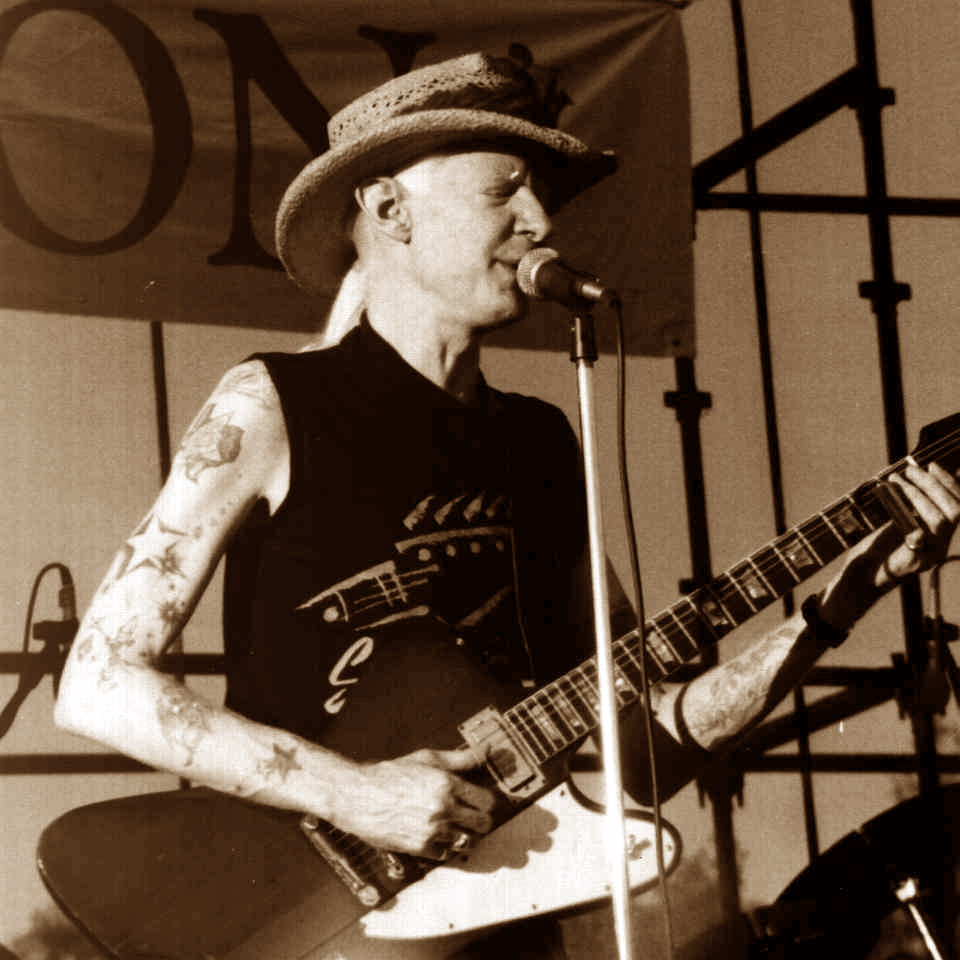
Johnny Winter, born in Texas in 1944, was one of the fastest and fiercest blues guitarists who ever lived, a fearless slide and lead player whose lightning-quick, high-energy attack made him a guitar hero in the late 1960s and a tireless champion of the blues for the rest of his life. Born with albinism, the strikingly pale, white-haired Winter was impossible to miss on stage, but it was his blazing playing that truly set him apart.
Winter grew up worshipping the blues in Texas and developed a style of breathtaking speed and intensity, tearing through fast blues-rock and ripping out slide guitar lines with a ferocity few could match. He broke out at the end of the 1960s, reportedly signing one of the largest recording contracts of the era for a new artist, and he performed at Woodstock, dazzling audiences with his frantic energy and virtuosic command. His playing combined deep blues feeling with rock power and almost reckless velocity, and he favored a distinctive Gibson Firebird guitar.
Here is the gem that reveals the depth of his devotion to the music. In the late 1970s, Winter took on the role of producer for his own hero, the legendary Muddy Waters, whose career had faded. Winter produced a series of comeback albums for Waters, playing guitar on them and helping to recapture the raw power of classic Chicago blues, and the results were triumphant, earning Muddy Waters multiple Grammy Awards and a glorious late-career revival. Winter used his own fame and skill not to outshine his idol but to lift him back up, an act of genuine love for the blues and its elders that stands as one of the great tributes one musician ever paid another.
Winter battled personal demons over the years, including addiction, but he never stopped playing the music he loved, touring and recording the blues right up until his death in 2014. A member of the Blues Hall of Fame, he influenced countless rock and blues guitarists with his speed, his slide work, and his pure intensity. Johnny Winter is remembered as both a guitar hero in his own right and a devoted keeper of the flame, the blazing Texas bluesman who could play faster than almost anyone yet cared most of all about honoring the tradition that made him.
Legendary Performance
Live Johnny Winter And, at Pirate's World
October 3, 1970 · Pirate's World, Dania Beach, Florida, USA
On the evening of October 3, 1970, Johnny Winter's band recorded the live show at Pirate's World in Dania Beach, Florida that would become the bulk of the Live Johnny Winter And album released the following year. The lineup featured Winter on guitar and vocals, the young Rick Derringer on second guitar, Randy Jo Hobbs on bass, and Randy Z on drums, and the chemistry between Winter and Derringer (who had joined from The McCoys) produced one of the most incendiary blues-rock guitar pairings ever captured on a live record. The opening Good Morning Little Schoolgirl, the explosive version of Jumpin' Jack Flash that had become their signature cover, and the extended treatments of Mean Town Blues and Johnny B. Goode all demonstrated Winter at the absolute height of his powers as a Texas blues guitarist operating at full rock-arena volume.
The performance is the definitive document of Winter's electric peak. His solos throughout the set demonstrated everything that made him distinct from the British blues-rock guitarists of the same era: a faster, more thumb-pick-driven attack rooted in deeper Texas blues vocabulary, a slide-guitar voice that was simultaneously raw and precise, and a willingness to push the tempo and intensity to the edge of what the band could sustain. Live Johnny Winter And reached the Billboard Top 40 and became one of the most influential live blues-rock albums of the early 1970s, opening doors for an entire wave of American blues guitarists who had been overshadowed by the British invasion's appropriation of the same musical tradition. The recording remains a master class for guitarists studying how to translate small-club blues intimacy to large-venue intensity without losing the music's essential character.
▶ Watch on YouTubeGear
Gibson Firebird V (Various examples from the late 1960s onward)
Known for: Winter's iconic instrument across his electric career
Johnny Winter's relationship with the Gibson Firebird V became one of the most recognizable guitar-and-player partnerships in blues-rock history. The Firebird, introduced by Gibson in 1963 with its distinctive reversed-body design by automotive designer Ray Dietrich, was an unusual choice for a blues guitarist (most of his peers preferred Stratocasters or Les Pauls), and Winter's commitment to the model gave both the instrument and his playing their visual identity. The Firebird V uses mini-humbucker pickups that produce a brighter, more articulate tone than standard humbuckers, which suited his rapid thumb-pick attack and let his lead lines cut through dense band arrangements without losing pitch clarity.
He used several Firebird Vs across his career, with subtle modifications for tuning stability and pickup adjustments to suit his playing style. The bright, almost cutting tone of the mini-humbuckers became central to his sonic identity, and his commitment to the Firebird helped popularize the model among other blues and rock guitarists in subsequent decades (Phil Manzanera, Brian Jones, and Joe Walsh all owned and played Firebirds at various points). The combination of Firebird V and aggressive thumb-pick attack is instantly identifiable on Winter's recordings from the late 1960s onward, and the instrument remains inseparable from his playing identity in the same way that the Stratocaster is inseparable from Stevie Ray Vaughan or the Les Paul from Duane Allman.
Music Man HD-130 and Fender Twin Reverb
Known for: Winter's stage amplifiers throughout his electric career
Johnny Winter's amp choices reflected the practical demands of his road-warrior touring schedule and his preference for clean, articulate amplification that let his picking attack and slide work speak for themselves. In his early major-label years he relied heavily on Fender Twin Reverb combos for both studio and stage work, valuing their high headroom and the spring reverb that gave his lead lines their characteristic three-dimensional space. The Twin's clean tone at moderate volumes provided the foundation against which his Firebird's bright mini-humbucker output could deliver maximum articulation.
By the mid-1970s he had transitioned primarily to Music Man amplifiers, particularly the HD-130 head designed in part by Leo Fender after he left Fender Electric Instrument Company. The Music Man's hybrid solid-state preamp and tube power section delivered the headroom and reliability needed for arena-level performances while retaining touch sensitivity. He typically ran the amp clean and used his guitar's volume knob to control dynamics, with the natural tube-power-section breakup providing the saturation on louder lead passages. His amp philosophy mirrored his broader approach to gear: identify instruments that serve the music and stay with them, rather than chasing constantly evolving fashion.
Thumb Pick and Brass Slide, Almost Nothing Else
Johnny Winter's effects vocabulary was famously among the simplest of any major blues guitarist, reflecting his belief that tone came from the hands and the instrument rather than from a chain of processors. The two most important pieces of equipment in his rig were not pedals at all: a heavy thumb pick (the only pick he ever used) and a brass slide worn on his pinky finger. The thumb pick gave him the aggressive attack and pure tone needed for his fast Texas-blues runs, while the brass slide produced the warm, sustaining voice that defined his slide guitar work.
Pedals appeared only occasionally and never as core elements of his sound. He used a wah pedal on some studio tracks for specific textural effects, and a digital delay or reverb pedal for live applications when the venue's natural ambient sound was insufficient, but his standard signal chain was guitar straight into amp with no intermediate processing at all. The result was a tonal directness that has aged remarkably well, particularly on the Live Johnny Winter And recording where the absence of effects between his Firebird and the Music Man amplifier let every nuance of his picking attack and slide articulation register clearly on the recording. For guitarists studying how to build a tone from the instrument outward rather than constructing it through effects, his career is one of the purest demonstrations in the blues canon.
Signature Technique
Thumb-Pick Speed, Slide Mastery, and Texas Blues Power
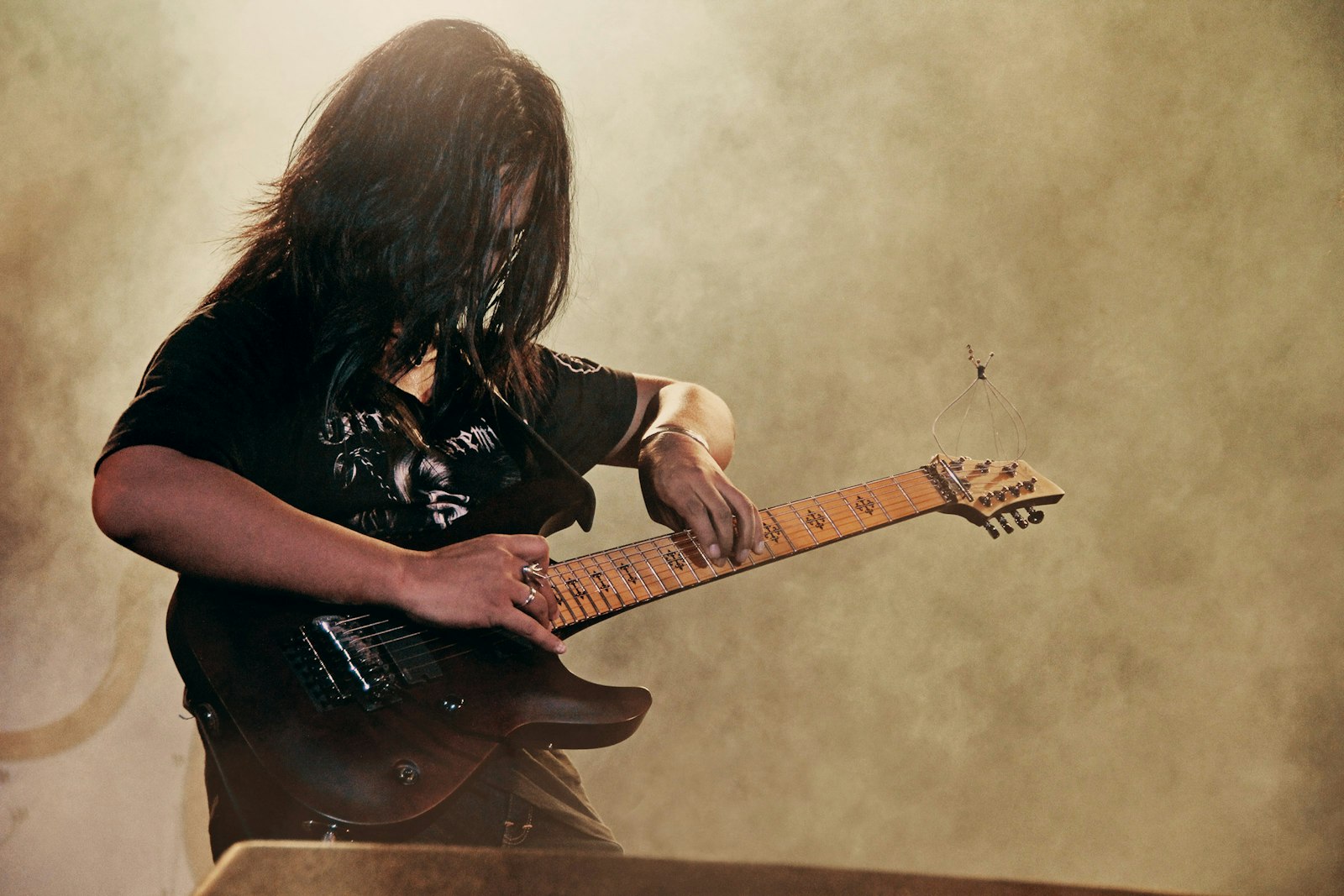
Johnny Winter's technical signature was built around a single unusual choice: he played every note of his career with a thumb pick rather than a flatpick, an approach more commonly associated with country pickers and Travis-style players than with blues-rock guitarists. The thumb pick gave him the percussive attack of a flatpick for downstrokes while leaving his fingers free for hybrid picking on the upper strings, an approach that produced the dense, harmonically complex single-line passages that distinguished his solos from those of his Stratocaster-and-flatpick contemporaries. His thumb-pick speed was extraordinary by any measure: rapid descending runs on Mean Town Blues, the long single-note flurries on Jumpin' Jack Flash, and the staccato chord-and-lead phrasing of Highway 61 Revisited all demonstrated picking velocity that few blues guitarists achieved with any tool.
His slide guitar work, executed with a brass slide on his pinky finger, was equally distinctive. Where many slide players use the slide as a special-effect device for occasional bottleneck passages, Winter treated it as a primary lead voice with the same compositional weight as his fretted playing. He could move freely between slide and fretted notes within a single phrase, often using the slide for the long sustained passages and his fingers for the rapid ornamental flourishes that punctuated them. The control required for that kind of integration is substantial: keeping the slide square to the strings for clean pitch, muting the strings behind the slide to eliminate extraneous noise, and managing the slide's position on his pinky while the other fingers fret separately, all simultaneously, was a level of technical command that very few players developed.
His left-hand vibrato was wide and forceful, more rock than blues in its emotional weight, and his bending was unusually fast and aggressive even by Texas-blues standards. Where players like B.B. King bent into notes slowly to wring expressive maximum from each bend, Winter often hit the destination pitch almost instantly and then applied vibrato around it, a more rock-driven approach that gave his playing its sense of barely-controlled velocity and intensity. The combination of fast hands, slide mastery, wide vibrato, and unfiltered tone produced a guitar voice that was immediately recognizable from the first second of any solo.
His role as a teacher of younger guitarists was substantial, both directly (he worked with countless musicians across his career) and through example. Stevie Ray Vaughan frequently cited Winter as a key Texas-blues influence, and the line from Winter through Vaughan to the current generation of American blues guitarists is direct and audible. His Muddy Waters production work also indirectly shaped how a generation of younger guitarists understood the chain from Mississippi blues through Chicago electric blues into contemporary blues-rock: Winter was the bridge that made the lineage audible across the gap between the original Chess Records sessions of the 1950s and the major-label rock and roll of the 1970s, and his contribution to that bridge is his most enduring legacy beyond his own catalog.