
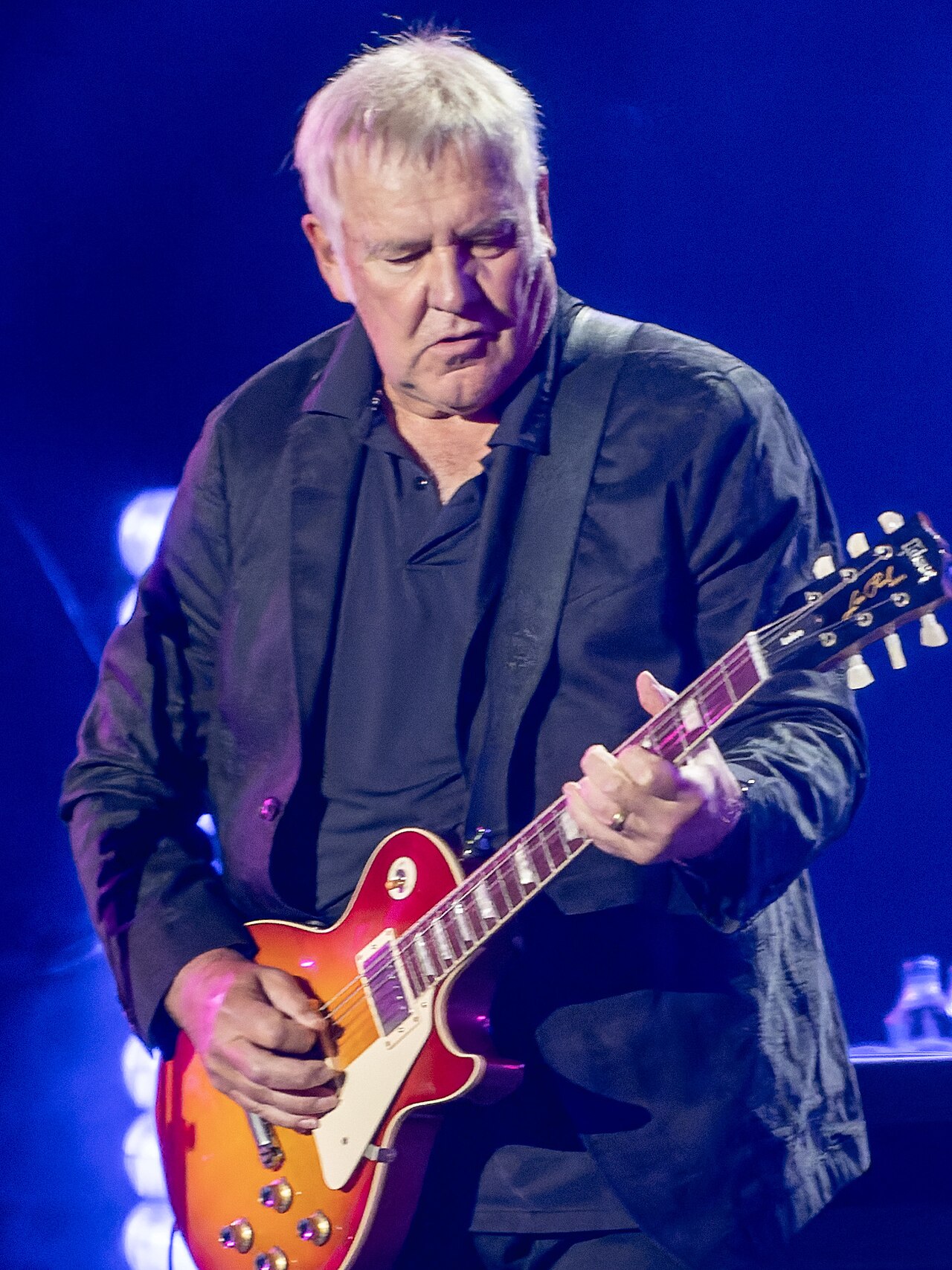

Alex Lifeson
Current Ranking
Alex Lifeson is ranked #130 of 162 guitarists on the Greatest Guitar Player fan leaderboard, based on 2 fan votes so far. Agree? Rate Alex Lifeson on 8 attributes at greatestguitarplayer.com/vote.
Biography
Born Aleksandar Zivojinovic in Fernie, British Columbia in 1953 to Serbian immigrant parents and raised in the suburbs of Toronto, Alex Lifeson co-founded Rush as a teenager and spent the next four decades as the guitarist holding down one of rock's most ambitious power trios. In a band with a singing bassist and one of the most famous drummers alive, Lifeson had the job of filling all the remaining space, and he did it by becoming one of the most texturally inventive guitarists in rock.
His style is built on chord voicings rather than just riffs and leads. He loves ringing open strings, suspended and add-nine shapes, and shimmering layers of chorus and delay that make a three-piece sound like an orchestra. From the prog marathons of 2112 and Hemispheres to the tighter, radio-friendly punch of Moving Pictures, his playing covers enormous ground. La Villa Strangiato shows off his fire, Limelight contains one of the most beautifully unusual solos in classic rock, and Tom Sawyer and Spirit of Radio are clinics in how to make a guitar serve a song while still being unmistakably you.
For years Lifeson was the quietly underrated member of Rush, overshadowed in the press by Geddy Lee and Neil Peart, yet endlessly studied by other guitarists for exactly the open-voiced chord vocabulary that the famous names could not reproduce. The band was finally inducted into the Rock and Roll Hall of Fame in 2013, and he was named to the Order of Canada for the same body of work.
Here is the gem: when Rush were inducted into the Rock Hall, Lifeson stepped to the microphone for his acceptance speech and delivered it almost entirely in the single word blah, an escalating, perfectly timed two minutes of blah blah blah that became one of the funniest moments in the ceremony's history. It tells you everything about the man, a serious, restlessly creative musician with absolutely no interest in taking himself seriously. Away from the guitar he is a licensed pilot and a painter, the kind of person who treats every craft as something to quietly master and never brag about. The blah speech was the joke, but the body of work it capped is no joke at all.
Legendary Performance
Rush: 2112 World Premiere, Massey Hall
June 11, 1976 · Massey Hall, Toronto, Canada
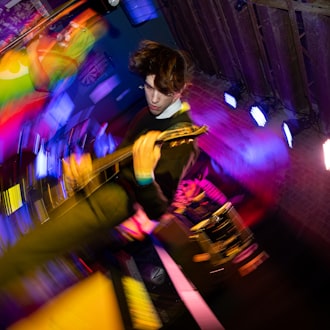
By June 1976, Rush had been told plainly by their American label that "2112" was commercial suicide, a 20-minute side-long science fiction suite on a rock album, released by a band that the industry had largely written off. The album had been made anyway, financed by the band themselves, and when they played Massey Hall that summer they performed the entire suite live in sequence for the first time. Alex Lifeson's guitar work on "2112" moves through clean arpeggiated passages, heavily distorted power sections, and an acoustic interlude in the space of a single piece; the dynamic range required and the technical control needed to make the transitions coherent in a live setting was substantial. That night, Massey Hall gave the band the first standing ovation of their career.
The "2112" album had already begun to sell before the tour, on the strength of word of mouth from listeners who found the suite compelling on purely musical terms despite the industry's indifference. The Massey Hall performance and the tour that followed converted that initial groundswell into a commercial reality that no label prediction had anticipated. For Lifeson, the night was confirmation that the guitar work he had built for "2112", structured around dramatic dynamic shifts, open-chord voicings, and a genuine compositional arc across the full 20 minutes, was not self-indulgence but communication, and that an audience existed for exactly that kind of ambition.
▶ Watch on YouTubeGear
Gibson ES-335 & Les Paul (early) / Gibson Alex Lifeson Axcess (later) (1975-present)
Known for: "La Villa Strangiato", Hemispheres, 1978
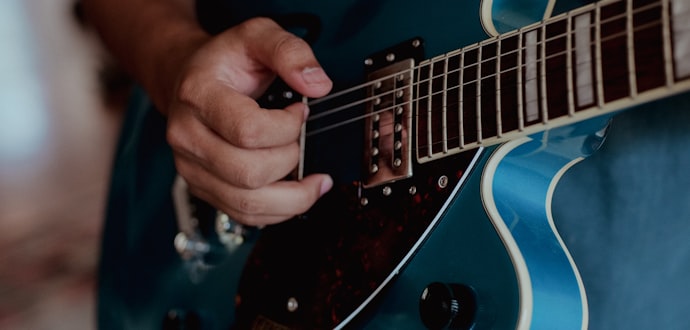
Alex Lifeson began his career primarily on Gibson semi-hollow guitars, ES-335s and ES-355s provided the warm, slightly compressed tone of early Rush, before moving to Les Pauls for greater sustain and output as the band's sound hardened. By the "Moving Pictures" era, he was using various Les Paul models in combination with a twelve-string acoustic for clean passages. Later in his career, Gibson developed the Alex Lifeson Axcess signature, a Les Paul body with a carved cutaway for high-fret access and a floating bridge system, which became his primary touring instrument from the mid-2000s onward.
The diversity of tones required across a typical Rush set, clean arpeggios, heavy riff sections, acoustic passages, synthesizer-layered textures, means Lifeson's guitar selection has always been driven by range rather than tonal consistency. His approach is pragmatic: the right instrument for the musical requirement, which in Rush's case covers more tonal territory than almost any other working rock band.
Marshall Super Lead (early) / Mesa/Boogie Mark IIC+ (later)
Known for: "Tom Sawyer", Moving Pictures, 1981
Lifeson ran Marshall Super Lead heads through 4×12 cabinets through most of the 1970s, producing the high-output driven tone of Rush's heavy sections. By the "Moving Pictures" era he had added Mesa/Boogie amplifiers for cleaner high-gain tones, eventually incorporating a rack-based signal chain that allowed him to switch between amplifier characters mid-performance.
His effects use has been extensive throughout his career: chorus, delay, flanger, and a Roland GP-8 multi-effects processor in the 1980s allowed him to generate synthesizer-like textures from the guitar, filling the frequency space that a three-piece band without a dedicated keyboard player would otherwise leave open.
Roland GP-8 & Eventide Effects Rack
Rush's three-piece format required Lifeson to fill harmonic space that larger bands distribute among multiple instruments. His solution was an extensive effects chain that allowed him to layer, delay, and chorus the guitar signal into orchestral density when the arrangement required it, then strip back to a single dry tone for rhythmic passages.
The Roland GP-8 programmable effects processor, used through the late 1980s, allowed instant recall of complex combinations during live performance. Subsequent tours used Eventide harmonisers and pitch shifters to extend the guitar's range further, reflecting Lifeson's approach of treating effects as compositional tools rather than ornamentation.
Signature Technique
Open-String Voicings & Progressive Architecture
Alex Lifeson built Rush's guitar sound around chord voicings that most rock players never attempt: suspended fourths, added ninths, major sevenths with open strings ringing against fretted notes, producing harmonically ambiguous textures that sit between folk, jazz, and hard rock without belonging comfortably to any of them. The opening chord of "The Spirit of Radio", a twelve-string acoustic arpeggio in a voicing that suggests simultaneously a major and a suspended chord, is characteristic: Lifeson's instinct is always toward the note that opens the harmony rather than closes it, the voicing that invites the listener into unresolved space rather than providing satisfaction. That instinct gave Rush's music its particular quality of forward motion, the sense that the harmony is always en route to somewhere rather than arrived.
His lead playing operates on the same architectural principle. Rather than blues-scale patterns used for their emotive familiarity, Lifeson constructs solos that function as melodic arguments: they have a shape, a development, and a conclusion that relates to the song structure rather than simply filling the available bars. "La Villa Strangiato," the nine-minute instrumental from "Hemispheres," is the fullest demonstration of this approach, a piece in which the guitar must carry narrative responsibility across multiple sections, each with its own character, connected by transitions that Lifeson navigates with the compositional discipline of a player who understands that technique is only useful insofar as it serves structure.