


Robert Fripp
Current Ranking
Robert Fripp is ranked #126 of 162 guitarists on the Greatest Guitar Player leaderboard, based on our editorial score until fans weigh in. No fan votes yet, so be the first to rate Robert Fripp on 8 attributes at greatestguitarplayer.com/vote.
Biography
Robert Fripp, born in England in 1946, is one of the most cerebral, innovative, and uncompromising guitarists in the history of rock, the founder and guiding force of King Crimson and a pioneer whose experiments expanded the very idea of what an electric guitar could do. A player of remarkable precision and intellectual rigor, Fripp has spent his long career pushing relentlessly into new sonic territory, influencing progressive rock, ambient music, and the avant-garde alike.
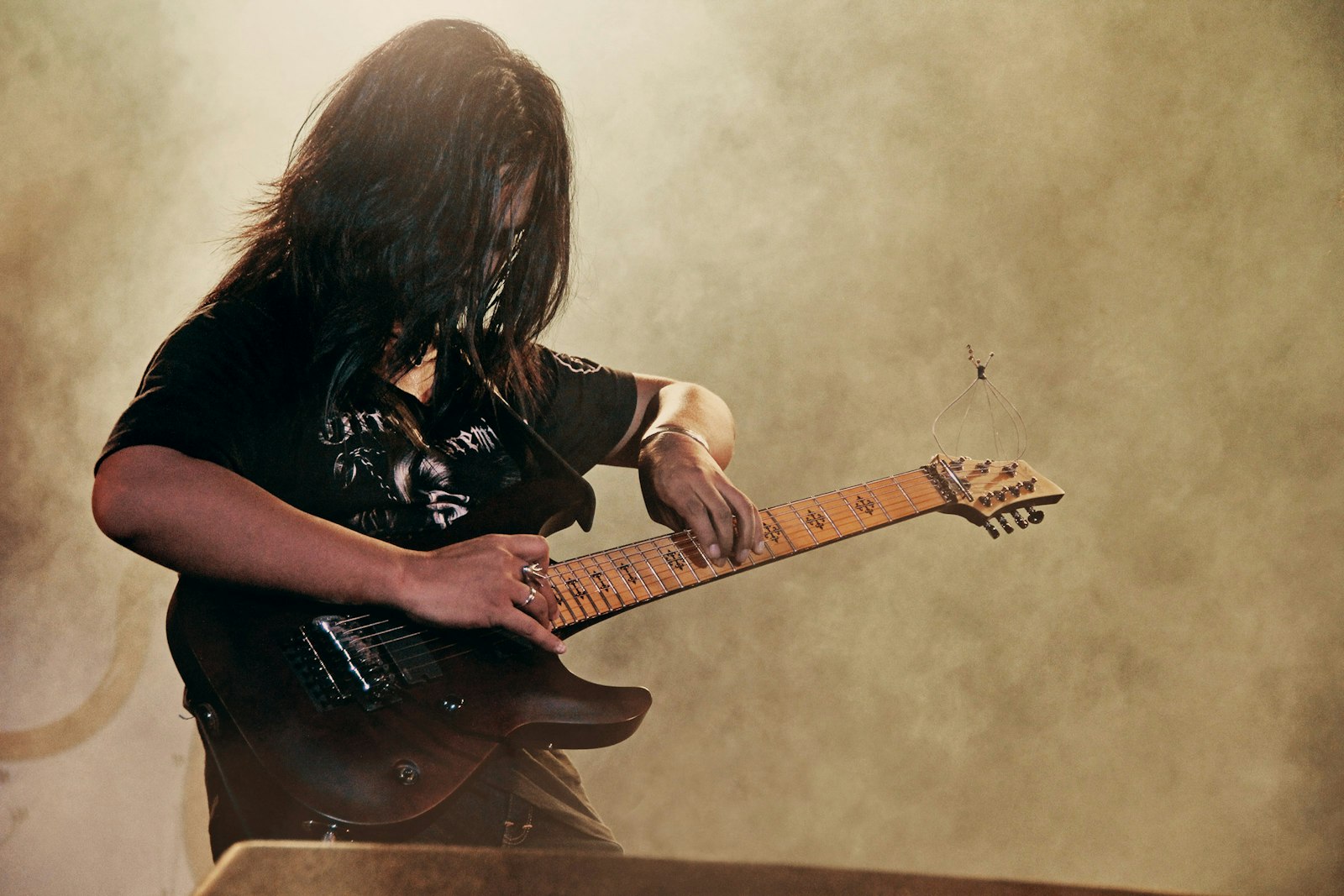
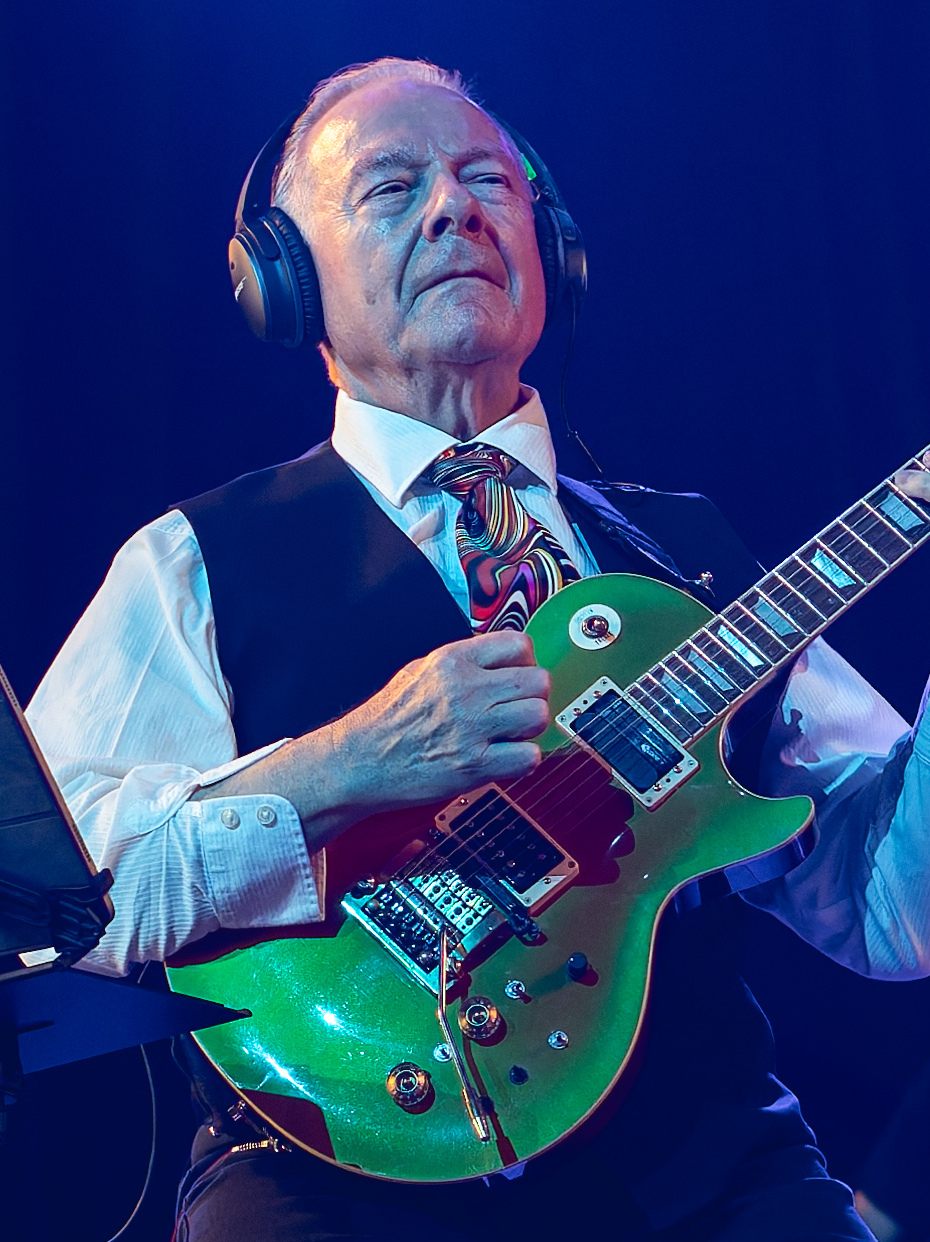
Fripp founded King Crimson in 1969, and the band's debut became a landmark of progressive rock, ferociously inventive music full of complex structures, dramatic dynamics, and Fripp's angular, precise, often dissonant guitar work. Across the band's many incarnations, he has remained the constant, driving the music through jazz, classical, heavy metal, and minimalist influences with a discipline that is almost scientific. He plays with a famously meticulous, mathematically precise picking technique, often seated on a stool, the picture of intense concentration, and he favors intricate interlocking patterns over conventional rock soloing.
Here is the gem that captures his innovative spirit. Fripp developed a system of tape-loop manipulation he dubbed Frippertronics, using reel-to-reel tape machines to layer and sustain guitar phrases into shimmering, evolving soundscapes, a technique he explored in collaboration with Brian Eno that helped lay the groundwork for ambient music and for the looping technology countless musicians use today. He essentially turned the guitar into a tool for building vast, slowly shifting walls of sound, decades before such things were commonplace. His distinctive sustained, singing guitar tone also graced one of the most famous songs in rock, lending its soaring, feedback-rich lead to David Bowie's Heroes, a perfect example of his sound elevating another artist's masterpiece.
Beyond his own bands, Fripp became a sought-after collaborator and session player, contributing his unmistakable guitar to records by Bowie, Eno, Talking Heads, Peter Gabriel, and others, always adding texture and intelligence rather than flash. He also developed a unique guitar tuning system and founded a school to teach his disciplined approach to other players. Fiercely principled and famously protective of his artistic independence, Robert Fripp is a true original, the thinking person's guitar hero whose precision, experimentation, and refusal to compromise have made him one of the most influential and singular figures the instrument has ever known.
Legendary Performance
King Crimson, Hyde Park Free Concert
King Crimson's performance at the Hyde Park Free Concert on July 5, 1969, the same day as the Rolling Stones' memorial concert for Brian Jones on the same ground, introduced Robert Fripp's guitar to an audience of 650,000 people and announced the arrival of a musical intelligence that would reshape progressive rock's possibilities. Playing the debut album material including "21st Century Schizoid Man," Fripp demonstrated a technical approach that had no precedent in rock: the precise, metronomic attack of jazz combined with the compositional density of contemporary classical music, mediated by a willingness to use volume and distortion as structural elements rather than merely as texture.
The performance made King Crimson overnight one of the most discussed acts in British music and established Fripp as a guitarist operating outside the prevailing models of blues-based rock. His playing that afternoon was simultaneously the most technically demanding and the most unconventional heard on a British rock stage to that point, combining the metric complexity of odd time signatures with melodic invention that drew on Bartok and early jazz as readily as it drew on any rock precedent. The concert remains the founding document of progressive rock guitar.
▶ Watch on YouTubeGear
Gibson Les Paul & Custom Instruments
Robert Fripp's primary instrument for much of King Crimson's classic period was the Gibson Les Paul, an instrument whose thick, sustain-rich output suited the dense, layered textures he was constructing. His relationship with the Les Paul was less about the guitar's conventional rock associations, the bluesy warmth of Page or Clapton, than about its capacity for sustain and harmonic complexity when driven into careful saturation. He later moved to custom instruments, including guitars built to his specifications by luthiers who accommodated his unusual technical requirements, and his endorsement relationships have reflected his priorities as a player: precision and reliability over visual statement.
Marshall & Roland Guitar Synthesizer
Fripp's amplification evolved dramatically across his career, from the Marshall stacks of early King Crimson through the Roland GR-300 guitar synthesizer system that became central to his Frippertronics solo performances and later Crimson work. The Roland system allowed him to trigger synthesizer voices from his guitar playing in real time, adding textural and harmonic dimensions unavailable from conventional amplification. His use of the GR-300 represented a genuine integration of guitar technique and electronic music rather than the superficial application of technology that characterised many rock guitarists' experiments with synthesis.
Eno Collaboration & Tape Loop Systems
Fripp's most technically distinctive contribution is his development of the Frippertronics system in collaboration with Brian Eno: two Revox tape machines connected in a loop, with the guitar signal recorded onto the first machine and played back by the second after a delay determined by the distance between them. By playing into the loop, he could build up layers of guitar that accumulated into dense, slowly evolving textures, ambient music created entirely from guitar without synthesizers or sequencers. The system anticipated the looping techniques now standard in solo performance by decades and remains one of the most creative technological applications in guitar history.
Signature Technique
Signature Technique
Robert Fripp is the most systematically innovative guitarist in the history of progressive rock, having developed not merely a playing technique but an entire theoretical and physical approach to the instrument that differs fundamentally from standard guitar method. His New Standard Tuning, C-G-D-A-E-G from low to high, all fifths except the top string, reorganises the guitar's fretboard so that patterns consistent with the instrument's physics replace the historically arbitrary standard tuning, enabling voice-leading and harmonic movement that standard tuning makes unnecessarily difficult. His Guitar Craft courses, which have trained hundreds of players in this approach, represent the most sustained attempt in rock history to rethink the instrument from first principles.
Fripp's New Standard Tuning places all six strings in fifths, the interval system used by violins, violas, and cellos, which means that every scale pattern and chord shape repeats consistently across all string pairs, unlike standard tuning where the G-to-B string break creates an inconsistency that guitar students must specially memorise. The tuning enables certain voice-leading movements, holding notes common between chords while others move, that standard tuning makes physically awkward, and it opens resonance possibilities unavailable to conventionally tuned instruments. The cost is the inapplicability of all standard guitar method, requiring players to learn the instrument from the beginning.
Fripp's development of the Frippertronics tape loop system with Brian Eno in the mid-1970s created a performance practice in which he could build ambient compositions in real time from guitar alone, each layer of playing passing through a delay system and accumulating into evolving textures. The technique required a fundamentally different approach to playing: rather than producing complete melodic or harmonic statements, each gesture needed to function both as a musical event in itself and as a layer in a growing structure whose final form was not predetermined. This systems-based approach to composition through performance anticipated the looping culture that became standard in experimental music decades later.