



Andy Summers
Current Ranking
Andy Summers is ranked #155 of 162 guitarists on the Greatest Guitar Player leaderboard, based on our editorial score until fans weigh in. On the punk, grunge and alternative leaderboard, Andy Summers ranks #14 of 17. No fan votes yet, so be the first to rate Andy Summers on 8 attributes at greatestguitarplayer.com/vote.
Biography
Andy Summers, born in Poulton-le-Fylde, England in 1942, was the secret weapon and the grown-up in The Police, a band that looked like a punky power trio but was quietly led on guitar by one of the most harmonically sophisticated players of his generation. By the time the band exploded in the late 1970s, Summers was already a seasoned veteran, having logged years in the 1960s London scene with Zoot Money's Big Roll Band, the psychedelic outfit Dantalian's Chariot, and a stint backing Eric Burdon in a later version of the Animals. He brought all of that hard-won musicality to a trio playing reggae-tinged new wave.
With only three instruments and lots of empty space to fill, Summers built a guitar style out of atmosphere and color. He leaned on chorus and delay, on suspended and add-nine chords that hang in the air without resolving, and on clean, chiming arpeggios that made the band sound enormous. His fingerprints are on some of the most recognizable guitar parts in pop, from the hypnotic riff of Message in a Bottle to the moody washes of Walking on the Moon.
The most famous of all is the gem here. The shimmering, instantly identifiable guitar figure that drives Every Breath You Take, one of the most played songs in radio history, was largely Summers' invention, a part he worked out in the studio that turned a simple chord progression into something unforgettable. It is a masterclass in how the right guitar arrangement can define a song more than any solo ever could, and it earned him a permanent place in the pop guitar canon.
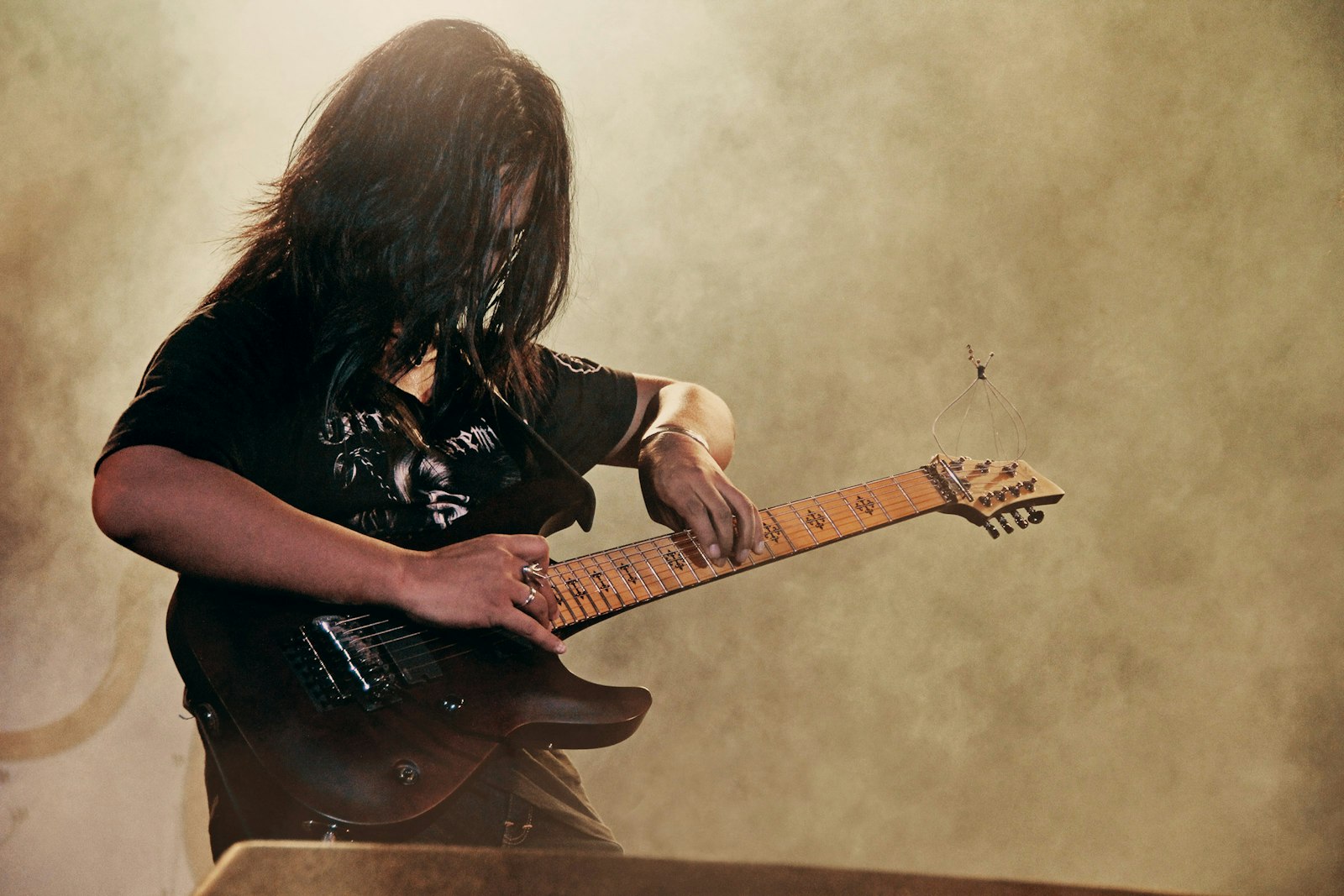
There is a second gem worth knowing: away from music, Summers is a genuinely accomplished fine-art photographer, with gallery exhibitions and published books of his work, an artist's eye that mirrors the careful, textural way he hears a guitar part. His Telecaster, a heavily modified 1961 model packed with custom onboard electronics, became as central to the Police sound as his ideas. Long after the band's breakup he kept exploring instrumental and experimental music, but it is those clean, ringing, perfectly placed chords that made him one of the most influential guitarists to come out of the new-wave era.
Legendary Performance
The Police at the US Festival
May 29, 1983 · Glen Helen Regional Park, San Bernardino, California
The 1983 US Festival was a two-weekend event funded by Apple Computer co-founder Steve Wozniak and designed to demonstrate that rock music and technology could coexist. The Police headlined the New Wave Weekend on May 29 in front of an estimated 250,000 people, at that point one of the largest paying audiences in concert history, performing from the "Synchronicity" album that would become one of the best-selling records of the decade. Andy Summers's guitar work in that set exemplified what made The Police unusual: a three-piece band in which the guitarist's role was not to fill space but to create texture, using chorus and delay to build the shimmer that the songs required while leaving the harmonic centre entirely to Sting's bass.
The set included "Every Breath You Take," "Message in a Bottle," "Roxanne," and "Synchronicity II", a near-complete tour through the band's catalogue at the moment it was at its widest reach. For a guitarist, the US Festival performance demonstrated the particular discipline Summers had developed over six years: the willingness to play less, to choose chord voicings that opened rather than cluttered, and to use effects not as ornamentation but as the actual instrument. That approach scaled to 250,000 people without losing its intimacy, which is a technical achievement as much as a musical one.
▶ Watch on YouTubeGear
1961 Fender Telecaster (1961)
Known for: "Message in a Bottle", Reggatta de Blanc, 1979
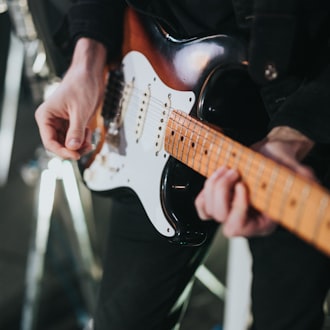
Andy Summers's principal instrument through most of The Police years was a 1961 Fender Telecaster, a guitar whose design was already 11 years old when it was made and whose sonic characteristics were the opposite of fashionable in 1977: a single-coil pickup with a sharp, clear attack and very little low-frequency weight. That clarity was exactly what Summers needed for the chord voicings he employed: the complex jazz-inflected suspended and extended chords he played required a guitar that transmitted all their internal harmonic information without the smearing that a high-output humbucker would have introduced.
The Telecaster's neck pickup, which Summers used frequently for cleaner, warmer chord stabs, gave him a second tonal identity within the same instrument, the bright bridge pickup for the shimmer passages, the rounder neck pickup for the more melodic lines. He modified his Telecaster with a Stratocaster neck at certain points, creating a hybrid instrument that combined the body's tonal characteristics with the Stratocaster neck's playing comfort.
Roland Jazz Chorus 120
Known for: Defining the clean, chorus-drenched Police guitar sound
The Roland Jazz Chorus 120, a 120-watt solid-state amplifier with a built-in stereo chorus circuit, was central to Andy Summers's tone throughout The Police years. Unlike tube amplifiers, the Jazz Chorus does not introduce harmonic distortion when pushed; it remains clean at any volume, which was exactly what Summers needed to let the internal complexity of his chord voicings speak without the blur of overdrive.
The built-in chorus was used in combination with external chorus and delay pedals, producing the layered shimmer that defined the Police guitar sound on recordings and live. The amplifier's high-fidelity transparency meant that the character of the guitar and the effects chain was preserved without the colouration a tube amp would have added, the tone was his own, not the equipment's.
Boss CE-1 Chorus / MXR Phase 90 / Various Delays
Summers's effects chain was the medium through which the characteristic Police guitar sound was constructed. The Boss CE-1 Chorus Ensemble, the first of Boss's chorus pedals, based on the circuit of the Roland Jazz Chorus amplifier, provided the shimmering modulation that made his chord voicings ring in the way recordings had established as the Police's sonic identity.
Delay pedals, used at specific tempo settings calibrated to the song's tempo, gave individual chord stabs an after-echo that extended their duration and added rhythmic complexity. The MXR Phase 90 provided an additional modulation texture. All of these were used subtly: effects as atmosphere rather than spectacle, serving the song's emotional character rather than demonstrating their own capability.
Signature Technique
Jazz Voicings, Effects Architecture & The Art of Restraint
Andy Summers approached The Police's power-trio format as a harmonic problem to be solved rather than a limitation to be worked around. In a band where Sting's bass covered the low-end harmonic function and Stewart Copeland's drums provided rhythmic density, Summers determined that the guitar's most valuable role was textural rather than rhythmic, to provide the harmonic colour that made the songs identifiable without duplicating what the other instruments were already doing. His solution was to play jazz-informed chord voicings, suspended fourths, major ninths, minor elevenths, through a chorus pedal and delay chain that expanded their resonance without cluttering the frequency spectrum. The Roland Jazz Chorus amplifier and Boss CE-1 chorus gave his clean chord stabs a shimmer that was immediately identifiable as the Police guitar sound.
The restraint required to execute this approach is the technical achievement that is easiest to underestimate. Summers possessed the technical ability to play far more densely, he had spent the 1960s as a working jazz guitarist and session musician, but understood that the most useful thing he could do in the context of The Police was to leave space. His work on "Message in a Bottle," "Every Little Thing She Does Is Magic," and "Wrapped Around Your Finger" demonstrates that negative space is itself a technique: knowing which notes not to play, and making that absence audible as a deliberate choice rather than an omission, requires as much musical intelligence as any virtuosic display.