


Johnny Ramone
Current Ranking
Johnny Ramone is ranked #159 of 162 guitarists on the Greatest Guitar Player leaderboard, based on our editorial score until fans weigh in. On the punk, grunge and alternative leaderboard, Johnny Ramone ranks #15 of 17. No fan votes yet, so be the first to rate Johnny Ramone on 8 attributes at greatestguitarplayer.com/vote.
Biography
Johnny Ramone, born John Cummings in New York in 1948, was the guitarist of the Ramones and the architect of one of the most influential guitar sounds in all of rock, a relentless, buzzing wall of noise that essentially launched punk rock. He was not a soloist, not a virtuoso in any traditional sense, and he wanted nothing to do with the flashy guitar heroics of the 1970s. Instead, he reduced rock guitar to its rawest, most powerful essence and changed music forever.
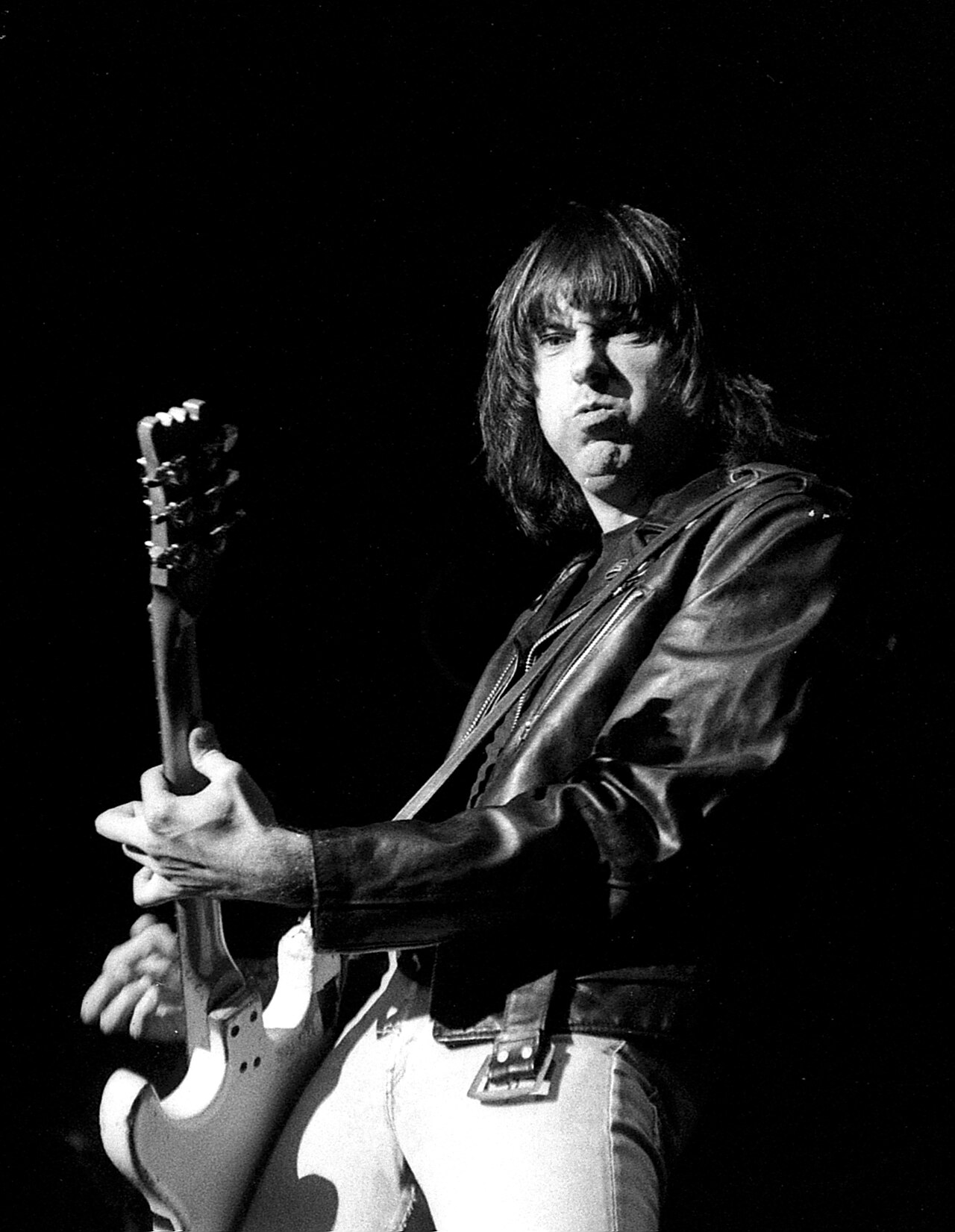
Here is the gem that defines his entire style. Johnny Ramone played fast, barre-chord-driven songs using almost nothing but rapid, relentless downstrokes of his pick, never the easier alternating up-and-down motion. Hammering out eighth notes at blistering tempos with all downstrokes is brutally demanding on the picking arm, but it produced a uniform, machine-gun, buzzsaw attack that became the signature sound of the Ramones and of punk rock itself. Every chord hit with the same furious, propulsive energy, and he kept it up song after song, night after night, for decades. That all-downstroke buzzsaw is one of the most copied and important techniques in punk and beyond.
The Ramones stripped rock down to its bare bones, short, fast, loud songs with no solos, no excess, and no pretension, played at breakneck speed in matching leather jackets and ripped jeans. Johnny was the disciplined engine of the band, a famously regimented and businesslike figure who kept the whole operation running with military precision, even as the band's personalities clashed. Playing his trademark Mosrite guitar, he provided the unstoppable rhythmic drive while the songs flew by in under three minutes each.
Though the Ramones never had big hit singles in their heyday, their influence is almost impossible to overstate. They directly inspired the entire punk movement on both sides of the Atlantic and, through it, vast swaths of alternative and indie rock that followed. Johnny's refusal to solo, his rejection of virtuosity in favor of pure energy and attitude, was itself a radical artistic statement, proof that what you leave out can matter as much as what you put in. Inducted into the Rock and Roll Hall of Fame, Johnny Ramone remains the patron saint of stripped-down guitar, the man whose furious downstrokes powered a revolution.
Legendary Performance
CBGB, New York, 1977
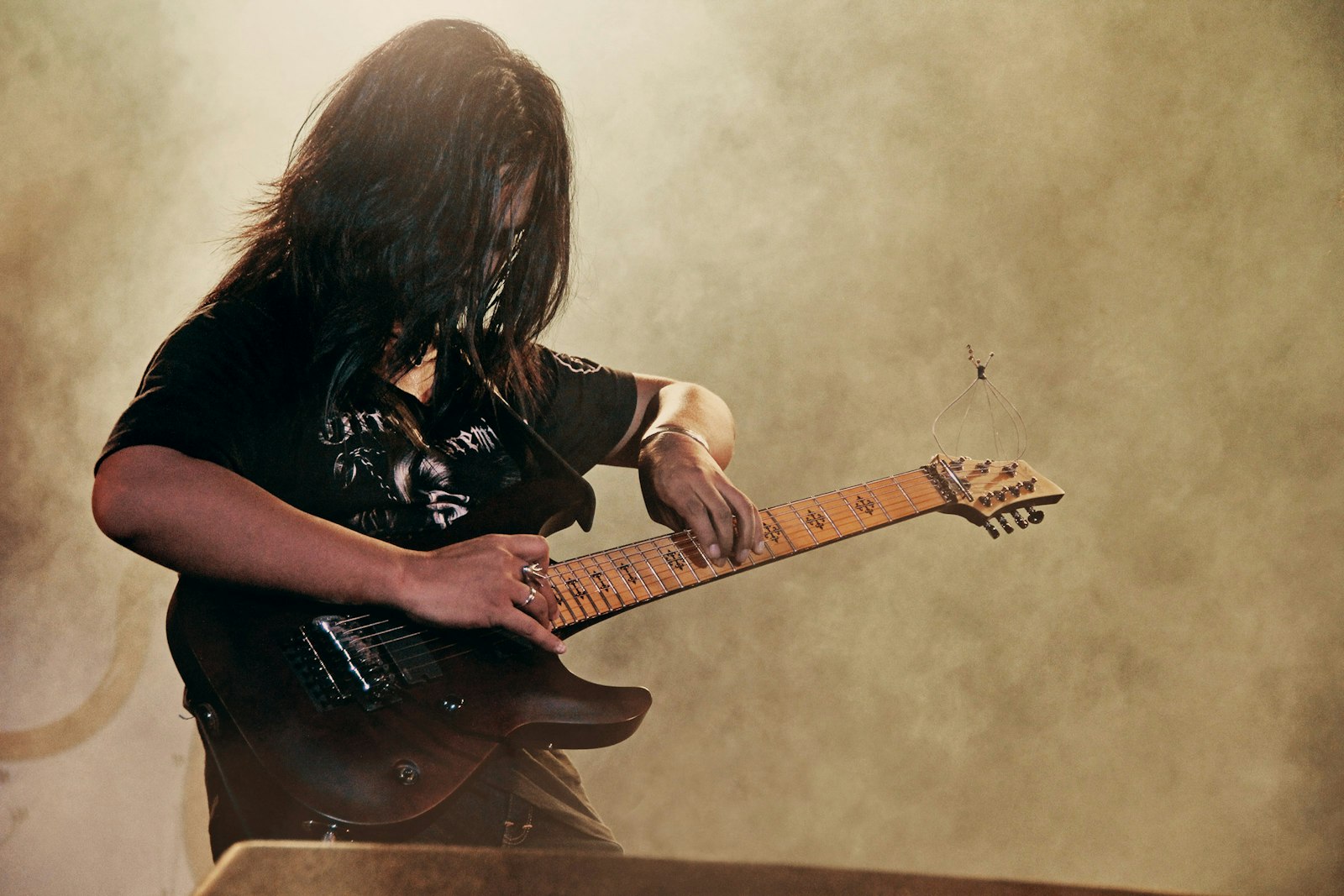
Johnny Ramone at CBGB in 1977 was an elemental force. He stood stage right with a Mosrite Ventures II guitar, right arm moving in a continuous, metronome-steady downstroke motion, producing a wall of distorted sound that was simultaneously brutal and oddly hypnotic. The Ramones played sets of twenty songs in under twenty-five minutes, and Ramone drove every one of them with a physical and rhythmic intensity that exhausted audiences.
His playing rejected everything the prevailing rock culture valued: extended solos, harmonic sophistication, tonal variety. Ramone played barre chords, almost exclusively, at tempos that left no room for anything else. The restriction was entirely deliberate.
CBGB in the mid-1970s was the incubator of American punk, and Ramone's performances there established the guitar's role in that music: not as the instrument of individual expression it had been throughout the 1960s and early 1970s, but as the engine of collective energy. The band was the point, not the soloist.
▶ Watch on YouTubeGear
Mosrite Ventures II • Marshall Amplifier • Bridge Pickup • High Gain • Randall Solid-State
Johnny Ramone's guitar of choice was a Mosrite Ventures II, a 1960s American guitar originally associated with surf music. He played it with the bridge pickup selected almost exclusively, run into a Marshall amplifier cranked for maximum distortion. The Mosrite's thin body, fast neck, and responsive pickups handled the punishment of his downstroke attack without failing, though he went through strings at a rate that alarmed the band's guitar techs.
Ramone's settings were deliberately simple: volume up, tone up, everything flat. He was not interested in sculpting tone. He wanted a wall of distorted guitar, and the Mosrite through a cranked Marshall provided exactly that. The Mosrite's slight treble emphasis cut through the low-end density his style created.
He later used a Randall solid-state amplifier for its reliability and consistent distortion character on the road. The switch from Marshall tubes to solid-state was entirely pragmatic. Ramone valued consistency and durability over warmth.
Signature Technique
The Downstroke & Rhythmic Absolutism
Johnny Ramone's technique can be described in a single word: downstrokes. He played almost exclusively with downward pick strokes, a choice that produced a harder, more aggressive attack than the alternate picking most rock guitarists used. The physical demands of maintaining that technique at the Ramones' tempos, often 180 beats per minute or faster, were considerable.
His barre chord execution was precise. He moved between positions cleanly and quickly, and his left-hand muting technique prevented unwanted string noise from cluttering the texture at high gain. The clarity of his chord changes, given the distortion level and tempo, reflects genuine technical discipline.
What made Ramone's approach genuinely innovative was its philosophical dimension. He stripped guitar technique down to its rhythmic essence and committed to it absolutely. There is no individual expression in his playing in the conventional sense, no attempt to stand out or demonstrate facility. The technique exists entirely to serve the collective momentum of the band.