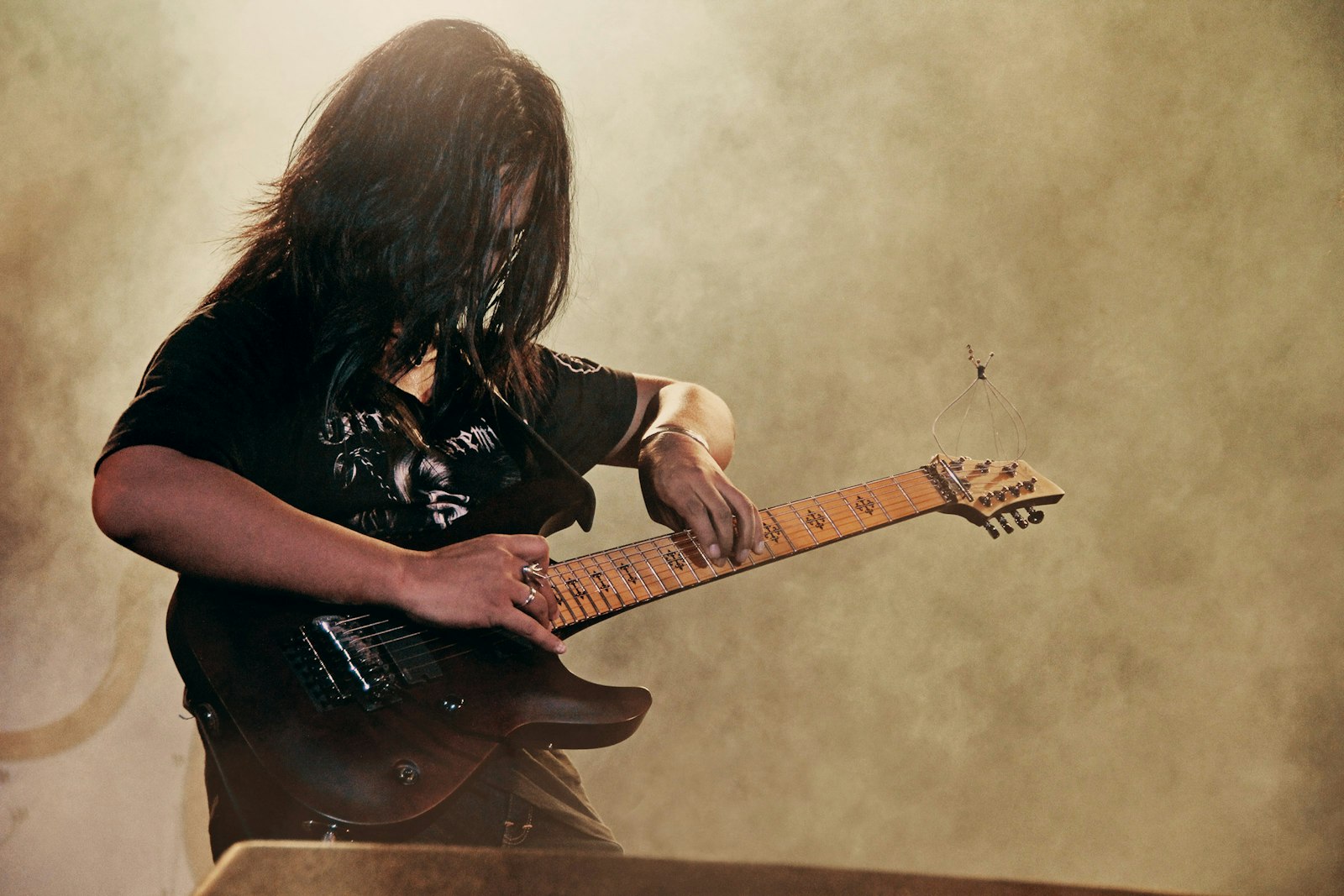



Billy Strings
Current Ranking
Billy Strings is ranked #38 of 162 guitarists on the Greatest Guitar Player leaderboard, based on our editorial score until fans weigh in. On the country and roots leaderboard, Billy Strings ranks #2 of 11. No fan votes yet, so be the first to rate Billy Strings on 8 attributes at greatestguitarplayer.com/vote.
Biography
Billy Strings is the guitarist who dragged bluegrass into arenas without changing what makes it bluegrass. Born William Lee Apostol on October 3, 1992, in Lansing, Michigan, and raised mostly in the small town of Muir, he learned the music the old way, at the kitchen table. His stepfather, Terry Barber, is a serious traditional picker who put a guitar in his hands as a toddler and had him playing Doc Watson, Bill Monroe and Del McCoury songs at jams before he was in grade school. The nickname came from an aunt who watched a tiny kid keep up with grown men and started calling him Billy Strings. It stuck, and it turned out to be the most accurate stage name in the business.
The road from there was not tidy. His teenage years in Michigan were spent in metal bands, and the Slayer and Black Sabbath influence never left. He has been open about a rough childhood and about the years he spent getting clear of it, and songs like "Dust in a Baggie" and "Enough to Leave" come straight out of that. Bluegrass came back into the picture in his early twenties when he teamed up with Traverse City mandolinist Don Julin. The duo cut Rock of Ages (2013) and Fiddle Tune X (2014), and the sight of a longhaired kid flatpicking at that speed and volume started making the rounds of the festival circuit.
He moved to Nashville, put together his own band, and released Turmoil & Tinfoil in 2017. Home (2019) won the Grammy for Best Bluegrass Album, and the IBMA voted him Guitar Player of the Year in 2019 and again in 2021, then Entertainer of the Year three years running from 2021 to 2023. Renewal (2021) stretched the songwriting, Me/And/Dad (2022) was a duet record with Terry Barber, and Live Vol. 1 (2024) took a second Grammy. Then Highway Prayers (2024) did something no bluegrass record had done in more than two decades: it opened at number one on Billboard's all-genre Top Album Sales chart, and it earned a third Grammy in the same category. In January 2025 he sold out three nights at Denver's Ball Arena, the biggest indoor crowds a bluegrass band has ever drawn. So Much for Goodbyes, produced with T Bone Burnett and released in August 2026, is an album about grief, and his playing on it is as fast and as clear as ever.
The gem in the gear locker says a lot about him. Alongside his Preston Thompson dreadnoughts he tours with a 1945 Martin D-28 he calls "Jody," which belonged to Willie Nelson's longtime guitarist Jody Payne, and the ashes of the man himself are sealed inside the body. Strings plays it every night. He is also the rare bluegrass player who runs an acoustic guitar through a rack of twenty-odd pedals, and the jams that come out of it, with Grateful Dead and Phish DNA all over them, are why a five-piece string band with no drummer can hold twenty thousand people for two and a half hours. The band, banjo player Billy Failing, bassist Royal Masat, mandolinist Jarrod Walker and fiddler Alex Hargreaves, is as tight as any rhythm section in rock. He has jammed with Bob Weir, opened for Dead & Company in Golden Gate Park, and had Trey Anastasio and Les Claypool play his wedding. The traditionalists still show up, because underneath the lights and the loops he can play "Salt Creek" as straight and as hard as anyone alive.
Legendary Performance
Three Nights at Ball Arena, Denver
January 24 to 26, 2025 · Ball Arena, Denver, Colorado
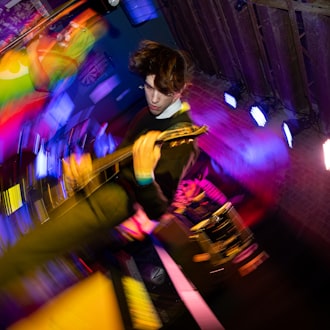
Bluegrass has been a festival music, a barn music and a theater music for most of its life. It had never been an arena music until January 24, 25 and 26, 2025, when Billy Strings sold out three straight nights at Ball Arena in Denver, a building that holds close to 21,000 people. The second night set the record for the biggest indoor crowd the band had ever played, obstructed-view seats included, and Strings stood at the front of the stage with a dreadnought and told the room it was, positively, the largest indoor audience of his life. It was also the largest indoor audience in the history of the genre.
What made the run matter was that he did not water anything down to get there. The sets ran well past two hours with no drummer and no electric guitar in the band, just fiddle, mandolin, banjo, upright bass and his flatpick. He opened up "Away from the Mire" and "Dust in a Baggie" into long improvisations that owed as much to the Grateful Dead as to Bill Monroe, then pulled the whole band into one microphone for Doc Watson, John Hartford and Osborne Brothers tunes played straight and fast. He worked in a cover of "Run Down" as a tribute to the late Jeff Austin of Yonder Mountain String Band, and the lighting rig turned the arena into something closer to a Phish show than anything the Grand Ole Opry ever staged.
The Denver stand capped a stretch that had already rewritten what a bluegrass career could look like: Highway Prayers had gone to number one on the all-genre Top Album Sales chart the previous October, the first bluegrass album to do that since 2002, and the tour that followed was the biggest the music had ever supported. Strings spent the afternoon of the second show volunteering at the Denver Rescue Mission, then went out and played a three-hour show to twenty thousand people. Denver was the night the argument ended. A guy with an acoustic guitar and four friends could fill the same buildings as anyone.
▶ Watch on YouTubeGear
Preston Thompson DBA Dreadnought "Frankenstein" & 1945 Martin D-28 "Jody" (2017 / 1945)
Known for: every show since 2017; the D-28 carries Jody Payne's ashes
Strings' main stage guitars are dreadnoughts built by Preston Thompson Guitars in Sisters, Oregon, prewar-Martin-style instruments with Adirondack spruce tops and Brazilian rosewood backs and sides. The one he has played most since 2017 is nicknamed "Frankenstein," and its near twin in a smoky charcoal sunburst is "Bride of Frankenstein." Thompson builds a Billy Strings signature model on the same recipe. He wants what every serious flatpicker wants, a big, dry, punchy low end and a top end that stays clear when the pick is moving at full speed, and the Thompsons deliver that whether he is playing "Salt Creek" into a single condenser mic or running the signal through a rack of pedals.
Then there is "Jody." It is a 1945 Martin D-28 that belonged to Jody Payne, who played guitar behind Willie Nelson for more than thirty years, and after Payne died his family gave it to Strings with his ashes sealed inside the body. Strings plays it every night. He also keeps an unmodified 1940 D-28 for the straight bluegrass moments and a fully appointed custom Martin D-45 rigged with the full mic and pickup setup. The 1940 and the 1945 are the real prewar sound, the reason the Thompsons are built the way they are, and having both on one stage is a small lesson in where the music came from.
K&K Pickups, Grace Design BiX DI & Kemper Profiler (no stage amp)
Known for: the acoustic-through-the-PA arena sound
There is no amplifier in the normal sense. Each guitar carries a K&K Pure Mini pickup under the saddle, a K&K Double Helix humbucking soundhole pickup, and a Shure clip-on condenser mic, so the sound crew and the pedalboard both get a clean acoustic signal. A Grace Design BiX handles the DI side, and for the heavier moments a Kemper Profiler with a Soldano SLO-100 profile gives the acoustic a wall of electric distortion without a real amp on stage. It is a studio-style signal chain running through a front-of-house system, and it is the reason a wooden guitar can sit on top of an arena mix.
Twenty-Pedal Rack: EHX Micro POG, Eventide H9, Chase Bliss Mood, Boss SY-1 & more
The pedalboard is the thing traditionalists tut about and the thing that fills arenas. Strings runs somewhere around twenty pedals, racked in drawers and switched by an RJM Mastermind MIDI controller, so the flatpicker's feet only ever touch a few footswitches. The drawers hold an Electro-Harmonix Micro POG and Pitch Fork for octaves, a Boss SY-1 and Source Audio C4 for synth textures, an Eventide H9, a Red Panda Raster, a Boss DD-8 and a Source Audio Nemesis for delay, a Chase Bliss Mood and Wombtone, an EHX Freeze, a Strymon Lex rotary and a Voodoo Lab Sparkle Drive for grit. Two expression pedals and two volume pedals let him swell the whole rig in and out. Most nights he plays a whole set with it all bypassed. Then "Away from the Mire" goes into the jam and the acoustic guitar starts sounding like a synthesizer, a Leslie cabinet and a 1970 Fillmore all at once, and the crowd loses its mind.
Signature Technique
Machine-Speed Flatpicking, Cross-Picking & the Psychedelic Acoustic Jam
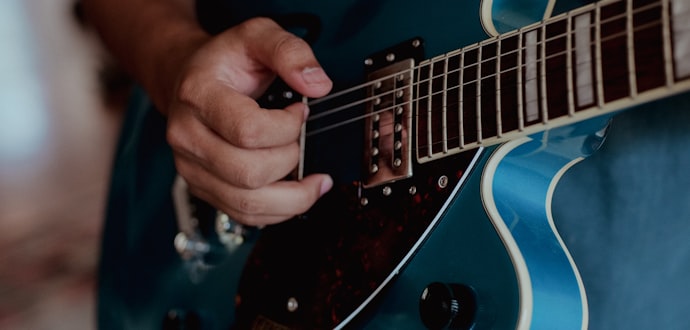
Strings plays with a thick BlueChip pick and a wrist that barely seems to move, and out of that comes flatpicking as fast and as even as anyone has ever produced on a steel-string acoustic. The foundation is pure Doc Watson and Tony Rice: alternate picking that never cheats, downstrokes on the beat and upstrokes off it, so that fiddle tunes like "Salt Creek," "Black Mountain Rag" and "Bill Cheatham" come out as unbroken chains of eighth and sixteenth notes with every note the same weight. He learned them by ear from his stepfather at a kitchen-table jam before he could read, and the muscle memory shows. At his tempos, most players start slurring runs together with hammer-ons and pull-offs; Strings keeps picking, which is why the lines stay so loud and so articulate at the top of a solo.
Cross-picking is the second signature. He rolls the pick across three strings in a steady pattern, the guitar equivalent of a banjo roll, and uses it both for the Tony Rice-style intros on ballads and for building rhythmic tension in a jam before the band drops back in. Listen to the intro of "Away from the Mire" or the middle of "Dust in a Baggie" and you can hear him shift between straight alternate picking, cross-picking and big open-string drones without a seam. The right hand also carries the rhythm when he is comping. His boom-chuck is heavy and dry, with the bass runs of a Lester Flatt G-run hitting like a kick drum, and the band leans on it because there is no drummer to lean on instead.
The left hand is where the metal upbringing sneaks in. He uses chromatic passing tones, tritone substitutions and diminished runs that come more from Slayer and Allan Holdsworth records than from the Stanley Brothers, and he will sometimes shift a fiddle tune up the neck into closed positions to get a darker, thicker sound. Because the guitar runs through a pedalboard, he has also developed an electric player's control of dynamics, riding the volume pedal into swells and using the octave pedals to double a line an octave down like a bass. The jams that result are structured like Jerry Garcia's: a theme, a slow build, a peak, and a landing back on the tune.
His influence has been immediate. A whole wave of younger flatpickers across the festival and newgrass scene now plays with pedals, treats bluegrass tunes as launching pads for improvisation, and takes speed and precision as a baseline rather than a party trick. The larger point is that Strings proved an acoustic guitar can be a lead instrument in the same rooms where electric guitars fill the sound, and he did it with the oldest technique in the book, a pick moving up and down, done better than almost anyone.