


Jake Kiszka
Current Ranking
Jake Kiszka is ranked #149 of 162 guitarists on the Greatest Guitar Player leaderboard, based on our editorial score until fans weigh in. On the hard rock leaderboard, Jake Kiszka ranks #12 of 12. No fan votes yet, so be the first to rate Jake Kiszka on 8 attributes at greatestguitarplayer.com/vote.
Biography
Jake Kiszka is the guitarist and co-founder of Greta Van Fleet, the Michigan band that dragged 1970s arena rock back onto the charts and into the Grammy conversation at a moment when most people had written the form off. Born Jacob Thomas Kiszka on April 23, 1996 in Frankenmuth, Michigan, he grew up in a house full of his parents' vinyl, learning the shapes of Elmore James, Muddy Waters, Cream and Led Zeppelin before he was old enough to drive. He formed the band in 2012 with his twin brother Josh on vocals, their younger brother Sam on bass and keys, and drummer Kyle Hauck, later replaced by Danny Wagner. The name was borrowed, with her blessing, from a Frankenmuth local named Gretna Van Fleet.
The breakout came fast. "Highway Tune", built on one of Jake's chunky, open-string riffs, sat at number one on the Billboard Mainstream Rock and Active Rock charts for four straight weeks in the fall of 2017, and the From the Fires EP that followed won Best Rock Album at the 2019 Grammys. Along the way the band played Elton John's Oscar party in 2018, made a January 2019 Saturday Night Live appearance that had guitar forums arguing for weeks, and released three full albums, Anthem of the Peaceful Army (2018), The Battle at Garden's Gate (2021) and Starcatcher (2023), with a fourth, Palace for the People, announced for October 2026. The Zeppelin comparisons came with every review. Jake has never seemed bothered by them, and he plays as if the whole point is to make that lineage sound alive again rather than archived.
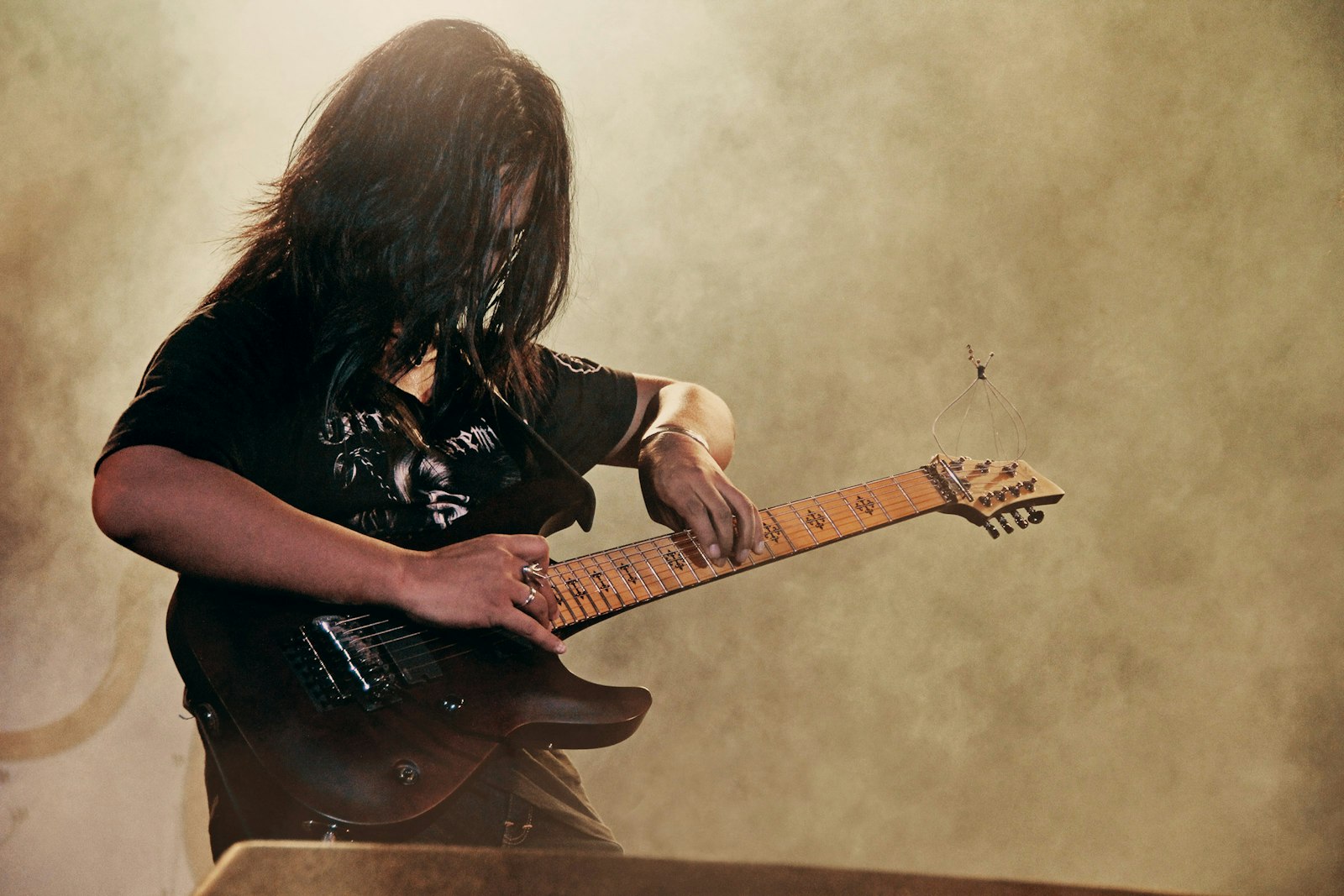
The gem in his story is the guitar. On an early tour the band stopped at Chicago Music Exchange, where Jake picked up a 1961 Gibson Les Paul, the first-year SG shape with a sideways Vibrola. He has described it as divine intervention, the sound he had been chasing his whole life, and the shop let a broke twenty-year-old take a twenty-thousand-dollar instrument out the door and pay for it later. That guitar has been on every stage since, cracked control cavity, duct tape and all, until it finally got a proper repair. He has said he will probably be buried with it. In April 2026 Gibson honored it with the Jake Kiszka SG Standard, a Faded Vintage Cherry signature model built around the '61's slim neck and locked Vibrola cover.
Off the Greta Van Fleet road, Jake co-founded Mirador in 2024 with Chris Turpin of Ida Mae, a swampier, more psychedelic outfit where he also sings, plays harmonica and, memorably, blows an Iron Age carnyx horn. Their self-titled debut arrived in September 2025 on Republic. Whatever the project, the thread is the same: a young player who treats the blues-rock canon as a living language, plays with his teeth and behind his back when the room demands it, and has made a Gibson SG through a cranked Marshall sound like news again to a generation that never heard it the first time.
Legendary Performance
Starcatcher World Tour, Madison Square Garden
September 12, 2023 · Madison Square Garden, New York City
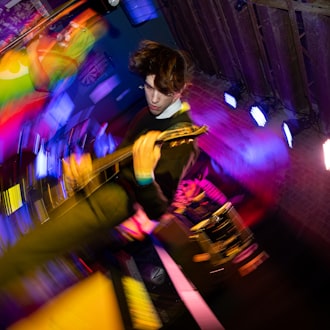
A first headlining night at Madison Square Garden is a threshold for any rock band, and Greta Van Fleet crossed it on September 12, 2023, sold out, six years after "Highway Tune" first hit the radio. For Jake Kiszka it was the night the arguments stopped mattering. The set opened with "The Falling Sky" behind a curtain reveal, then ran through "Heat Above", "Meeting the Master", "Black Smoke Rising" and "Light My Love" on a stage with twin catwalks reaching into the floor, pyro, and Josh in a rotating wardrobe of capes and jumpsuits. Jake, in contrast, was all guitar: the '61 SG slung low, running the catwalks with Sam, riffing over his head and behind his back at the climax, and stretching "Highway Tune" out into a solo the room could barely hear itself over.
What made the night matter beyond the setlist is what it proved. A band accused of being a tribute act had filled the most famous arena in America on its own songs, with a 27-year-old guitarist holding the whole thing together on a single humbucker-and-Marshall sound. The show closed with "Farewell for Now", and the reviews that followed treated the band as headliners rather than a curiosity. For a young player carrying the weight of every Page and Blackmore comparison, it was the moment the room stopped comparing and simply listened.
▶ Watch on YouTubeGear
1961 Gibson Les Paul (SG) Standard with sideways Vibrola (1961)
Known for: every Greta Van Fleet stage since 2017; basis of the 2026 Gibson signature model
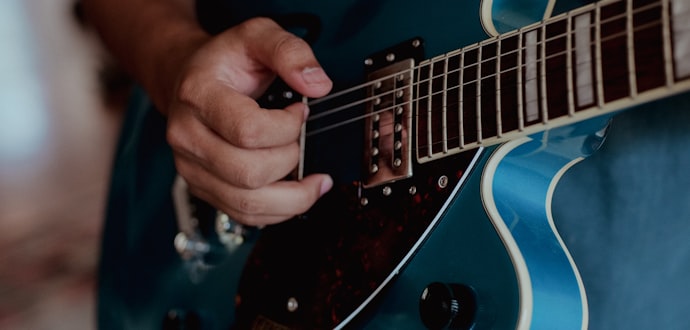
The guitar is a first-year SG, back when Gibson still called it a Les Paul, in cherry with a sideways Vibrola tailpiece. Jake found it at Chicago Music Exchange on an early tour, played it once, and knew. The shop let him leave with it before he could pay, and it has done nearly every show since, including a stretch with a cracked control cavity held together with duct tape. Its thin, fast neck and the bright bite of the early PAF-style humbuckers give him the articulate crunch that the Zeppelin comparisons are really about, and he keeps a second all-stock '61 and a 1962 reissue as backups so the original never has to sit out a night. Gibson's April 2026 Jake Kiszka SG Standard copies the recipe: SlimTaper neck, T-Type humbuckers, a locked Vibrola cover and a Faded Vintage Cherry nitro finish. For acoustic passages he leans on a custom shop Gibson J-45 in tobacco burst with a Hummingbird as backup.
Marshall JCM800 with two 4×12 cabinets
Known for: the live Greta Van Fleet sound; swapped for vintage combos on Starcatcher
On stage it is the classic picture: a Marshall JCM800 head driving two matching 4×12 cabinets, run hot enough that the SG's humbuckers do the rest. He rounds the rig out with Marshall Astoria heads for cleaner colors and a vintage Selmer Zodiac Twin 30 that once belonged to Richard Fortus of Guns N' Roses. In the studio he has gone the other way. For Starcatcher, with producer Dave Cobb, he shelved the stacks entirely because they moved too much air for the room, and cut the record on a Fender Bassman, a Princeton, a Magnatone Twilighter and a Vox AC30, learning to mic small amps at different distances instead. The lesson he took from it is one the old records taught first: big tone comes from a good guitar into a cranked amp, not from a wall of cabinets.
Dunlop Cry Baby wah, TC Electronic Flashback delays, EHX Mel9, Micro POG and Holy Grail, Fractal FM3
The pedals live in three rack drawers switched by an RJM Mastermind GT, but the signal stays fairly honest. A Dunlop Cry Baby set for a stereo sweep handles the vocal-sounding solo passages, TC Electronic Flashbacks add slapback and long ambient tails, a Danelectro Back Talk reverses phrases on the psychedelic sections, and Electro-Harmonix's Mel9, Micro POG and Holy Grail supply the Mellotron pads, octaves and spring reverb that thicken the arena mixes. A Fractal FM3 sits in the chain for the odd profiled tone. He strings the SGs with Cleartone .010 to .046 sets, picks with Dunlop .60mm nylons, and keeps a brass slide on every electric for the Elmore James moments.
Signature Technique
Open-String Riffing, Pentatonic Attack & Blues Vibrato
Jake Kiszka's playing starts with the riff, and his riffs start with open strings. "Highway Tune" is the model: a chunky low-E figure with hammer-ons and pull-offs against the ringing open string, played with a hard downstroke attack so the SG's neck pickup barks rather than sings. He builds most of the Greta Van Fleet catalog the same way, from "Safari Song" to "The Falling Sky", stacking short repeating figures that leave room for Josh's voice and lock with Sam's bass rather than doubling it. It is an approach learned from Jimmy Page and Tony Iommi, filtered through the Elmore James and Muddy Waters records he grew up on, and the open-string drone is what makes the parts feel bigger than one guitar.
His lead vocabulary is unapologetically pentatonic, with the minor pentatonic box, the blues note and the major-third bends that Clapton and Page made standard, delivered at speed with a wide, deliberate finger vibrato. What sets him apart is the physicality. He plays with the SG hanging low, uses the sideways Vibrola for dips and shimmers rather than divebombs, and stretches solos live far past their studio length, working the wah for vocal phrasing and letting feedback bloom between phrases. The extended "Highway Tune" and "Black Smoke Rising" solos, the behind-the-back and teeth passages, and the catwalk runs are showmanship, but they sit on top of clean picking and accurate bends, which is why the tricks land.
He is also a more textured player than the hard-rock tag suggests. The Battle at Garden's Gate and Starcatcher lean on slide (he keeps a brass slide on every electric), on Mellotron-style pads from the Mel9, on reverse delay and on acoustic fingerpicking from the J-45, and Mirador pushed him further into swampy, open-tuned blues and psychedelic drones. Younger players have taken two things from him: proof that a plain SG into a cranked Marshall still cuts through a modern mix, and a reminder that a riff you can hum will outlast any amount of technique.