

Ty Tabor
Current Ranking
Ty Tabor is ranked #129 of 162 guitarists on the Greatest Guitar Player fan leaderboard, based on 1 fan vote so far. On the hard rock leaderboard, Ty Tabor ranks #11 of 12. Agree? Rate Ty Tabor on 8 attributes at greatestguitarplayer.com/vote.
Biography
Ty Tabor is the guitarist, co-lead singer and chief melodic architect of King's X, the Texas-by-way-of-Missouri trio that spent the late 1980s and early 1990s quietly rewiring hard rock. Born September 17, 1961, in Pearl, Mississippi, and raised around Jackson, he started out singing and picking bluegrass with his father and brother before the Beatles, Alice Cooper and a stack of blues-rock records pulled him toward the electric guitar. (For the record, it is pronounced TAY-bur.) As a teenager he toured the South with a Christian rock band called Matthew, then headed to Evangel College in Springfield, Missouri, where a talent-show performance caught the ear of bassist Doug Pinnick and a scramble to cover a missing drummer before a Phil Keaggy opening slot brought him together with drummer Jerry Gaskill.
That lineup has not changed since 1980. The band worked as The Edge and then Sneak Preview before moving to Houston in 1985, where manager and producer Sam Taylor heard them, fell hard for the sound, and suggested a new name borrowed from an old Texas playground game. As King's X they signed with Megaforce and Atlantic and released Out of the Silent Planet in 1988, followed by Gretchen Goes to Nebraska in 1989 and Faith Hope Love in 1990. The formula was unlike anything else on rock radio: detuned, riff-heavy guitar that could hit like metal, stacked with three-part harmonies straight out of Abbey Road and lyrics that searched rather than preached. Musicians noticed long before the charts did. Pearl Jam's Jeff Ament went as far as saying "King's X invented grunge," and a generation of prog and alternative players borrowed from Tabor's drop-D playbook.
Here is the gem. During a lull in the early 1990s, the man behind some of the most intricate guitar arrangements in hard rock was racing motocross at a semi-professional level. He came back for Dogman in 1994, produced by Brendan O'Brien, and the band's opening-day set at Woodstock '94 put them in front of the biggest audience of their career. Tabor also built a busy life outside the trio. He cut a long run of solo records starting with Naomi's Solar Pumpkin in 1997 and Moonflower Lane in 1998, reaching Shades in 2022, and he joined Dream Theater's John Myung, Derek Sherinian and Dixie Dregs drummer Rod Morgenstein in Platypus, which later became The Jelly Jam. He has called the Platypus invitation "the single most important thing I ever did as a musician," which is a big statement from a guy with a catalog like his.
He is also a working studio engineer, running Alien Beans Studios first in Katy, Texas and later in Kansas City, where he masters and produces other artists. His tone rules are famously stubborn: solid-state amps instead of tubes, and ultra-thin Mel Bay picks struck on the edge. "I developed my entire sound and style around Mel Bay guitar picks," he has said. "If I use a different one, I can't really get the same tone." King's X returned in 2022 with Three Sides of One, their first album in fourteen years, and it sounded exactly like them, which is the whole point.
Legendary Performance
King's X at Woodstock '94
August 12, 1994 · Winston Farm (North Stage), Saugerties, New York
King's X walked onto the North Stage at Winston Farm on the opening day of Woodstock '94 with a new album to push, a cult following that knew every harmony, and a huge crowd that mostly did not know who they were. Dogman had come out that January, produced by Brendan O'Brien fresh off records for Pearl Jam and Stone Temple Pilots, and the festival was being beamed out on pay-per-view to viewers across the country. It was the largest audience the trio had ever faced, and a real chance to crack the mainstream that had kept them at arm's length for six years.
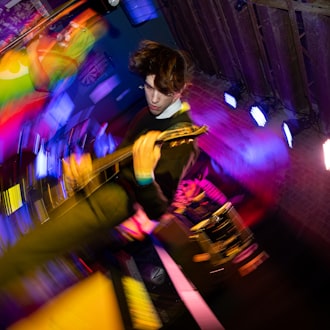
The set was short and blunt. They opened with "Dogman" and "Black Flag," Tabor's drop-D riffs coming off the stage like slabs, then eased into "It's Love," the harmonies drifting over the field the way they do on the record. The move that people still talk about was a cover of Jimi Hendrix's "Manic Depression," a pointed nod to the man who closed the original Woodstock twenty-five years earlier, with Tabor handling Hendrix's lines in his own clipped, scrapey voice rather than imitating them. "Over My Head" turned into a mass singalong, and the set wound down with "Moanjam," a loose, heavy groove that let Tabor stretch out.
Observers loved it. MTV coverage singled King's X out as one of the best bands of the day, and the performance became the go-to proof for fans trying to explain why this band mattered. The frustrating part of the story is what happened next, which was not much: album sales barely moved and the breakthrough never came. That is exactly why the set endures. It is the clearest picture of King's X at full power in front of the whole world, and of Tabor as the engine room, riffing, harmonizing and soloing at once.
▶ Watch on YouTubeGear
Fender Elite Stratocaster (c. 1983)
Known for: the active midrange bite of Out of the Silent Planet and Gretchen Goes to Nebraska
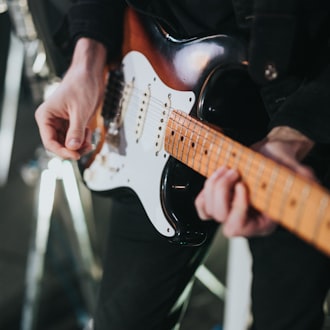
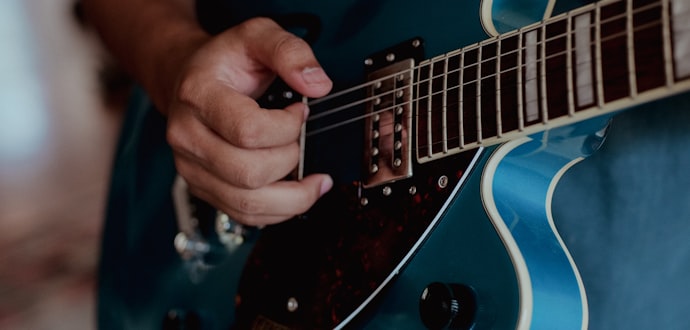
The guitar most tied to Tabor's classic sound is an early 1980s Fender Elite Stratocaster with a rosewood board, one of Fender's short-lived attempts to modernize the Strat. The Elite had active electronics, including a TBX treble control and an MBX midrange booster that could push up to 12dB of mids, and Tabor built much of the King's X tone around that circuit. On Out of the Silent Planet he ran the bridge and middle pickups together with the boost wide open, which is where the nasal, vocal upper-midrange bite on those early records comes from. He has joked about "that little knob inside his Strat," the internal trim that shapes how the active boost behaves.
Over the years he has played signature models from Zion (loaded with Joe Barden pickups) and Yamaha (an RGX), and he regularly grabs Les Paul Specials and a goldtop Les Paul Standard, which he has played live with King's X in recent years. On stage these days he often uses Mexican-made Stratocasters that he modifies with upgraded pickups, full trem blocks and Fender Noiseless pickups to keep the hum down, sometimes with a Seymour Duncan JB Junior in the bridge.
Two small details matter as much as any guitar. He strings up light, GHS Boomers .009 to .042, and tunes down, most often to drop D (seven of the twelve songs on Gretchen Goes to Nebraska use it), plus lower variations. And he plays ultra-thin Mel Bay picks, turned to strike the string with the edge. Light strings, low tunings and a floppy pick sound like a recipe for mush, but in his hands it produces a tight, scraping attack that stays in tune even when he digs in hard.
Lab Series L5 solid-state head, later Orange Crush CR120
Known for: the transistor tone behind every classic King's X record
Tabor is one of the most committed solid-state players in rock. His classic King's X tone came from a late-1970s Lab Series L5, the transistor head made during the Norlin era of Gibson, run on its second channel with the midrange and multifilter controls dialed in to find a resonant upper-mid peak. On the early records it fed a Crown power amp and 4×12 cabinets (Peavey cabs loaded with Celestion G12K-85 speakers on Out of the Silent Planet, Marshall 1960 cabinets later). He briefly experimented with tubes around the Dogman sessions, and at one point ran a Mesa Dual Rectifier rig, but he always came back to transistors.
His reasoning is practical rather than romantic. Tube amps change as they heat up and as the room changes, while transistor amps give him the same tone at the first song and the last, at any volume. That consistency is what lets him play so hard with such light strings and a thin pick, and it is a big part of why his sound is so hard to copy with a standard tube rig. In recent years he has paired the L5 with Orange Crush transistor heads, notably the CR120.
Alesis MidiVerb II, Ibanez DD200 delay, Mojo Hand Rook Royale, DLS RotoSIM
Tabor's effects are about space and color, not gain. On the early albums he ran an Alesis MidiVerb II on a chorus preset and an Ibanez DD200 digital delay, which together give his clean parts and leads that shimmering, slightly doubled quality. Over the years the list has also included an MXR Pitch Transposer, Boss chorus, a Dunlop Cry Baby wah and, more recently, a modified DLS RotoSIM for thick, swirling leads. In the studio he leans on tricks like the E-Bow and tape varispeed for chorus-style detuning.
What he avoids is just as telling. He does not use distortion pedals, preferring to let the amplifier do all the shaping, and his main boost has long been a Mojo Hand Rook Royale. The result is a rig where the dirt comes from the amp and the magic comes from delay, modulation and his own hands.
Signature Technique
Drop-D Riff Architecture and Harmony-First Arranging
Tabor's riffing starts from a simple idea and then bends it out of shape. He leans hard on drop D and lower tunings, using the open low string as a drone under power chords, but his riffs are rarely square. Vintage Guitar's analysis of his style calls them oddly asymmetric, with R&B syncopation and time spans that stretch or cut short, often shifting between 4/4 and 3/4 inside the same figure. "We Were Born to Be Loved" is the extreme case: the band hits on the "e" rather than the downbeat, and even seasoned session players have needed to watch the band to lock in with it. He has said "Lost in Germany" arrived fully formed in the shower, and he had to scramble to learn it from memory before it vanished.
His chord work is just as distinctive. The arpeggiated opening of "Summerland" sounds gentle, but it uses unusual fingerings that lean heavily on the pinky, and his voicings often let open strings ring against moving shapes so the harmony shifts in unexpected ways. That harmonic thinking carries into the vocals. King's X songs are built as three-part harmony arrangements, and Tabor's guitar parts often leave room for the voices rather than filling every gap, a Beatles lesson applied to detuned hard rock.
As a soloist he values feel over speed. His heroes were self-taught players like Brian May, Robin Trower, Johnny Winter and Ace Frehley, and he has said "the technical side has never been anything I cared about." His leads mix blues bends and wide vibrato with melodic, singable lines, plus volume swells for violin-like textures, pinch harmonics, occasional tapping, whammy dives and double-tracked lead lines that move in harmony. Short delays and modulation on lead statements are a recurring signature.
The last piece is the picking hand. Turning an ultra-thin Mel Bay pick sideways to strike with its edge gives a scraping, percussive attack that does not push the pitch sharp, so he can play aggressively on light strings and still sound tight. Put together, the drop-D riffs, rhythmic displacement and harmony-first arranging became a template that echoes through grunge, alternative metal and progressive metal, which is why players from Pearl Jam's Jeff Ament to Dream Theater's Mike Portnoy have championed the band.