



Muddy Waters
Current Ranking
Muddy Waters is ranked #31 of 162 guitarists on the Greatest Guitar Player leaderboard, based on our editorial score until fans weigh in. On the blues leaderboard, Muddy Waters ranks #5 of 32. No fan votes yet, so be the first to rate Muddy Waters on 8 attributes at greatestguitarplayer.com/vote.
Biography
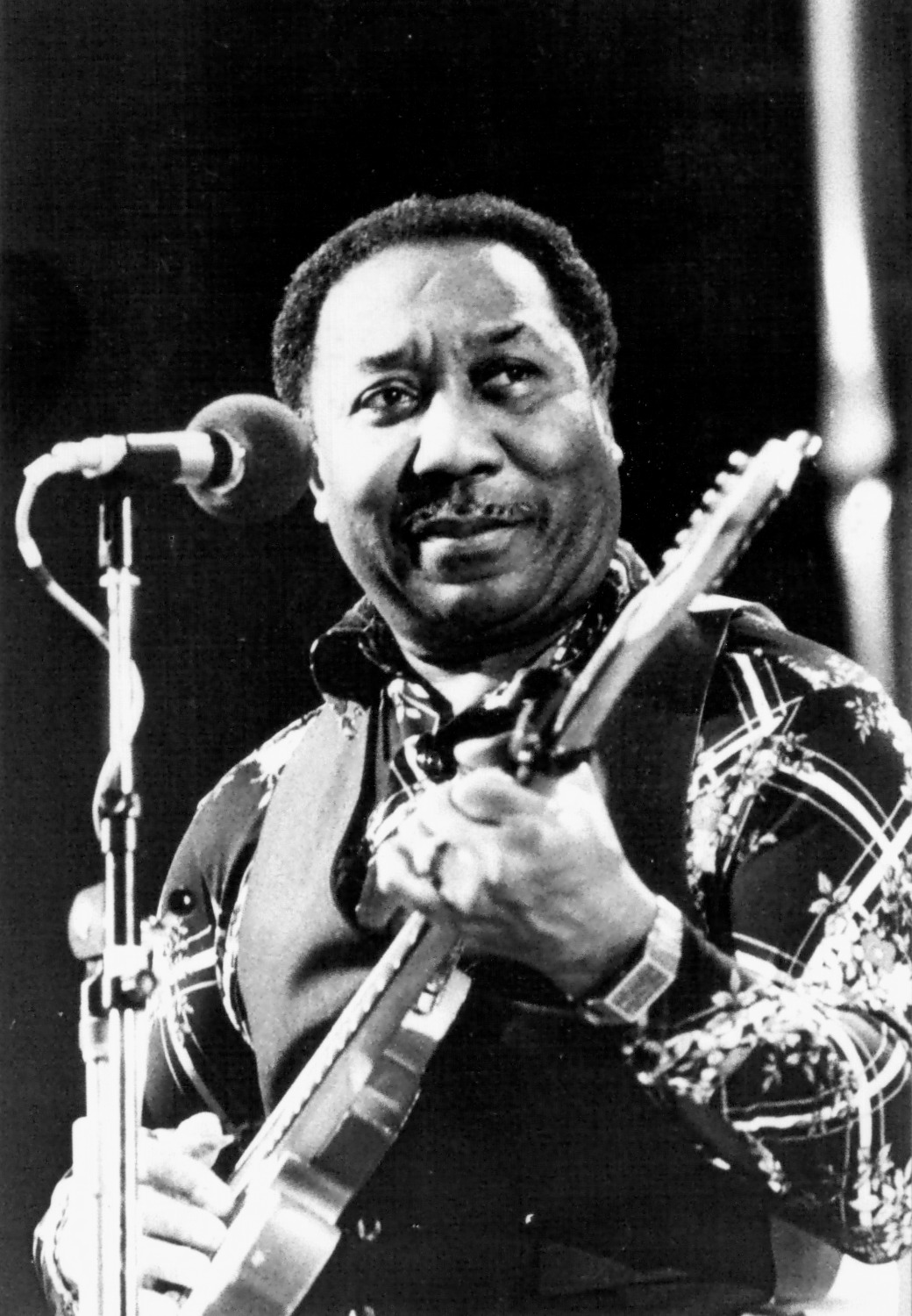
Muddy Waters, born McKinley Morganfield in Mississippi around 1913, is the father of modern Chicago blues and one of the most important and influential musicians in the entire history of popular music. He took the raw, acoustic country blues of the Mississippi Delta, carried it north to Chicago during the Great Migration, plugged it into an amplifier, and in doing so created the electric blues that would become the direct ancestor of rock and roll. Without Muddy Waters, the music of the second half of the twentieth century is almost unimaginable.
Waters learned the Delta blues in his youth, absorbing the slide guitar and deep feeling of the tradition from the likes of Son House and Robert Johnson, and when he moved to Chicago he electrified that sound, giving it a new power and swagger. Backed by a tough, swinging electric band, he cut a series of definitive recordings, including Hoochie Coochie Man, Mannish Boy, I Just Want to Make Love to You, and Got My Mojo Working, that established the template for the electric blues. His commanding voice, his stinging slide guitar, and his charismatic presence made him the king of the Chicago blues scene and an icon whose influence radiated outward across the world.
Here is the gem that shows just how far that influence reached. When a young English band was casting about for a name in the early 1960s, they took it directly from a Muddy Waters song, Rollin' Stone, and called themselves the Rolling Stones. That is only the most famous example. Waters' music was a foundational inspiration for the entire British blues boom and the rock explosion that followed, with the Rolling Stones, Eric Clapton, Led Zeppelin, and countless others building their music on the electric blues he pioneered.
A second gem speaks to his role as a discoverer and bandleader. Waters' band was a kind of finishing school for blues greatness, and at various points its ranks and his circle included future legends like Little Walter, Otis Spann, Willie Dixon, and a young Buddy Guy, while Waters himself helped open doors for the careers of artists like Chuck Berry, whom he reportedly steered toward Chess Records. He did not just create a sound, he nurtured a whole generation of the musicians who carried it forward.
Late in his life, Waters enjoyed a triumphant revival when the guitarist Johnny Winter, a devoted admirer, produced a series of acclaimed comeback albums that won him multiple Grammy Awards and introduced his powerful sound to new audiences before his death in 1983. A charter member of the Blues Hall of Fame and a Rock and Roll Hall of Fame inductee, Muddy Waters stands as a true founding father, the man who electrified the blues and lit the fuse for rock and roll. Every electric guitarist who has ever played a blues lick owes him a debt, whether they know it or not.
Legendary Performance
Newport Jazz Festival, Electrifying the Crowd
Muddy Waters' performance at the 1960 Newport Jazz Festival is one of the pivotal moments in American music history. Taking the stage with his electric Chicago blues band in front of an audience more accustomed to bebop and acoustic folk, Waters turned Newport into a South Side Chicago juke joint. His slide guitar playing, raw, powerful, and deeply rooted in the Mississippi Delta, sent shockwaves through an audience that included many who had never encountered electric blues at full volume.
The performance was partly responsible for the folk and blues revival that would reshape popular music throughout the 1960s. Bob Dylan was in the crowd; so were scores of young musicians who would carry the blues-rock torch into the British Invasion and beyond. Waters played his 1957 sunburst Telecaster with a ferocity that seemed to contain all of the Delta in its sound, mournful and joyful at once, ancient and completely vital. It was the night the American music establishment was forced to take the blues seriously.
▶ Watch on YouTubeGear
1957 Fender Telecaster (Sunburst)
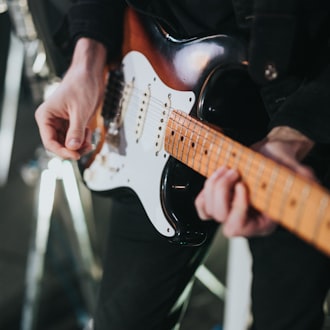
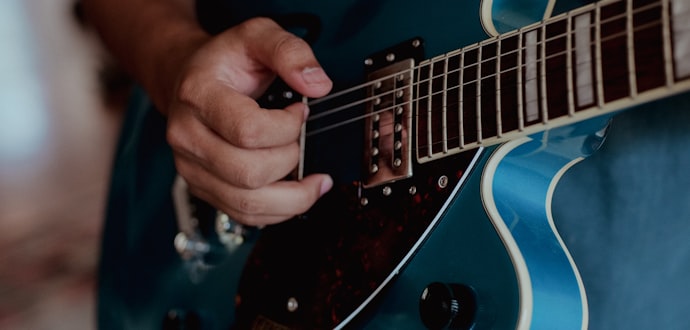
Muddy Waters' mid-to-late career electric tone was shaped significantly by his 1957 sunburst Fender Telecaster, a guitar whose bite and twang suited his transition from raw Delta slide to the more polished but still powerful Chicago electric blues sound. Earlier in his career, Waters had played various guitars including a 1958 Les Paul Custom, but the Telecaster's clarity and sustain on slide passages became central to his stage identity. He typically played with a metal slide on his ring finger, exploiting the Telecaster's bright single-coil pickups to project his slide work across a noisy club environment.
Fender Super Reverb / Tweed Bassman
Waters ran his Telecaster through Fender combo amplifiers, the Super Reverb and earlier Tweed Bassman were favorites, producing a sound that was clean enough to articulate slide notes but pushed hard enough to generate natural amp breakup on his most aggressive passages. His band was loud; Chicago blues required volume to compete with the noise of a packed South Side club, and Waters' amplifier setup was calibrated for that environment. The combination of Telecaster brightness and Fender reverb gave his live sound a shimmer and authority that translated powerfully to the Newport audience in 1960.
Slide (Metal/Glass) / Straight Signal
Muddy Waters' primary 'effect' was his slide, wielded with a blues man's authority, angled for vibrato, and positioned precisely for intonation. His signal chain was otherwise direct: guitar into amp, with perhaps a touch of the Super Reverb's built-in spring reverb for depth. The blues required no more than that. What made Waters' tone distinct from his contemporaries was his attack, the way he struck the strings with his pick hand conveyed an urgency and weight that no amount of signal processing could replicate.
Signature Technique
Amplified Delta Slide & The Birth of Electric Blues
Muddy Waters brought the Mississippi Delta slide tradition to Chicago, plugged it into a Fender Telecaster through a small amplifier, and produced a sound that had never previously existed: electric bottleneck slide guitar with the volume and presence to project over a full band without acoustic compromise. The Delta technique he inherited from Robert Johnson and Son House, open D tuning, glass or steel bottleneck worn on the little finger, a picking-hand fingerstyle approach that kept the bass and melody independent, was transformed by electricity into something categorically new. The sustain of an amplified electric string gave the slide a vocal quality, a long exhale on every held note, that was acoustically impossible.
"Mannish Boy," "Rollin' Stone," and "Hoochie Coochie Man" establish the standard that every electric blues player since has had to navigate. When the Rolling Stones named themselves after a Muddy Waters song, they were acknowledging a debt that could not be repaid. Clapton, Page, Richards, Hendrix, all of them have explicitly cited Waters as a primary source. The amplified slide guitar he developed in Chicago in the late 1940s and early 1950s is the direct ancestor of every distorted electric guitar sound that followed, because it was the first time anyone understood that electricity did not just make the guitar louder: it made it fundamentally different.